

Water Damage Ceiling
Water Damage Ceiling? Here’s How to Find the Best Repair Options
A brown stain spreading across your ceiling. Paint bubbling near the light fixture. A slow, steady drip you noticed after last night’s storm. Water damage has a way of announcing itself at the worst possible time—and demanding immediate attention.
The good news? A water damage ceiling isn’t always a disaster. With the right approach, most damage is entirely fixable. The tricky part is knowing what you’re dealing with, whether to tackle it yourself or call in a professional, and how to make sure the problem doesn’t come back.
This guide walks you through everything: from spotting the signs of water damage to choosing the best repair path—and why Wheeler Painting & Restoration Services is the contractor homeowners trust for high-quality ceiling restoration.
Why Water-Damaged Ceilings Are More Serious Than They Look
A stain or patch of peeling paint might seem like a cosmetic issue, but water-damaged ceilings can hide far more serious problems beneath the surface.
Here’s what’s actually at stake:
Structural compromise:
Prolonged moisture weakens drywall, plaster, and wooden support beams. Over time, a saturated ceiling can sag—or worse, collapse.
Mold growth:
Damp conditions create the perfect environment for mold. Once it takes hold, it spreads fast and can pose real health risks, particularly for those with respiratory conditions.
Electrical hazards:
Water and wiring don’t mix. If moisture reaches your ceiling’s electrical fixtures or wiring, the risk of short circuits or fires increases significantly.
Hidden rot:
Moisture that seeps into wall cavities or roof structures can cause rot that goes unnoticed until major repairs are needed.
The longer you wait, the worse—and more expensive—the damage becomes. Acting quickly is always the right call.
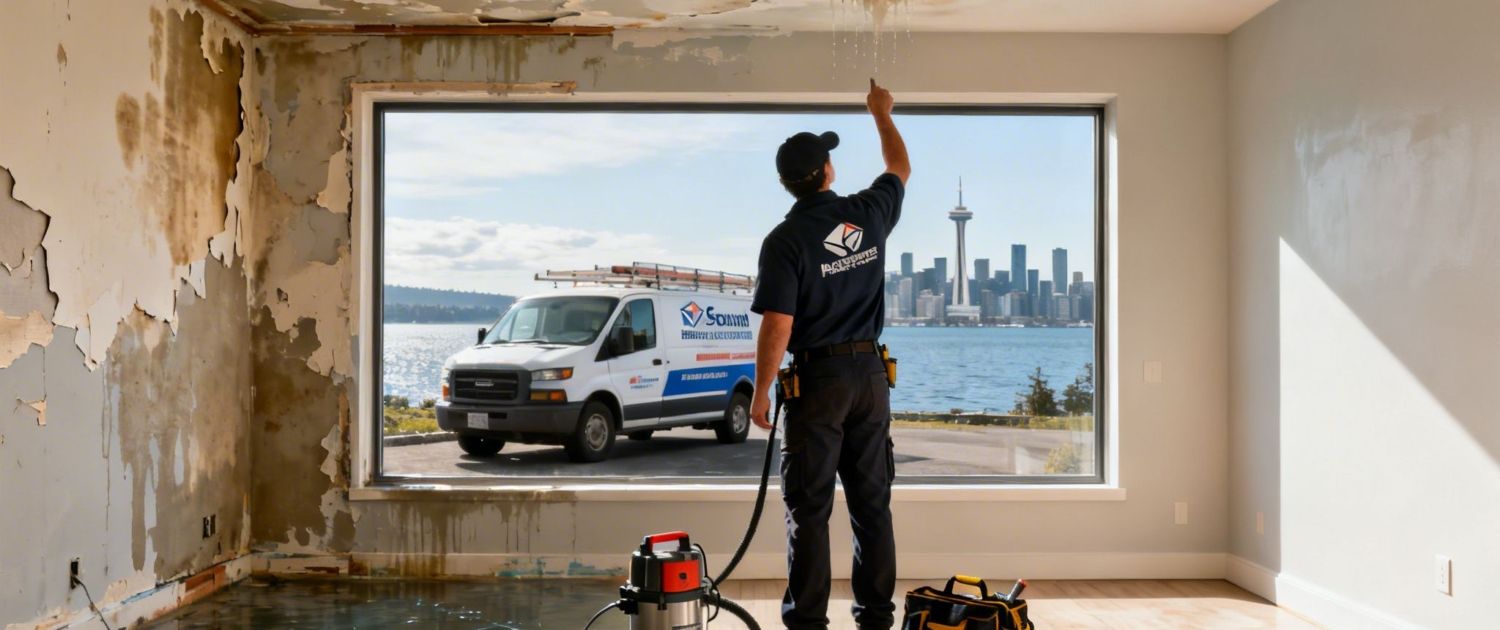
Water Damage Ceiling Restoration
Common Causes of Ceiling Water Damage
Before you can fix the problem, you need to understand what caused it. Water damage rarely has a single, obvious source. Some of the most common culprits include:
Roof leaks:
Damaged shingles, cracked flashing, or blocked gutters allow rainwater to seep through.
Plumbing failures:
Burst pipes, loose connections, and aging fixtures above the ceiling are frequent offenders.
Condensation buildup:
Poor attic ventilation or inadequate insulation can cause moisture to accumulate over time.
HVAC issues:
Air conditioning units that aren’t draining properly can leak onto ceilings below.
Appliance overflows:
Washing machines, dishwashers, and water heaters on upper floors can cause significant ceiling damage when they malfunction.
Identifying the correct source is critical. Repairing the ceiling without fixing the underlying cause will only lead to the same problem recurring weeks or months later.
What to Do the Moment You Notice a Ceiling Leak
Speed matters. Here’s what to do as soon as you spot the signs:
Contain the water
Place buckets or towels under the leak to prevent further water from spreading to floors or furniture. If there’s visible bulging in the ceiling, carefully puncture it with a screwdriver to release the collected water in a controlled way—this relieves pressure and reduces the risk of a sudden collapse.
Turn off electricity in affected areas
If the leak is near any light fixtures, ceiling fans, or visible wiring, switch off the electricity to those circuits at your breaker box. Don’t wait.
Document everything
Take photos and videos of the damage before touching anything. This documentation is essential for insurance claims.
Contact your insurance provider
Most homeowner policies cover sudden, accidental water damage. Notify your insurer promptly—delays can complicate your claim.
Locate the source
Do not begin any repairs until you’ve found and stopped the source of the water. Trace the leak back to its origin, whether it’s a rooftop issue, a burst pipe, or a faulty appliance.
How to Assess the Severity of the Damage
Not all water damage is equal. Some repairs are minor. Others require a professional crew and significant reconstruction.
Minor damage typically involves:
Small, contained stains with no sagging
Surface-level paint bubbling or peeling
Drywall that’s still structurally firm
Moderate damage may include:
Larger stained areas with visible soft spots
Multiple affected sections or spreading discoloration
Signs of early mold growth (dark patches, musty odor)
Severe damage requires urgent professional attention:
Sagging or bowing ceiling sections
Widespread mold or visible rot
Compromised structural elements, such as exposed joists
When in doubt, have a professional inspect the area. What looks minor on the surface can sometimes point to deeper structural issues.
DIY vs. Professional Repair: Choosing the Right Path
When DIY Makes Sense
For small, clearly contained stains caused by a one-time event—such as a minor roof tile that’s since been fixed—a DIY repair may be perfectly appropriate. This typically involves:
Letting the area dry completely (at least 24–48 hours)
Cutting out and replacing damaged drywall sections
Applying a stain-blocking primer
Repainting with a ceiling-grade paint
DIY works best when the source of the leak has been definitively resolved, the damage is superficial, and there’s no sign of mold or structural compromise.
When to Call a Professional
For anything beyond minor cosmetic repairs, professional restoration is the smarter investment. Here’s why:
Accuracy: Professionals use moisture meters and thermal imaging to detect hidden water damage that’s invisible to the naked eye.
Mold remediation: Certified contractors can safely remove mold and treat the affected area to prevent regrowth.
Structural repairs: Replacing joists, beams, or large drywall sections requires expertise and the right tools.
Quality finish: A professionally repaired ceiling looks seamless. DIY patches often leave visible seams, uneven textures, or mismatched paint tones.
Attempting a complex repair without the right skills often costs more in the long run when the work needs to be redone.
How to Choose a Reliable Repair Contractor
The water damage restoration contractor you choose will determine both the quality and longevity of the repair. Here’s what to look for:
Licensing and insurance: Always verify that the contractor holds the appropriate licenses and carries liability insurance. This protects you if something goes wrong during the job.
Relevant experience: Ceiling restoration requires specific skills in drywall repair, plastering, texture matching, and painting. Ask for examples of similar projects they’ve completed.
Written quotes: Reputable contractors provide detailed, written estimates that break down materials and labor costs. Avoid anyone who quotes vaguely or pressures you to decide on the spot.
References and reviews: Check Google reviews, ask for references, and look for a consistent track record of satisfied customers.
Clear communication: A good contractor explains the scope of work clearly, provides realistic timelines, and keeps you updated throughout the job.
Warranty on work: Quality contractors stand behind their work. Ask whether they offer a warranty on the repair and finishing work.

Ceiling Water Damage Restoration
Why Homeowners Choose Wheeler Painting & Restoration Services for Ceiling Restoration
When it comes to ceiling restoration and finishing, Wheeler Painting & Restoration Services stands out for a clear reason: the quality of the work speaks for itself.
Wheeler Painting & Restoration Services specializes in high-quality interior and exterior painting and surface restoration, with deep expertise in ceiling repair finishing. Their team brings the kind of attention to detail that makes a repaired ceiling look as good—or better—than the original.
Here’s what sets Wheeler Painting & Restoration Services apart:
Expert surface preparation:
The team at Wheeler Painting & Restoration Services knows that a flawless finish starts with thorough preparation. They identify and treat problem areas properly before a single drop of paint is applied.
Premium materials:
Wheeler Painting & Restoration Services uses high-quality, durable paints and primers that protect against moisture and stand the test of time.
Seamless texture matching:
One of the hardest parts of ceiling repair is matching the existing texture. Wheeler Paint’s experienced team ensures the repaired section blends seamlessly with the surrounding ceiling.
Reliable, professional service:
Clients trust Wheeler Painting & Restoration Services for their clear communication, punctuality, and commitment to getting the job done right the first time.
If you’re dealing with water-damaged ceilings and want a finish that looks truly seamless, Wheeler Painting & Restoration Services is a trusted partner for the job.
Preventative Measures to Protect Your Ceiling
Once your ceiling is repaired, keep it that way. A few simple habits can significantly reduce the risk of future water damage.
Inspect your roof regularly: Check for cracked or missing shingles, damaged flashing, and blocked gutters, especially after heavy storms. Annual inspections by a roofing professional are a worthwhile investment.
Service your plumbing: Have a licensed plumber inspect pipes and fixtures periodically, particularly in older homes. Look out for slow leaks under sinks and around toilet bases.
Improve attic ventilation: Proper ventilation prevents moisture from building up in roof spaces, reducing the risk of condensation damage.
Check appliances: Inspect the hoses and connections on washing machines and dishwashers regularly. Replace rubber hoses with braided steel alternatives for added durability.
Use moisture-resistant paint: In bathrooms, kitchens, and laundry rooms, opt for moisture-resistant ceiling paint. It won’t prevent leaks, but it slows damage and buys you time to notice a problem.
Act early on small stains: A small water stain is easy to dismiss. Don’t. Trace its origin promptly—catching a minor leak early can save you thousands in repair costs.
Don’t Let Ceiling Damage Go Unchecked
Water damage doesn’t fix itself. What begins as a small, seemingly insignificant stain on your ceiling can quickly escalate into a much larger issue. Left unaddressed, it can compromise your home’s structural integrity, foster unhealthy mold growth, and eventually lead to a major, costly renovation project. Taking proactive steps is crucial. The process is straightforward: first, identify the source of the leak, then assess the full extent of the damage, and finally, choose a repair strategy that matches the severity of the problem.
While minor fixes might be tempting for a DIY project, ensuring a lasting and safe repair often requires professional expertise. For homeowners who want the job done right the first time—from addressing any underlying structural issues to achieving a flawless, perfectly blended painted finish—working with an experienced contractor makes all the difference. Wheeler Painting & Restoration Services brings the specialized knowledge and meticulous craftsmanship needed to restore your ceiling to its original, pristine condition.
Don’t let a small issue become a major headache. Ready to get started? Contact Wheeler Painting & Restoration Services today for a professional assessment and a detailed quote.
Wheeler Painting
https://maps.app.goo.gl/TkHPUUvsfohwTSm8A
1317 Central Ave S, Kent, WA 98032, United States
(253) 802-8656
https://wheelerpainting.com/

 “Like” us on Facebook!