
Water Damage Remediation
/in Water Damage RestorationFrom Flooded to Fixed: How to Find the Right Water Damage Remediation Contractor
Water damage doesn’t wait for a convenient time. A burst pipe at 2 a.m., a flash flood while you’re at work, a slow leak behind the walls that goes unnoticed for months—when water gets in, it gets to work fast. Within 24 to 48 hours, mold can begin to grow. Structural materials start to warp and weaken. What might have been a manageable repair quickly becomes a costly renovation.
Knowing what to do in those first critical hours—and who to call—can make the difference between a swift water damage remediation and a months-long ordeal. This guide walks you through every step: from the moment water enters your home to the final coat of paint that makes it look like nothing ever happened.
What to Do the Moment Water Damage Strikes
Before you call anyone, take action to limit the damage. If the source of water is a burst pipe or appliance, shut off the main water supply immediately. If there’s any risk of electrical hazards—standing water near outlets or a flooded basement—turn off power to the affected areas at the circuit breaker.
Document everything before you touch it. Use your phone to photograph and video the damage from multiple angles. This documentation will be critical when you file an insurance claim.
Then, if it’s safe to do so, remove standing water using mops, towels, or a wet/dry vacuum. Move furniture and valuables out of wet areas and open windows to increase ventilation. These steps won’t replace professional remediation, but they slow the damage while you wait for help to arrive.
One thing to avoid: running standard fans into walls or under flooring before a professional assesses the situation. Improper drying can push moisture deeper into building materials, creating hidden mold problems that are expensive to remediate later.
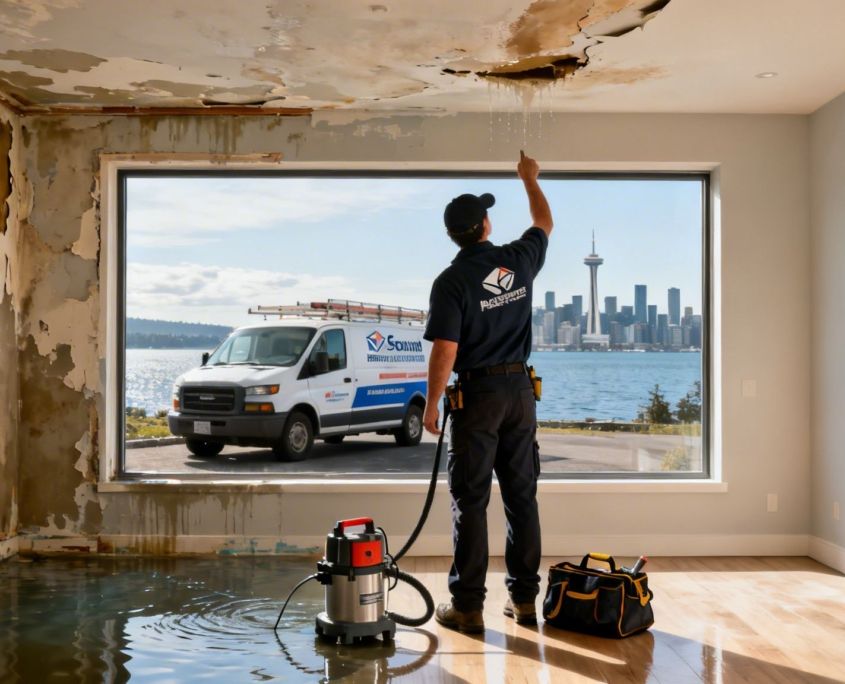
Water Damage Remediation Service
Why Professional Remediation Matters More Than DIY
It’s tempting to tackle water damage yourself, especially if the visible damage seems minor. But water doesn’t stay where you can see it. It travels through wall cavities, saturates insulation, and pools under flooring. Without professional moisture detection equipment—thermal cameras, moisture meters, and hygrometers—you simply can’t know how far the damage has spread.
Certified remediation professionals follow industry standards set by the Institute of Inspection, Cleaning and Restoration Certification (IICRC). These standards govern everything from moisture measurement to structural drying protocols. A certified contractor knows how to dry a structure completely, not just superficially.
Beyond drying, professional remediation addresses mold prevention and safe removal of contaminated materials. Certain types of water damage—like sewage backups or floodwater from outside—carry pathogens that require proper protective equipment and disposal procedures. Handling contaminated materials without the right training puts your health at serious risk.
Insurance companies also take note of who did the work. A professionally documented remediation performed by a licensed contractor strengthens your claim and reduces the chance of future disputes over pre-existing damage or incomplete repairs.
Key Factors to Evaluate When Choosing a Contractor
Not all remediation contractors are equal. Here’s what to look for before you sign anything.
Licensing and Certification
Your contractor should hold a valid state contractor’s license and, ideally, IICRC certification in water damage restoration (WRT). Some states also require specific mold remediation licenses. Ask for proof of both and verify them independently if possible.
Insurance Coverage
Confirm that the contractor carries general liability insurance and workers’ compensation. If a worker is injured on your property or causes additional damage during remediation, you need to know you’re protected. A reputable contractor will provide certificates of insurance without hesitation.
Response Time
Water damage is a time-sensitive emergency. Look for contractors who offer 24/7 emergency response and can have a crew on-site within a few hours. Every hour of delay increases the extent of the damage and the cost of repairs.
Experience and References
Ask how many water damage jobs the contractor has completed and request references from recent clients. Online reviews on Google or the Better Business Bureau can also give you a clearer picture of the contractor’s reliability and quality of work.
Transparent Pricing
Be cautious of contractors who provide vague estimates or ask for large upfront payments. A trustworthy contractor will conduct a thorough inspection before quoting and provide a written estimate that breaks down labor, materials, and equipment costs.
Questions to Ask Before You Hire
Calling a few contractors before committing takes time you might feel like you don’t have—but it’s worth it. Here are the questions that matter most:
Are you IICRC certified? Certification signals that the contractor adheres to industry best practices.
What equipment will you use? Professional-grade dehumidifiers, air movers, and moisture detection tools are the minimum standard.
How will you document the drying process? Daily moisture readings and a written drying log protect you if disputes arise with your insurer.
Will you handle mold testing and remediation if mold is found? Some contractors outsource this work. Know who will actually be in your home.
Do you work directly with insurance companies? Contractors experienced with insurance claims can simplify the process considerably.
What happens if hidden damage is discovered mid-job? Get clarity on how change orders are handled before work begins.
The answers reveal a lot. A contractor who can’t explain their process in clear terms, or who pushes you to skip the assessment and start work immediately, is worth walking away from.

Water Damage Remediation
The Final Step: Restoration and Repainting with Wheeler Painting & Restoration Services
Remediation removes the damage. Restoration makes your home feel like home again. Once the structure has been dried, cleaned, and cleared, surfaces that were exposed to water—drywall, trim, ceilings, and cabinetry—often need repainting or refinishing before the job is truly done.
This is where Wheeler Painting & Restoration Services comes in. Specializing in post-remediation restoration and repainting, Wheeler Painting & Restoration Services provides the professional finishing touch that brings your space back to its original condition—or better. Their team understands the unique requirements of post-water-damage surfaces, including the importance of using moisture-resistant primers and paints that protect against future issues.
Coordinating your remediation contractor with Wheeler Painting & Restoration Services ensures a seamless handoff between the structural work and the cosmetic restoration. Rather than dealing with multiple timelines and miscommunication between trades, you get a clear path from flooded to finished.
Navigating the Insurance Claims Process
Most homeowner’s insurance policies cover sudden and accidental water damage—like a burst pipe—but not gradual damage caused by neglect or lack of maintenance. Flood damage from outside typically requires a separate flood insurance policy through the National Flood Insurance Program (NFIP).
Notify your insurer immediately
Don’t wait. Most insurance policies have a clause requiring prompt notification after a loss. Delaying your call gives the insurance company a reason to question the severity of the damage or even deny your claim outright. The sooner you report the incident, the sooner you can begin the remediation process.
Document everything thoroughly
Before any cleanup begins, extensively document the damage. Take photos and videos of the affected areas, including the source of the water and all damaged property. This visual evidence is crucial for your claim file. Also, keep a detailed log of every conversation with your insurance company, noting the date, time, and who you spoke with.
Maintain a comprehensive file of all paperwork
Your claim file should include your photos and videos, written estimates, reports from your remediation contractor, and any receipts for initial repairs or supplies. Organization is key to a smooth claims process.
Request a detailed, itemized scope of work
Your contractor should provide a written scope that breaks down the repair process line by line, including materials and labor costs. Vague descriptions like “repair drywall” can lead to adjusters underpaying the claim. An itemized list ensures every part of the restoration is accounted for and properly cost.
Don’t be afraid to get a second opinion
If the settlement offer from the insurance company’s adjuster seems too low to cover the actual costs of water damage restoration, you have the right to get an independent assessment. Consider hiring a trusted public adjuster or an independent contractor to provide their own detailed estimate to support your claim.
Track all your additional living expenses (ALE)
If the water damage is severe enough that you can’t live in your home during the remediation, your policy may cover the costs. This is often called “loss of use” coverage. Keep every receipt for hotel stays, meals, laundry, and other necessary expenses incurred while you’re displaced. These costs can add up quickly, and proper documentation is the only way to get them reimbursed.
A remediation contractor with insurance experience can be invaluable here. They understand how adjusters evaluate claims and can advocate for a fair settlement on your behalf.

Water Damage Remediation Expert
Your Final Checklist: From Remediation to Move-In Ready
Before you consider the job complete, run through this checklist:
All moisture readings have returned to normal levels and are documented in a drying log
No visible mold and a professional clearance test confirms no hidden mold
All damaged materials (drywall, insulation, flooring) have been removed and replaced
HVAC system has been inspected and cleaned if water exposure occurred
Plumbing or structural issues that caused the damage have been repaired
All surfaces have been primed with moisture-resistant products prior to painting
Wheeler Painting & Restoration Services has completed the repainting and surface restoration
Insurance claim has been filed, reviewed, and settled
Preventative measures have been taken—sump pump installed, gutters cleaned, drainage improved
Take Back Your Home
Water damage feels overwhelming at the moment. But with the right team behind you, recovery is entirely achievable. Start by acting quickly to limit the damage, then focus on finding a licensed, certified remediation contractor who communicates clearly and documents their work thoroughly. When the structural work is done, call Wheeler Painting & Restoration Services to restore your home’s appearance with a professional finish.
The goal isn’t just to get back to where you were before the flood. It’s to come out on the other side with a safer, better-protected home—and the confidence to handle whatever comes next.
Wheeler Painting
https://maps.app.goo.gl/TkHPUUvsfohwTSm8A
1317 Central Ave S, Kent, WA 98032, United States
(253) 802-8656
https://wheelerpainting.com/

 “Like” us on Facebook!