

Water Damage Services
/in Water Damage RestorationWater Damage Services 101: How to Pick the Right Contractor
Water damage is one of the most stressful situations a homeowner or property manager can face. A burst pipe, a flooded basement, a leaking roof after a storm—within hours, what looks like a minor inconvenience can spiral into a full-scale structural crisis. The costs add up fast, and so do the mistakes if you hire the wrong contractor.
The good news? Knowing what to look for makes a real difference. The right water damage services doesn’t just show up with a wet-dry vacuum—they bring certified expertise, professional-grade equipment, and a systematic approach that protects your property from further deterioration. The wrong one? They might leave hidden moisture behind walls, setting the stage for mold growth and long-term structural damage.
This guide walks you through everything you need to know: what causes water damage, why the first 48 hours are critical, how to vet a contractor, and what the restoration process actually looks like from start to finish—including how companies like Wheeler Painting & Restoration Services play an essential role in bringing your property back to its pre-loss condition.
What Causes Water Damage in Residential and Commercial Properties?
Water damage doesn’t always announce itself dramatically. Sometimes it’s a slow drip behind a wall; other times it’s a flash flood that submerges an entire ground floor. Understanding the common causes helps you act faster when something goes wrong.
Residential Causes
In homes, water damage most often stems from:
Plumbing failures: Burst pipes, leaking joints, and worn-out supply lines are among the leading culprits, particularly in older homes.
Appliance malfunctions: Dishwashers, washing machines, refrigerators with ice makers, and water heaters all carry risk when connections fail or seals deteriorate.
Roof leaks: Damaged shingles or flashing allow water to penetrate during heavy rainfall, often pooling in attics before seeping through ceilings.
Storm and flooding: Heavy rain, flash floods, and sewer backups can overwhelm drainage systems, forcing water into basements and crawl spaces.
HVAC condensation: Poor maintenance can cause condensation buildup or drain line clogs that lead to water pooling around units.
Commercial Causes
Commercial properties face similar risks, but the scale is often much larger. Sprinkler system failures, roof drainage problems on flat commercial rooftops, and plumbing issues across multi-story buildings can affect dozens of offices or units simultaneously. The financial impact compounds quickly when business operations are disrupted alongside the structural damage.
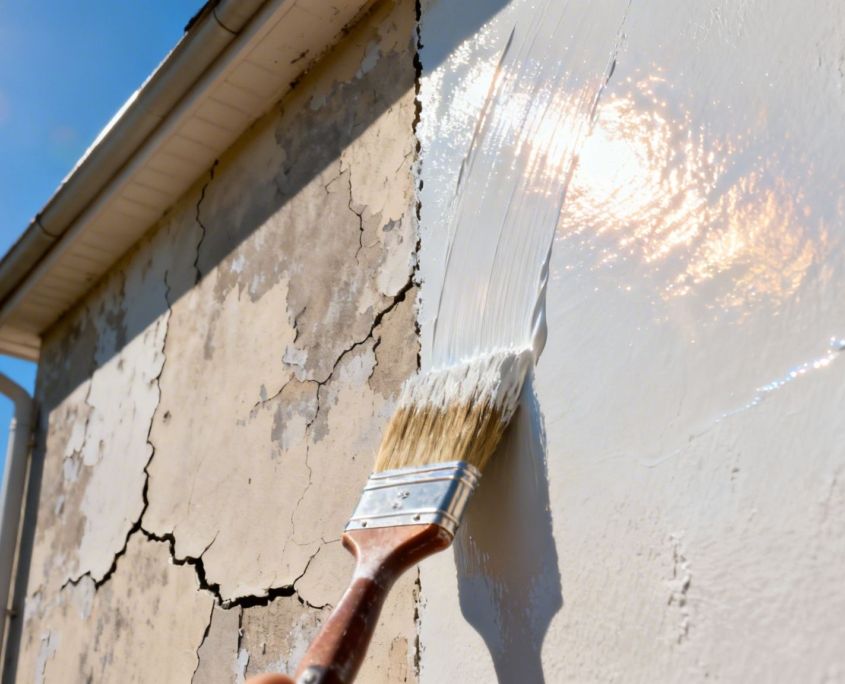
Water Damage Restoration Service
The 24-48 Hour Window: Why Speed Is Everything
Here’s the reality of water damage: the clock starts the moment moisture enters your property. Within the first 24 to 48 hours, mold can begin to develop on affected surfaces. Structural materials—drywall, subfloors, insulation, wooden framing—begin absorbing water rapidly, and the longer they stay wet, the harder and more expensive the restoration becomes.
Acting within this critical window allows a professional mitigation team to:
Extract standing water before it spreads further
Set up industrial drying equipment to prevent moisture from settling into structural materials
Identify hidden pockets of moisture using thermal imaging and moisture mapping tools
Prevent secondary damage, including mold colonization, warping, and corrosion
Waiting even a day or two can mean the difference between a straightforward drying job and a full-scale demolition and reconstruction project. This is why emergency response time should be near the top of your contractor checklist.
Key Credentials to Look for in a Water Damage Contractor
Not all restoration companies are created equal. Before you commit to anyone, verify the following credentials.
IICRC Certification
The Institute of Inspection, Cleaning and Restoration Certification (IICRC) sets the industry standard for water damage restoration professionals. Look for contractors certified under the IICRC’s Water Damage Restoration Technician (WRT) or Applied Structural Drying (ASD) programs. These certifications confirm that technicians have been trained in the science of drying, moisture control, and safe restoration practices.
State Licensing
Requirements vary by state, but most jurisdictions require contractors performing restoration work to hold a valid contractor’s license. Ask to see proof before any work begins. A licensed contractor is accountable—they have legal standing to perform the work and are subject to regulatory oversight.
Comprehensive Insurance
At a minimum, your contractor should carry general liability insurance and workers’ compensation coverage. General liability protects your property if the contractor causes additional damage during the restoration process. Workers’ comp protects you from liability if a technician is injured on your premises. Ask for certificates of insurance directly—not just verbal confirmation.
Questions to Ask Before Hiring
Even with the right credentials, the quality of service can vary widely. Ask these questions to separate professional operations from contractors who may not be equipped to handle your situation properly.
What is your emergency response time?
Reputable water damage contractors offer 24/7 emergency services and commit to on-site arrival within a defined timeframe—often two to four hours. If a company can’t give you a clear answer, that’s a red flag.
What moisture mapping and detection tools do you use?
Professional contractors use thermal imaging cameras, moisture meters, and hygrometers to locate water that isn’t visible to the naked eye. This equipment is essential for ensuring no moisture is left behind in walls, ceilings, or subfloors.
What drying equipment do you use?
Look for contractors who deploy commercial-grade air movers, dehumidifiers, and desiccant systems where appropriate. Residential fans won’t cut it for significant water intrusion—industrial equipment creates the controlled airflow and humidity conditions needed for efficient structural drying.
Do you coordinate with insurance companies?
An experienced contractor will be familiar with the insurance claims process and can help document damage thoroughly—photos, moisture readings, drying logs—to support your claim.
Can you handle both mitigation and restoration?
Some contractors only perform the initial water extraction and drying (mitigation). Full-service restoration—which includes repairing or replacing damaged materials and restoring the property to its original condition—requires additional expertise. Knowing upfront what a contractor can and can’t handle avoids delays and handoffs that complicate the process.

Water Damage Restoration
The Role of Wheeler Painting & Restoration Services in Post-Mitigation Restoration
Structural drying gets your property safe and dry. But when the dehumidifiers are switched off, you’re often left with bare drywall, exposed framing, sanded-down surfaces, and walls stripped of their finishes. This is where companies like Wheeler Painting & Restoration Services step in.
Wheeler Painting & Restoration Services specializes in the aesthetic finishing phase of water damage restoration—the work that transforms a structurally sound but visually bare space back into a finished, livable property. This includes:
Surface preparation: Sanding, priming, and treating water-stained or repaired surfaces to ensure proper adhesion and a smooth final finish.
Interior and exterior painting: Repainting walls, ceilings, trim, and other surfaces affected by water damage or restoration work.
Specialty coatings: Applying moisture-resistant primers and sealants where appropriate to provide an extra layer of protection against future water intrusion.
Color matching: Blending new paint with existing finishes to create a seamless, unified appearance throughout the affected space.
Working with a skilled painting and surface finishing team as part of your restoration process ensures that the final result isn’t just structurally sound—it looks the way it did before the damage occurred. For homeowners and commercial property managers alike, that final aesthetic outcome is just as important as the technical restoration work that precedes it.
The Restoration Process: Step by Step
Understanding what happens during a professional water damage restoration helps you know what to expect—and helps you spot shortcuts that compromise quality.
Step 1: Inspection and Assessment
A qualified technician performs a thorough assessment of the affected area, using moisture meters and thermal cameras to map the extent of the damage. This step establishes a baseline that informs the entire restoration plan.
Step 2: Water Extraction
Using truck-mounted or portable extraction units, the team removes all standing water. Speed here is critical—the faster the bulk water is removed, the less secondary absorption occurs in porous materials.
Step 3: Structural Drying
Industrial air movers and dehumidifiers are positioned strategically throughout the affected space. This phase can take anywhere from three to five days depending on the severity of the damage, the materials involved, and environmental conditions. Moisture levels are monitored daily.
Step 4: Cleaning and Sanitization
Contaminated water—especially from sewage backups or floodwater—introduces bacteria and pathogens. The affected area is cleaned and treated with appropriate antimicrobial agents to ensure the space is safe before reconstruction begins.
Step 5: Demolition of Unsalvageable Materials
Any drywall, insulation, or flooring that cannot be dried and restored is carefully removed and disposed of. This step is critical—leaving compromised materials in place is a common cause of ongoing mold problems.
Step 6: Reconstruction and Finishing
Structural repairs are completed, and materials are replaced. New drywall is hung, subfloors are repaired, and the space is prepared for finishing. This is the stage where Wheeler Paint’s expertise becomes invaluable—surface finishing, priming, painting, and final touches that restore the property’s appearance to match or exceed its pre-loss condition.

Water Damage Remediation
Why the Right Contractor Protects More Than Your Walls
Choosing a qualified water damage contractor isn’t just about fixing the immediate problem—it’s about protecting long-term property value. Poorly executed water damage restoration leads to mold, compromised structural integrity, and problems that surface during property inspections down the line. These issues don’t just cost money to fix; they affect what your property is worth.
A contractor with proper IICRC certification, verified licensing, comprehensive insurance, and professional-grade equipment gives you documented proof that the work was done correctly. That documentation matters for insurance claims, resale disclosures, and your own peace of mind.
When you add a skilled finishing partner like Wheeler Painting & Restoration Services to the restoration process, you ensure the job is complete—not just technically, but visually. The result is a property that’s dry, safe, structurally sound, and restored to the standard it deserves.
Water damage is never convenient. But with the right team in place, recovery is entirely possible—and it starts with knowing exactly what to look for before you sign anything.
Wheeler Painting
https://maps.app.goo.gl/TkHPUUvsfohwTSm8A
1317 Central Ave S, Kent, WA 98032, United States
(253) 802-8656
https://wheelerpainting.com/

 “Like” us on Facebook!