
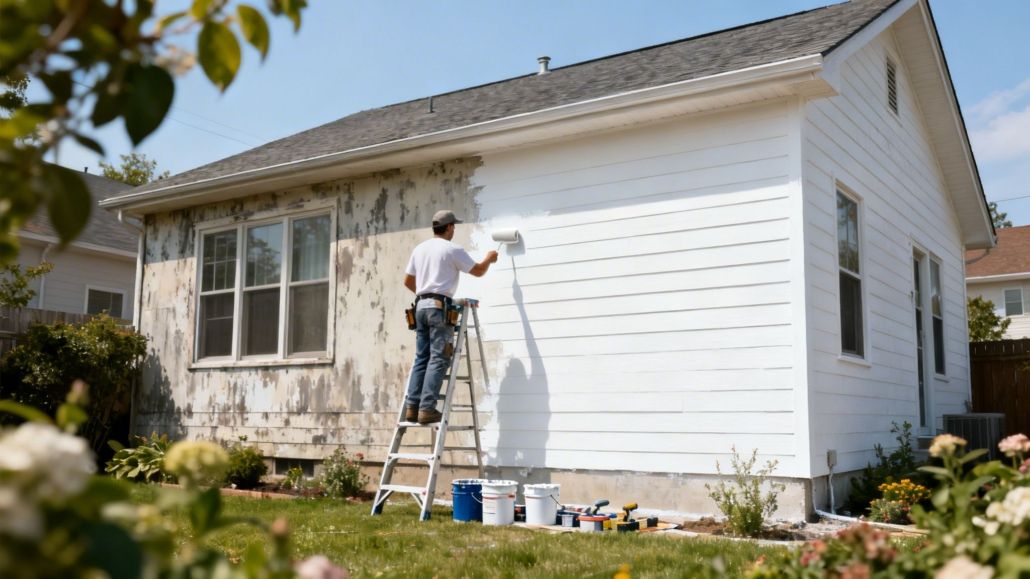
Average Cost of Painting Exterior of House: 2026 Guide to Pricing & Quotes
If you're asking about the average cost of painting the exterior of your house, you've come to the right place. It’s one of the first questions we hear from property owners, and for good reason. Nationally, you’ll see figures in the $3,500 to $7,500 range, but here in Western Washington, that's often just a starting point for residential projects.
For homeowners and business owners alike, our notoriously damp climate and local labor rates mean a quality paint job that actually lasts is going to cost more. Budgeting accurately from the get-go is key to avoiding surprises and making a sound investment in your property.
Your Quick Guide to 2026 Exterior House Painting Costs

Trying to nail down a budget for a big project, whether for your home or business, can feel overwhelming. Having a realistic ballpark figure makes all the difference. While those national averages are a decent benchmark, they don’t tell the full story for the Puget Sound.
The simple truth is, our weather demands more—more detailed prep work and higher-performance materials. It’s the only way to get a finish that will stand up to the rain and humidity year after year. To build trust and help you plan, we've put together some localized estimates based on our experience serving homeowners in the community.
Estimated 2026 Exterior Painting Costs for Puget Sound Homes
This table provides homeowners in Western Washington with realistic cost ranges for painting homes of different sizes, helping them create an initial budget.
| Home Size (Square Feet) | Number of Stories | Estimated Cost Range (Puget Sound) |
|---|---|---|
| Small (1,200 – 1,800 sq. ft.) | 1 Story | $4,500 – $8,500 |
| Medium (1,800 – 2,500 sq. ft.) | 1-2 Stories | $7,000 – $12,500 |
| Large (2,500 – 4,000+ sq. ft.) | 2-3 Stories | $11,000 – $18,000+ |
Of course, these numbers are a launchpad, not a final destination. Your final quote will always depend on the unique character and needs of your property.
A professional paint job is more than just applying color; it’s about installing a protective shield for your home. In the Pacific Northwest, that shield needs to be tough enough to handle our persistent rain and moisture.
The real cost of painting your property’s exterior is shaped by a handful of key variables that go way beyond square footage. When an experienced estimator from a team like ours at Wheeler Painting comes out for a consultation, we’re looking closely at these factors:
- The type and condition of your siding
- The complexity of your building’s architecture
- The amount of prep work required
Understanding what drives these costs is the first step toward getting a transparent quote you can trust. In the next section, we’ll break down each of these cost drivers one by one, so you’ll know exactly what to look for and feel confident investing in your home or commercial space.
Why Painting Costs Vary So Much Across the Country
Have you ever discussed home improvement or commercial renovation costs with someone in another state and had your jaw drop at their prices? It’s a common story. A business owner in the Midwest might mention paying half of what you were just quoted for a similar project right here in our area. This isn't just a coincidence—it's a reflection of real differences in what it costs to paint a building from one region to another.
These price gaps are tied directly to local economies, the cost of living, and, most importantly, the specific challenges posed by the regional climate. Putting a fresh coat of paint on a building in a dry, mild part of the country just isn't the same job as protecting a property from the constant moisture and temperature swings we get.
A National Look at Painting Prices
To get a better sense of where the Puget Sound market stands, it helps to zoom out and look at the bigger picture. When you look at recent data on exterior painting across North America, you see a huge range in what people are paying.
The numbers paint a clear picture of just how much prices can swing. Homeowners in the Far West are looking at an average of $4,500, with the New England area even higher at around $4,800. Now, compare that to the Plains states, where the average cost is just $2,300, or the Southwest at $2,400. If you're curious, you can explore more about these regional painting cost differences to see how different markets stack up.
What this tells us is that your zip code is one of the single biggest factors in your final bill. Property owners in coastal areas with a higher cost of living and more demanding weather almost always pay a premium.
Why the Pacific Northwest Is a Premium Market
Here in the Puget Sound, we’re not just part of that "Far West" category; we're at the higher end of it. The reason is simple: our climate. The relentless dampness, fog, and rain create an incredibly tough environment for any exterior finish.
When a paint job fails here, it doesn't just look bad—it can fail spectacularly. We’re talking about widespread peeling, bubbling, and, worst of all, moisture getting in where it shouldn't. That can lead to wood rot and serious structural damage. This isn't just about curb appeal; it's about protecting your investment.
In Western Washington, an exterior paint job is not just about aesthetics—it’s a critical layer of defense against the elements. Cutting corners on preparation or materials is a recipe for costly repairs down the road.
To deliver a paint job that will actually last through our wet seasons, a true professional has to be far more meticulous. It's a completely different standard of work. This includes:
- Doing the Prep Work Right: This is the most critical step, and it's non-negotiable. It means thorough pressure washing to get rid of grime and mildew, followed by hours of scraping and sanding any loose paint. We then meticulously caulk every single gap and seam where water could find a way in.
- Using High-Performance Materials: We rely on primers that are specifically designed to block stains and stop mildew. After that comes top-tier acrylic latex paint formulated to stay flexible and resist moisture. These premium products simply cost more, but they’re essential for a lasting finish.
- Bringing in Skilled Experts: It takes a seasoned painter to apply these products correctly, especially with our unpredictable weather. They know how to work within those precious dry windows to make sure every coat bonds perfectly for maximum protection and longevity.
At Wheeler Painting, we don't just see ourselves as painters. We’re building and restoration specialists who live and work in the Puget Sound. We know that what we're really doing is installing a protective shield for your property—one that’s designed specifically for our local environment. That's why hiring a trusted, local provider who gets these nuances is an investment that provides real, long-term value for your home or commercial property.
The 7 Key Factors That Determine Your Final Cost
When homeowners or facilities managers ask for a quick, off-the-cuff estimate to paint their building, I have to explain that it's just not that simple. Think of it like buying a car. You know the base model has a certain price, but the final sticker reflects the engine you choose, the trim package, and all the other features that make it your car. The average cost of painting the exterior of a house or commercial building works the same way—it's a starting point, but the real price is in the details of your specific property.
A seasoned estimator doesn't just eyeball your property and pull a number out of thin air. We perform a deep dive into the specific factors that drive the cost, from labor and materials to the overall complexity of the job. Here are the seven biggest things we look at to build an accurate, reliable quote.
1. Building Size and Stories
This one might seem obvious, but there's more to it than just the total square footage. Of course, a larger building means more paint and more time on the job. But the number of stories is just as important, if not more so.
Painting a sprawling, single-story retail space is a completely different ballgame than tackling a three-story office building, even if they have the same square footage. Taller structures demand extensive ladder work, specialized scaffolding, or even aerial lifts. That extra equipment and the critical safety measures involved add complexity and time, which naturally increases the cost.
2. Siding Type and Condition
The skin of your building is a huge variable. Porous materials like older wood, stucco, or brick are thirsty—they can soak up a surprising amount of primer and paint compared to smoother surfaces like vinyl or modern fiber cement. Getting a durable, uniform finish on these materials simply requires more product.
Just as crucial is the current shape of your siding. Is the paint peeling and flaking off in sheets? If so, we'll need to budget a lot more time for surface preparation (more on that in a moment). A well-maintained property will always be less expensive to paint than one that's been showing its age for a few years.
3. The Critical Role of Prep Work
Here’s an industry truth that catches many people by surprise: 80% of a high-quality paint job is preparation. The actual painting is just the finishing touch. The real work—the part that ensures your new paint lasts for a decade instead of peeling in two years—happens before a can of finish paint is even opened.
Think of prep work like the foundation of a skyscraper. You can't see it when the building is finished, but it's the most important part ensuring the structure stands strong for decades. Rushing this step is a guarantee for failure.
For a professional crew, proper prep is non-negotiable and always includes:
- Thorough Cleaning: Power washing to blast away years of accumulated dirt, mildew, and chalky paint residue.
- Scraping and Sanding: Meticulously removing every bit of loose or failing paint to create a sound, bondable surface for the new coats.
- Caulking: Sealing all gaps around windows, doors, and trim. This is your building's primary defense against moisture intrusion, a vital step in our damp Puget Sound climate.
- Priming: Applying a high-quality primer to any bare wood or heavily stained areas to block stains and ensure the final color looks perfectly uniform.
4. Accessibility and Landscaping
How easy is it for us to get to the walls of your building? A property on a flat, clear lot is the dream scenario. But we often work on homes built into steep hillsides, or commercial facilities surrounded by dense, mature trees, or flanked by delicate garden beds that run right up to the foundation.
Our crews need to maneuver carefully around prized landscaping or set up complex scaffolding on sharply sloped ground. These logistical challenges take extra time and care, and that labor will be factored into the final quote.
The infographic below shows how regional economic factors already set a baseline cost, even before we start looking at your specific property's challenges.

As you can see, our location in the Pacific Northwest puts us in a higher-cost region to begin with. From there, the unique details of your property fine-tune the price.
5. Architectural Details and Trim
There’s a world of difference between painting a simple, modern retail building and a historic Craftsman bungalow loaded with detail. Every extra corner, window frame, corbel, and piece of gingerbread trim adds time to the job.
These intricate features can't be sprayed. They require painstaking "cutting in" by hand with a brush, which is one of the most meticulous and time-consuming parts of any paint job. The more complex your building's architecture, the more hours a painter will spend on this detailed work.
6. Quality of Paint and Materials
When it comes to paint, the old saying is true: you get what you pay for. It can be tempting to save a few hundred dollars on cheaper, economy-grade paint, but it's almost always a mistake. These paints have lower-quality resins and pigments, meaning they fade quicker, offer less protection from the elements, and will have you calling a painter again years sooner.
We only use premium-quality paints for a simple reason: they work. Top-tier products are engineered to fight off UV degradation, resist mildew growth, and stay flexible as your siding expands and contracts with the seasons. The upfront material cost is higher, but the investment pays for itself with a finish that looks better and lasts far longer. Of course, even the best paint needs the right weather, and you can see how we make that call in our guide on what temperature is too cold to paint an exterior.
7. Necessary Structural Repairs
Sometimes, a painting quote turns into something more. During the detailed inspection and prep phase, it’s not uncommon to find issues hidden beneath the surface—wood rot in a window sill, pest damage on a siding board, or failing flashing that’s letting water in.
Painting over these problems is malpractice. It traps moisture and guarantees that a small issue will become a massive, expensive repair down the road. This is where hiring a full-service residential and commercial contractor like Wheeler Painting is a huge advantage. Our in-house construction and restoration experts can properly fix any underlying rot or damage before we apply the first drop of paint, ensuring your investment is protected by a solid, healthy structure.
How Siding Material Impacts Your Painting Budget

The material on the outside of your property isn't just about curb appeal—it’s the canvas we work on, and every type has its own quirks. Thinking all siding is the same is like saying you can treat silk and canvas the same way. As professional painters, we know that’s not true. Each surface demands a specific approach to get a paint job that doesn’t just look good but actually lasts.
Different materials need their own unique prep work, primers, and paint formulas. This isn't just about looks; it's about the science of adhesion and durability. It’s a huge factor in why the average cost of painting the exterior of a house varies so much, even between buildings of the same size.
Painting Wood Siding
In the Pacific Northwest, classic wood siding is everywhere. We love its natural charm, but it's also one of the most demanding surfaces to paint. Wood is alive, in a way—it expands and contracts with the constant shifts in temperature and humidity. It’s also a magnet for moisture, which can quickly lead to peeling, cracking, and even rot if it isn't sealed perfectly.
Painting wood siding correctly is a meticulous job. We have to scrape and sand away every bit of failing paint, treat any mildew, and prime all the bare wood. We then use a top-tier, flexible acrylic paint that can move with the wood, preventing it from cracking under pressure and protecting it from our notoriously damp climate.
Painting Vinyl and Fiber Cement Siding
Vinyl siding is a popular low-maintenance choice, but painting it comes with a critical rulebook. The number one concern is heat. Dark paint colors can cause vinyl to absorb too much sun, which leads to warping, buckling, and irreversible damage. That's why we always use special vinyl-safe paints formulated with reflective pigments. This lets you choose a great color without worrying about your siding melting on a hot day.
Fiber cement, which many people know as Hardie Board, is a fantastic, stable material that holds paint beautifully. The key here is a deep cleaning to get rid of the chalky residue that builds up over time. Because it's a cement-based product, getting the priming and application just right is crucial for a long-lasting bond. If you have this type of siding, you might find our guide on painting Hardie Board siding helpful.
Painting Stucco and Brick Surfaces
Stucco and brick are what we call "thirsty" surfaces. They’re so porous they can drink up a shocking amount of paint if you don't seal them first. The process always starts with an intensive cleaning to remove dirt, grime, and efflorescence—that chalky white powder that often appears on masonry.
Painting brick or stucco isn't just a color change; it's a process of sealing a porous surface against the elements. Skipping the specialized masonry primer is like trying to build a house on sand—the final result simply won't last.
After it's clean, we apply a dedicated masonry primer or conditioner. This step is non-negotiable. It seals the surface, stops the paint from soaking in unevenly, and creates a solid foundation for the topcoats. This is what gives you that rich, uniform color and, more importantly, a robust barrier against moisture. Because of the specialized materials and extra labor, stucco and brick are usually on the higher end of the price spectrum.
Industry data shows just how much siding type can swing the final cost, with prices varying from $1,000 to over $12,000. Wood can be more budget-friendly ($1,000-$4,000), with vinyl in the middle ($3,000-$9,000), and stucco requiring a specific approach and budget ($1,500-$7,500). Brick is often the most expensive to paint, ranging from $4,000 to $12,000, simply due to the intense prep and materials needed. You can discover more insights about these siding cost differences to see the national trends, and we definitely see these same patterns right here in Western Washington.
DIY Painting vs Hiring a Professional Contractor
The idea of tackling your own exterior painting project is always tempting. On the surface, it looks like a straightforward way to save a good chunk of money. Before you start clearing out your weekends and heading to the hardware store, though, it pays to look beyond the price of a few cans of paint and understand what you’re really getting into.
What often starts as a simple cost-saving measure can quickly become a massive source of frustration. The truth is, a DIY paint job has a lot of hidden costs—in both time and money.
The True Cost of DIY Painting
The first surprise for most property owners is the sheer amount of equipment needed to do the job right. We’re not just talking about a few brushes and rollers. If you want a result that lasts, you need the right tools for every step.
- Essential Equipment: You'll need a solid extension ladder (maybe more than one), a pressure washer for cleaning, and a whole collection of scrapers, sanders, caulk guns, drop cloths, and painter's tape. Don't forget safety gear like masks and goggles. This gear alone can easily add up to hundreds of dollars.
- The Time Investment: This is the big one. Properly painting a building isn't a weekend project. For an average-sized home, the prep work—washing, scraping, sanding, and caulking—can easily take 40-60 hours. Then you have to add the actual painting time. You could be looking at giving up every weekend for a month or burning through a whole week of vacation.
- Safety Risks: Working on ladders is no joke, especially when you're two stories up or on uneven ground. Thousands of people are injured in ladder-related falls every year. Without proper training and safety equipment, you’re taking a serious personal risk.
- The Potential for Mistakes: This is where a DIY project can get really expensive. A little inexperience can lead to big problems. For example, using the wrong type of paint on vinyl siding can cause it to warp from the heat. If you don't prep the surface perfectly, you'll be watching your new paint start to peel in a year or two. These kinds of mistakes don't just look bad; they can expose your property to moisture and rot, turning your "money-saving" project into a major repair bill down the road.
The Value of Hiring a Professional Contractor
Hiring a professional contractor is an investment in getting the job done right—safely, efficiently, and with a result that will last. While the initial quote is higher than buying materials yourself, the value you get is about much more than just a coat of paint. It’s about peace of mind.
A professional contractor doesn’t just sell you a paint job; they provide a service that includes project management, safety compliance, and a guaranteed outcome. It transforms a complex, risky project into a straightforward, stress-free process for the property owner.
Here’s what you’re really paying for when you hire an experienced team like Wheeler Painting:
- Efficiency and Expertise: A professional crew moves fast. We can often complete a whole project in the time it might take a homeowner just to finish the prep work. Our teams have the skill to navigate tricky architectural details, solve problems on the fly, and work together efficiently whether it's a "house painting near me" or a major commercial project.
- Safety and Insurance: We are fully licensed and insured, which completely protects you from liability if an accident were to happen on your property. Our crews are trained in worksite safety, use professional-grade gear, and know how to manage the risks of working at height.
- Guaranteed Quality and Warranties: A reputable contractor will always stand behind their work. At Wheeler Painting, we provide a solid warranty for our services because we're confident in our process. We use the right products and the right techniques to deliver a beautiful finish that will protect your property for years to come.
As a full-service contractor for both residential and commercial properties, we bring a level of project management and reliability that a DIY approach simply can’t match, whether we're painting a family home or handling a complex retail build-out or office space renovation.
How to Get an Accurate and Trustworthy Painting Quote
Walking into a meeting with a painting contractor can feel a little intimidating, especially if you’re not sure what to ask. When the proposals start rolling in, it's easy to get lost in the details. But if you know what to look for, you can quickly cut through the noise and find a true professional you can trust.
This isn't just about getting a good price; it's about making sure you're comparing apples to apples. A thorough, detailed bid tells you a lot more about a contractor's work ethic and credibility than a lowball number ever will. Let’s walk through how to get a quote you can actually rely on.
Your Step-by-Step Checklist for Reliable Bids
To make a smart investment in your property, you need to be methodical. Following these steps helps you spot the difference between a rushed, cheap job and a fair price for quality work that will protect your home or business for years to come.
Get Multiple Written Quotes: Never, ever go with a single verbal estimate. Your goal should be to get at least three detailed, written proposals from different local painting contractors. This gives you a realistic benchmark for your project’s market rate and immediately highlights any bids that are unusually high or suspiciously low.
Ask Detailed Questions About Prep Work: Here's a pro tip: a painter's quality is directly tied to their commitment to preparation. Ask them to walk you through their exact process. Does their base price include power washing, scraping loose paint, sanding rough spots, caulking gaps, and priming bare wood? Anyone who gets vague here is probably cutting corners where it matters most.
Verify Licensing and Insurance: This one is completely non-negotiable. A legitimate contractor will have no problem showing you proof of their current business license, liability insurance, and workers' compensation coverage. This is what protects you from being on the hook if an accident happens or your property gets damaged.
A trustworthy contractor welcomes questions about their credentials and process. If a painter is hesitant to provide proof of insurance or details about their prep work, consider it a major red flag.
By following this checklist, you’ll be in a much better position to understand what you're really paying for. It empowers you to see exactly why a comprehensive, no-surprise proposal from a contractor like Wheeler Painting stands out from vague or incomplete estimates. For those managing commercial properties, these factors are just as vital, and our commercial painting cost estimator offers a great starting point.
What to Look for in the Written Proposal
Once you have a few quotes in hand, it’s time to dig in. A professional proposal is much more than a final price—it’s a roadmap for your entire project.
Here’s what it absolutely must include:
- Itemized Scope of Work: The estimate should clearly spell out every single step, from the initial power wash and prep all the way to the final coat of paint and site cleanup.
- Specified Materials: The proposal needs to list the exact brand and product line for the primer and paint being used. "Premium paint" is far too vague; you want to see something specific, like Sherwin-Williams Emerald® or Benjamin Moore Aura®.
- Clear Payment Schedule: You need to know the payment terms before you sign anything. A common, fair schedule is a third upfront for materials, a third at the project's halfway point, and the final third only after you’ve done a final walkthrough and are completely satisfied. Be very wary of any contractor who asks for a huge payment upfront.
- Project Timeline: The quote should give you an estimated start date and a projected completion date. A good contractor will also mention how potential weather delays are handled.
Your Top Exterior Painting Questions Answered
Let's tackle a few of the questions we hear most often from property owners right here in Western Washington. Getting clear on these details can make planning your project a whole lot easier.
How Often Should I Paint My House Exterior in the Pacific Northwest?
Here in the damp PNW, a well-done exterior paint job should look great for 7 to 10 years. The key word there is well-done. The final lifespan really comes down to the quality of the prep work, the specific paint that was used, and your building's siding.
Keep an eye on the sides of your property that get the most abuse from sun and rain—they’ll almost always show wear and tear first. We tell our clients to do a quick walk-around every spring. If you spot any peeling, bubbling, or cracking, it's time to act. Catching those little issues early is the best way to stop moisture from creeping in and causing bigger problems.
Does My Choice of Color Affect the Painting Cost?
It absolutely can. This is a detail that surprises some property owners when they're working out the average cost of painting their house exterior or commercial building.
Think of it this way: trying to cover a dark navy blue with a light, creamy white is a tough job. It almost always requires an extra coat of high-quality primer or paint to get that perfect, even finish without the old color ghosting through. That adds to both material and labor costs. The same goes for complex color schemes. A building with three or four different colors for the trim, shutters, and doors simply takes more time, tape, and precision than a single-color project, which is reflected in the labor hours.
What Happens If You Find Wood Rot or Other Damage?
This is a fantastic question, and it really gets to the heart of why it’s so important to hire a licensed general contractor like Wheeler Painting, not just any painter. Our crew is trained to spot underlying problems, not just paint over them.
If we're prepping a building and find wood rot, siding replacement needs, or other issues, we hit the pause button. We’ll show you exactly what we've found and talk through the best way to fix it. Because we have deep expertise as a residential and commercial construction contractor, we can handle the repairs ourselves, the right way.
A professional contractor doesn't just apply color; they diagnose the health of your building's exterior. We will always explain the options, provide a clear change order for any required repair work, and get your approval before proceeding. This transparency protects your investment.
This process guarantees your beautiful new paint job is going onto a solid, healthy surface. It’s the only way to have real peace of mind that your home or business is truly protected for years to come.
Ready to transform your property with a team that offers both expert painting and comprehensive construction services? At Wheeler Painting & Restoration Services, we manage every detail to ensure a seamless, high-quality outcome for homeowners and businesses in our community. Contact us today to schedule your on-site consultation and receive a clear, detailed proposal. Learn more at https://wheelerpainting.com.


 “Like” us on Facebook!