

Transform Your Home: Kitchen and Bath Remodel
You’ve probably stood in your kitchen or bathroom lately and thought, “This room works, but not well enough.” Maybe the cabinet doors stick. Maybe the bathroom never quite dries out. Maybe the layout made sense years ago, but now it slows down every morning and every dinner.
That’s usually how a kitchen and bath remodel starts. Not with a dramatic design idea, but with daily friction.
For homeowners around Kent, Seattle, Tacoma, and the towns in between, remodeling also comes with a second feeling. Uncertainty. How big is this project really? What needs a permit? What should you spend money on first? And which materials hold up in a damp Puget Sound climate?
A good remodel gets clearer once you break it into parts. Scope first. Budget next. Then process, permits, materials, and contractor selection. When each piece makes sense, the whole project feels far less intimidating.
Defining Your Kitchen and Bath Remodel Scope
Most homeowners use the word “remodel” to mean everything from repainting cabinets to moving walls. That’s where confusion starts. If you can name the level of project you want, it becomes much easier to set expectations for cost, timeline, and disruption.
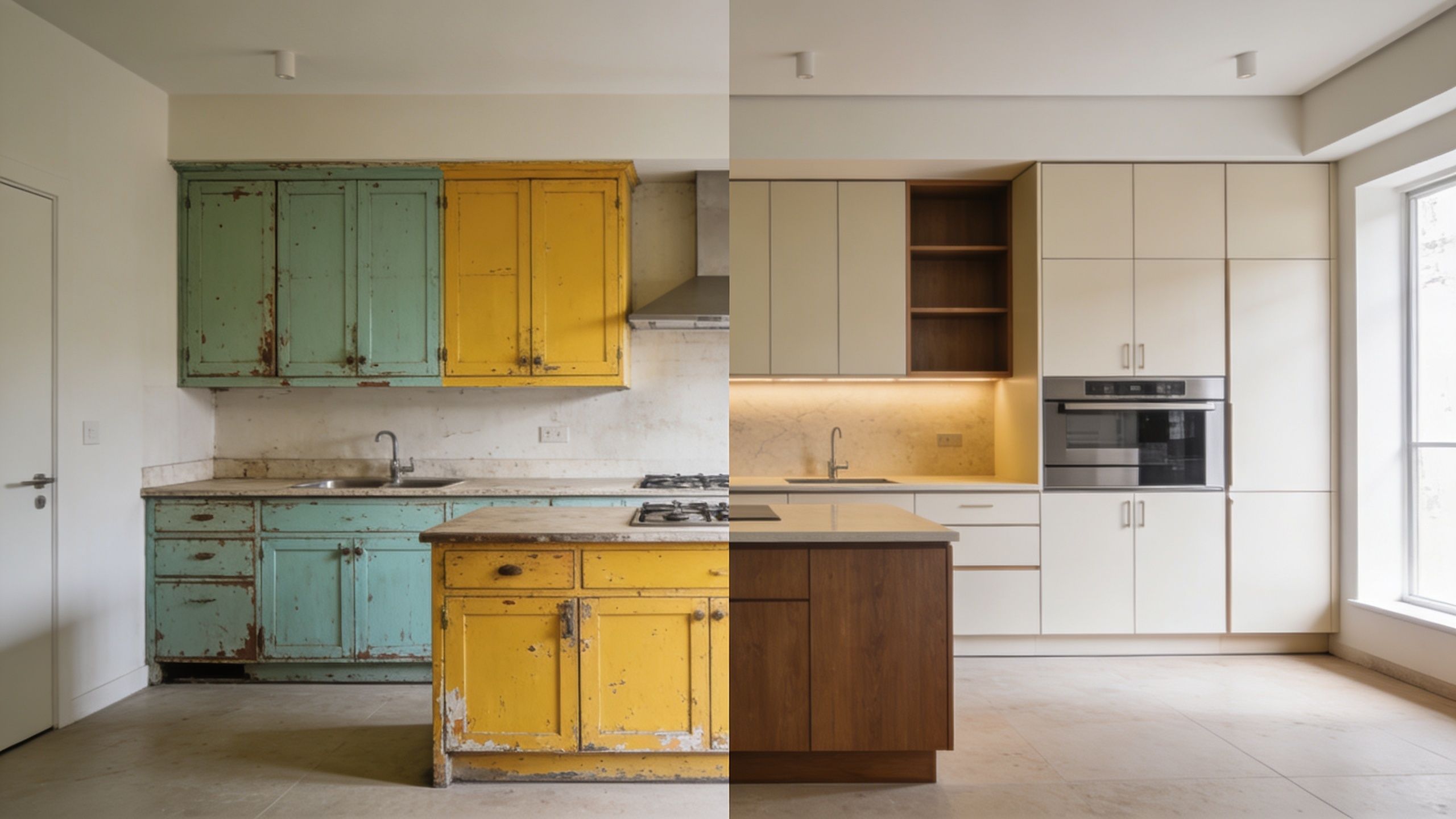
Kitchen work remains a top priority for homeowners. In 2024 and 2025, kitchen remodels dominated the U.S. home renovation market, and 24% of renovating homeowners upgraded their kitchens, with a median spend of $22,000 and major remodels for kitchens under 200 square feet rising 9% year over year to $35,000, according to the 2025 Houzz and Home Study summary.
Cosmetic updates
This is the lightest version of a kitchen and bath remodel. The layout stays the same. Plumbing stays where it is. Electrical usually stays put too.
Typical cosmetic work includes:
- Cabinet painting or refinishing to brighten an older kitchen without replacing the boxes
- New hardware such as pulls, knobs, towel bars, and faucets
- Fresh wall paint for better light reflection and moisture resistance
- Mirror and light fixture swaps in a bathroom that feels dated
- New backsplash or surface updates that change the look more than the structure
This level works well when the room functions fine, but looks tired. It’s often the right call for homeowners who want improvement without opening walls.
Pull-and-replace remodels
Often, in first-time remodels, you’re replacing the major parts of the room, but you’re not changing the footprint.
A pull-and-replace kitchen might include new cabinets, countertops, sink, flooring, and appliances, all in roughly the same places. In a bathroom, it might mean a new vanity, toilet, shower surround, tile, and lighting without moving the plumbing lines across the room.
This project type often gives the best balance of visual impact and construction control. You still get a major change, but you avoid some of the complexity that comes with structural changes.
Practical rule: If the sink, toilet, tub, and major appliances stay in the same locations, you’re usually looking at a simpler remodel category.
Full-gut custom renovation
This is the most involved form of a kitchen and bath remodel. Walls may move. Windows may change. Plumbing and electrical may be rerouted. Storage is often rethought from scratch.
Examples include:
- Removing a wall between a kitchen and dining room
- Expanding a small primary bath into an adjacent closet
- Reworking a cramped layout to add an island, larger shower, or better circulation
- Correcting old framing, uneven floors, or outdated systems discovered during demolition
In older Seattle and Tacoma homes, this level of work often uncovers hidden conditions that a simple update would never reveal.
If you're still deciding what your bathroom project should include, this guide to bathroom remodel planning can help you organize priorities before you start requesting bids.
Budgeting and Timelines for Your Puget Sound Remodel
Budgets get stressful when homeowners compare unlike projects. A cosmetic bathroom refresh and a full custom primary suite aren’t the same job, even if both get called a remodel. The more useful question is this: what level of work are you pricing?
For bathrooms, national benchmark data gives you a solid starting point. The 2025 Houzz Bathroom Trends Study reports a national median spend of $13,000, while major remodels rose to $22,000, and projects in large bathrooms of 100+ square feet averaged $25,000, according to the Houzz bathroom trends study.
What changes the price in Puget Sound
A remodel in Kent won’t always be priced the same as one in Seattle. Access, parking, delivery logistics, permit complexity, and the age of the house all affect labor and scheduling.
The biggest cost drivers usually include:
- Cabinet type whether you’re repainting existing boxes, using stock options, or ordering custom cabinets
- Surface selections such as quartz counters, tile layouts, specialty waterproofing, and finish details
- Layout changes because moving plumbing and electrical adds labor, inspections, and coordination
- House age and hidden conditions especially in older homes with outdated wiring, old piping, or uneven framing
- Finish level from practical mid-range materials to highly customized design choices
Estimated Kitchen & Bath Remodel Costs in Puget Sound (2026)
| Project Scope | Kitchen Cost Range | Primary Bath Cost Range | Typical Timeline |
|---|---|---|---|
| Cosmetic update | Lower than a full replacement project, often focused on paint, hardware, selected fixtures, and surface refreshes | Lower than a major remodel, often focused on vanity, paint, fixtures, and limited tile work | Shorter timeline with less disruption |
| Pull-and-replace | Often aligns more closely with national median and midrange spending benchmarks, depending on materials and site conditions | Often aligns near the national median to major-remodel benchmark range, depending on scope | Moderate timeline |
| Full-gut custom remodel | Can rise well beyond median benchmarks when layout changes, custom cabinetry, and structural work are involved | Can rise above major-remodel benchmark levels when expanding the room or relocating plumbing | Longest timeline and most coordination |
That table is intentionally qualitative because real local pricing depends on field conditions, finish selections, and permit requirements. National medians are useful for orientation, but they aren’t a substitute for an on-site estimate in Western Washington.
If you want another planning tool before talking with a contractor, Harrlie Plumbing and Heating offers a helpful walkthrough to calculate your bathroom renovation budget. It’s a useful way to separate must-haves from nice-to-haves before selections begin.
Timelines are tied to decisions
Homeowners often think construction is what makes a remodel long. Sometimes it is. But delayed selections can slow a job just as much as demolition or inspections.
A kitchen and bath remodel usually moves faster when you decide these items early:
- Cabinet layout
- Tile size and pattern
- Plumbing fixture style
- Countertop material
- Lighting locations
- Paint and finish schedule
Early decisions protect your schedule. Waiting to choose tile, faucets, or cabinet hardware can stall later trades even when the room is otherwise ready.
For a more detailed breakdown of how project choices affect price, this page on kitchen remodel cost breakdown is a useful next step.
The Remodeling Process A Step-by-Step Guide
Most remodel anxiety comes from not knowing what happens next. Once you see the sequence, the project feels more manageable. The order matters because each trade depends on the one before it.
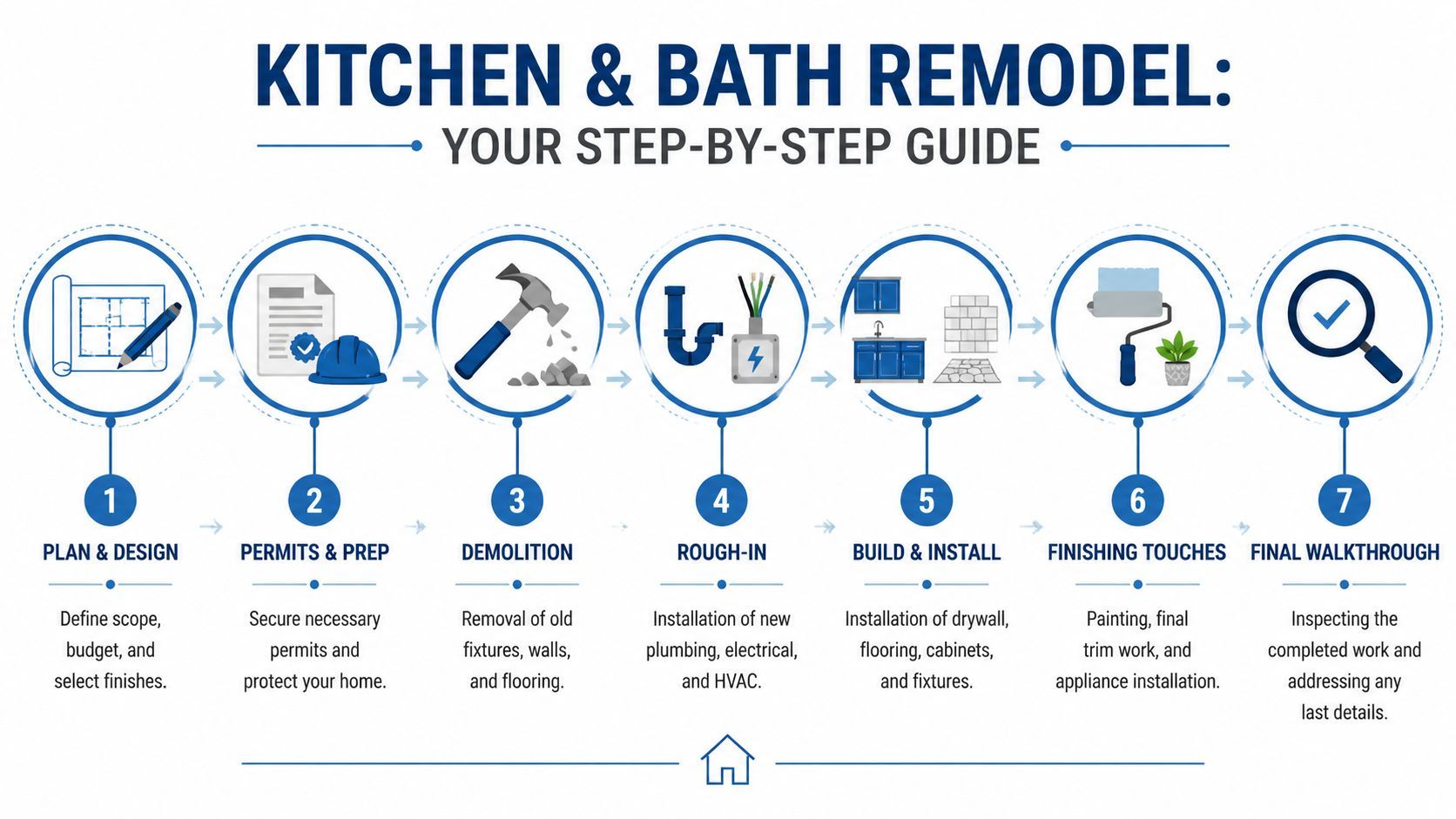
The first conversation and design work
A typical project starts with a site visit. You walk through what isn’t working, what you want changed, and what level of disruption you can tolerate.
Then the practical questions come out:
- Can the layout stay the same?
- Are the cabinets worth saving?
- Does the bathroom need better ventilation?
- Is that wall structural?
- Are the finishes realistic for the budget?
This is also when measurements, photos, and product ideas start turning into a real plan. In a compact Seattle bungalow, that might mean using every inch carefully. In a larger suburban home near Tacoma, it might mean fixing circulation and storage rather than adding square footage.
For homeowners collecting inspiration, this guide for luxury kitchen remodels is useful because it helps translate broad style ideas into actual planning choices.
Permits, prep, and demolition
Once the scope is settled, permit needs are reviewed and job prep begins. In occupied homes, protection matters. Floors get covered. Dust barriers go up. Work zones are defined so the rest of the house stays livable.
Demolition is the part everyone notices, but it’s also diagnostic. Once old cabinets, flooring, or wall coverings come out, the house tells the truth. A wall may be out of square. The subfloor may slope. A bathroom may show signs of long-term moisture.
That’s not automatically bad news. It’s information you need before rebuilding.
Old homes often reveal their real condition only after demolition. Finding issues early is frustrating, but it’s still far better than covering them up and discovering them after the finishes are in.
Rough-in and inspection
This is one of the most important stages in the entire project. The rough-in phase is where new plumbing and electrical go into the framing before insulation and drywall cover everything.
The stakes are real here. The rough-in phase is a critical step, and failure to pass the mandatory post-rough-in inspection can delay a project by 1 to 2 weeks, while fixing mistakes after drywall can raise retrofit costs by 25% to 40%, based on the remodel process guidance from Bath Plus Kitchen.
Why homeowners get confused here is understandable. At this stage, the room can look unfinished and even messy, but it’s one of the most technical moments in the whole remodel. This is when outlet locations, sink lines, shower valves, lighting boxes, and vent paths must be correct.
Build-back and finish work
After rough-in passes inspection, the room starts looking like a room again.
That sequence usually includes:
- Drywall and wall prep so surfaces are flat, sealed, and ready for finish materials
- Flooring and tile work depending on the room and product order
- Cabinet and vanity installation with careful leveling and fastening
- Countertop templating and install after cabinets are set
- Fixture setting including sinks, faucets, toilets, appliances, and lighting
- Painting and trim for the final visual polish
Painting often happens later than homeowners expect. That’s because walls and trim can get bumped during cabinet, countertop, and fixture installation.
Final walkthrough and punch list
The last step isn’t just “done.” It’s review. Doors get checked. Drawers get adjusted. Caulk lines, paint touch-ups, hardware alignment, and fixture operation all get looked over carefully.
A good walkthrough gives homeowners time to ask small questions before they become long-term frustrations. Which shutoff controls what? How long should grout cure? Which surfaces need special cleaners? Those details matter.
Navigating Permits and Codes in Western Washington
Permits make many homeowners nervous because the rules can feel opaque. In reality, most permit questions come down to one issue. Are you replacing finish materials, or are you changing the building itself?
Work that often triggers permits
In Puget Sound cities such as Seattle, Kent, and Tacoma, permit requirements often come into play when a remodel changes systems behind the walls or alters the structure.
That usually includes:
- Moving or adding plumbing lines
- Changing electrical circuits, outlets, or panel-fed loads
- Removing or modifying walls
- Installing work that affects ventilation or other mechanical systems
- Making structural changes tied to framing or openings
A kitchen and bath remodel that shifts sink locations, adds new lighting circuits, or opens a wall between rooms will usually involve permit review.
Work that may be more straightforward
Some updates are often simpler from a permit standpoint, though local interpretation still matters.
Examples can include:
- Painting walls or cabinets
- Replacing hardware
- Swapping a faucet without relocating plumbing
- Installing similar finish materials in the same footprint
Even then, homeowners shouldn’t guess. Local rules differ, and city requirements can change based on the details of the job.
Permit rules don’t exist to make projects harder. They exist so hidden work inside walls is installed safely and inspected before those walls get closed up.
Why local knowledge matters in Western Washington
Western Washington homes bring their own complications. Older neighborhoods may have aging infrastructure. Some houses have past remodels that weren’t documented clearly. Others need closer attention to moisture management, ventilation, and structural details common in this region.
Seattle’s review path can look different from Kent’s. Tacoma may ask different questions depending on the property and scope. That’s why local planning matters as much as design.
For homeowners, the practical takeaway is simple. Don’t build your remodel strategy around what a neighbor once did in a different city. Build it around your actual address, your actual scope, and current local requirements.
How a contractor helps
A contractor’s role here isn’t just paperwork. It’s coordination. Plans, permit applications, inspections, trade scheduling, and corrections all need to line up in the right order.
That helps prevent the most common permit-related problems:
- Starting work too early
- Missing an inspection
- Closing walls before approval
- Discovering code issues after finish materials are installed
Handled properly, permits become part of the process rather than a roadblock.
Smart Design and Material Choices for the Pacific Northwest
A beautiful room that can’t handle moisture is a short-term upgrade. In Puget Sound, good design needs to survive damp air, seasonal grime, heavy use, and the occasional surprise behind old walls.
That’s why material selection matters as much as color and style.
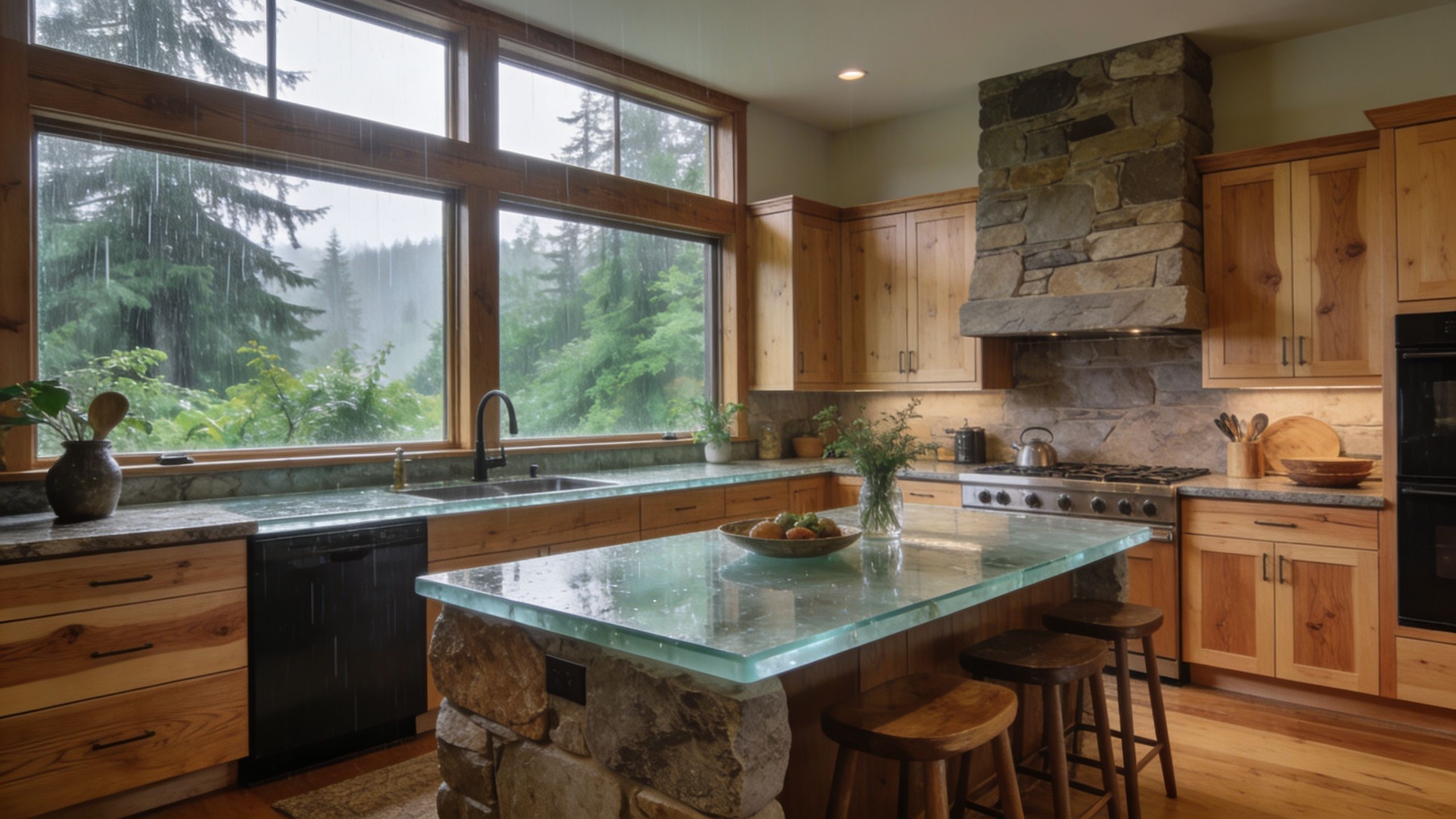
Start with moisture, not finishes
Bathrooms in particular need a moisture-first mindset. That means thinking beyond tile color and vanity style.
Look closely at:
- Waterproofing behind wet areas so shower and tub surrounds are protected where you can’t see
- Ventilation strategy to help surfaces dry after everyday use
- Paint and wall products suited for humid conditions
- Flooring transitions and seal points where water tends to collect or migrate
In the Pacific Northwest, these decisions affect longevity. They also affect maintenance. A room that dries properly is easier to keep clean and less likely to develop avoidable surface problems.
Kitchen layout should reduce friction
Many kitchens don’t fail because they’re ugly. They fail because they’re awkward. Not enough landing space near the sink. Refrigerator doors opening into traffic. Too many steps for simple tasks.
Effective kitchen prep zones need at least 36 inches of uninterrupted counter space, and optimized layouts can reduce injury risk by 30%, while poor layouts can increase prep time by 20% to 25%, according to the designer toolkit summarizing NKBA ergonomic guidance.
That number matters in everyday life. If you cook often, prep space isn’t a luxury. It’s workflow.
Materials that make sense here
A practical kitchen and bath remodel in Western Washington often favors materials that are durable, easy to clean, and stable in damp conditions.
Common smart choices include:
- Quartz countertops for a hard, low-maintenance work surface
- Porcelain or ceramic tile in bathrooms and mud-prone entries
- Well-finished wood cabinetry with attention to seal quality around sinks and dishwashers
- Mold-resistant paint systems in baths, laundry areas, and other high-moisture zones
- Epoxy and specialty coatings in selected utility or high-wear areas where slip resistance and cleanability matter
If you’re comparing styles and formats before selecting bathroom surfaces, browsing a visual collection of tiles for your bathroom renovation can help narrow down what you like before visiting local showrooms.
Storage and cabinetry should fit the room, not fight it
Older homes around Seattle and Tacoma often have odd corners, tighter footprints, and less forgiving wall lines. That’s where smart cabinet planning earns its keep.
Instead of forcing standard storage into a difficult space, look for solutions like shallow-depth cabinets, vertical tray storage, pull-outs, and vanity drawers designed around plumbing. If you’re weighing door styles and cabinet construction options, this overview of types of cabinet is a good place to start.
One practical option homeowners in this area sometimes use is Wheeler Painting & Restoration Services for remodel work that overlaps with custom cabinets, drywall, painting, waterproofing, and specialty finishes. That can simplify coordination when the project needs both construction and finish work under one scope.
Here’s a useful visual if you’re still sorting through layout and finish ideas.
Good material choices aren’t about chasing trends. They’re about picking surfaces and systems that still work well after years of steam, spills, and heavy daily use.
Finding and Hiring the Right Residential Contractor
The contractor you choose affects every part of the remodel. Design clarity, scheduling, communication, permits, finish quality, and how problems get solved all depend on that relationship.
A polished estimate means very little if the communication is vague once work starts.
Questions worth asking before you sign
The best hiring conversations are specific. General promises don’t help much. Ask direct questions and listen for direct answers.
Use a checklist like this:
Licensing and coverage
Ask whether the contractor is properly licensed, bonded, and insured in Washington for the type of work involved.Local project experience
Ask for examples of kitchen and bath remodel work in Kent, Seattle, Tacoma, or nearby communities with homes similar to yours.Daily communication
Ask who your point of contact will be, how updates are handled, and how often you’ll hear from the team.Change management
Ask what happens if demolition uncovers old plumbing, framing issues, or water damage that changes the scope.Trade coordination
Ask who schedules plumbers, electricians, tile installers, painters, and inspections so there’s no confusion later.
Don’t focus only on the bid total
Homeowners naturally compare prices first. That makes sense. But two estimates can look similar on the front page and be very different in the details.
Review whether the estimate clearly addresses:
| Topic | Why it matters |
|---|---|
| Scope detail | Prevents assumptions about what is or isn’t included |
| Material allowances | Reduces surprises when you start selecting actual products |
| Prep and protection | Important if you’re living in the home during construction |
| Finish standards | Helps define expectations for paint, tile, trim, and cleanup |
A careful contractor should also be comfortable discussing long-term performance, not just appearance. That matters in bathrooms and utility areas where slippery surfaces and moisture can become real maintenance issues. One commonly overlooked topic is specialty floor protection. Data tied to high-moisture bath conditions shows epoxy floors can reduce slip hazards by 60% and maintenance costs by 30% over 10 years, based on the discussion in this bathroom angles and finish article.
Signs you’re talking to the right fit
A reliable contractor usually does a few simple things well:
- They answer clearly instead of hiding behind vague language.
- They talk through risks early rather than pretending every wall will open perfectly.
- They explain sequencing so you know what happens next.
- They document changes instead of handling major revisions casually.
- They respect the fact that you live there and need predictability, not just craftsmanship.
That kind of steadiness matters even more than a polished sales pitch.
Begin Your Remodel with Wheeler Painting & Restoration
A kitchen and bath remodel feels much more manageable once you define the scope, understand the likely budget range, and know how the work unfolds from demolition to final walkthrough. Most of the stress comes from uncertainty. Clear planning removes a lot of that pressure.
For homeowners in Kent, Seattle, Tacoma, and nearby communities, the right path usually starts with a conversation about the house you have, not a generic online template. Older homes, damp weather, local permits, and layout limitations all shape the best solution.
If you’re ready to move from ideas to a practical plan, contact Wheeler Painting & Restoration Services for a no-obligation on-site consultation. A site visit can help you sort out what’s cosmetic, what’s structural, what needs permits, and what choices will give you a kitchen or bathroom that works better every day.
Frequently Asked Questions About Home Remodeling
Should I remodel the kitchen and bathroom at the same time
Sometimes yes, sometimes no. Doing both at once can reduce repeated disruption and create one coordinated design plan. But if you only have one full bathroom or if your kitchen is your home’s main gathering point, phasing the work may be easier on daily life.
How do I know if my remodel is too ambitious for my house
A project usually becomes too ambitious when the goals, budget, and house condition don’t align. If you want custom layout changes in an older home, leave room for hidden conditions and permitting. If your priority is function, a pull-and-replace remodel may deliver more value than a full reconfiguration.
Is it okay to buy my own fixtures and finishes
It can be, but only if the ordering is organized. Homeowners often run into delays when a faucet arrives without the right valve, tile comes in short, or cabinet hardware shows up late. Before buying anything, confirm lead times, quantities, compatibility, and return rules.
What should I decide before asking for estimates
Have a rough answer for these four items:
- Project scope such as cosmetic, pull-and-replace, or full-gut
- Priority list including what matters most if tradeoffs are needed
- Style direction so bids reflect realistic finish expectations
- Timing needs especially if you have travel, school, or family schedule constraints
Will I be able to live at home during the remodel
Often yes for smaller jobs. Sometimes no for larger ones. A hall bath refresh is very different from a full kitchen tear-out or a primary suite expansion. The deciding factors are access to water, cooking, dust control, noise, and how much of the house becomes an active work zone.
If you’re planning a kitchen, bathroom, or larger home improvement project in Kent, Seattle, Tacoma, or the communities in between, Wheeler Painting & Restoration Services can help you turn early ideas into a clear scope, realistic proposal, and organized build plan. Reach out to schedule an on-site consultation and take the next step with confidence.

 “Like” us on Facebook!