
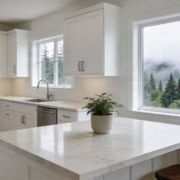
White Shaker Kitchens: Your Seattle & Tacoma Guide
If you're standing in a Seattle, Kent, or Tacoma kitchen wondering whether to follow the latest trend or choose something that will still look right ten years from now, that's a common place to be. Kitchen remodels carry a lot of pressure. You want the room to feel brighter, work harder, clean easier, and still make sense when it’s time to sell or lease the property.
That’s why so many homeowners and property managers keep coming back to white shaker kitchens. They aren’t flashy. They aren’t tied to one short-lived design cycle. They solve practical problems well, and in the Puget Sound climate, practical matters.
Why White Shaker Kitchens Are a Timeless Puget Sound Investment
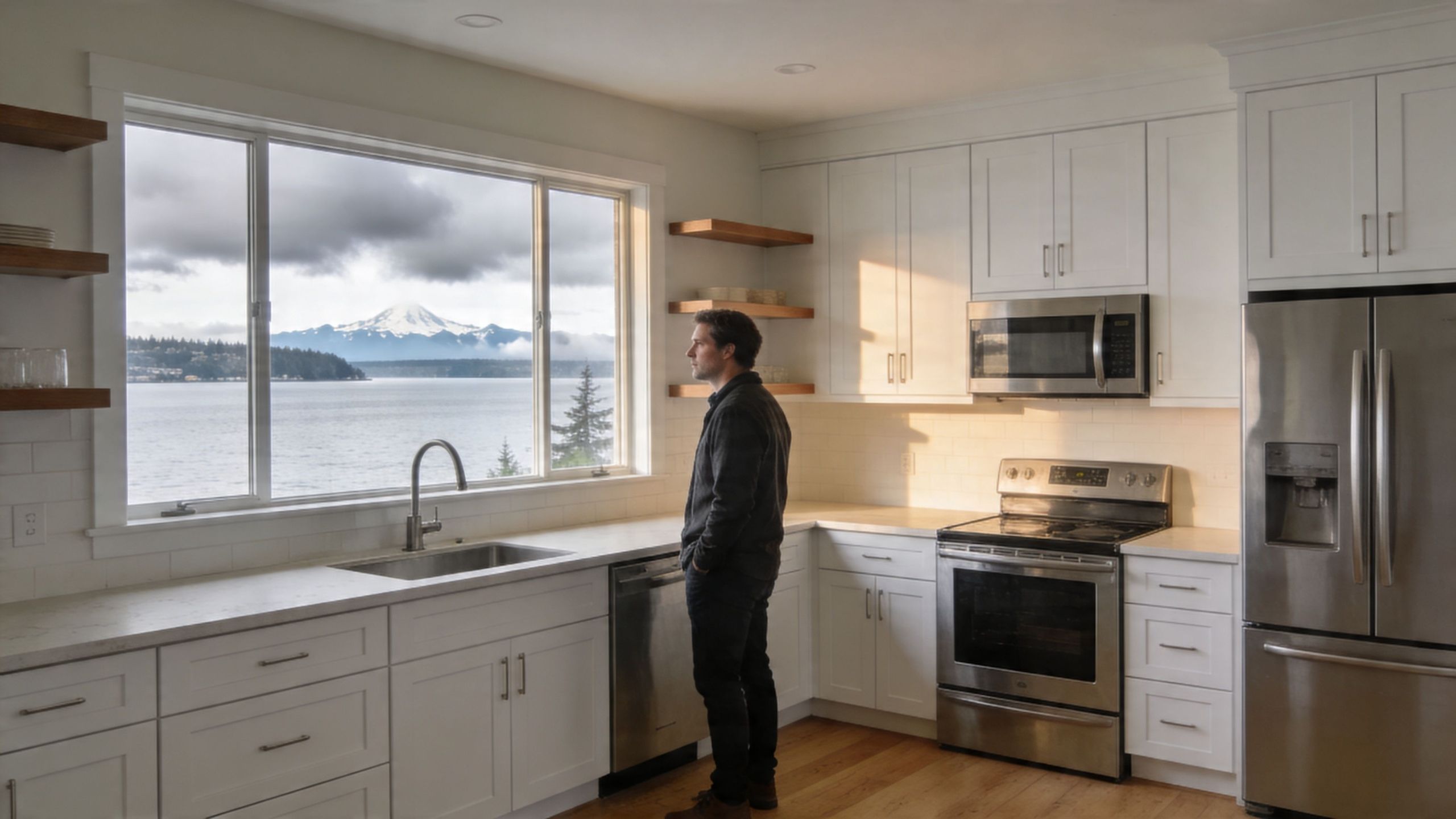
A kitchen has to do more than photograph well. In Western Washington, it has to hold up through gray winters, damp air, busy households, and the kind of daily wear that exposes weak materials fast.
White shaker kitchens make sense because they cover both value and function. They look clean without feeling cold, and they fit older homes in Tacoma just as naturally as newer builds in Seattle or Kent. That flexibility matters when you're remodeling for long-term use, resale, or a tenant improvement that needs broad appeal.
Why buyers and owners keep choosing them
The market data is unusually clear here. According to this white shaker cabinet market summary, homes with white Shaker kitchens sold for about 4.5% more than expected in Zillow’s 2022 data. The same source notes a 2023 Houzz survey found 61% of homeowners upgrading cabinets chose the Shaker style, and white was the most popular color at 43%.
Those numbers line up with what contractors see on the ground. This style reaches a wide audience because it doesn’t box the kitchen into one narrow look.
A white shaker kitchen can lean:
- Traditional with warm wood floors and polished hardware
- Coastal with soft blue accents and brushed nickel
- Modern with slab backsplash panels and simple pulls
- Transitional with quartz counters and understated lighting
Practical rule: If a finish works with several design directions instead of only one, it usually ages better.
Why it works so well in Puget Sound homes
Natural light in this region changes all year. Many kitchens deal with cloud cover, tree shade, or narrow lot placement. White cabinet faces help bounce available light around the room, so the space feels more open without changing the footprint.
That matters in:
| Property type | Why white shaker works |
|---|---|
| Older homes | Brightens compact layouts and pairs well with original trim details |
| Rental upgrades | Appeals to a wide range of future occupants |
| Family homes | Keeps the kitchen feeling clean and easy to update over time |
| Small commercial breakrooms | Creates a professional, neutral backdrop |
A lot of remodel decisions get harder the more options you compare. This one usually gets easier. White shaker kitchens are a durable design baseline. If the cabinets are built correctly and finished for local conditions, they rarely become the part of the remodel people regret.
The Anatomy of a Classic Shaker Cabinet
White shaker kitchens have lasted because the design starts with restraint. The style traces back to the Shaker religious communities established around 1774, where simplicity, utility, and durable craftsmanship shaped the furniture they built. Those principles still define the look today.
You can see that history in the door itself. Nothing is fussy. Nothing exists just for decoration.
What makes a cabinet door a shaker door
A classic shaker cabinet door has a framed face with a flat recessed center panel. That clean outline is the signature.
The basic construction uses 5-piece cope-and-stick joinery:
- Two vertical stiles form the sides
- Two horizontal rails form the top and bottom
- One recessed flat panel sits in the middle
That five-part build is one reason the style looks balanced. The frame gives the door visual structure, and the flat center keeps it from feeling busy.
Why that simple look matters
Shaker design works because it gives the eye a break. In a kitchen with counters, tile, appliances, fixtures, and lighting all competing for attention, the cabinet face shouldn’t add noise.
That’s also why white is such a strong match. The profile creates enough shadow line to give the door character, while the painted finish keeps the room bright.
The best cabinet styles usually don’t need constant explaining. People understand them right away.
What to inspect before you buy or refinish
Not every shaker cabinet is built to the same standard. Two doors can look similar online and perform very differently after a few wet winters and a few years of use.
Look at these details first:
Door construction
Ask whether the door is a five-piece frame-and-panel build or a cheaper imitation.Substrate choice
Wood species, center panel material, and box construction all affect movement, durability, and refinish potential.Edge quality
Crisp, even profiles usually signal better machining and a cleaner paint result.Finish system
A proper cabinet coating behaves differently than standard wall paint. It cures harder and stands up better to cleaning.
If you're comparing cabinet wood options, this guide on types of kitchen cabinet woods is a useful place to start. Material choice affects everything that follows, from paint adhesion to moisture response.
The difference between style and structure
Many homeowners focus on the face profile first. That’s natural. But in practice, structure decides whether the kitchen stays attractive.
A good shaker cabinet should feel steady when the door opens. It should close square. The corners should stay tight. The paint film should sit smoothly on the profile without pooling in inside edges.
When those details are right, the style feels effortless. When they’re wrong, white cabinets expose every flaw.
Designing Your Dream Kitchen with Shaker Cabinets
A white shaker kitchen gives you a strong starting point, not a finished answer. The final result depends on the choices around it. Countertops, hardware, backsplash, lighting, and the cabinet finish itself all push the room in a different direction.
Start with cabinet construction, not color swatches
Before choosing pulls or tile, make sure the cabinet door is worth finishing. White shaker cabinet doors are typically built with 5-piece cope-and-stick joinery, using two vertical stiles, two horizontal rails, and a recessed flat panel. That frame resists warping and racking, which matters in a working kitchen with regular moisture and temperature shifts, as shown in these white shaker cabinet specifications.
A white finish won’t hide poor construction. It highlights it.
What holds up better
| Cabinet option | What it looks like | What to watch for |
|---|---|---|
| Painted wood shaker | Crisp, classic, refinishable | Shows brush marks or prep flaws if rushed |
| Thermofoil shaker | Smooth and uniform | Heat and edge failure can become the weak point if product quality is low |
| Low-cost imitation shaker | Similar from a distance | Details often soften, joints age poorly, finish may not last |
Choose the right shade of white
Not every white cabinet should be bright white. In Puget Sound homes, light is often cooler and softer. Stark whites can feel flat in some rooms and too harsh in others.
A better approach is to test the cabinet color against:
- Your flooring tone
- Countertop undertone
- Natural light at different times of day
- Wall color and trim color
- Appliance finish
Warmer whites and soft off-whites often sit more comfortably in Northwest homes than a pure, clinical white. If the house has warm wood floors or mixed metal finishes, the wrong white can make the whole kitchen feel slightly off.
A white that looks perfect on a sample card can turn gray, yellow, or blue once it meets your actual light.
Countertops change the personality fast
The cabinet style may be fixed, but the counters decide the tone.
Quartz
Quartz is the low-drama option for many households. It gives a consistent look, cleans easily, and works well with white shaker kitchens because it can either blend quietly or add contrast through veining.
Good fit for busy family kitchens and rental-ready upgrades.
Granite
Granite brings more movement and a more natural pattern. Some slabs look great with shaker cabinets. Others overwhelm the simple door style.
If the stone is busy, keep the backsplash restrained.
Butcher block
Butcher block can soften a white kitchen and make it feel warmer. It pairs especially well with farmhouse and coastal versions of the shaker look.
It also asks more of the owner. Wood counters need ongoing care and don't suit every use pattern.
Hardware is small, but it sets the tone
Cabinet hardware changes the room more than is often realized.
- Black pulls give sharper contrast and a more modern edge.
- Brushed nickel stays easy to live with and fits most homes.
- Warm brass adds depth, especially with warmer whites.
- Small knobs can feel more traditional.
- Long bar pulls push the kitchen toward a cleaner, updated look.
Keep the choice consistent with the house, not just the mood board. A hardware finish that works in a downtown Seattle condo might feel out of place in a craftsman near Tacoma.
Backsplash and lighting finish the room
Subway tile remains a dependable match because it echoes the shaker cabinet’s straightforward geometry. If you want less grout and a quieter backdrop, a slab backsplash can make the kitchen feel more current.
Lighting deserves the same attention as tile. White cabinets reflect light well, but they also reveal shadows, glare, and uneven color temperature. If you’re planning the room from scratch, this explanation of layered lighting in a kitchen remodel is worth reading. It helps homeowners think through ambient, task, and accent lighting before fixtures are locked in.
A few design combinations that work
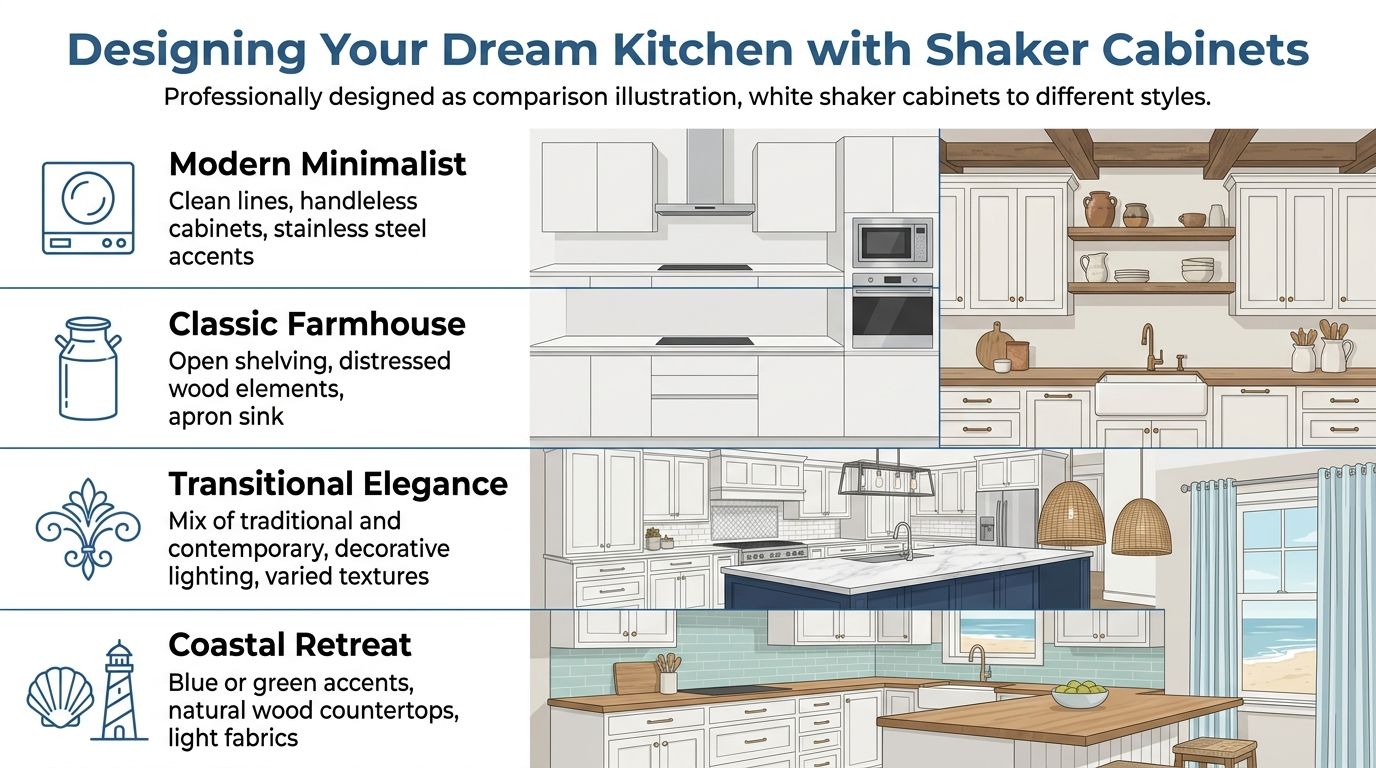
For a modern look
Use a softer white shaker door, simple pulls, pale quartz, and minimal backsplash pattern.
For a farmhouse kitchen
Pair white cabinets with wood accents, an apron-front sink, and lighting with a bit of texture.
For transitional homes
Blend shaker cabinets with quartz counters, mixed finishes, and cleaner pendant lighting.
The point isn’t to force one style. It’s to build around a cabinet form that can handle change without looking dated.
Protecting Your Investment in the Puget Sound Climate
Most design articles treat white shaker kitchens like they live in a controlled showroom. They don’t. Kitchens in Seattle, Kent, and Tacoma deal with damp air, cooking moisture, window condensation, and long stretches of overcast light that change how finishes age.
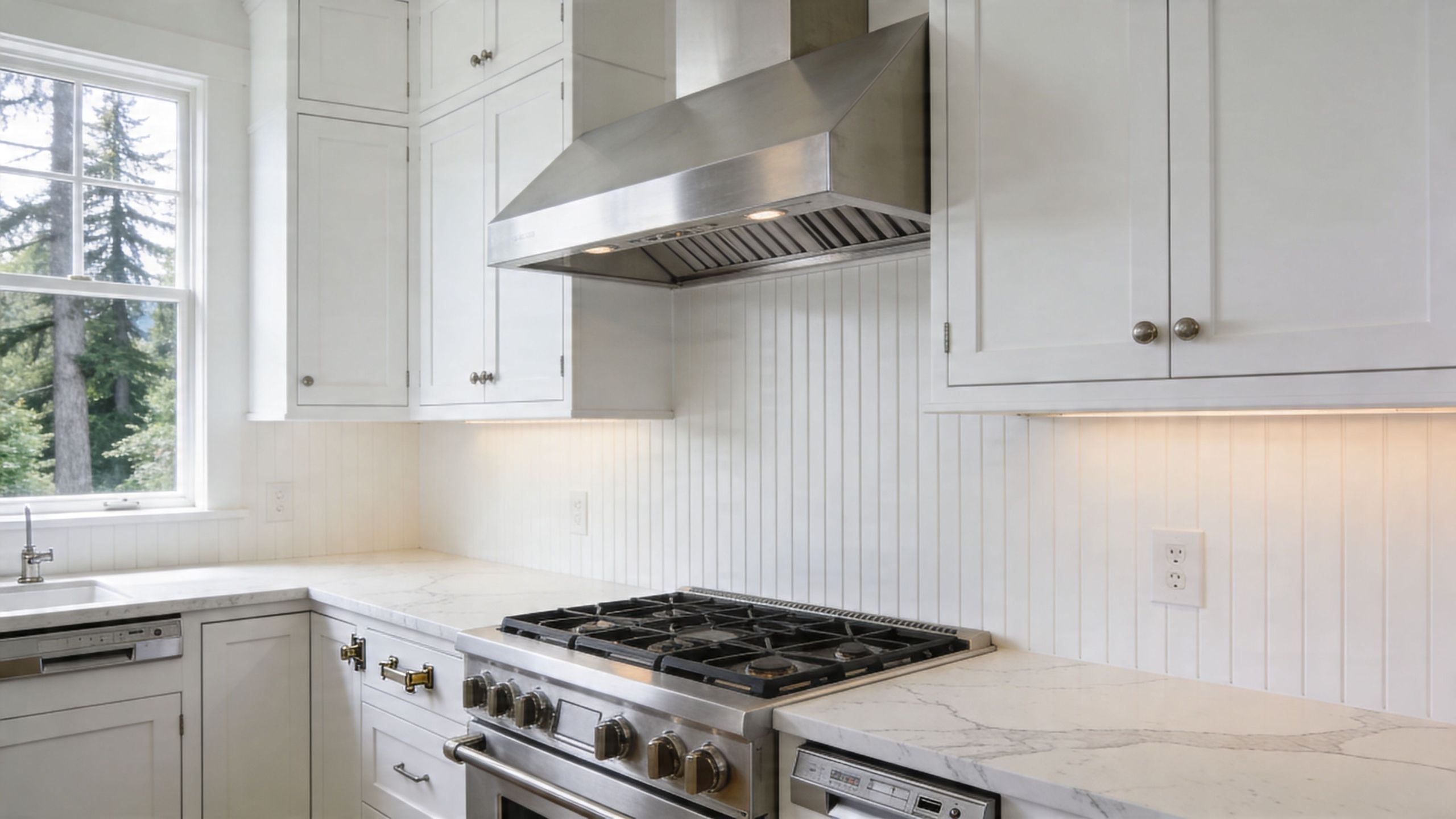
Generic advice misses the local problem. In humid environments like Puget Sound, with average relative humidity of 70% to 80%, standard painted MDF shaker doors can see a failure rate of up to 25% within 5 years, which is why region-specific options such as maple with marine-grade epoxy topcoats and specialty coatings matter, according to this discussion of white shaker cabinet durability in humid climates.
What usually goes wrong first
White finishes make moisture problems easier to spot. That’s a downside and an advantage.
Common trouble areas include:
- Sink base doors that absorb repeated splashes
- Cabinets near dishwashers where steam escapes during unloading
- Upper cabinets by ranges that catch grease and humidity
- Panels near windows where condensation and light combine
- Lower toe-kick areas that take mopping moisture and minor impacts
The failure often starts small. A seam swells. A corner edge softens. Paint loses its tight bond around a profile edge. Once that begins, standard touch-up paint doesn’t solve the underlying issue.
What works better in this region
If the goal is long service life, material selection has to come before color.
Better substrate choices
Maple and other stable wood options usually give a stronger long-term base than low-grade MDF in moisture-prone kitchens. They cost more up front, but they reduce the chance of swollen edges and failed corners.
Stronger finish systems
Marine-grade epoxy topcoats and professional cabinet coatings make sense where kitchens see real humidity swings. A cabinet finish needs hardness, adhesion, and moisture resistance. Wall paint doesn't belong on cabinet doors.
One option homeowners compare during repaint projects is cabinet door painting services, especially when the existing boxes are sound and the layout already works.
Better ventilation
A good finish still loses if the room stays wet. Range hoods, bath fans in nearby spaces, and consistent airflow matter more than people think. For homeowners dealing with persistent dampness, this guide on how to avoid mold in your home is a practical companion to any kitchen planning conversation.
Moisture management starts long before you see mold. It starts with material choice, sealing details, and ventilation habits.
Maintenance that actually helps
White shaker kitchens don't need fussy care, but they do need the right care.
Use a soft cloth and a cleaner appropriate for painted cabinetry. Wipe standing water near sinks and dishwashers instead of letting it sit on lower edges. Check caulk lines and sink splashes before they become panel damage.
Avoid these shortcuts:
| Bad idea | Why it causes problems |
|---|---|
| Harsh degreasers used constantly | They can wear down the finish |
| Soaking cabinet faces while cleaning | Water finds seams and edges |
| Delaying small paint failures | Minor breaches let moisture reach the substrate |
| Choosing cabinets by appearance alone | The finish system may be wrong for local conditions |
A white shaker kitchen is still one of the safest cabinet choices for this market. It just performs best when the build and finish match the climate.
Budgeting for Your White Shaker Kitchen Remodel
Kitchen budgets get easier to control when you separate the visible choices from the structural ones. Most overruns happen when owners price a kitchen by cabinet style alone and miss the labor, preparation, finishing, and correction work underneath it.
White shaker kitchens can be built at several budget levels. The trick is knowing which upgrades actually affect performance.
Where the money usually goes
Cabinets are the first major cost driver, but not the only one. Layout changes, electrical updates, plumbing moves, countertop fabrication, tile, flooring transitions, and finish carpentry all shape the final number.
A simple refresh usually costs less because the footprint stays in place. A full remodel costs more because every trade touches the room.
Cabinet tiers in plain terms
Stock cabinets
Faster to source and often good for straightforward layouts. Fewer size options can mean more fillers and less customized storage.Semi-custom cabinets
A practical middle ground for many homes. Better flexibility on sizing, finish options, and details.Custom cabinets
Best suited for unusual layouts, high-end design goals, or projects where every inch matters.
Painting vs replacing
If the cabinet boxes are solid and the door profile works, repainting or replacing doors can be smarter than tearing everything out. If the boxes are failing, moisture-damaged, or badly laid out, refinishing won’t fix the underlying problem.
That’s why budgeting should start with an on-site evaluation, not a rough guess from photos.
The cheapest cabinet decision is often the one that avoids paying twice.
Questions that tighten the budget early
Ask these before requesting pricing:
- Are you keeping the current layout?
- Are the cabinet boxes worth saving?
- Do you need new countertops because of sink or appliance changes?
- Will lighting, outlets, or ventilation be upgraded?
- Are you trying to match the rest of the home, or create a different style?
The answers narrow the scope fast.
Why detailed proposals matter
A useful remodeling proposal should separate materials, labor, prep, finish work, and any likely repair items. Lump-sum numbers are hard to compare because they hide assumptions.
If you want a clearer picture of how remodeling costs are usually organized, this kitchen remodel cost breakdown is a helpful reference. It gives homeowners a better way to read estimates and understand what drives pricing up or down.
A good budget isn’t about chasing the lowest number. It’s about matching the cabinet system, finish quality, and scope of work to how the kitchen will be used.
Local Transformations by Wheeler Painting
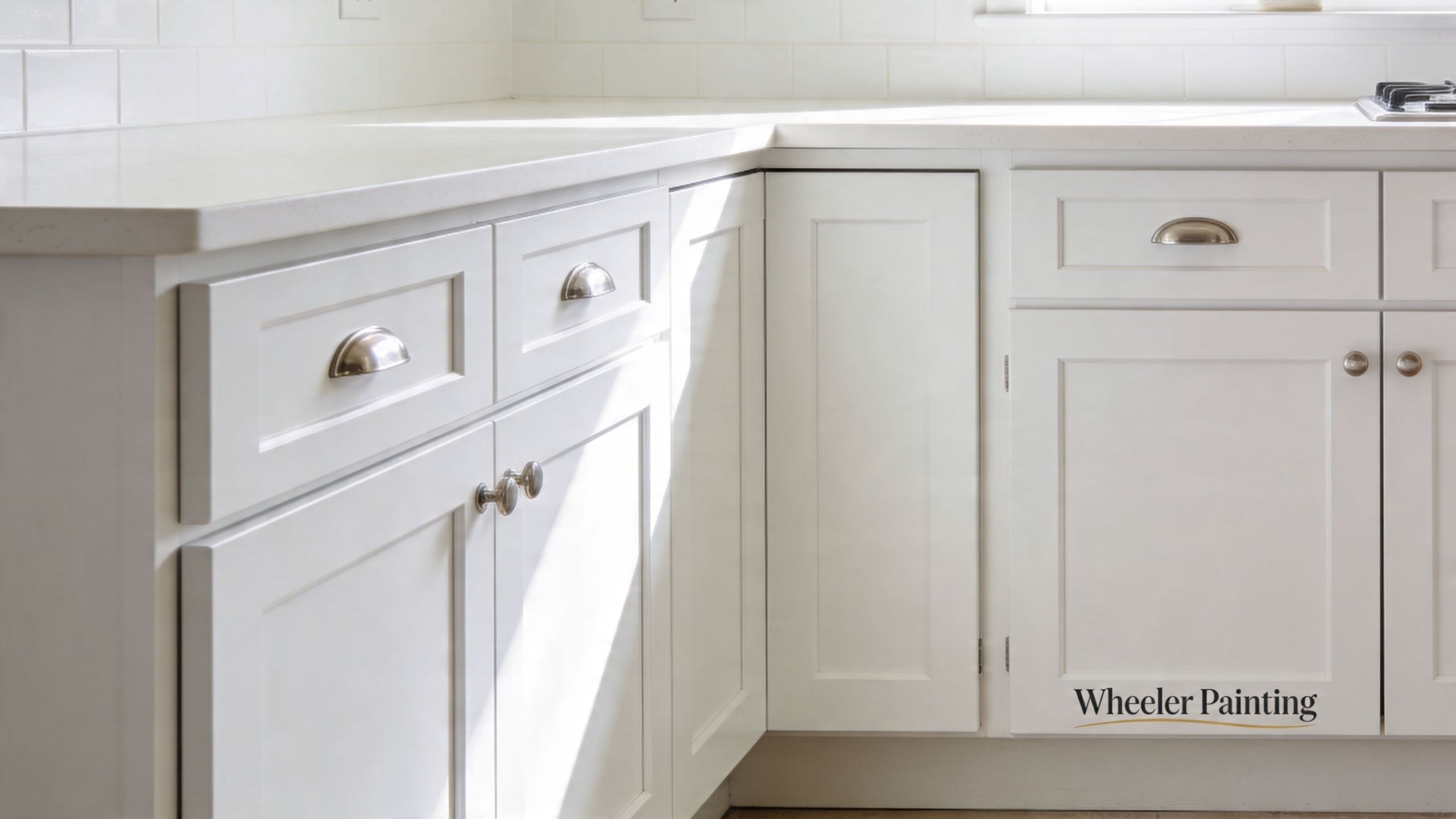
The strongest case for white shaker kitchens usually isn’t a trend report. It’s what happens when an outdated room finally starts working again.
In homes and small commercial spaces between Seattle and Tacoma, the same pattern shows up. The old kitchen or breakroom feels dark, cluttered, and harder to maintain than it should. White shaker cabinetry fixes the visual noise first, then supports better function when the layout and finish details are handled properly.
Kent home with a dated, heavy kitchen
One common remodel starts with dark doors, busy granite, and not enough reflected light. The cabinets may still be usable, but the room feels smaller than it is.
In that kind of Kent project, a white shaker approach works because it strips away the heaviness. Cleaner door profiles, quieter finishes, and updated hardware make the kitchen feel more open without forcing a dramatic architectural change.
The key is discipline. If every surrounding finish competes for attention, the cabinets lose their advantage.
Seattle tenant improvement with a breakroom upgrade
In a Seattle office or small commercial suite, the breakroom often needs to look professional without appearing sterile. White shaker cabinetry lands in that middle ground.
It feels finished. It also gives property managers a cabinet style that future tenants usually accept without asking for immediate changes.
A good commercial application keeps the lines simple, uses durable surfaces, and avoids trendy details that date the space too quickly.
Tacoma kitchen where durability mattered more than novelty
Some Tacoma remodels are less about style experimentation and more about replacing failing materials with something that will last. That’s where white shaker kitchens earn their keep.
When the homeowner wants:
- a layout that still feels current years from now,
- cabinet doors that can be maintained or refinished,
- and finishes that won’t fight the rest of the house,
shaker construction gives a dependable foundation.
A successful remodel doesn’t just look newer. It feels easier to live with every day.
What these local projects usually have in common
The properties differ, but the decisions that lead to a good result are similar:
| Good project choice | Why it matters |
|---|---|
| Matching cabinet style to the building | The kitchen feels intentional, not imported from another house |
| Choosing durable coatings | The finish stands up better to use and cleaning |
| Resisting trend overload | The room stays relevant longer |
| Planning for maintenance | Small issues are easier to manage before they spread |
That’s why white shaker kitchens keep showing up in both residential remodeling and smaller commercial renovation work. They solve real problems cleanly.
Finding the Right Residential Contractor in Washington
The cabinet style matters. The contractor matters more. A white shaker kitchen can fail because of poor prep, vague scope, weak coordination, or the wrong finish system just as easily as it can fail because of cheap materials.
Hiring well protects the whole investment.
What to verify before signing anything
Start with the basics, then get more specific.
License and insurance
Confirm the contractor is properly credentialed for the work being done in Washington.Itemized proposal
Ask for a written scope that separates demolition, prep, carpentry, painting or finishing, installation, and cleanup.Local references
Talk to clients in Seattle, Kent, Tacoma, or nearby communities where weather and housing conditions are similar to yours.Communication process
Ask who you’ll hear from during the project, how changes are documented, and how scheduling updates are handled.
Questions worth asking in a kitchen consultation
Not every contractor is comfortable answering detailed finish questions. That’s useful information.
Ask things like:
- What cabinet material do you recommend for a damp kitchen?
- How will you protect areas around the sink, range, and dishwasher?
- What surface prep is included before painting or refinishing?
- How do you handle hidden damage if it appears after demolition?
- Who coordinates the different trades?
A solid contractor should be able to answer clearly without hiding behind vague language.
Warning signs to take seriously
Shortcuts usually show up in the estimate before they show up in the work.
Watch for:
- Unclear allowances that leave major selections undefined
- Verbal promises that aren’t included in writing
- One-number bids with no scope detail
- Rushed timelines that don’t match the amount of work
- No discussion of moisture, ventilation, or substrate condition
A kitchen remodel is easier when one accountable team manages the moving parts. That matters for homeowners, and it matters just as much for property managers handling tenant improvements or smaller facility upgrades.
Start Your Kitchen Transformation with Confidence
White shaker kitchens stay relevant because they solve more than style. They brighten Northwest homes, fit a wide range of properties, and give owners a cabinet design that’s easier to maintain and easier to live with over time. In Puget Sound, the difference comes down to construction quality, finish selection, and climate-aware planning.
If you’re weighing a kitchen remodel in Seattle, Tacoma, Kent, or the communities between them, start with a practical conversation and a clear scope. Good results come from good decisions early.
If you're planning a residential remodel, cabinet repaint, or a smaller commercial renovation, Wheeler Painting & Restoration Services can help you review the condition of your existing kitchen, talk through material and finish options, and build a clear proposal for the work.

 “Like” us on Facebook!