
Drywall Water Damage
Drywall Water Damage: Signs, Risks, and When Replacement Is Needed
Drywall water damage can start small. A faint stain on the ceiling, a soft spot near the baseboard, bubbling paint behind a sink, or a musty smell in one room may not seem urgent at first. But once water reaches drywall, the problem can move quickly behind the surface.
Drywall is absorbent, which means it can pull in moisture and hold it longer than many homeowners realize. Even if the surface feels dry, water may still be trapped inside the wall cavity, behind paint, under trim, or along the framing. That is why water-damaged drywall should never be ignored.
For homeowners in Kent, Seattle, Tacoma, Bellevue, and throughout Western Washington, moisture is a familiar concern. Heavy rain, roof leaks, plumbing failures, appliance leaks, damp crawl spaces, and storm-related intrusion can all create conditions where drywall water damage appears. The key is knowing what signs to look for, what risks are involved, and when drywall repair is no longer enough.
What Causes Drywall Water Damage?
Drywall water damage can come from several sources. Some are sudden, such as a burst pipe, overflowing toilet, leaking water heater, or failed washing machine hose. Others happen slowly over time, such as a roof leak, poor exterior sealing, condensation, plumbing seepage, or water entering around windows, siding, or foundation areas.
In many cases, the visible stain is only part of the story. Water often travels before it shows itself. A ceiling stain may come from a roof issue, an upstairs bathroom, or a pipe running above the room. A wet wall near the floor may be connected to a slow plumbing leak, exterior drainage problem, or water trapped behind baseboards.
That is why it is important to identify the source before repairing the drywall. If the source is not corrected first, new drywall, paint, and trim may be damaged again.

Drywall Water Damage
Common Signs of Water-Damaged Drywall
Some drywall water damage is obvious. Other signs are easy to miss until the problem has spread. Homeowners should watch for changes in appearance, texture, smell, and structure.
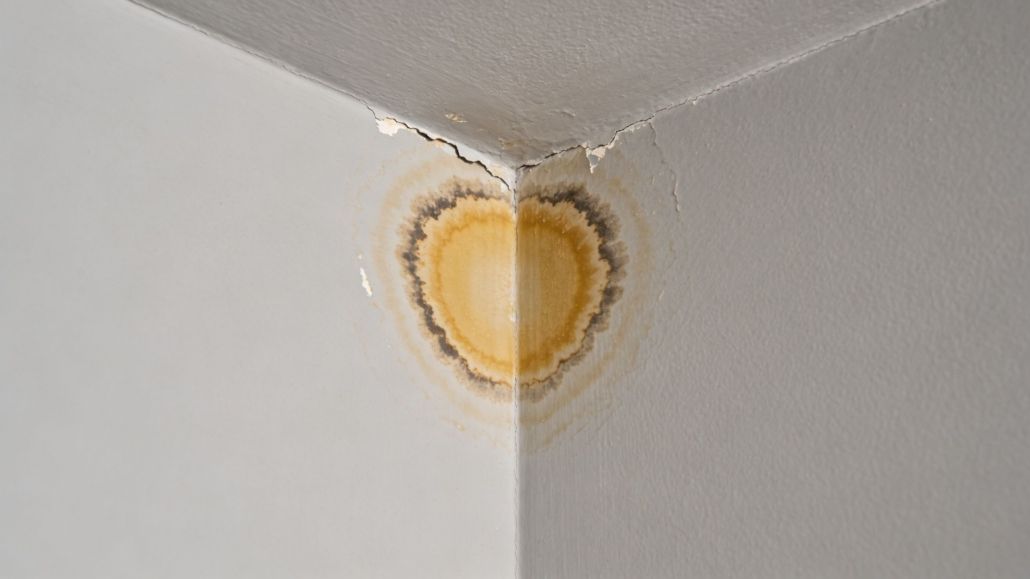
One of the most common signs is staining. Water stains often appear as yellow, brown, gray, or darker patches on walls or ceilings. The edges may look uneven, like a ring or cloud. If the stain grows after rain or plumbing use, that is a strong sign of an active moisture problem.
Paint and texture changes are also common. Water can cause paint to bubble, blister, peel, or separate from the drywall surface. Wall texture may look swollen, cracked, or uneven. In some areas, the wall may feel soft when pressed.
A musty odor is another warning sign. Even if you cannot see a large stain, a damp smell may suggest moisture is trapped behind the wall or ceiling. This is especially important in bathrooms, laundry rooms, kitchens, basements, and rooms with poor airflow.
Baseboards and trim can also reveal hidden problems. If trim is pulling away from the wall, swelling, warping, or showing discoloration near the floor, moisture may be affecting the drywall behind it.
Why Drywall Water Damage Gets Worse Over Time
Drywall is made with a paper facing over a gypsum core. When it absorbs water, the paper can weaken, the gypsum can soften, and the surface can lose its strength. If the drywall stays wet long enough, it may sag, crumble, or separate.
The longer moisture remains inside the wall, the greater the risk of related damage. Water can affect insulation, framing, flooring, cabinets, paint, electrical components, and nearby finishes. What begins as a small wall repair can become a larger restoration project if moisture is not addressed early.
In Western Washington homes, damp weather can make drying more challenging. Opening a window may not be enough, especially during rainy or humid conditions. Professional moisture detection and drying evaluation can help determine whether the wall is truly dry or still holding moisture behind the surface.
When Drywall Can Be Repaired
Not every water-damaged wall needs full replacement. In some cases, drywall can be repaired if the damage is minor, the water source was clean, the affected area dried quickly, and the wall remains firm and stable.
For example, a small surface stain from a brief leak may only need drying, stain-blocking primer, texture touch-up, and repainting once the source is fixed. Minor paint bubbling or texture damage may also be repairable if the drywall itself has not softened.
However, repair should only happen after the area has been properly evaluated. Painting over a stain too soon can hide the problem temporarily while moisture remains inside the wall. That often leads to recurring stains, peeling paint, odors, or deeper damage later.
When Drywall Replacement Is Needed
Drywall replacement is usually needed when the material has lost its strength or has been exposed to too much water for too long. If the wall feels soft, swollen, crumbly, sagging, or warped, patching the surface may not be enough.
Replacement may also be needed if the water came from a contaminated source. Toilet overflows, sewer backups, floodwater, and drain backups can introduce materials that should not remain inside wall systems. In those cases, affected drywall often needs to be removed and replaced as part of a safer restoration process.
Large stains, recurring moisture, visible mold-like growth, strong odors, or damage that extends behind cabinets, trim, or flooring are also signs that replacement may be necessary. If drywall has been wet for an extended period, removing the damaged section may be the only way to properly dry and inspect the area behind it.
Ceiling drywall deserves special caution. Wet ceiling drywall can sag or weaken, and in some cases, sections can fall. If you see bulging, dripping, spreading stains, or sagging overhead, keep people away from the area and call a qualified professional.

Water Damaged Drywall
Why Moisture Detection Matters
One of the biggest mistakes homeowners make is relying only on what they can see. Drywall can look dry on the outside while moisture remains behind it. Water can also travel along studs, base plates, insulation, flooring, and ceiling cavities.
Restoration professionals use moisture meters and infrared thermal cameras to help locate hidden moisture pockets. These tools help map the affected area before repairs begin, reducing the chances of missing wet materials or removing more than necessary.
This is especially helpful after leaks in kitchens, bathrooms, laundry rooms, and multi-level homes. A dishwasher leak, for example, may damage cabinets, drywall, flooring, and the wall behind the appliance. A roof leak may affect ceiling drywall, insulation, framing, and wall surfaces below.
The Role of a Restoration Contractor
A restoration contractor does more than patch the visible wall. The right team looks at the source of the water, the extent of the damage, the condition of surrounding materials, and what needs to happen before the space is rebuilt.
A proper restoration plan may include stopping the water source, removing damaged drywall, drying the wall cavity, repairing framing or insulation if needed, replacing drywall, matching texture, priming, painting, and restoring nearby trim or flooring. If cabinets, waterproofing, or other construction details are involved, those should be coordinated as part of the same plan.
Wheeler Painting & Restoration Services handles both restoration and reconstruction work, including drywall, flooring, cabinets, waterproofing, and painting. That kind of continuity can help homeowners avoid the stress of hiring separate contractors for each phase of the repair.
Do Not Repaint Too Soon
Repainting is often the first thing homeowners want to do because it makes the room look normal again. But paint should be one of the final steps, not the first.
If the wall is still damp, new paint may peel, bubble, discolor, or fail to bond properly. If the stain was caused by an active leak, it will likely return. If damaged drywall was not removed, the finished surface may look uneven or continue to weaken.
A good repair sequence matters. First, identify and stop the water source. Next, evaluate the moisture. Then dry or remove affected materials. After that, repair the drywall, match the texture, prime correctly, and repaint.
This sequence protects both the appearance and the durability of the repair.
Drywall Damage Around Kitchens and Bathrooms
Kitchens and bathrooms are common areas for drywall water damage because they contain plumbing, fixtures, appliances, and frequent humidity. In a kitchen, leaks may come from the sink, dishwasher, refrigerator line, or wall plumbing. In a bathroom, damage may appear near showers, tubs, toilets, vanities, or ceilings below upstairs bathrooms.
These areas often involve more than drywall. Cabinets, flooring, trim, tile, and paint may also be affected. If moisture reaches behind cabinets or under flooring, a simple wall patch may not solve the full problem.
That is why water damage in kitchens and bathrooms should be evaluated carefully. The repair may need to include drywall replacement, cabinet repair, flooring work, waterproofing improvements, and finish painting.

Water Damaged Drywall Issue
Drywall Damage in Commercial Spaces
Drywall water damage is not limited to homes. Commercial buildings, offices, retail spaces, tenant suites, and multifamily properties can also experience leaks and moisture problems. In a commercial setting, fast response and clear communication matter because damage can affect employees, tenants, customers, and business operations.
Commercial water damage may require drywall repairs, painting, flooring work, tenant improvement updates, and restoration coordination. A contractor with both construction and restoration experience can help property managers and business owners move from damage assessment to finished repairs with less disruption.
When to Call for Professional Help
Call a restoration contractor if the water damage affects more than a small surface stain, if the drywall feels soft, if the stain keeps returning, if there is a musty smell, if the water source is unknown, or if the affected area involves ceilings, cabinets, flooring, or multiple rooms.
You should also call for help if the water came from a roof leak, burst pipe, appliance failure, toilet overflow, sewer backup, or storm intrusion. These situations often involve hidden moisture that is difficult to judge without proper tools.
For homeowners and property owners in Kent, Seattle, Tacoma, Bellevue, and the surrounding Puget Sound area, local experience matters. Wheeler Painting & Restoration Services understands the moisture challenges common in Western Washington and provides restoration, construction, drywall, painting, and finish repair services to help return damaged spaces to a clean, finished condition.
Restoring the Wall and Protecting the Space
Drywall water damage is more than a cosmetic issue. A stain, bubble, or soft spot may be the first sign of a larger moisture problem inside the wall. The sooner it is evaluated, the easier it is to limit damage and plan the right repair.
Sometimes, drywall can be dried, patched, primed, and painted. Other times, replacement is the safer and more durable option. The difference depends on the source of the water, how long the material stayed wet, whether the drywall has weakened, and what hidden damage may exist behind the surface.
If you notice signs of drywall water damage, do not cover it and hope it goes away. Find the source, check the extent of the moisture, and bring in an experienced restoration contractor when the damage goes beyond a simple surface repair. With the right approach, your walls can be restored properly and your home or commercial space can feel finished, safe, and comfortable again.
Wheeler Painting
https://maps.app.goo.gl/TkHPUUvsfohwTSm8A
1317 Central Ave S, Kent, WA 98032, United States
(253) 544-5233
https://wheelerpainting.com/


 “Like” us on Facebook!