
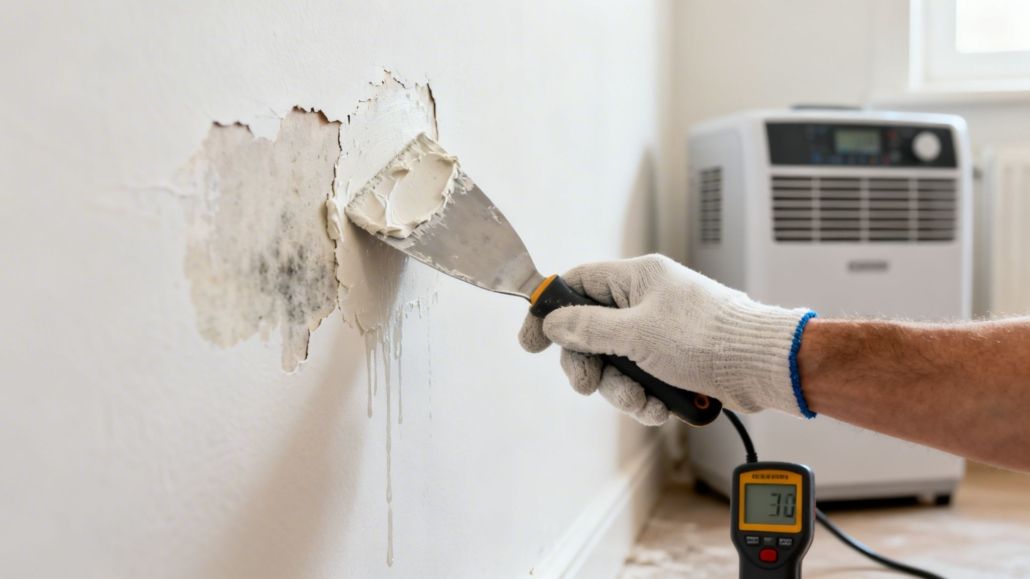
How to Repair Water Damaged Drywall in Your Puget Sound Home
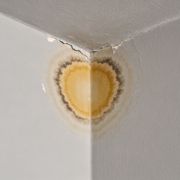
That sinking feeling is universal. Whether you’re a homeowner or a business owner, finding a water stain, a soft spot, or a bulge in your wall is never a welcome discovery. When it comes to repairing water-damaged drywall, the most important thing is to act fast. You need to find and stop the water source immediately, figure out how bad the damage really is, and get things drying as quickly as possible. Taking these first steps within 24 hours can be the difference between a small patch job and a massive, expensive headache.
Your First Steps After Discovering Water Damaged Drywall
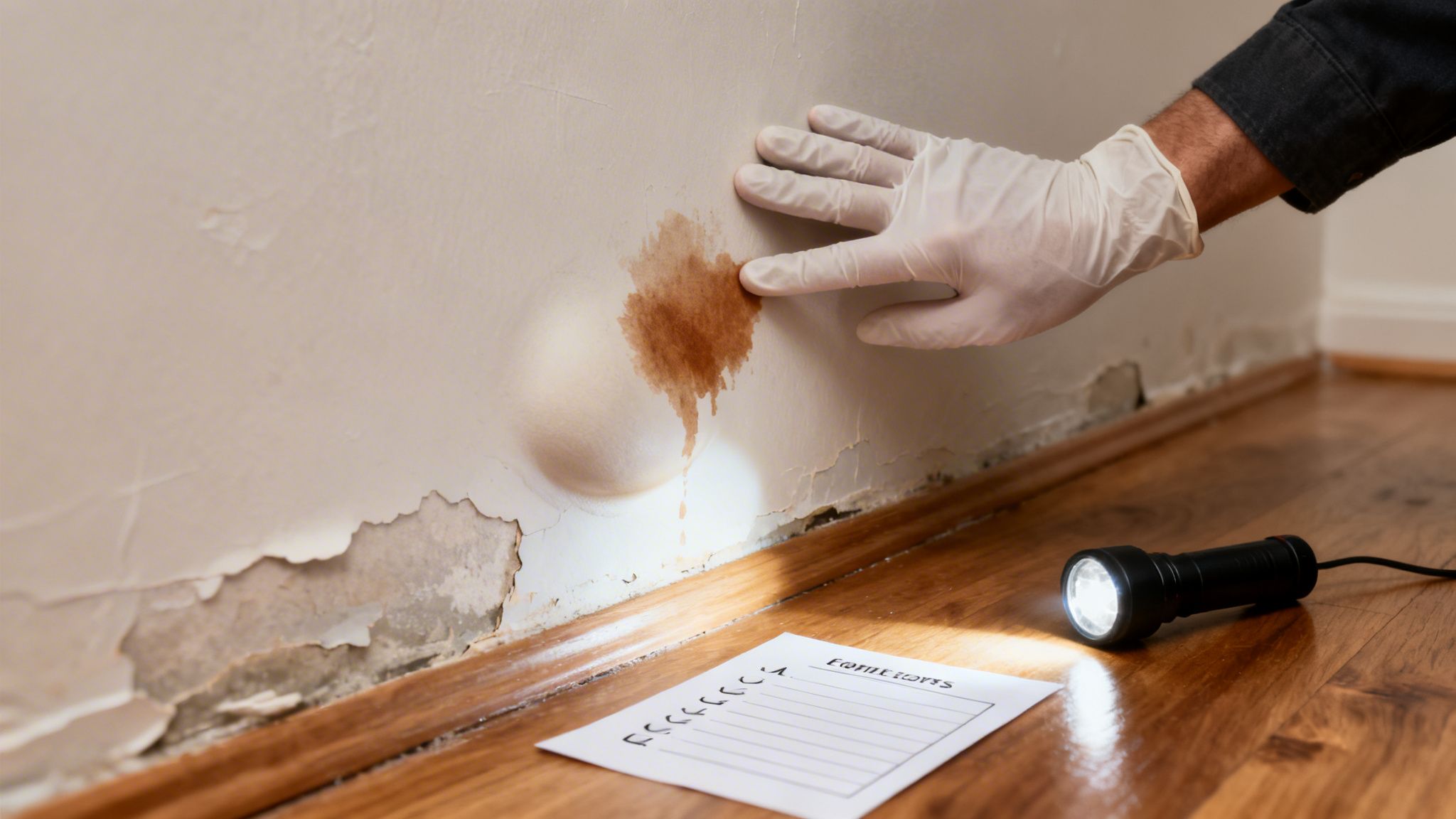
Here in the Puget Sound, we’re no strangers to water. But seeing it inside your home or commercial property is a different story. Your immediate reaction matters more than you think. Before you even touch a putty knife or a paintbrush, you have to become a detective.
Find and Stop the Water Source
Water damage is always a symptom of a bigger issue. Sometimes the cause is glaringly obvious, like a burst pipe spraying water under the sink. Other times, it’s much sneakier—a slow, silent drip from a failed roof flashing that only shows up after weeks of our classic Western Washington drizzle.
Your investigation should start with the most likely culprits, depending on where the damage is located:
- Ceilings or Upper Walls: Look up. Check the roof, attic, and any plumbing on the floor above. We’ve seen everything from missing shingles and bad flashing around vents to leaky pipes in the ceiling cause this kind of damage.
- Walls Near Bathrooms or Kitchens: This is almost always plumbing-related. Inspect every fixture, supply line, and drainpipe. Common culprits are leaky dishwasher hoses, failing toilet wax rings, and loose connections under the sink.
- Lower Walls or Basements: Check for foundation cracks, leaky basement windows, or failed appliances like water heaters and washing machines. Also, take a look outside—poor grading can send rainwater straight toward your foundation.
Once you find the source, shut the water off. Now. This could mean turning off the main water valve to your property or just the specific valve for a sink or toilet. If it's a roof leak, you might need to throw a tarp over the area as a temporary fix until a roofer can get out there.
Whether you're in a residential home or a commercial building, stopping the leak is the one step you cannot skip. Trying to repair drywall before you've fixed the source is a complete waste of time and money—the damage will just come right back.
Assess the Damage Severity
With the leak under control, it's time to gauge how bad things are. This is where you decide if you've got a weekend DIY project on your hands or if it's time to bring in a professional residential or commercial contractor. Use your eyes and your hands to check the area.
This is especially critical because water can wreck drywall—the primary wall material in over 96% of homes—incredibly fast. Restoration pros will tell you that even 1 inch of standing water can cause minor damage, while just 2 inches can compromise your insulation and wiring, creating a perfect environment for severe mold.
Use this quick checklist to help you categorize what you're seeing and feeling.
Water Damage Severity Checklist
Use this table to quickly assess the severity of your drywall water damage based on visual and physical signs.
| Severity Level | Visual Signs | Drywall Feel | Recommended Action |
|---|---|---|---|
| Minor | Small, light-brown stain. Paint is discolored but not bubbling or peeling. | Firm and solid. | Likely a DIY repair after drying. |
| Moderate | Larger, darker stain. Paint is starting to bubble or peel. | Slightly soft or spongy when pressed. | Borderline; consider a professional. Removal may be needed. |
| Severe | Noticeable sagging or bulging. Wall is crumbling or falling apart. Possible musty odor. | Very soft, saturated, and mushy. | Call a professional immediately. Full removal is required. |
After inspecting the area, you should have a much clearer picture of what you're up against. Anything that feels soft, spongy, or is showing any signs of a musty smell is a red flag.
Honestly, for anything beyond a small, firm stain, calling in a pro is the safest bet. They have the right equipment to dry the structure completely and ensure no hidden moisture is left behind. If you're facing moderate to severe damage, our team offers professional water remediation services to handle the problem correctly from start to finish.
Drying the Area and Tackling Mold
Okay, you’ve stopped the leak. That’s a huge first step, but don't relax just yet. Now the clock is ticking on a new problem: the water left behind. Especially here in damp Western Washington, moisture is mold’s best friend. Getting that wall bone dry isn’t just a good idea—it’s absolutely essential to prevent much bigger headaches down the road.
We’ve seen it countless times. The first instinct is to crack a window and point a box fan at the wet spot. It feels productive, but it’s rarely enough. That only skims the surface moisture off. It does almost nothing for the water soaked deep inside the drywall or, worse, trapped in the wall cavity. It’s like trying to dry out a waterlogged sponge by just blowing on it.
Getting Serious About Drying
To really win this fight, you have to create an environment where the wall has no choice but to dry out, and fast. This means aggressive airflow and pulling moisture out of the air itself. This is why professionals don't mess around with box fans; we bring in the heavy equipment.
- High-Volume Air Movers: These are not your average fans. They're designed to blast a focused jet of air across a surface. This dramatically speeds up evaporation.
- Low-Grain Refrigerant (LGR) Dehumidifiers: These are the real workhorses. An industrial dehumidifier pulls a massive amount of water vapor out of the air, creating an intensely dry atmosphere that literally sucks the moisture out of wet drywall, wood studs, and insulation.
The difference is stark. Without professional-grade gear, wet drywall can stay damp for weeks. Industry data shows that leads to mold growth in an estimated 70% of cases. With the right setup, we can get a wall back to safe, dry standards in just 3 to 5 days.
Spotting and Dealing with Mold
Even if you’re quick, mold can start showing up in as little as 48 hours. You have to know what you’re looking for. A little patch of discoloration isn't just an ugly spot; it's a potential health hazard that needs to be handled correctly.
Keep an eye (and nose) out for:
- Visible Growth: Mold can be black, green, or even white. It often starts as little specks and grows in a circular pattern, sometimes looking fuzzy or even slimy.
- That Musty Smell: You'll often smell mold before you see it. If you notice a persistent earthy, damp basement smell, that’s a huge red flag.
If it’s a tiny area of surface mold—we're talking smaller than your hand—you might be able to clean it yourself. But gear up first. Always wear PPE, including an N95 respirator mask, goggles, and gloves. For non-porous surfaces, a simple 1:10 bleach-to-water solution can work, but it won't kill the roots of mold that have penetrated porous drywall.
The single biggest mistake we see property owners make is sealing up a wall too soon. If you paint over drywall that’s still damp on the inside, you're essentially building a terrarium for rot and mold. It guarantees a hidden infestation that will cost way more to fix later.
If you find a large patch of mold or have any reason to believe it's growing inside the wall, stop what you're doing. This is no longer a DIY drywall job. It’s a hazardous material problem that requires a professional approach. Wheeler Painting provides full mold remediation services to properly contain, remove, and treat the affected area, making your home or business safe again. Trying to rip out moldy drywall yourself can send millions of spores airborne, turning a contained problem into a whole-property nightmare.
Taking Out and Replacing Water-Damaged Drywall
If you’ve assessed the damage and the drywall is soft, swollen, or just plain soaked, drying it out isn't an option. It has to go. This is where the real repair work kicks off—carefully cutting out the ruined material to make way for a seamless patch.
In any setting, from a home basement to a commercial space, getting this step right is crucial. A clean, precise removal is the only way to ensure the new wall is solid and the finish looks professional.
Gear Up: The Tools You’ll Need
Before you even think about cutting, grab your tools. Having everything on hand makes the whole process cleaner, safer, and so much faster. Trust us, a little prep work here will save you a massive headache later.
- Stud Finder: Absolutely essential for finding the wood framing in your wall. Your new drywall patch needs something solid to screw into.
- Utility Knife & Drywall Saw: A sharp utility knife is what you'll use to score your cut lines cleanly. For the actual cutting, a drywall saw (also called a jab saw) will be your best friend.
- Measuring Tape & Carpenter's Square: Precision matters. These tools are for making sure your cuts are dead straight and the replacement piece fits perfectly.
- Pry Bar & Hammer: Once the section is cut, you'll need these to gently coax the old, soggy drywall away from the studs.
- Personal Protective Equipment (PPE): Don't even think about skipping this. At the very least, you need safety glasses for dust and an N95 mask. You do not want to breathe in drywall dust, or worse, hidden mold spores.
As you get ready to tear out the old material, keep the principles of mold prevention front and center. It's a critical part of the job.
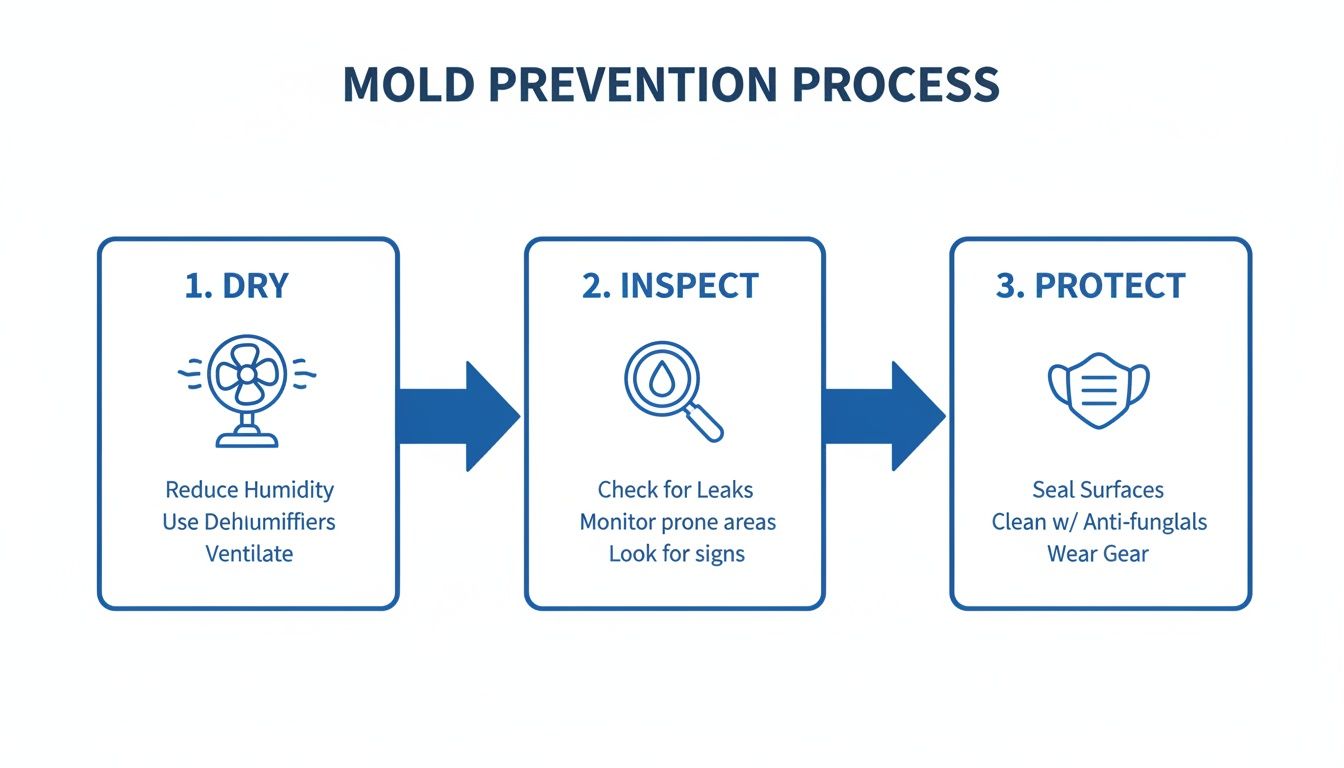
This simple process—Dry, Inspect, and Protect—is a great reminder that your work isn't finished just because the wet drywall is gone. You have to make sure the area is completely moisture-free before you close it back up.
Making the Cut and Pulling the Panel
With your tools laid out and safety gear on, it’s time to get to work. The key here is to be methodical, not destructive. If you just start ripping and tearing, you’ll end up damaging the good drywall around the patch and making more work for yourself.
First, figure out how much to remove. You need to cut out more than just the part that looks wet. Water has a nasty habit of wicking up inside the wall, so you need to go higher. This is where pros use what’s called a “flood cut.” It’s a horizontal cut made a good 12 to 24 inches above the highest point you see water damage.
A flood cut might seem like overkill, but it’s the professional standard for a reason. It’s the single best way to make sure you’ve removed every last bit of compromised drywall, preventing mold from coming back and ensuring your repair lasts.
Once you’ve marked your flood cut line, your next move is to create a clean square or rectangle. Use your stud finder to locate the studs on either side of the damaged zone. The ideal spot for your vertical cuts is right down the middle of a stud, which gives you a solid anchor point for attaching the new drywall. Use your carpenter's square and utility knife to score the lines deeply, then finish the job with your drywall saw.
Prepping for the New Drywall
After you’ve carefully pried out the damaged piece, stop and take a good look inside the wall cavity. Pull out any damp insulation. Now, you have to let the inside of the wall—the studs and the back of the drywall on the other side—dry out completely. This isn't a quick process; it can easily take a few days with fans and a dehumidifier running.
Here in the Puget Sound, we see this all the time. Even a minor leak can create major headaches for both homeowners and businesses. Restoration industry data shows that while water exposure under an inch might just leave a stain, anything over two inches almost always requires full replacement of the affected drywall. It’s the only way to head off structural problems and mold, which can start growing in as little as 24 hours. Proper removal and thorough drying of the wall cavity are simply non-negotiable. If you're weighing your options, you can get more detail on when to save and when to replace drywall.
Finally, measure the opening one more time and cut your new drywall panel to fit. You want a snug fit, but a piece that’s too tight will be a nightmare to install. A good rule of thumb is to aim for a small gap, about 1/8 of an inch, around the edges. You’ll fill this later with joint compound.
Making Your Drywall Repair Invisible
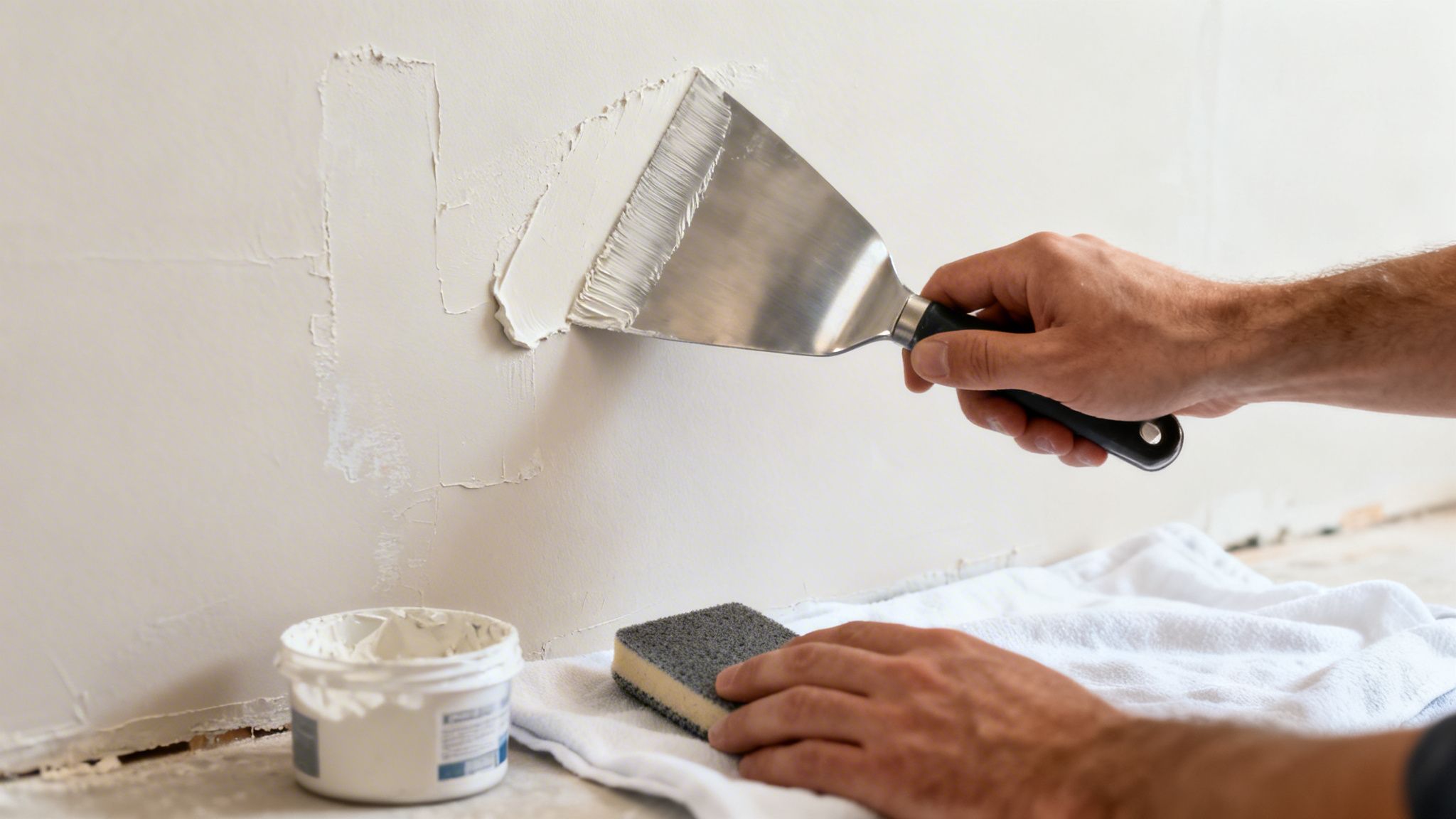
You can tell a drywall repair is good when you can't tell it was ever there. After you've cut out the soggy drywall and screwed in a new patch, the real work—the part that requires a bit of finesse—begins. This finishing stage is what separates a lumpy, obvious patch from a truly seamless repair that blends right into the wall.
As a local contractor working on everything from residential homes in the Puget Sound to busy commercial spaces, our goal is always the same: a flawless surface that looks like nothing ever happened.
Taping the Seams for a Crack-Proof Finish
First things first, you need to tape the joints where your new patch meets the old wall. This isn't just for looks; the tape provides critical reinforcement that keeps cracks from forming later as the building settles. You've got two main choices for tape.
- Fiberglass Mesh Tape: This stuff is self-adhesive, which definitely makes it easier to apply if you're new to this. It's perfectly fine for flat runs, but it’s a bit thicker than paper tape, so you'll need more mud to hide it. We generally avoid it on inside corners because it doesn't fold well.
- Paper Tape: This is the professional standard for a reason. Paper tape is stronger and lets you create a much flatter, smoother seam. It takes a bit more practice, though. You lay down a thin bed of mud, press the tape into it, and then pull your knife over it to squeeze out the excess from behind.
For the strongest, most invisible repairs—especially any involving corners—we always reach for paper tape. It delivers a superior result every time.
The Art of Mudding and Feathering
Now it's time to apply your joint compound, what we call "mud." The biggest mistake people make here is trying to do it all in one go. The secret to a perfectly smooth wall is applying multiple thin coats, not one thick, goopy layer that will just shrink, crack, and leave a big hump.
Apply your first coat just wide enough to cover the tape and fill in your screw dimples. Then, walk away and let it dry completely.
For the second coat, grab a wider drywall knife (if you used a 6-inch knife for the first coat, step up to a 10- or 12-inch for the next). Apply the mud a few inches past the edge of the first coat. This is a technique called feathering.
Feathering is the single most important skill for making a patch disappear. By making each layer of mud wider than the last and applying less pressure on the very outer edges, you create a gradual slope that's impossible to see.
After that second coat dries, sand it lightly and apply one final, thin skim coat, feathering it out even further to fill in any tiny scratches or imperfections.
Don't Skip the Primer and Paint
Once that last coat of mud is bone dry and you've given it a final, light sanding with fine-grit sandpaper, the wall should feel perfectly smooth to the touch. You’re almost there. But whatever you do, do not skip the primer.
New joint compound is like a sponge; it soaks up paint differently than the painted wall around it, which creates a dull, blotchy spot called "flashing."
For any water damage repair, a stain-blocking primer is absolutely essential. Even if the drywall is completely dry, water leaves behind mineral deposits that will eventually bleed through regular paint, and that ugly stain will reappear. A quality stain-blocking primer seals the patch and locks in any residual discoloration for good. We get into the nitty-gritty of this in our guide on priming sheetrock before painting.
Finally, you can paint. To make the repair truly vanish, you need to match both the paint color and the sheen. A matte touch-up on an eggshell wall will stick out like a sore thumb. If you don't have the original can, you can usually take a small chip of the old paint to the store for a perfect match. Two coats of paint, and your wall will look good as new.
When to Call a Professional Restoration Contractor
Every DIYer eventually hits a wall—sometimes literally. Knowing where to draw the line between a manageable weekend project and a job that’s spiraling out of control is the most valuable skill you can have. With water-damaged drywall, the stakes are particularly high.
Getting in over your head doesn't just lead to a botched repair; it can create a much bigger, more dangerous, and far more expensive disaster. For homeowners and facility managers here in the Puget Sound, recognizing the red flags early is key to avoiding a serious headache.
Spotting the DIY Deal-Breakers
Some situations are immediate red flags, signaling that the problem has graduated beyond a simple patch job. If you see any of these, it's time to put down the tools and call a team with the right experience and equipment for residential or commercial construction services.
The Damage Is Spreading: Is the water stain showing up across multiple drywall sheets, or worse, on different floors of your property? This isn't a small leak; it's a sign of a major water intrusion event that needs a professional, coordinated response to prevent serious structural issues.
You See or Smell Mold: Don't underestimate mold. If you spot fuzzy black, green, or white patches larger than a dinner plate, or you can't shake that musty, earthy smell, the contamination is likely deep inside the wall. Trying to scrape it off will release millions of spores into your property's air.
The Structure Looks Compromised: Do you see the ceiling bulging down? Does a wall look warped or feel spongy to the touch? This is a huge warning sign. It means water has soaked the structural framing, weakening its integrity. This is a genuine safety hazard that needs immediate attention from a commercial construction or residential contractor near you.
Water Is Near Electrical Components: This one is non-negotiable. If the water damage is near outlets, light switches, fixtures, or your breaker box, do not touch anything. Water and electricity are a deadly mix, and you need an expert to safely shut off power and assess the situation.
Water-damaged drywall isn't just an eyesore—it can be a serious blow to your wallet. Repair costs often land between $600 to $1,550 for a single incident, making it one of the pricier drywall fixes out there. You can explore more insights on drywall repair costs on Angi.com and see why doing it right the first time pays off.
The Value of a Single Point of Contact
When a pipe bursts or a roof leak turns into a major problem, the last thing you want is the stress of juggling multiple phone numbers. Finding a plumber, then a water mitigation company, then a drywaller, and finally a painter is an organizational nightmare.
This is where a full-service general contractor like Wheeler Painting makes all the difference. We serve as your single point of contact for the entire restoration, whether it's a residential remodel or a large-scale commercial renovation.
For a homeowner, it means a seamless, organized process from water extraction and demolition all the way through to flawless drywall finishing and painting. For a facility manager trying to get a retail build-out or office space back online, it means the project stays on track with one trusted partner to hold accountable. We handle all the coordination so you can focus on getting back to normal.
DIY vs. Professional Repair: When to Make the Call
Trying to decide if this is a job you can handle yourself? Sometimes a small stain is just a small stain, but other times it's the tip of the iceberg. This chart can help you decide when to roll up your sleeves and when to call us for a professional assessment.
| Scenario | Recommended DIY Approach | When to Call a Pro (Wheeler Painting) |
|---|---|---|
| A Small, Faint Stain on the Ceiling | Once you're 100% sure the leak is fixed and the spot is bone dry, you can try sanding, applying a stain-blocking primer, and repainting. | If the stain bleeds through the new paint or the drywall feels even slightly soft or flexible, it's time for an expert to open it up. |
| Bubbling Paint on a Wall | You might be able to carefully scrape the bubbles, sand the area smooth, prime, and repaint, if the drywall underneath is completely firm and dry. | If the drywall feels spongy, the bubbling covers more than a square foot, or the paper facing is peeling off, a pro needs to cut out the bad section. |
| Saturated Drywall After a Flood | Do not attempt. Floodwater is often contaminated ("black water"), and the sheer volume of moisture makes it unsafe for DIY remediation. | Immediately. This is a job that requires professional demolition, high-powered drying equipment, certified mold treatment, and a structural check. |
Ultimately, bringing in a professional restoration contractor is about more than just convenience—it's about peace of mind. It’s the confidence of knowing the job was done safely and correctly, protecting the long-term value of your property and the health of your family, employees, or customers.
A Few Common Questions About Drywall Repair
When you're staring at a soggy, water-stained wall, a million questions probably run through your mind. Here in the Puget Sound, our team at Wheeler Painting gets calls about this every day from homeowners and facility managers. Based on our experience, here are the honest answers to the questions we hear most often.
How Long Does It Really Take for Drywall to Dry?
This is always the first question, and the honest answer is: it depends. The timeline hinges entirely on how saturated the wall is and, just as importantly, your drying method.
If you just crack a window and hope for the best, a truly wet wall can take weeks to dry out. That’s far too long, blowing past the 48- to 72-hour window where you can prevent serious mold growth.
You might be able to speed things up with some house fans and a small dehumidifier, maybe getting a lightly damp wall dry in about 5 to 7 days. But when restoration pros show up, we bring the big guns—high-velocity air movers and commercial-grade dehumidifiers. This equipment doesn't just move air around; it creates an intensely dry, powerful vortex that pulls moisture from deep inside the wall cavity. With a professional setup, we can often get the structure properly dry in just 3 to 5 days, which is crucial for stopping mold in its tracks.
Can I Just Paint Over a Water Stain?
We see people try this all the time, and we get it—it looks like an easy fix. But slapping a coat of paint over a water stain is a shortcut that almost always backfires.
Even if the wall feels dry on the surface, moisture is often still trapped in the drywall panel or the insulation behind it. That's a perfect recipe for mold and rot. On top of that, the minerals and grime left behind by the water will eventually "bleed" right through regular paint, and your ugly stain will be back in a few weeks or months.
To do it right, there are no shortcuts. First, you have to be 100% certain the entire area is bone dry, not just the surface. Then, you absolutely must seal the spot with a quality stain-blocking primer designed specifically for this job. Only after that primer is cured can you finally paint, carefully matching the color and sheen so the repair disappears.
Will My Homeowners Insurance Cover This?
Whether insurance will pay for the repair comes down to one thing: where the water came from. As a general rule, most standard policies cover damage from "sudden and accidental" events. Think of a burst pipe, a washing machine hose that lets go, or water damage from firefighting efforts.
Where you'll run into trouble is with damage that happens over time from a lack of maintenance. A slow drip under the sink, seepage through a foundation crack, or a leaky roof that’s been ignored for years are typically excluded from coverage.
The moment you find water damage, your best move is to take plenty of photos and call your insurance agent to understand exactly what your policy covers.
Here in the Puget Sound, with our rainy climate, waiting to act on water damage is a costly mistake. We've seen it firsthand: a small, manageable repair can quickly spiral out of control. Waiting just a few extra days can give mold the foothold it needs, turning a straightforward drywall job into a complex and expensive remediation project. You can see how fast water damage costs can add up at QRestore.com to better understand the risk.
A professional contractor like Wheeler Painting can give your insurance company the detailed, itemized estimate and expert documentation they'll need to process your claim smoothly. It makes a world of difference in getting your property—and your life—back to normal.
Feeling overwhelmed by water damage? You don't have to tackle it alone. For over 30 years, Wheeler Painting has been the trusted local provider for homeowners and businesses across the Puget Sound, handling everything from emergency water dry-outs to flawless drywall repair, painting, and full-scale commercial construction projects. Let our team give you the peace of mind that comes from a job done right. Get in touch with us today for a consultation at https://wheelerpainting.com.





 “Like” us on Facebook!