
Your Seattle Guide To A Bath To Shower Conversion
Thinking about swapping out that old bathtub for a shower? You're not alone. This is one of the most popular home improvement projects we see across Kent, Seattle, and Tacoma, and for good reason. It’s more than a simple style update; it’s a practical upgrade that can completely change how you feel about your bathroom.
As a residential contractor, we at Wheeler Painting help property owners with these decisions every day. By getting rid of an underused tub, you can create a modern, spacious shower that’s safer, more functional, and a whole lot better suited to your daily life.
Why a Shower Conversion Is a Smart Upgrade for Your Home
All across the Puget Sound, from Seattle to Tacoma and Kent, we’re seeing more and more homeowners and property managers decide to ditch their old bathtubs for sleek, modern showers. It’s a shift that makes perfect sense for today’s lifestyles, where convenience, safety, and a touch of everyday luxury are top priorities. At Wheeler Painting, this is a conversation we have with our clients all the time. This isn’t just about making things look prettier—it's a smart investment in your property.
One of the biggest drivers behind this trend is the desire for a safer, more accessible bathroom. Let's be honest, stepping over a high tub wall every day can be a genuine challenge and a serious slip hazard, especially for those with limited mobility. A low-curb or walk-in shower eliminates that barrier, making it a crucial upgrade for anyone who wants to age in place safely and comfortably. For facility managers, this type of residential remodeling can make a property far more attractive to a wider range of tenants.
The Growing Demand for Larger Showers
The desire for big, spa-like showers has absolutely exploded. It's not just a feeling; the numbers confirm it. Recent industry studies show a huge shift in what homeowners want from a bathroom remodel. A solid 27% of homeowners are tearing out their master bathtubs with the specific goal of building a larger shower.
And what do they do with that new space? An overwhelming 91% of them make the shower footprint bigger, transforming a utilitarian spot into a personal retreat. We see this most often with homeowners over 54, who are wisely investing in features like non-slip floors and grab bars for long-term comfort and peace of mind. You can see all the data for yourself in the Houzz U.S. Bathroom Trends Study.
This all points to a bigger change in how we think about our homes. A beautifully designed shower is no longer an afterthought—it's a main feature.
We hear it from our clients constantly: their shower is more than just a place to get clean. They want to create a daily spa experience with rain heads, built-in benches, and gorgeous tile. It’s why a staggering 81% of people upgrading their master shower choose to make it bigger.
Boosting Your Home’s Appeal and Value
In the competitive Puget Sound real estate market, a well-executed bath to shower conversion can be a major selling point. Buyers today are looking for clean lines, practical design, and homes that are move-in ready. A modern, accessible shower checks all those boxes, appealing to everyone from young professionals to retirees.
- Enhanced Functionality: Walk-in showers are simply easier to clean and maintain than tub-shower combos, which are notorious for grimy corners and stubborn grout lines. For facility and property managers, this means easier upkeep and maintenance.
- Improved Aesthetics: A glass-enclosed shower opens up the entire room, making even a small bathroom feel brighter, larger, and more inviting.
- Future-Proofing: When you add accessibility features, you’re not just planning for your own needs down the road. You’re also making your home far more attractive to a wider pool of future buyers or tenants.
At the end of the day, converting your bath to a shower is a strategic move. It improves your daily routine right now while adding real, lasting value to your home. It’s an investment in your comfort, your safety, and the long-term appeal of your property here in the Seattle area.
Getting Your Bath-to-Shower Project Off the Ground
Thinking about a bathroom remodel can feel overwhelming. We get it. But the secret to a smooth, headache-free project isn't some magic formula—it's just a solid, transparent plan. At Wheeler Painting, we've refined our process over countless residential construction projects in Kent, Seattle, and across the Puget Sound, breaking down every bath to shower conversion into clear, predictable phases. You'll know exactly what's happening from day one.
A bathroom renovation is so much more than picking out pretty tile. It’s a construction project that demands skilled demolition, precise plumbing, and, most importantly, bulletproof waterproofing. Our job as your local residential contractor is to manage all those moving parts, turning what could be a mess into an exciting upgrade for your home.
As you can see, swapping that old tub for a modern shower isn't just about looks. It's an investment in your safety, daily comfort, and your home's overall value.
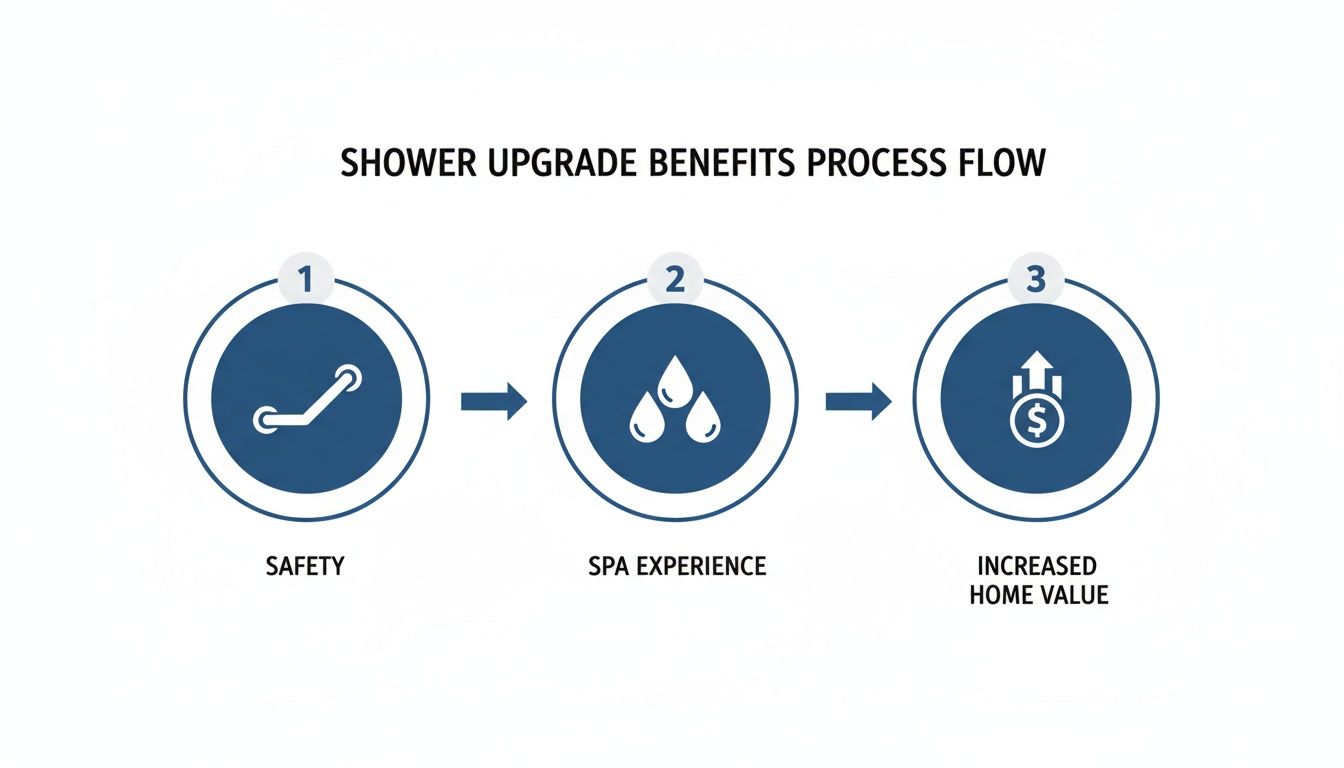
This is why a well-executed shower conversion is one of the smartest updates you can make—it improves your life now and pays off later.
The Initial On-Site Consultation
Every great remodel starts with a simple conversation. We'll come to your property, whether you're in Seattle, Tacoma, or anywhere in between, to see the space for ourselves. This is our chance to listen to what you want, measure everything up, and get a feel for what’s possible.
This in-person meeting is non-negotiable for us. It’s where we figure out the important stuff:
- Your Vision: Are you aiming for a spa-like retreat with all the bells and whistles, or is the main goal a safe, accessible walk-in shower for a tenant or family member?
- The Reality: We’ll take a hard look at your current tub, the walls, and where the plumbing is located to spot any potential curveballs early on.
- First Ideas: We can start brainstorming materials, fixtures, and finishes that match your style and make sense for your budget.
This first step is all about getting on the same page so our proposal is spot-on. It lays the groundwork for a project that runs smoothly from demolition to final polish. If you're looking for more tips on how to prepare, check out our comprehensive guide to bathroom remodel planning.
Demolition and Plumbing Adjustments
With a solid plan in hand, it's time to get to work. First things first: demolition. Our crew is meticulous about protecting your home. We seal off the bathroom to keep dust contained, then carefully remove the old tub, tile, and fixtures.
This is also where the real technical work begins. It’s almost a guarantee that the plumbing will need to be adjusted. The drain for a bathtub almost never lines up with where a new shower drain needs to go. As a licensed and insured contractor, we handle all the necessary plumbing work to ensure your new shower drains perfectly and is built to last.
A common DIY mistake we're often called in to fix is underestimating the plumbing. It’s not just about connecting a new drain. It's about getting the slope just right and tying it into the shower pan flawlessly. Get this wrong, and you’re setting yourself up for a leak that requires expensive floor repairs and replacements.
Waterproofing: The Most Important Step
If there's one stage you absolutely cannot cut corners on, it's this one. Proper waterproofing is the only thing standing between your new shower and a slow, hidden leak that can cause thousands in structural damage and mold. We are obsessive about getting this right.
Our multi-layered approach ensures your shower is completely watertight:
- Solid Foundation: We start by inspecting the studs and subfloor. If we find any old water damage, we'll make any necessary floor repairs or replacements to ensure we're building on a solid, clean surface. This may involve wood and tile floor work.
- Waterproof Barrier: Next, we install a top-of-the-line waterproof membrane over the shower walls and floor. This creates a continuous, sealed envelope.
- Meticulous Sealing: Every single corner, seam, and hole for plumbing fixtures is carefully sealed. There can be no weak points.
This fanatical focus on building a leak-proof shower is what sets a professional job apart. It's the only way to guarantee your investment will look great and function perfectly for decades. As the global bathroom remodeling market continues to grow—projected to hit USD 615.6 billion by 2036—it’s clear that property owners are prioritizing functional, durable upgrades like this.
Navigating Seattle Area Permits And Building Codes
Let's talk about the part of a renovation that makes most property owners groan: permits. For a bath-to-shower conversion, the question we hear all the time is, "Do I really need one?" In the Seattle, Tacoma, and Kent areas, the straightforward, safe answer is yes, you almost certainly do.
It might feel like a simple swap, but this residential remodeling project dives deep into your home's critical systems—plumbing, electrical, and sometimes structural elements. A permit isn't just red tape; it's your assurance that the work is being done correctly and inspected by a third party. It’s the best defense you have against future disasters like hidden leaks, mold growth, or faulty wiring.
So, When Exactly Is a Permit Required?
In the Puget Sound region, the rules are pretty clear. Any time you alter your plumbing or electrical systems, the city wants to know about it. A tub-to-shower conversion hits these triggers every time.
You'll need a permit if your project involves:
- Moving the drain. A tub drain is in a completely different spot than a shower drain. Relocating it is a non-negotiable part of the job and requires a permit.
- Altering water supply lines. We’ll need to adjust the pipes to accommodate the new shower valve and head at the correct height, which is considered a system alteration.
- Adding new electrical work. Planning on adding beautiful recessed lighting, a quiet exhaust fan, or maybe even luxurious heated floors? That requires an electrical permit.
- Changing the bathroom's footprint. If you’re moving a wall to make that shower a bit bigger, a building permit is standard procedure.
Honestly, this is where a trusted local provider earns their keep. As a residential contractor near you, Wheeler Painting takes all the permit paperwork and coordination off your plate. We deal directly with the building departments in Seattle, Tacoma, and Kent so you don't have to. It's just part of doing the job right from the start.
Key Codes an Inspector Will Scrutinize
Building codes are not just suggestions—they are the minimum legal standard for safety and durability. While our team manages all the technical details, it helps to know what inspectors are looking for when they show up.
From our experience, here are the things they zero in on:
- Waterproofing: This is the big one. An inspector will look for a continuous, unbroken waterproof membrane behind your tile and across the shower floor. One small mistake here can lead to a catastrophic failure down the road.
- Shower Floor Slope: The floor can't be flat. It needs a precise slope, typically between 1/4 and 1/2 inch per foot, to guide every drop of water toward the drain. No pooling allowed.
- Plumbing Vents: Your new shower drain needs to be properly vented. This is what allows it to drain quickly and prevents unpleasant sewer gases from entering your home.
- Accessibility (ADA) Standards: If your design includes features like grab bars or a curbless, zero-threshold entry, they have to be done right. This means installing proper wood blocking inside the walls for support before the tile goes up, ensuring everything is secure and meets strict code requirements.
Navigating these rules is a core part of our expertise. When you work with Wheeler Painting, you can rest easy knowing your beautiful new shower is not only up to code but built to last for decades.
Choosing The Right Shower Materials For Your Home
Okay, this is where the fun really begins. After all the planning and measuring, you finally get to decide what your new shower will actually look like and feel like. This is the step where your vision starts becoming a reality.
The sheer number of choices can feel overwhelming, we get it. From the shower floor to the walls and fixtures, every decision matters. As a contractor who helps homeowners and property managers in the Seattle and Tacoma areas with these projects every day, our job is to cut through the noise. Let's break down the most common options so you can find that perfect sweet spot between style, budget, and long-term upkeep.
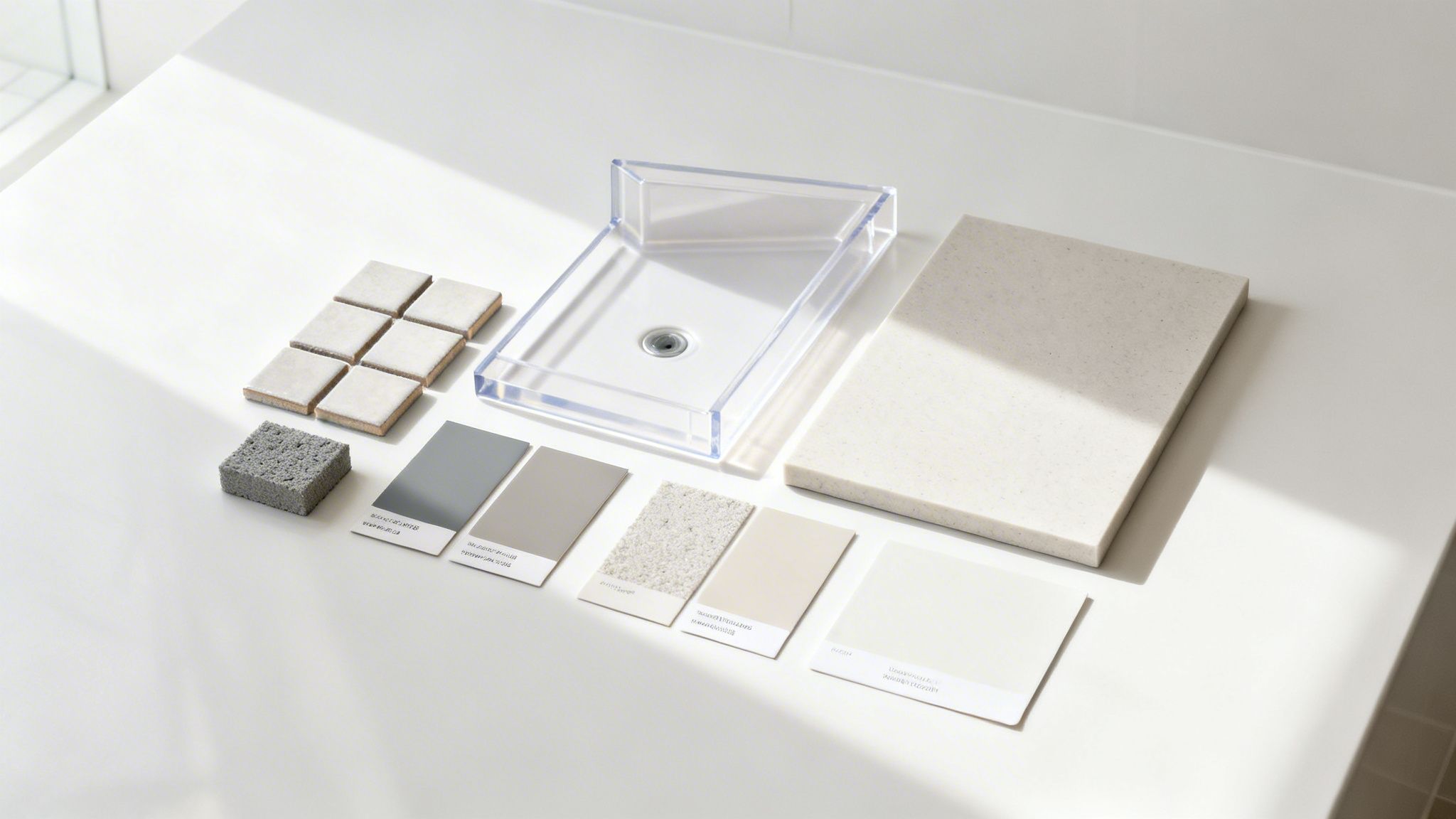
Shower Floor Showdown: Custom Tile vs. Prefabricated Base
The very foundation of your shower is its base, or what we call the pan. It's the first thing you step onto, and it's a huge factor in both aesthetics and performance. You really have two main roads you can go down: a custom-tiled floor or a single-piece prefabricated base.
A custom-tiled shower floor gives you total creative control. Want a specific mosaic pattern or a color that perfectly matches your vanity? Tile makes it possible. This is the go-to for unique shower footprints or for anyone wanting a high-end, spa-like finish.
The trade-off, of course, is grout. Lots of it. Even with modern grouts, those lines are a magnet for grime and mildew, especially here in our damp Puget Sound climate. They simply require more consistent cleaning and facility maintenance.
If you’d rather skip the scrubbing, a prefabricated shower base is a fantastic option. Usually made of durable acrylic or fiberglass, these pans are a single, seamless piece. No grout lines means less cleaning and a significantly lower chance of leaks down the road. They’re also quicker and more cost-effective to install, which is a big win for many projects. The only real downside is that you’re limited to standard sizes and a handful of colors.
The decision you make on the shower floor sets the stage for the rest of the build. A custom tile pan involves a complex, multi-layered waterproofing process that takes time and skill. A prefab base streamlines everything. We always make sure our clients understand the maintenance side of things so they love their shower just as much five years from now.
Shower Walls: Classic Tile vs. Modern Solid Surface Panels
With the floor decided, let’s look up at the walls. Just like the base, your main options are traditional tile or the more contemporary solid surface panels.
Tiled walls are timeless for a reason. They offer the same limitless design freedom as a tiled floor, letting you create custom accent niches, borders, and patterns that are uniquely yours. For a lot of people, nothing beats the authentic, handcrafted look of real tile. But again, you have to be prepared for the reality of maintaining all those grout lines.
Lately, we've seen a huge surge in the popularity of solid surface panels. These are large, grout-free sheets made from materials like engineered stone or advanced composites. They create a sleek, modern aesthetic that is ridiculously easy to clean—a quick wipe-down is all it takes. Because they're 100% non-porous, they're also bulletproof when it comes to water protection.
While some worry they won't have the character of tile, today's high-quality panels do an amazing job of mimicking natural stone and other textures. To get a better feel for it, you can play around with AI bathroom design tools to see how different materials would look in your actual space before committing.
Use this table to weigh the key differences between common shower materials and find the perfect match for your bathroom remodel.
Comparing Shower Base And Wall Materials
| Feature | Custom Tiled Shower | Prefabricated Base | Solid Surface Panel System |
|---|---|---|---|
| Aesthetics | Unlimited design freedom; classic, high-end look. | Limited to standard sizes and colors; functional look. | Sleek and modern; can mimic stone but less variety than tile. |
| Maintenance | High. Requires regular grout cleaning to prevent mildew/stains. | Low. Seamless, non-porous surface is easy to wipe clean. | Low. No grout lines; a simple wipe-down is sufficient. |
| Cost | Higher. Labor-intensive installation drives up the price. | Lower. Cost-effective materials and faster installation. | Mid-to-High. Varies by brand but typically between tile and prefab. |
| Durability | Very durable if installed correctly, but grout is a weak point. | Extremely durable and leak-resistant due to one-piece design. | Highly durable and 100% waterproof; resistant to chips/stains. |
Ultimately, choosing the right material comes down to a personal balance of what you want your shower to look like versus how much time you want to spend cleaning it.
Key Material Considerations
Thinking about the big picture, here’s what you should be weighing:
- Aesthetics: Are you dreaming of a one-of-a-kind design that only tile can provide, or do you prefer the clean, minimalist look of solid panels?
- Maintenance: How do you feel about cleaning grout? Be honest with yourself! A low-maintenance surface might be a better fit for a busy household or a rental property.
- Budget: Custom tile work is a significant investment in skilled labor. Prefabricated and panel systems can often stretch your budget further.
- Durability: Both tile and panels are built to last, but only if installed correctly. The real key to longevity is what’s behind the walls. A bulletproof waterproofing system is non-negotiable. You can read up on our approach and learn more about what waterproofing in construction involves.
At the end of the day, the best materials for your bath to shower conversion are the ones that fit your lifestyle and your vision for your Kent-area home. Our role is to present the options clearly and provide the expert installation to make it happen.
Finishing Your Shower With Fixtures And Doors
Now for the fun part. The demolition is done, the plumbing is set, and the waterproofing is solid. It's time to choose the finishing touches that really bring your new shower to life: the doors and fixtures.
This is where your personal style gets to shine. Think of these elements as the jewelry of your bathroom—they define the look, feel, and daily function of the space. A bath to shower conversion isn't just about swapping a tub for a pan; it's about creating a space you love to use every day.
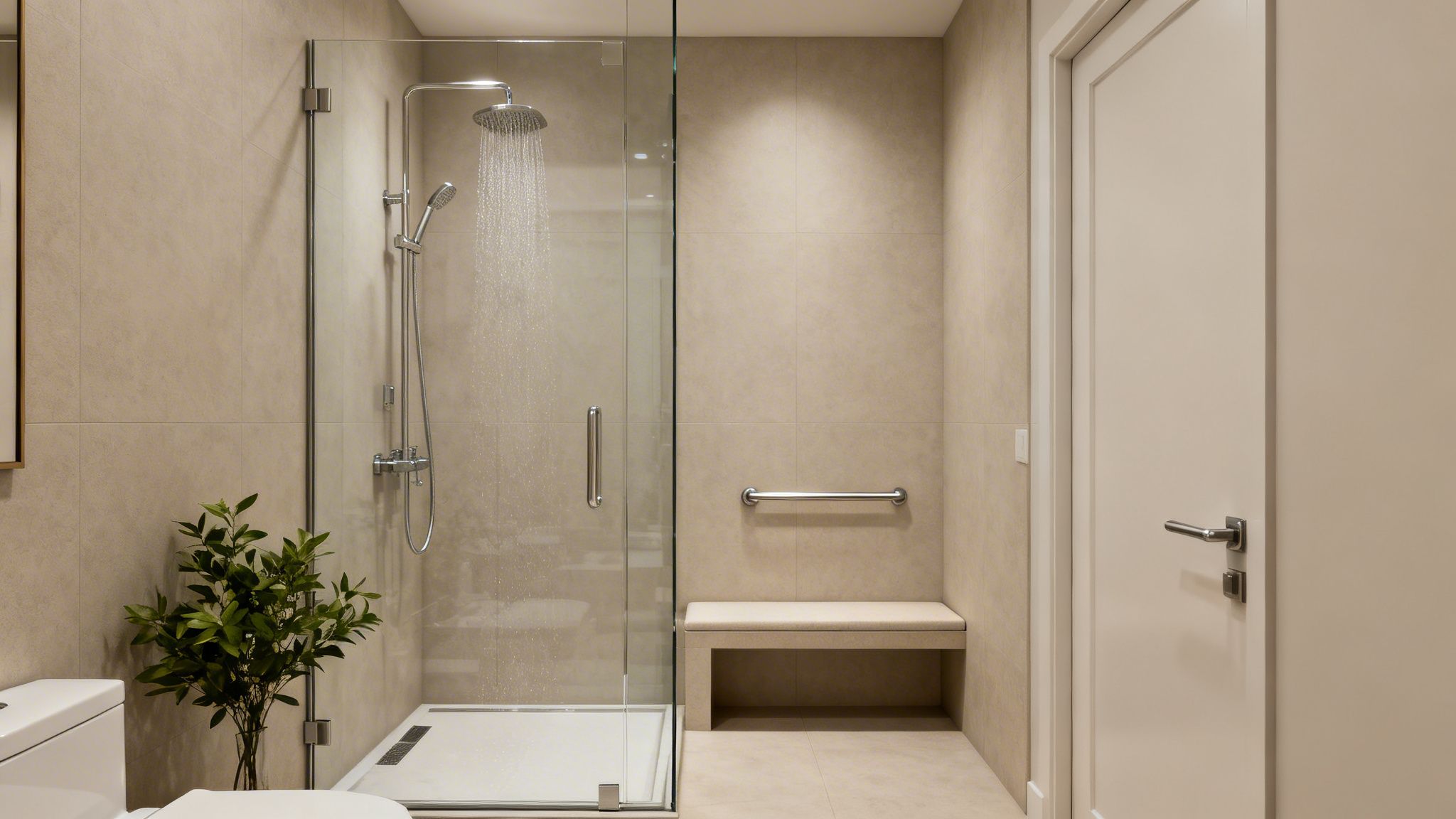
These final decisions are anything but minor. They determine how you start your morning, how easy the shower is to clean, and how the entire bathroom feels. A frameless glass door can make a tight space feel huge, while the right showerhead can feel like a daily trip to the spa. Let's walk through the options we see most often in Puget Sound homes.
Choosing the Perfect Shower Door
Your shower door is a major design element that also needs to be incredibly practical. The right choice depends on your bathroom's layout, your budget, and the look you're going for.
- Frameless Glass Doors: This is the top choice for a reason. By eliminating the metal frame, you get a clean, minimalist look that makes the whole bathroom feel bigger and brighter. It’s the perfect way to show off that beautiful new tile you just installed.
- Semi-Frameless Doors: A fantastic compromise. These doors give you a very clean look that’s similar to a frameless model but at a more accessible price point. They typically have minimal framing around the perimeter, but the door panel itself is clean glass.
- Sliding Doors: If your bathroom layout is tight and a swinging door would hit the toilet or vanity, sliders are the solution. We've seen a huge rise in modern "barn door" style sliders, which look much more high-end than the old-school tracked doors you might be picturing.
- No Door (Open Concept): A true walk-in shower is the peak of luxury and accessibility. Just be aware that it can make for a chillier shower experience since there's nothing to trap the steam. This works best in larger bathrooms where you have plenty of room to contain splashes.
After years of doing this, one of the biggest regrets we see from DIYers is an open-concept shower that's just too cold, especially during our chilly Washington winters. A frameless glass door often hits the sweet spot—it feels open but keeps you warm.
Selecting Your Shower Fixtures
Your fixtures are the hardworking parts of the shower, so you want to choose them for performance just as much as for looks. Here’s what you’ll need to decide on.
- Showerheads: The sky's the limit here. A water-saving head is a smart choice for any home, while a big "rain" showerhead can provide a truly luxurious downpour. For ultimate flexibility, many of our Tacoma-area clients choose a dual system with a fixed overhead head and a separate handheld wand.
- Valves and Controls: This is a decision you don't want to overlook. We highly recommend upgrading to a thermostatic valve. It lets you set an exact temperature and holds it steady, even if someone flushes a toilet or starts the dishwasher. It’s a game-changer for comfort and a crucial safety feature to prevent scalding.
Integrating Accessibility And Safety Features
One of the greatest advantages of a bath to shower conversion is the chance to create a safer, more accessible bathroom for today and for the future. Modern design means these features can be beautiful, not institutional.
- Grab Bars: Forget the clunky, clinical bars of the past. Today's grab bars come in stunning finishes like matte black, brushed brass, and polished nickel to perfectly match your other fixtures. The key is that we install them with proper blocking inside the wall for rock-solid support.
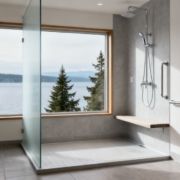
- Built-in Bench: A tiled bench is a must-have for anyone who prefers to sit while showering. It provides stability and comfort, turning the shower into a more relaxing and secure space.
- Zero-Threshold Entry: By eliminating the curb, you create a seamless, "curbless" entry that's easy to walk into and fully accessible for a wheelchair or walker. It’s the ultimate in universal design.
Planning for these features from the very beginning is the key to a successful project. For a deeper dive, check out our guide on creating a handicap-accessible shower. As your local Kent contractor, we at Wheeler Painting specialize in building beautiful showers designed to support you safely for years to come.
How To Budget For Your Shower Conversion Project in 2026
Let's get right to it. The first question every homeowner in the Seattle area asks is, "So, what's this actually going to cost?" The honest answer is: it depends. But that's not a cop-out. The final price for a residential remodeling project like this really comes down to a few key decisions you'll make, and our goal here is to walk you through them so there are no surprises.
When we put together an estimate at Wheeler Painting, it's completely itemized. We want you to see exactly where your money is going, from the demolition down to the last tube of caulk, before we ever start work.
What Drives the Cost of a Shower Conversion?
The final number on your proposal is a mix of labor, the materials you choose, and sometimes, dealing with what we find behind the walls. It’s more than just the new tile and fixtures you see at the end.
For any project here in the Kent area, the budget really boils down to these four things:
The Teardown: Ripping out a lightweight, one-piece acrylic tub and surround is a relatively quick job. But if we're dealing with an old cast-iron tub that was mud-set into place with layers of heavy tile? That’s a completely different level of labor and disposal.
The Plumbing Puzzle: Your tub drain is in one spot, but a shower drain needs to be centered. The valve and showerhead also need to be raised from tub height to standing height. Simple moves are one thing, but if we have to reroute pipes through tricky framing, the plumbing costs will naturally go up.
Your Material Style: This is where you have the most direct control over the budget. A clean, high-quality prefabricated shower base and wall panel system is a very cost-effective and durable option. On the other end of the spectrum, you could have a fully custom-tiled shower pan with floor-to-ceiling natural stone, intricate mosaics, and built-in niches. This could even involve custom cabinets to reconfigure the space.
Fixtures and Glass: The hardware is the jewelry of your new shower. A beautiful, reliable showerhead and valve set in chrome might cost a few hundred dollars. A thermostatic system with multiple body sprays in a specialty finish like matte black or brushed gold can run into the thousands. The same goes for shower doors—a standard framed door versus a custom heavy-glass frameless enclosure is a significant price difference.
Here’s a piece of advice we give every single homeowner: plan for a 10-15% contingency fund. It’s not because we expect to find problems. It’s for your peace of mind. If we open the walls and discover old, hidden water damage or funky plumbing from a previous DIY job, that buffer means we can fix it the right way without derailing your budget.
How Long Will My Bathroom Be Out of Action?
The other big question is about time. It's a common myth that a bath-to-shower conversion is a quick weekend project. To do it properly and meet all building codes, especially with critical steps like waterproofing, it just takes more time.
Here's a realistic look at how a typical project unfolds:
- Planning & Ordering: We'll meet, finalize the plan, and get your materials ordered. This can take anywhere from 1 to 4 weeks, depending on how custom your tile and fixtures are.
- Demo & Rough-In: Once materials are on-site, our crew gets to work. Demolition, plumbing adjustments, and any framing changes usually take 2-4 days. A skilled drywall contractor may also be needed at this stage.
- Waterproofing & Walls: This is the most critical phase. We install the shower base, apply multiple layers of waterproofing, and get it inspected. Then, we install the tile or wall panels. This can take 3-7 days because drying and curing times are non-negotiable.
- Finishing Touches: Finally, we grout, install the glass door, and mount the fixtures. This last part takes about 1-2 days.
All in, you should realistically plan for your bathroom to be a construction zone for about two to three weeks. We know it's an inconvenience, but that timeline ensures every detail is handled correctly for a shower that will last for decades.
Your Top Shower Conversion Questions, Answered
If you’re thinking about a bath-to-shower conversion, you've probably got a few questions. It's a big decision! We've been doing this for homeowners, business owners, and property managers all over the Seattle and Tacoma area for years, and we've heard just about everything. Here are the honest answers to the questions that come up the most.
Will I Hurt My Home's Resale Value by Removing the Only Tub?
This is easily the number one concern we hear, and it’s a smart question to ask. The short answer? Probably not, especially here in the Puget Sound. While real estate agents used to say a home needed a tub, today’s buyers are often looking for a spacious, modern, and accessible walk-in shower.
A well-designed, professionally installed shower can actually be a major selling point. If you trade an old, cramped tub/shower combo for a beautiful walk-in, you're adding practical, daily value that most new buyers will appreciate far more.
How Long Will I Be Without a Bathroom?
No one wants their bathroom to be a construction zone forever. For a standard conversion, you can expect the project to take about one to three weeks from the start of construction.
This timeline can change based on the complexity of the job. For example, intricate custom tile work takes longer than installing a pre-fabricated shower surround. Major plumbing rerouting or waiting on city inspections can also add to the schedule. We always map out a detailed project calendar for you before we ever pick up a hammer, so you'll know exactly what to expect.
The most important part of this entire project is the waterproofing. I can't stress this enough. A tiny mistake here can go unnoticed for years, leading to hidden leaks that cause thousands in structural rot and mold damage. This is the biggest reason to go with a professional residential contractor near you—we guarantee a completely watertight system that protects your home.
Can I Just DIY This Project to Save Money?
Tackling a project yourself can be rewarding, but a shower conversion is one of those jobs where the risks are incredibly high. It’s not just about tiling a wall; it involves complex plumbing and waterproofing that have to meet very strict local building codes.
One small error—an improperly sealed drain or a punctured waterproof membrane—can lead to catastrophic failure down the line. We’ve been called in to fix DIY jobs that ended up costing the homeowner double. Hiring a licensed, insured professional protects your investment and gives you the peace of mind that the job is done right and will pass inspection.
How Can I Make the New Shower Safe for Aging in Place?
This is a fantastic question and something more and more homeowners are planning for. A walk-in shower is already a huge step up in safety from a high-sided tub. You can enhance it even further with a few key additions:
- Zero-threshold entry to eliminate any tripping hazard.
- A comfortable, built-in shower bench.
- Strategically placed grab bars that are anchored into the wall studs.
- Non-slip tile for the shower floor.
There’s a lot of great equipment out there designed specifically for this. For a more detailed look at your options, this guide to bathroom safety equipment for the elderly is a really helpful resource.
Ready to see what it would take to transform your bathroom into a space you’ll love? Wheeler Painting has been the go-to residential contractor for home improvements and remodels in Kent, WA, and the surrounding communities since 1991. We bring our expertise in residential and commercial construction to every project, no matter the size. Contact us today for a clear, no-pressure, on-site estimate and let’s start planning your new shower.


 “Like” us on Facebook!