

Puget Sound Bathroom Remodel Planning: Your Essential Guide
Thinking about remodeling your bathroom? It’s one of the best upgrades you can make to your property, and when done right, it's incredibly rewarding. But before you get lost in tile samples and faucet designs, successful projects—whether for your home or a commercial property—always start with one simple question: why?
Figuring out your core motivation is the single most important first step. Are you dreaming of a personal spa, need a more functional space for your growing family, or are you a facility manager needing to upgrade an office or retail space for accessibility and modern appeal? Your answer will guide every decision from here on out. This guide will walk you through the essential steps, from initial vision to final punch list, ensuring your project in the Kent, WA area is a success.
Getting Started on Your Puget Sound Bathroom Remel
A bathroom remodel isn’t just about knocking down walls and putting up new tile. It’s a serious investment in your property's value and, more importantly, in your daily life or business operations. Especially for property owners in hot markets like Seattle, Kent, or Tacoma, a smart remodel can deliver a fantastic return.
But let's not get ahead of ourselves. Nailing down your vision before a single hammer swings is what separates a smooth project from a stressful one. Getting this right prevents those expensive, last-minute changes and ensures the finished bathroom is one you'll actually love using every day.
First, Define Your "Why"
We always ask clients to start by thinking about the problems their current bathroom creates. What's not working for you? Is it cramped and cluttered? Outdated and impossible to clean? Or are you simply planning for the future?
Your answers point us in the right direction. For example:
- Craving a Spa-Like Retreat? We'd probably look at a spacious soaking tub, maybe a multi-head shower system, and definitely things like heated floors and dimmable mood lighting.
- Wrangling a Busy Family? The focus shifts to durability. Think dual sinks to end the morning rush hour, tough materials that can handle some abuse, and clever storage to hide all the clutter.
- Planning for Accessibility? The layout is key. A curbless, walk-in shower becomes the centerpiece, along with well-placed grab bars, a comfort-height toilet, and maybe a wider doorway. This is a common need in both residential and commercial renovations.
Knowing what you truly need helps a contractor see beyond just a list of wants. It allows us to build a focused, practical plan that aligns your goals with your budget.
The Real Value of a Bathroom Remodel
It's no secret that bathroom projects are a smart investment. The market for remodels is huge—the global industry hit $398.1 billion in 2024 and continues to grow as people look to add personal touches and real value to their homes.
More importantly, a well-planned remodel can boost your home's value by as much as 60%, making it one of the highest-return improvements you can undertake. You can even explore more about these industry trends to see how projects like yours are shaping the market.
A thoughtfully planned remodel isn't just about aesthetics; it's about creating lasting value. By focusing on both timeless design and high-quality craftsmanship, you ensure your new bathroom will be enjoyed for years while also being a strong asset if you ever decide to sell your home in the Puget Sound area.
Alright, you've got your "why" figured out. Now comes the part where dreams meet reality: defining what you're actually going to do and how much it’s going to cost. Getting this right from the start is the single most important thing you can do to ensure your bathroom remodel is a success.
Why? Because the difference between swapping a vanity and moving a wall is massive, not just in dollars but in dust, disruption, and duration.
The first real decision you need to make is whether you're looking at a cosmetic facelift or a full-blown, down-to-the-studs renovation. This choice sets the stage for everything else. It’s the best way to keep "scope creep"—those little "while we're at it" additions that kill a budget—firmly in check.
Cosmetic Updates vs. Full Renovations
A cosmetic update is all about achieving a big impact with minimal demolition. Think of it as giving your bathroom a fresh new look without tearing into the walls. It’s faster, less expensive, and perfect for a space that already functions well.
- A fresh coat of paint on the walls, ceiling, or even the vanity.
- Replacing tired faucets, showerheads, and light fixtures.
- Swapping out old cabinet pulls, knobs, and towel bars.
- Upgrading your mirror or putting in a new vanity top (as long as you don't move the plumbing).
A full renovation, on the other hand, is a completely different animal. This is what you need when you're changing the bathroom's footprint, dealing with ancient plumbing and wiring, or fixing hidden problems like old water damage. It's common in commercial construction for retail build-outs or office space renovations.
- Taking down walls to open up the space or create a new layout.
- Moving the toilet, sink, or shower—a job that requires serious plumbing work.
- Hiring a drywall contractor to hang and finish new walls and ceilings.
- Tearing out the old floor for new tile or a combination of wood and tile floors.
- Bringing the electrical system up to current code, a common necessity in older homes and commercial buildings around Kent, WA.
Knowing which path you’re on from the get-go manages expectations for both your timeline and your wallet. If you're trying to keep costs down, our guide to planning an affordable bathroom remodel has some great strategies.
Budgeting for Your Puget Sound Remodel
Let's talk money. In the Seattle-Tacoma area, remodel costs are a moving target, influenced by the scope of your project, the age of your house or building, and the quality of finishes you choose. A good budget is more than just a number; it’s a detailed plan.
We tell every client the same thing: You absolutely must have a contingency fund. Set aside 15-20% of your total budget for the unexpected. This isn't for a splurge on fancier tile. It’s for the surprises we will find when we open up a wall—like leaky pipes, mold, or shoddy framing from a previous job.
To give you a starting point for your planning, here’s a look at what different levels of remodels typically cost in our area for 2026.
Estimated Bathroom Remodel Costs in the Puget Sound Area (2026)
| Remodel Tier | Typical Scope of Work | Estimated Cost Range |
|---|---|---|
| Basic / Cosmetic | Paint, new fixtures (faucet, lights), new vanity top, hardware updates. No layout changes. | $8,000 – $15,000 |
| Mid-Range | New tub/shower combo, new vanity & toilet, new tile floor & shower surround, updated lighting & ventilation. Minor plumbing/electrical adjustments. | $18,000 – $35,000 |
| High-End / Custom | Full gut renovation, layout changes, moving plumbing/walls, custom walk-in shower, high-end fixtures & tile, radiant floor heat, custom cabinetry. | $40,000 – $75,000+ |
Disclaimer: These are general estimates for professional remodels. Costs can vary significantly based on material choices, home condition, and contractor.
This infographic also gives a great snapshot of the bigger picture and why property owners are so focused on this space.
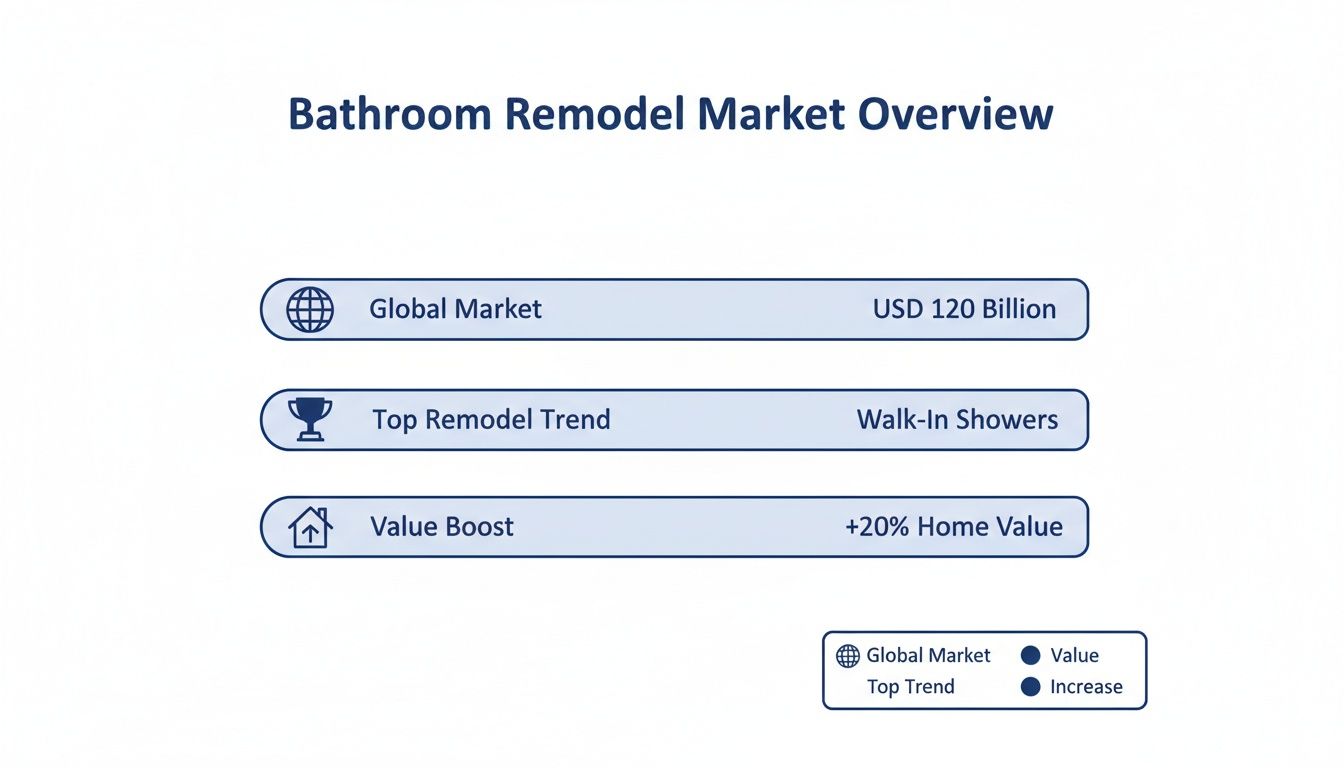
It’s clear that a well-planned bathroom remodel isn't just an expense; it’s one of the smartest investments you can make in your home's value.
When you build your budget, be sure to break it down into these core components:
- Materials: Tile, fixtures, paint, vanity, toilet, tub… everything you can see and touch. This category has the biggest cost variance.
- Labor: The pay for the skilled pros who make it happen—plumbers, electricians, tilers, and your general contractor.
- Permits: Non-negotiable for projects in Seattle, Tacoma, and surrounding cities that touch plumbing, electrical, or structural components.
- Contingency Fund: That 15-20% buffer we talked about. Don't skip it.
By locking in your scope and building out a detailed, all-in budget, you move your project from a "someday" idea to a well-defined plan. This groundwork is what makes for a smooth project and a great partnership with a local pro.
Making the Right Calls on Layout and Materials
Once you've nailed down your budget and scope, we get to the fun part. This is where your vision starts to feel real—where abstract ideas become concrete choices about your bathroom's layout, fixtures, and finishes. We've seen it time and time again: the most successful remodels are the ones that perfectly marry beautiful design with day-to-day practicality.
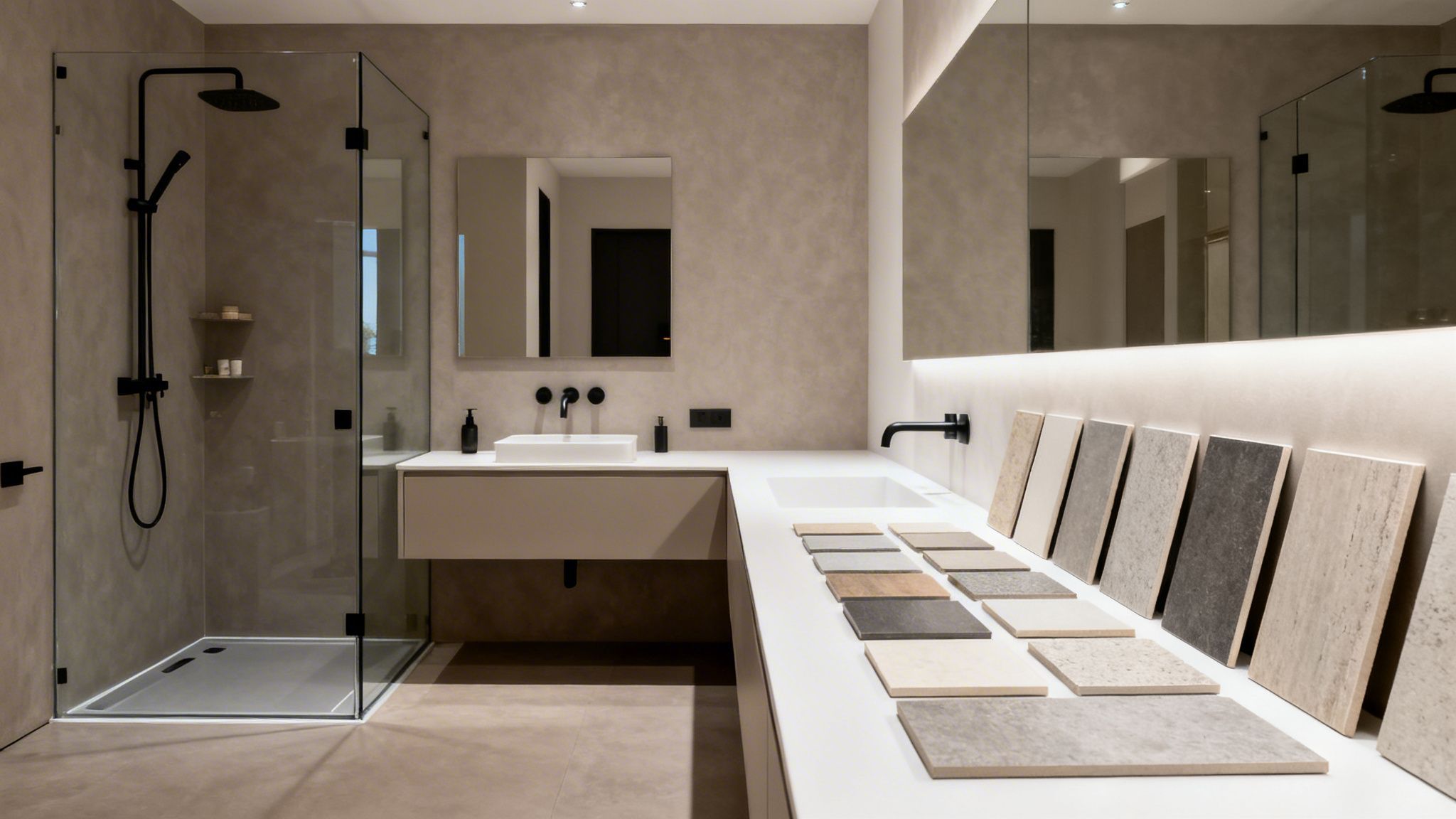
This stage is about so much more than just picking a tile that catches your eye. It's about crafting a space that genuinely works for you, your family, or your tenants. If you're in an older Seattle or Tacoma building, you know what we're talking about—those cramped, awkward layouts that just don't make sense. We can fix that.
Optimizing Your Bathroom Layout
The layout is the absolute backbone of a great bathroom. Sometimes, even the smallest tweaks can completely change how the room feels and functions. A good residential or commercial contractor should help you see possibilities you might not have even thought of.
Here are some layout strategies we often recommend:
- Making the Most of Small Spaces: Floating vanities are a game-changer. They create the illusion of a bigger room and make cleaning a breeze. Wall-mounted toilets can also be a clever way to reclaim a few precious inches.
- Designing a Functional Flow: Think through the daily routine. Is the towel hook exactly where you need it when you step out of the shower? If two people use the bathroom, can they get ready without a constant dance of bumping elbows? In a commercial setting, this means ensuring ADA compliance and smooth traffic flow.
- Planning for the Future: We're seeing a huge demand for universal design. This doesn't mean your bathroom has to look clinical. It can be as simple as installing a comfort-height toilet or adding blocking in the walls now for grab bars you might want later. This is crucial for both residential remodeling and commercial renovations.
It's often the little details that make the biggest difference. Something as specific as mastering sconce height for perfect vanity lighting can elevate the entire room from just "done" to "designed."
Selecting Durable and Stylish Materials
Your material choices set the tone for the entire space, but in the damp Pacific Northwest, durability is just as crucial as style. You absolutely need materials that can stand up to moisture, resist mold, and handle daily wear and tear.
Flooring, for instance, makes up a huge part of the material decision, accounting for 27.3% of the market share. Property owners are gravitating toward slip-resistant, easy-to-clean options like porcelain and luxury vinyl tile. And with over 50% of U.S. homes now over 40 years old, accessible features like curbless showers are becoming a smart investment, sometimes boosting resale value by 5-10%.
Let's dive into some of the most important material choices for your Puget Sound bathroom.
Flooring, Fixtures, and Finishes
Here's a breakdown of what to prioritize for the core components of your new bathroom:
- Flooring: You can't go wrong with porcelain or luxury vinyl tile (LVT). They're tough, 100% waterproof, and come in an endless variety of styles. Pro tip: For real comfort on those chilly Washington mornings, have radiant floor heating installed underneath.
- Countertops: Quartz is our go-to recommendation. It's a non-porous, stain-resistant surface that gives you the elegant look of natural stone without all the high-maintenance headaches.
- Fixtures: Look for faucets and showerheads with the WaterSense label to save water without sacrificing pressure. The finish—whether it's matte black, brushed nickel, or champagne bronze—is the jewelry of the room and pulls the whole design together.
- Cabinetry: Don't just settle for off-the-shelf options. Custom cabinets let you use every single inch of space for smart storage, which is worth its weight in gold, especially in a smaller bathroom.
The Critical Role of Waterproofing and Ventilation
Listen, if there's one thing you can't afford to get wrong in our climate, it's waterproofing and ventilation. We can't stress this enough. Cutting corners here is a recipe for disaster. A gorgeous remodel can be completely undermined by hidden moisture that leads to mold, rot, and costly structural damage.
At Wheeler Painting, we are meticulous about moisture management. It starts behind the scenes, using proven systems and materials to create a fully sealed, waterproof envelope in showers and wet areas. Our expertise in creating a fully waterproofed bathroom is how we ensure your investment is protected for the long haul.
Just as important is a powerful, quiet ventilation fan that’s properly sized for the room and vented directly to the outside—not into your attic. This is your number one defense against the damp air that lets mold and mildew take hold, keeping your beautiful new bathroom feeling fresh and healthy for years to come.
Hiring the Right Contractor in Western Washington
You’ve mapped out your dream bathroom, but bringing it to life hinges on one person: your contractor. After all the design choices and budget spreadsheets, the success of your project truly rests in their hands. This is arguably the most critical decision in your remodel, and here in the Puget Sound area—from Seattle to Tacoma and Kent—partnering with a reputable, local general contractor is your best bet for a smooth process.
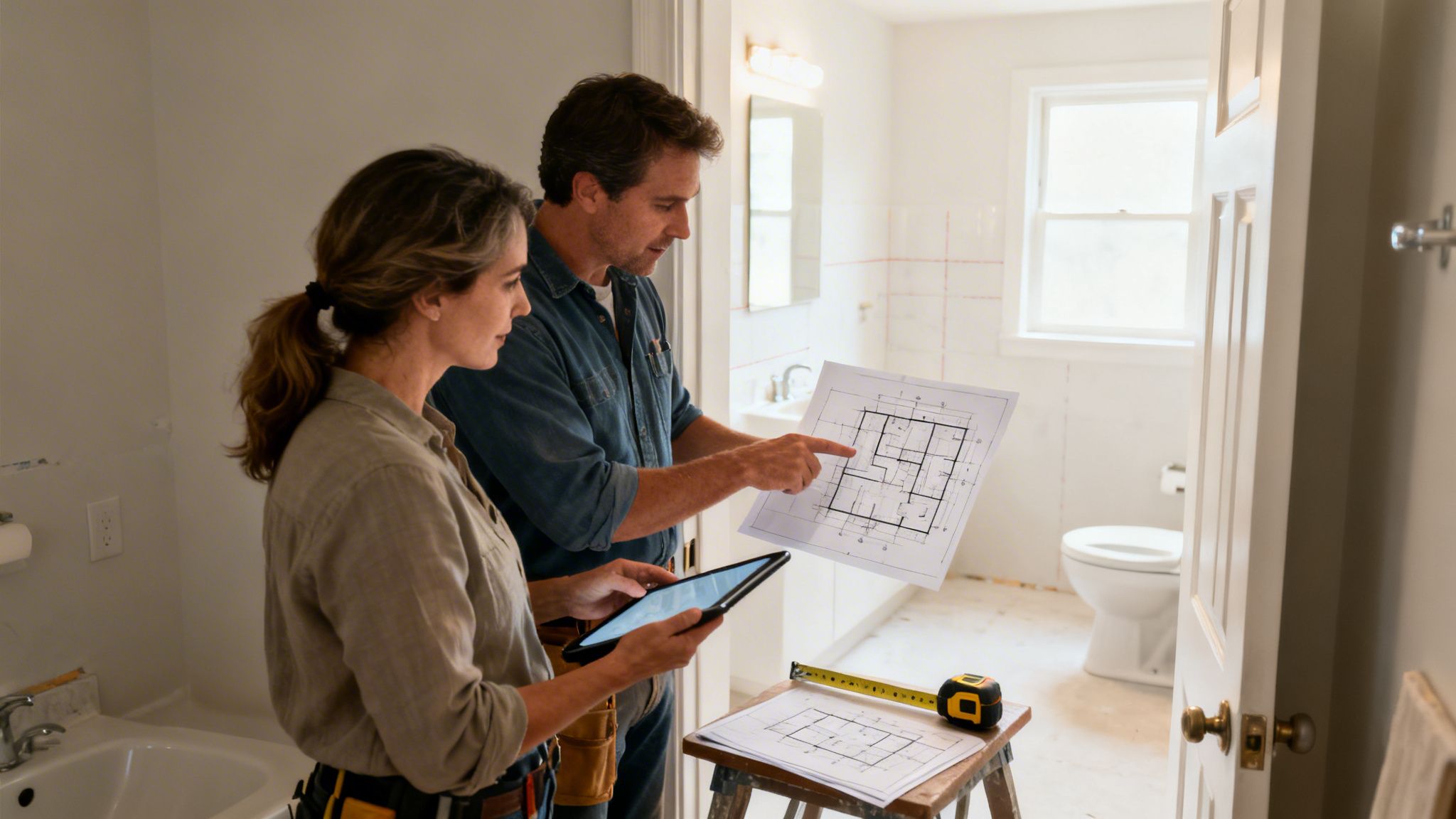
Finding the right pro isn't about chasing the lowest number. It's about finding a team you can communicate with, whose work you’ve seen and trust. A great contractor is more than just a builder; they're your project manager, your advocate, and your go-to problem-solver when the unexpected happens. Wheeler Painting is the ideal partner for building owners, facility managers, and property managers seeking a dedicated firm that specializes in small to mid-size tenant improvement and facility maintenance projects.
Where to Find and How to Vet Your Contractor
So, where do you start? The best leads often come from your own community. Talk to friends, neighbors, or coworkers who've had good remodeling experiences. Local building supply stores are another goldmine—they know which contractors are busy and consistently buying quality materials.
With a few names in hand, it's time to do your homework. In Washington State, a few non-negotiable credentials separate the pros from the risks. Before you even schedule a meeting, verify that they are:
- Licensed: A contractor must hold a current license with the Washington State Department of Labor & Industries (L&I). You can—and absolutely should—look them up on the L&I website.
- Bonded: The contractor’s bond is your financial safety net. It protects you if they fail to finish the job or skip out on paying their suppliers and crew.
- Insured: This is twofold. They need liability insurance to cover any potential damage to your property and workers' compensation to cover their crew in case of injury. Without it, you could be held liable.
Don't be shy about asking for proof. Request to see their current license and insurance certificates. Any legitimate contractor will have these documents ready and will be happy you asked. This one step can save you from a world of financial and legal trouble.
Questions to Ask During the Consultation
Think of the initial consultation as a two-way interview. While they're sizing up the job, you should be sizing them up. Do you get a good feeling from them? Do they listen to your ideas and offer thoughtful feedback? Trust your gut.
As you assemble your team of tradespeople, it's also important to know how to find a good plumber, as their work is fundamental to your bathroom's long-term function. The same rigorous vetting applies to every specialist who sets foot in your home or on your property.
Come prepared with a list of questions for each contractor you meet. For a complete rundown, check out our guide on the questions you should always ask a contractor before making a final decision.
Reading Bids and Understanding the Contract
Once the walkthroughs are done, the bids will start rolling in. It's so easy to just scan for the price at the bottom, but that’s a rookie mistake. A good bid is a detailed blueprint for the project, clearly outlining the entire scope of work.
Lay the bids out and compare them line by line. Is one significantly cheaper? Look closer. It might be missing key items like demolition, debris hauling, or it might have quoted builder-grade fixtures when you discussed premium ones. The cheapest bid is often the one with the most holes, leaving you wide open for costly "change orders" down the road.
Your final line of defense is the contract. A contract that protects you should always include:
- A Detailed Scope of Work: A complete description of every task and all materials being used.
- Total Cost and Payment Schedule: Payments should be tied to specific project milestones, not arbitrary dates.
- Project Timeline: An estimated start and completion date, with major phases outlined.
- Change Order Process: A clear procedure for how any changes to the plan will be approved and priced.
- Lien Waivers: These are critical. They are proof that the contractor has paid their suppliers and subcontractors, which prevents them from putting a lien on your property.
When you work with a trusted, local team like Wheeler Painting, you're not just hiring a crew—you're gaining a partner who is committed to quality and transparency, giving you peace of mind from demo day to the final, beautiful reveal.
What to Expect During the Construction Phase
All the planning is done, the decisions are made, and the start date is finally here. This is the moment the sledgehammer swings, and your old bathroom starts its journey to becoming the space you've been dreaming of. It’s also where things get loud, dusty, and a little chaotic before they get beautiful.
Knowing the typical flow of a renovation can seriously reduce your stress levels. It helps you understand what’s happening behind all that plastic sheeting, especially for homeowners and facility managers here in the Kent area who are new to the remodeling game.
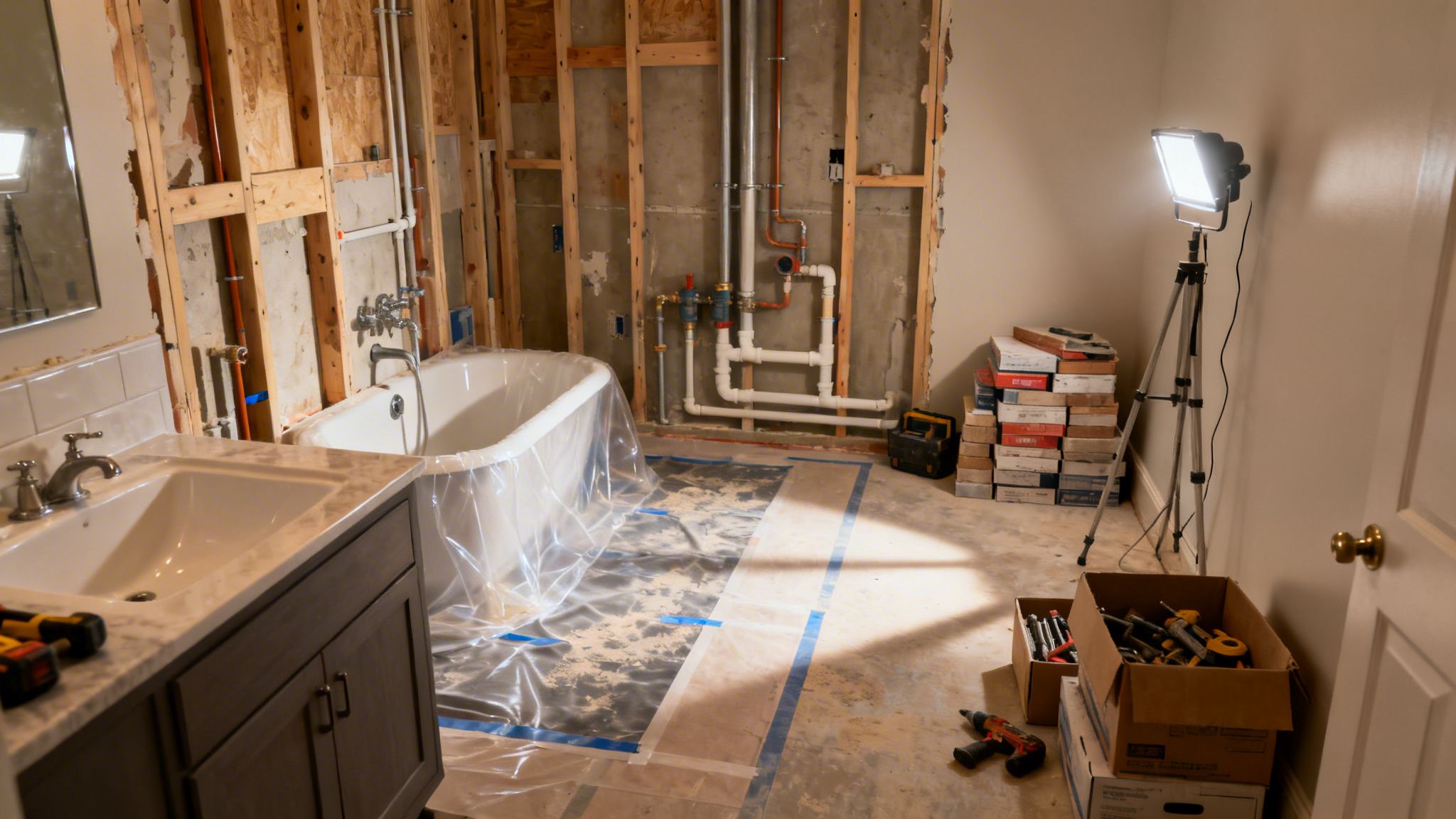
Before any walls come down, a good crew’s first job is protecting your property. They'll seal off the bathroom from the rest of your home or office to contain the inevitable dust storm and lay down protection for your floors and hallways. Then, the real fun begins.
The Order of Operations in a Remodel
While every bathroom has its own quirks, the construction work itself follows a pretty standard and logical path. Your project manager should give you a schedule, but this is the general sequence you can expect to see.
- Demolition and Haul-Away: This is the deconstruction phase. Our crew will tear out everything that’s being replaced—fixtures, tile, the vanity, maybe even drywall. It's also the point of no return and, frankly, the most likely time for surprises. This is when we often discover things like hidden water damage or funky old wiring that needs to be brought up to code.
- The "Rough-In" Work: If you’re changing the layout, this is when new walls get framed. Then, the plumbers and electricians take over, running new supply lines, drains, and wiring through the open walls and ceiling. This prepares the space for your new shower, toilet, vanity lights, and fan.
- Key Inspections: This is a crucial, non-negotiable step. Here in Western Washington, an inspector from your city (be it Seattle, Tacoma, or elsewhere) must come out to approve the rough-in plumbing and electrical work. Nothing can be covered up until they give the green light.
- Closing Up and Waterproofing: Once the inspections are passed, it’s time to close everything up. Insulation goes in, and fresh drywall is hung and finished. Critically, this is also when your contractor will apply modern waterproofing membranes in the shower and on the floor. Don’t let anyone skip this step!
- Tile, Paint, and Fixtures: The fun part! This is where you really start to see the new bathroom take shape. The tile goes in, the walls get painted, and the major pieces like the vanity, toilet, and tub are installed.
- The Finishing Touches (and the Punch List): The final stage is all about the details. Faucets and shower trim are connected, light fixtures and mirrors are hung, and hardware is installed. Afterward, you’ll do a final walk-through with your contractor to create a "punch list"—a short list of any minor adjustments or fixes needed before the job is officially complete.
How to Live Through the Dust
Let’s be honest: living at home during a major renovation isn't for the faint of heart. If this is your only bathroom, you absolutely need to have a temporary solution figured out beforehand. And even with the best containment, expect a fine layer of dust to find its way into nearby rooms. A little extra vacuuming is just part of the process.
It’s worth noting that the remodeling industry is always looking for ways to work more efficiently. Data shows that 80% of remodelers prioritize timeliness, as they know how disruptive a project can be for a family or business. Some newer methods, like using prefabricated shower systems, can even trim project timelines by up to 30% in the right situation. You can learn more about remodeling industry forecasts and financial breakdowns to see where the market is headed.
Our Pro Tip: Set up a standing weekly check-in with your project lead. This is your time to get updates, see the progress firsthand, and ask any questions. In our experience, consistent communication is the single best tool for keeping the project running smoothly and making sure you and your build team stay on the same page.
Your Top Bathroom Remodel Questions, Answered
After years of guiding homeowners and property managers through bathroom remodels in the Puget Sound, we've found the same critical questions come up time and time again. Let's cut through the noise and get you the straight answers you need to start planning with confidence.
How Long Will My Bathroom Remodel Actually Take?
This is the million-dollar question, isn't it? The honest answer is: it truly depends on the scale of your project.
If you're just looking for a quick refresh—maybe a new vanity top, updated fixtures, and a fresh coat of paint—you're in luck. This kind of cosmetic work can often be wrapped up in just one to two weeks. The disruption is minimal because we're not moving walls or messing with the core plumbing.
However, a full gut renovation is a different story. Once you start changing layouts, moving drains, or rewiring, the timeline naturally gets longer. For these bigger jobs, you should realistically plan for four to eight weeks, sometimes more. Why the big range? A few key things can stretch the schedule:
- Material Lead Times: That gorgeous custom vanity or special-order tile you fell in love with? It could have a long lead time that we need to account for right from the start.
- The Permit Process: Cities like Seattle and Tacoma have their own timelines for reviewing and approving permits. This administrative step happens before a single hammer is swung.
- Hidden Surprises: This is the big one. Once we open up walls, we might find hidden mold, old plumbing issues, or wood rot that absolutely must be addressed. It's an unwelcome discovery, but fixing it properly is non-negotiable.
This is exactly why we build a detailed, transparent project schedule before we begin. Our goal at Wheeler Painting is to anticipate as much as possible so you always know what’s happening and what to expect next.
Do I Really Need a Permit for My Bathroom Remodel in Washington?
Yes, you most likely do. It’s tempting to see permits as just red tape, but in Washington State—and especially in cities like Kent, Seattle, and Tacoma—they are your assurance of safety and quality. Think of them as a system of checks and balances that protects your property and your investment.
You can breathe easy for simple cosmetic swaps. Painting, changing a faucet without altering plumbing lines, or swapping a light fixture usually don't require a permit.
But the moment you touch the bones of your building, a permit is required. This includes:
- Moving the location of a toilet, sink, or shower.
- Altering plumbing supply or drain lines.
- Changing or adding new electrical circuits.
- Removing or building walls (structural changes).
This is where hiring a professional really pays off. A licensed contractor, like our team at Wheeler Painting, manages the entire permitting process for you. We handle the applications, the plans, and the final inspections. You get the peace of mind knowing your beautiful new bathroom is also safe, fully compliant, and a true asset to your property’s value.
What's the Average Return on Investment for a Bathroom Remodel?
A well-planned bathroom remodel is consistently one of the smartest investments you can make in your property. Based on market trends, Puget Sound homeowners can typically expect to recoup 50-70% of their cost when they sell their home. For commercial properties, the return is measured in tenant satisfaction, improved brand image, and ADA compliance, which are invaluable.
While a high-end, super-customized bathroom might have a slightly lower direct financial ROI, its value often comes from an improved lifestyle and major "wow factor" in a competitive real estate market.
To get the best bang for your buck, focus on choices with wide appeal:
- Go for Timeless Design: Steer clear of flash-in-the-pan trends. Classic choices in tile and fixtures will look great for years to come.
- Prioritize Functionality: A layout that just works better is a huge selling point. Think better storage, more counter space, or a more accessible shower.
- Demand Quality Workmanship: Nothing screams "bad investment" like sloppy tile work or a poorly installed vanity. Quality craftsmanship is an investment that always shows.
What Are the Biggest Mistakes I Should Avoid?
A successful remodel is all about the planning. The most expensive mistakes are almost always made before the first wall comes down.
The number one pitfall we see is jumping in without a detailed plan and a firm budget. This is a recipe for scope creep and serious financial stress. Right behind that is failing to set aside a 15-20% contingency fund. Trust us, you'll be glad you have it when an unexpected issue pops up.
Another common misstep is choosing materials based only on looks. That stunning-but-porous marble might not be the best choice for a busy family bathroom floor. In the damp Pacific Northwest, failing to invest in top-notch ventilation and waterproofing is a critical error that can lead to years of mold and rot problems. Lastly, don't buy all your materials before finalizing the design with your contractor—it's a surprisingly common mistake that leads to wasted money on fixtures that just don't fit.
Feeling more confident about your bathroom remodel planning? The right partner makes all the difference. For decades, Wheeler Painting has served homeowners and businesses in Kent, Seattle, and Tacoma, turning complex projects into straightforward, successful renovations. We are the trusted local choice for everything from residential remodeling to commercial construction and painting. If you’re ready to discuss your project, contact us for a consultation at https://wheelerpainting.com.

 “Like” us on Facebook!