

10 Crucial Questions to Ask a Contractor Before Hiring in Kent, WA
Embarking on a residential remodel, commercial build-out, or even a large-scale painting project is a significant investment. For homeowners, property managers, and facility managers in the Puget Sound area, from Tacoma to Seattle, the success of your project hinges on choosing the right partner. A great residential or commercial contractor brings not just skill but also transparency, reliability, and local expertise. The difference between a smooth, successful outcome and a stressful ordeal often comes down to asking the right questions upfront.
Before you sign any contract, it’s critical to ask the right questions. This guide provides the essential list of questions to ask a contractor to ensure you're hiring a professional, trustworthy partner like Wheeler Painting, who can navigate your project with confidence. By using this checklist, you’ll be empowered to make an informed decision, protecting your property and ensuring your vision for a residential remodel or commercial renovation is realized on time and on budget.
The vetting process is a crucial first step. It's about more than just finding the lowest bid; it’s about finding a local provider who understands the needs of businesses and homeowners in Kent, Seattle, and Tacoma. A well-prepared list of questions helps you compare potential partners systematically, ensuring you cover critical areas like licensing, payment schedules, and how unexpected issues are handled. To delve deeper into the overall process, a comprehensive guide on how to hire contractors can be invaluable. This list will equip you with the specific queries needed to verify credentials, understand project workflow, and set clear expectations, whether you're planning a tenant improvement in Kent or siding replacement in Tacoma.
1. Are You Licensed, Bonded, and Insured?
This is the most critical of all the questions to ask a contractor, acting as your first line of defense against financial risk and subpar work. Before you discuss project details, verify that any potential partner has these three credentials. In Washington State, these protections are foundational requirements that separate legitimate professionals from those who could leave you with a costly mess.

Understanding these three components is key to protecting your home or business in the Seattle, Tacoma, and Kent areas.
- Licensing: General contractors must be registered with the Washington State Department of Labor & Industries (L&I). This confirms they have met state requirements, including obtaining a bond and insurance.
- Bonding: A surety bond protects you. If a contractor fails to complete the job, doesn't pay for permits, or neglects to pay subcontractors, you can file a claim against the bond to recover financial losses.
- Insurance: This covers accidents. General liability insurance protects your property from damage, while workers' compensation covers injuries to the contractor's employees on your job site, preventing you from being held liable.
How to Verify Contractor Credentials
Never take a contractor's word for it. Always perform your own due diligence.
- Request Physical Copies: Ask for current certificates of insurance, a copy of their bond, and their L&I contractor number.
- Verify with L&I: Use the "Verify a Contractor, Tradesperson or Business" tool on the L&I website. This will show if their license is active and if they have any outstanding infractions.
- Confirm Insurance Directly: Call the insurance agent listed on the certificate to confirm the policy is active and the coverage limits are adequate for your project's scope.
- Check Subcontractor Coverage: Ask how they ensure their subcontractors are also fully licensed and insured. Reputable general contractors like Wheeler Painting have a strict vetting process for every partner they bring onto a job site.
2. What is Your Experience With Projects Similar to Mine?
Past performance is the best predictor of future success. This essential question helps determine if a contractor has proven, hands-on expertise with your specific project type, whether it’s a commercial renovation, residential remodeling project, or an exterior painting job. A mismatch in experience is a significant red flag, as a contractor specializing in new home construction may not have the nuanced skills required for a complex commercial tenant improvement project in downtown Seattle.
Digging into a contractor’s portfolio is crucial. For instance, a "remodeling contractor" might excel at custom decks and patios but lack the specific knowledge for a large-scale retail build-out or the precision needed for institutional painting. You need a partner whose background aligns directly with the scope, complexity, and unique challenges of your job.
- Residential vs. Commercial: The logistics, materials, and codes for residential home improvement services in Kent are vastly different from those for a commercial facility in Tacoma. A contractor must have experience navigating the right set of challenges.
- Project-Specific Skills: A general painter may not have the training to apply durable waterproofing coatings, just as a general builder might not understand the specific demands of a facility maintenance contract.
- Relevant Scale: A firm accustomed to small repairs may be overwhelmed by a multi-floor office space renovation. Ensure their team and resources can handle the size of your project. Wheeler Painting is perfect for building owners or facility managers looking for a smaller firm that specializes in small to mid-size tenant improvement and facility maintenance projects.
How to Verify Relevant Experience
Go beyond a simple "yes" and ask for tangible proof of their expertise. A professional contractor will be proud to showcase their work.
- Request a Detailed Portfolio: Ask for photos and descriptions of 3-5 recently completed projects that are similar to yours in scope and style.
- Ask for Relevant References: Inquire about clients from these specific projects. Speaking with a past customer who had a similar job is one of the most valuable forms of due diligence.
- Inquire About Specific Challenges: A great follow-up question is, "What was the biggest unexpected challenge on that project, and how did you resolve it?" Their answer reveals problem-solving skills.
- Discuss Your Project's Nuances: Explain any unique aspects of your project, like the need for custom cabinets or wood and tile floors, and ask how they would approach them. This tests their critical thinking and confirms their understanding. Wheeler Painting, with decades of experience in the Puget Sound region, can provide detailed case studies for everything from commercial renovations to residential siding replacement.
3. Can You Provide References From Recent Clients?
While a portfolio showcases their best work, references reveal the reality of working with them day-to-day. This is one of the most insightful questions to ask a contractor because it provides direct feedback on their communication, timeliness, and professionalism from clients who have already been through the process. Verifying recent references is your best tool for predicting your own experience with a "residential contractor near me" or a local commercial construction firm.
Hearing directly from past customers in the Seattle, Kent, or Tacoma areas offers a layer of assurance that a glossy brochure cannot.
- Recent Projects: References from jobs completed within the last 12-24 months are most relevant. They reflect the contractor's current team, processes, and quality standards.
- Similar Scope: Ask for references from clients who had projects similar to yours. If you need commercial painting services, a reference from a small residential deck and porch staining job is less helpful.
- Willingness to Share: A contractor’s confidence and transparency in providing a list of contacts is a positive sign. Hesitation could be a red flag.
How to Effectively Check References
Don't just collect names and numbers; conduct a thorough inquiry to get the full picture.
- Request 3-5 References: A quality contractor should have a healthy list of satisfied clients. Wheeler Painting can readily connect you with facility managers or homeowners who have recently completed projects.
- Prepare Specific Questions: Go beyond "Were you happy?" Ask about their communication style, how they handled unexpected issues, if the project stayed on budget, and if the cleanup was thorough.
- Inquire About the Team: Ask the reference about their experience with the on-site crew and project manager. Were they professional, respectful of the property, and communicative?
- Ask the Ultimate Question: A powerful final question is, "Would you hire them again?" The answer, and any hesitation behind it, often tells you everything you need to know.
4. How Will You Handle Change Orders and Unexpected Issues?
No project is immune to surprises, making this one of the most important questions to ask a contractor. A clear, documented process for handling change orders and unforeseen problems is the hallmark of a disciplined professional. This process protects both you and the contractor from scope creep and budget overruns when unexpected issues arise, such as discovering hidden damage or needing a drywall contractor for unforeseen repairs.

Understanding how a contractor manages these changes reveals their project management maturity. Whether it's a residential remodel in Seattle or a commercial tenant improvement in Kent, a formal change order process is essential.
- What is a Change Order? A change order is a written amendment to the original contract that documents a change in scope, price, or schedule. It should be signed by both you and the contractor before any new work begins.
- Why is it Necessary? It prevents misunderstandings by formally documenting new agreements. Issues like discovering rotted wood during an exterior painting job or finding outdated plumbing during a remodel require a formal change order to adjust the budget and timeline fairly.
- What it Protects Against: A solid process prevents a contractor from billing you for unauthorized work and protects the contractor from performing extra work without compensation. Understanding specific scenarios, like those in a guide to emergency storm damage repair, can help you formulate questions about a contractor's readiness for unforeseen challenges.
How to Clarify the Change Order Process
Your contract should explicitly detail the procedure for managing changes. Discuss these points before signing anything.
- Require a Formal Process: Insist that all changes be documented in writing on a formal change order form before work proceeds.
- Define Approval Authority: Clearly state who has the authority to approve changes and associated costs, whether it's you, a property manager, or an architect.
- Set Approval Timelines: Agree on how quickly you must review and approve a change order to prevent work stoppages and project delays.
- Demand Justification: The contractor should explain the reason for the change, provide a detailed cost breakdown, and outline any impact on the project schedule. Reputable contractors like Wheeler Painting will transparently provide this documentation for any necessary changes.
5. What is Your Payment Schedule and Invoice Process?
One of the most important questions to ask a contractor revolves around money. A clear payment schedule and invoicing process are vital for managing your project's cash flow. This conversation establishes firm expectations for when and how you pay, which helps prevent billing disputes and protects you from paying too much for incomplete work. In Washington State, payment terms must be explicitly documented in your contract.
Agreeing on a payment structure before work begins is non-negotiable for any project, whether it's a "house painting near me" job in Seattle or a commercial build-out in Kent.
- Progress Payments: Payments should be tied to specific, verifiable project milestones, not arbitrary dates. For example, a payment might be due after framing is complete and has passed inspection.
- Deposit: A reasonable deposit secures your spot on the contractor's schedule and allows them to order initial materials. However, this initial payment should be a modest percentage of the total cost.
- Final Payment & Retention: The final payment should only be made after all work is 100% complete, the site is clean, and you are fully satisfied. Holding back a small percentage (retention) is a standard practice that ensures the contractor finishes every last detail.
How to Structure Contractor Payments
A professional contractor will have a standard process but should be willing to negotiate terms that work for you.
- Negotiate the Schedule: Propose a payment schedule that aligns with key construction phases. For a home addition, you can explore cost estimators to better understand the phases and their associated costs.
- Limit the Deposit: Avoid paying more than 10-25% upfront. A contractor demanding a large deposit may be a red flag for financial instability.
- Require Detailed Invoices: Each payment request should come with an invoice that itemizes labor, materials, and any subcontractor costs for that phase.
- Ask for Lien Waivers: With each progress payment, request a signed lien waiver. This document confirms that the contractor and their suppliers have been paid, protecting your property from a mechanic's lien.
- Define ‘Completion’: Clearly state in the contract what constitutes "completion" for the final payment. This should include passing final inspections, completing a final punch list, and removing all tools and debris.
6. What is Your Timeline and What Happens if You Miss Deadlines?
A clearly defined timeline is the backbone of a successful construction or painting project. This question establishes expectations for start and completion dates and, crucially, what happens if deadlines are missed. For homeowners and business operators in the Puget Sound area, understanding the project schedule is essential for managing disruptions. A professional contractor should provide a realistic timeline that accounts for project complexity and their current capacity.
This discussion also reveals a contractor's organizational skills. A vague timeline can be a major red flag, while a detailed, phase-by-phase schedule demonstrates foresight. In Western Washington, where weather can impact exterior work like siding replacement or exterior painting, this conversation is even more critical.
How to Discuss and Document Project Timelines
A verbal agreement on timing is not enough; the schedule must be part of your written contract.
- Request a Detailed Schedule: Ask for a schedule that includes start and end dates for each major phase. For a kitchen remodel, this would mean dates for demolition, framing, electrical/plumbing rough-ins, drywall, and finishing.
- Define Work Hours: Clarify the contractor’s standard work hours (e.g., 7:00 a.m. to 3:30 p.m., Monday-Friday). This helps you manage expectations for noise and activity on your property in Seattle or Tacoma.
- Establish Delay Protocols: Specify which events qualify for a timeline extension, such as client-requested changes, unforeseen site conditions, or significant weather delays.
- Include Accountability Clauses: For larger commercial or residential projects, consider a "liquidated damages" clause. This stipulates a set amount the contractor pays for each day the project runs past the agreed-upon completion date, excluding approved extensions.
- Plan for Weather: For any exterior work in the Kent area, such as exterior painting or custom decks and patios, ensure your contract includes specific language about weather contingencies.
- Require Progress Updates: Reputable firms like Wheeler Painting provide regular progress reports to keep you informed and ensure the project is tracking against the established schedule.
7. How Do You Manage Subcontractors, Permits, and Code Compliance?
A successful renovation or construction project involves more than just the general contractor; it’s an ecosystem of specialized trades and municipal regulations. This is one of the most important questions to ask a contractor, as their answer reveals their ability to manage the entire project. A professional "commercial construction near me" contractor takes full ownership of coordinating subcontractors, securing permits, and ensuring every aspect of the work is up to code.
In Washington State, a licensed general contractor is legally responsible for the project's compliance. A contractor with clear processes demonstrates the experience needed to protect you from liability and delays. They act as the single point of accountability, ensuring the project runs smoothly without you having to juggle multiple vendors or navigate complex city requirements in Seattle or Tacoma.
How to Verify Project Management Capabilities
A well-managed project is a stress-free project. Dig into the details to understand how a contractor will handle these critical tasks.
- Permits and Fees: Confirm the contractor will obtain all required permits. Ask who pays the permit fees and how those costs are presented in the bid.
- Subcontractor Vetting: Request a list of the primary subcontractors they work with for trades like electrical and plumbing. Reputable contractors like Wheeler Painting have a roster of trusted partners they rely on for projects like a full kitchen remodel or floor repairs and replacements. You can learn more about how these elements fit together by exploring a guide on how to plan a kitchen remodel.
- Code Compliance Responsibility: The contract should state that the contractor is responsible for ensuring all work meets local and state building codes and for correcting any work that fails an inspection at their own cost.
- Inspection Coordination: Ask about their process for scheduling and managing building inspections with the relevant city department, whether in Kent or a surrounding municipality.
- Documentation: Request that you receive copies of all passed inspection reports and the final signed-off permit before you make your final payment.
8. What is Your Warranty and What Does It Cover?
A project isn’t truly complete until you have a clear understanding of the contractor’s responsibility after the final payment. Asking about the warranty is a critical question for any contractor, as it defines their commitment to quality. In Washington, the law implies certain warranties, but a detailed written warranty provides superior protection and clarity.
The scope and duration of a warranty can vary depending on the work. It's essential to understand these differences to set realistic expectations for your project in the Seattle, Tacoma, or Kent areas.
- Painting & Coatings: A professional interior or exterior painting warranty might offer two years on labor and a longer term on materials. Exclusions often include issues not caused by the contractor, such as pre-existing moisture problems.
- Remodeling & Construction: For a kitchen remodel or tenant improvement, a contractor typically offers a one-year workmanship warranty. This is separate from manufacturer warranties on appliances and fixtures.
- Facility Construction Services: For services like waterproofing or floor repairs and replacements, the warranty should be specific to the materials used and the application process.
How to Verify Warranty Details
A verbal promise is not enough. You need the warranty terms documented to protect your investment.
- Request Written Terms: Ask for the full warranty language to be included directly in your contract.
- Clarify Inclusions and Exclusions: Ask for a specific list of what is covered and, just as importantly, what is not.
- Understand Labor vs. Materials: Confirm if the warranty covers both the cost of replacement materials and the labor to install them.
- Review the Claims Process: Ask how you should report a defect. What is the expected timeframe for a response and repair? This process is a key part of an effective construction quality control checklist.
- Confirm No-Cost Repairs: A reputable contractor like Wheeler Painting stands behind their work and will confirm that valid warranty repairs will be performed at no additional cost to you.
9. How Will You Handle Safety, Cleanliness, and Site Management?
A project's success isn't just about the final product; it's also about how the work gets done. This question to ask a contractor reveals their professionalism and respect for your property. A well-defined plan for these elements minimizes disruption and protects your family or employees, whether it's a home in Tacoma or a commercial facility in Kent.
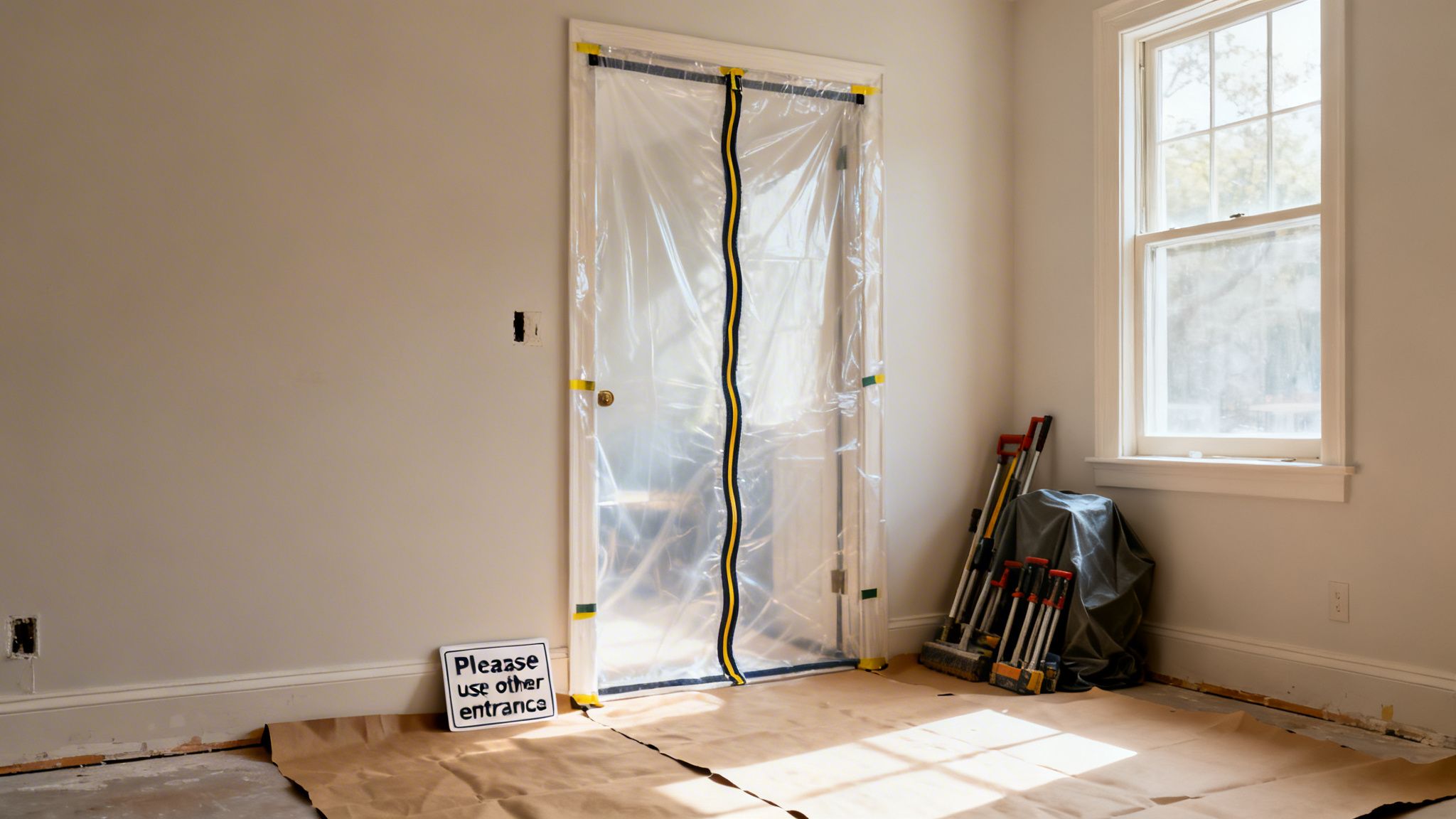
Understanding a contractor’s approach to site management is crucial for both residential and commercial projects where daily life or business operations must continue.
- Safety: A professional contractor will have clear protocols for securing the work area, managing tools, and addressing potential hazards.
- Cleanliness: This goes beyond a final sweep. It involves daily cleanup, dust containment methods like plastic barriers, and organized material storage to keep your space orderly.
- Site Management: This covers the logistics of the project, including work hours, noise levels, parking for crew vehicles, and protection for landscaping and adjacent structures.
How to Confirm a Contractor's Site Management Plan
A verbal promise isn't enough; you need specific commitments written into your agreement.
- Describe a Typical Day: Ask the contractor to walk you through their standard daily routine from arrival to departure. What does their cleanup process look like?
- Discuss Protection Measures: For interior painting, ask how they will contain dust and protect your furniture and flooring. For exterior projects, clarify how they will shield landscaping and windows.
- Review Work Hours and Noise: Confirm their proposed work schedule. Discuss flexibility for commercial properties in Seattle trying to minimize business disruption.
- Request a Safety Plan: Ask for their safety procedures, emergency contacts, and how they secure the site at the end of each day. Reputable firms like Wheeler Painting have established safety and cleanliness standards for every project.
10. How Are Disputes Handled, and Will I Receive a Written Contract?
Even the best-laid plans can encounter bumps. Discussing dispute resolution before a project begins is a sign of a mature, professional contractor. It establishes a clear, fair process for addressing disagreements over quality or costs, preventing small issues from escalating. This discussion should always conclude with a comprehensive, written contract that documents every detail.
In Washington State, a detailed contract is your best tool for ensuring clarity and accountability. A vague, lump-sum quote is a major red flag.
- Written Estimate/Contract: This document is the blueprint for your project. It must itemize all costs, including labor and materials, and specify brands and quantities. It should also outline the project timeline, payment schedule, change order process, and warranty details.
- Dispute Resolution Clause: A good contract specifies the steps to resolve conflicts. This often starts with direct negotiation, followed by mediation (using a neutral third party).
- Protecting Your Investment: Having these processes defined protects both parties. It ensures there is a pre-agreed method for solving problems and keeping the project on track.
How to Ensure Your Contract is Complete
A thorough contract is your project’s most important document. Don’t rush this step.
- Request an Itemized Estimate: Never accept a single lump-sum price. Ask for a breakdown of costs for materials, labor, permits, and other expenses.
- Verify All Agreements: Read the contract carefully to ensure all verbal promises—such as details about color consultation or specific materials—are included in writing. If it’s not in the contract, it’s not guaranteed.
- Clarify the Dispute Process: Ask the contractor to walk you through their standard dispute resolution clause. Is good-faith negotiation the first step?
- Review with a Professional: For large-scale projects in the Seattle or Tacoma area, consider having an attorney review the contract. Reputable contractors like Wheeler Painting will provide their standard agreement for review and are transparent about every clause.
10 Key Contractor Questions Comparison
| Item | Implementation complexity | Resource requirements | Expected outcomes | Ideal use cases | Key advantages |
|---|---|---|---|---|---|
| Is the Contractor Licensed, Bonded, and Insured? | Low — document verification and database checks | Minimal — time, access to L&I and insurer contacts | Legal protection, verified legitimacy, reduced liability | Any hire; projects with regulatory or liability exposure | Liability protection, recourse, professionalism |
| What is Your Experience With Projects Similar to Mine? | Medium — portfolio review and follow-up questions | Time for portfolio review, reference checks, possible site visits | Better fit, fewer mistakes, realistic approach to scope | Specialized or complex projects, niche trades, restorations | Proven competence, local code knowledge, efficient execution |
| Can You Provide Multiple References From Recent Clients? | Medium — conducting and documenting reference interviews | Time, prepared questions, phone/email contact effort | Direct insight into performance, communication, timeliness | High-value contracts or unfamiliar contractors | Real-world verification of claims; reveals reliability |
| How Will You Handle Change Orders and Unexpected Issues? | Medium–High — contract clauses and approval workflows | Clear change-order forms, documentation processes, approval timelines | Controlled scope changes, documented decisions, fewer disputes | Projects with unknowns (remodels, restorations) | Transparency, cost control, dispute prevention |
| What is Your Payment Schedule and Invoice Process? | Medium — define milestones and invoicing requirements | Financial planning, lien waivers, invoice tracking | Aligned cash flow, protection against overpayment | Large or phased projects, projects requiring retention | Financial clarity, retention leverage, reduced billing disputes |
| What is Your Timeline and What Happens if You Miss Deadlines? | Medium — detailed scheduling and penalty clauses | Project schedule, monitoring tools, contingency planning | Predictable schedule, contractor accountability | Time-sensitive commercial work or occupied homes | Timely completion incentives; better coordination |
| How Do You Manage Subcontractors, Permits, and Code Compliance? | High — coordination with multiple parties and jurisdictions | Permit fees, subcontractor vetting, liaison time, inspections | Regulatory compliance, single-point responsibility, fewer reworks | Permitted projects, multi-trade build-outs, commercial jobs | Reduced owner burden, inspection coordination, code compliance |
| What is Your Warranty and What Does It Cover? | Low–Medium — specify duration and exclusions in writing | Written warranty documents, clarity on labor vs. materials | Post-completion protection and defined remedies | Work with long-term performance concerns (coatings, finishes) | Assurance of quality, recourse for defects, confidence in workmanship |
| How Will You Handle Safety, Cleanliness, and Site Management? | Medium — establish daily protocols and containment methods | PPE, dust containment, cleanup supplies, supervision | Minimized disruption, lower injury and property-damage risk | Occupied residences, ongoing business operations | Safer site, protected property, professional site appearance |
| Disputes, Resolution, and Written Estimates/Contracts | High — legal clauses, itemized estimates, resolution paths | Legal review, detailed documentation, third-party experts | Clear dispute process, enforceable expectations, fewer surprises | High-value projects, multi-stakeholder contracts | Reduces litigation risk, clarifies scope/costs, structured resolution |
Build with Confidence: Partner with a Trusted Local Contractor
You have now worked through a detailed checklist of critical inquiries for any potential construction or painting partner. Moving beyond a simple price comparison to a thorough vetting process is the single most important step you can take to protect your investment. Asking the right questions to ask a contractor isn't about being confrontational; it's about establishing a foundation of clarity, accountability, and mutual respect.
A truly professional contractor, whether for "commercial painting services near me" in Seattle or a residential siding replacement in Tacoma, will appreciate your diligence. They understand that informed clients make the best partners. Their willingness to openly discuss licensing, insurance, and payment schedules is a direct reflection of their business ethics. Conversely, any hesitation or refusal to provide this information is the brightest red flag you can encounter.
Key Takeaways for Your Contractor Search
This comprehensive list of questions is your framework for a successful hiring decision. Let’s distill the most crucial takeaways to guide your next steps:
- Documentation is Non-Negotiable: Always verify a contractor's license (via the L&I website), proof of insurance, and bond details. This is your primary shield against liability and financial risk.
- Experience Must Be Relevant: A contractor’s experience is only valuable if it aligns with your specific project. Ask for a portfolio and references for projects that are similar in scope, size, and complexity to yours.
- The Contract Governs Everything: Your written contract is the ultimate source of truth. It should explicitly detail the scope of work, a clear payment schedule, material specifications, the change order process, and warranty terms.
- Communication is Key: Pay close attention to how a contractor communicates during the bidding process. Are they responsive, clear, and professional? This initial interaction is a strong indicator of how they will communicate once the project is underway.
Turning Questions into a Confident Decision
Armed with these questions, you can move forward with a clear plan. Start by shortlisting three to four potential contractors in your area, whether in Kent, Seattle, or surrounding Puget Sound communities. Conduct initial phone screenings, then invite your top candidates to provide a detailed, written bid. Use these bids not just to compare costs but to evaluate the thoroughness and professionalism of each company.
You are not just hiring a service; you are entering into a significant business relationship. The goal is to find a partner who will respect your property, communicate transparently, and deliver high-quality craftsmanship. For facility managers, this means finding a reliable team like Wheeler Painting for ongoing facility maintenance and tenant improvements. For homeowners, it's about entrusting your most valuable asset to a team that values quality and integrity. By using this guide, you empower yourself to make a choice that leads to a smooth, successful project and a final result you can be proud of for years to come.
The team at Wheeler Painting has built a three-decade reputation by providing clear, honest answers to every one of these questions. We believe an informed client is our best partner, and we welcome your detailed inquiries for any residential or commercial project in the Puget Sound area. Find out how our commitment to transparency and quality sets us apart by visiting Wheeler Painting & Restoration Services to schedule your detailed estimate.







 “Like” us on Facebook!