

Construction Quality Control Checklist for Flawless Projects
For property owners and facility managers in the Puget Sound area, a successful construction or painting project isn’t just about the final look; it’s about lasting quality and peace of mind. From preventing costly rework to ensuring safety and durability in our unique Pacific Northwest climate, a systematic approach to quality is non-negotiable. Whether you’re planning a residential remodel, a commercial build-out, or a large-scale painting job, overlooking small details can lead to significant problems. This is where a comprehensive construction quality control checklist becomes essential.
It transforms complex projects from overwhelming undertakings into manageable, step-by-step processes. For local homeowners undertaking a siding replacement or business owners planning an office space renovation, this checklist serves as a roadmap to excellence. It provides a clear framework for verifying materials, inspecting workmanship, and ensuring every aspect of the job meets exacting standards. A well-defined quality plan is the single most effective tool for minimizing defects, avoiding budget overruns, and achieving the desired outcome on schedule.
At Wheeler Painting & Restoration, we’ve spent decades refining our quality control to deliver dependable results for businesses and homeowners across our community. This guide shares our field-tested construction quality control checklist, breaking down the critical inspection points for everything from structural integrity to the final paint finish. We’ll provide actionable steps and clear standards to help you, ensuring your next project meets the highest benchmarks from foundation to final closeout.
1. Material Inspection and Certification
The foundation of any high-quality construction or painting project is the materials themselves. This critical first step in a construction quality control checklist involves the comprehensive verification that every single product brought on-site, from lumber and drywall to paint and sealants, meets or exceeds project specifications. It’s a methodical process of confirming that materials are undamaged, authentic, and certified for their intended application, especially in the demanding climate of the Pacific Northwest.
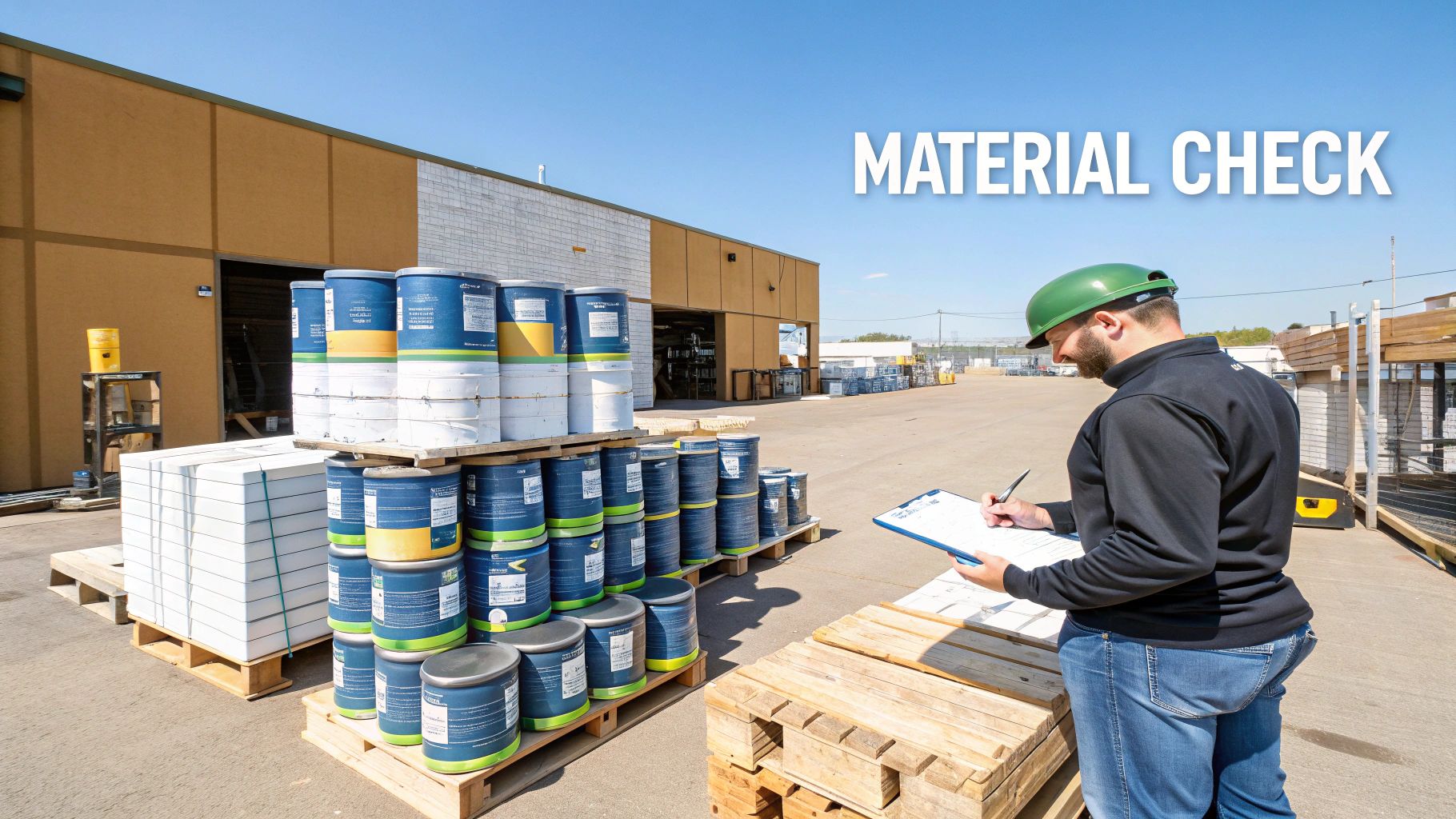
For a commercial build-out or a residential remodel, this means more than just a quick visual scan. It’s about documenting batch numbers, cross-referencing product data sheets with architectural plans, and ensuring every component has the right certifications to guarantee performance, safety, and longevity. Using the wrong materials can lead to premature failure, warranty voids, and costly rework.
Why This Step Is Crucial
Proper material inspection directly impacts durability and compliance. For instance, using an interior-grade coating on an exterior surface in rainy Western Washington will inevitably lead to failure. Verifying an ASTM-certified exterior paint ensures it can withstand moisture and UV exposure. Similarly, confirming drywall batch certifications before a residential kitchen remodel guarantees consistent quality and fire-resistance ratings.
Actionable Implementation Tips
To integrate this check into your process, consider these straightforward steps:
- Create a Detailed Receiving Log: Document the date, supplier, product name, lot number, and inspector’s initials for every delivery. This creates an unbroken chain of custody.
- Photograph Everything: Take clear photos of material labels, certification stamps, and any visible damage upon arrival. This documentation is invaluable for warranty claims and project records.
- Implement Just-In-Time Delivery: Coordinate with suppliers to have materials delivered shortly before they are needed. This minimizes on-site storage, reducing the risk of damage, moisture absorption, or theft.
- Proper On-Site Storage: If materials must be stored, ensure they are in a climate-controlled, dry environment. This prevents issues like moisture absorption in drywall or paint degradation from temperature swings.
2. Surface Preparation and Substrate Assessment
Even the highest quality materials will fail if applied to a compromised surface. This step in a construction quality control checklist involves the rigorous evaluation and preparation of all substrates before painting, coating, or attaching new materials. Proper substrate assessment identifies and corrects issues like hidden moisture, previous coating failures, or structural damage that could otherwise jeopardize the entire project’s integrity and longevity—a critical concern in the damp Puget Sound environment.
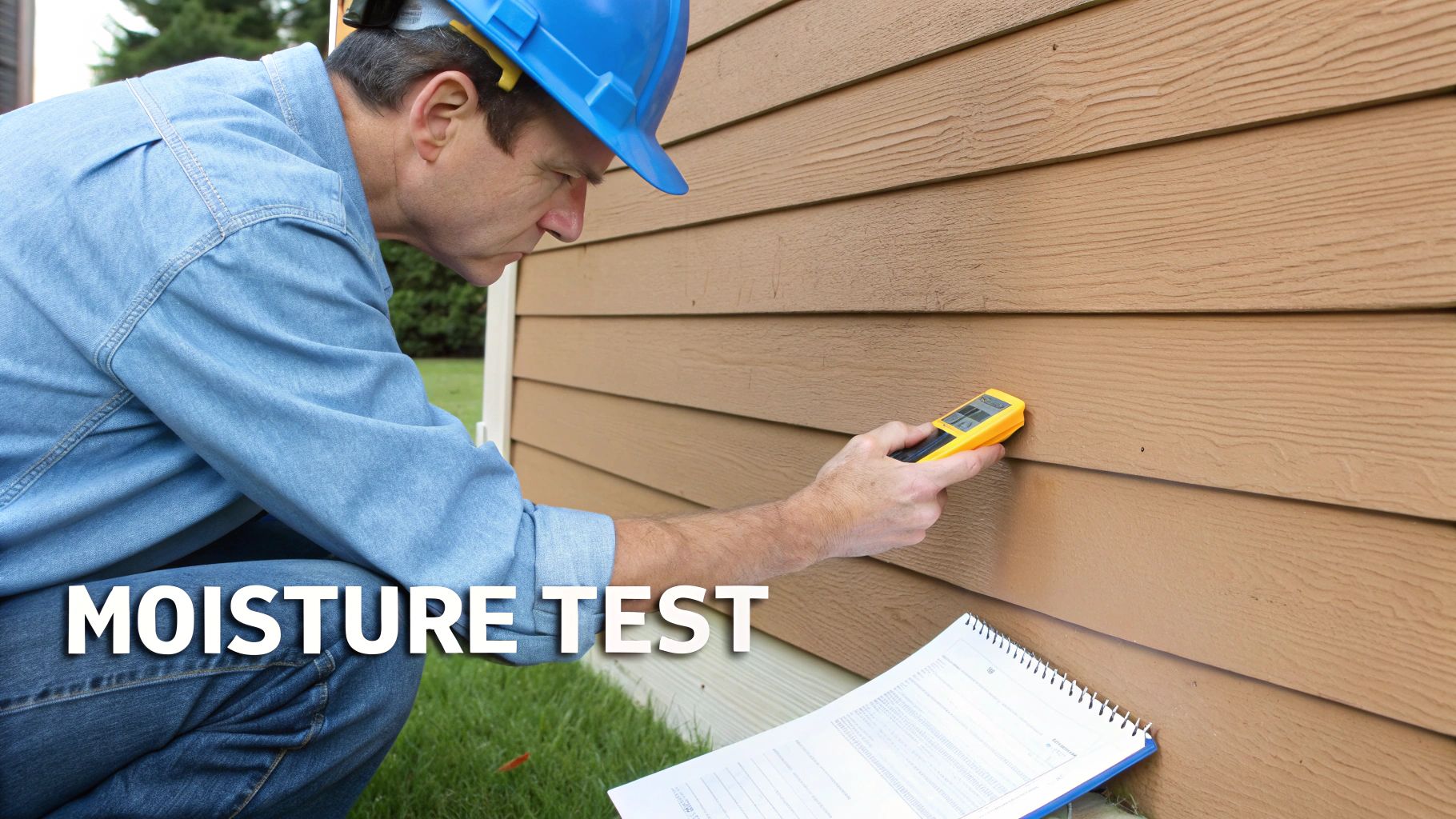
For a commercial build-out or a home remodel, this means going beyond a simple visual check. It requires meticulous testing for moisture content, assessing the pH of concrete floors before an epoxy application, and identifying any underlying rot or mold. Skipping this foundational work is a direct path to peeling paint, delaminating coatings, and costly, frustrating rework down the line.
Why This Step Is Crucial
Thorough surface preparation directly dictates the adhesion, performance, and lifespan of finishes and materials. For example, applying a fresh coat of paint over exterior wood siding with a high moisture content will inevitably lead to blistering and failure as the water tries to escape. Similarly, identifying and performing mold remediation on drywall in a storm-damaged home is essential before repainting to ensure a healthy and durable interior environment.
Actionable Implementation Tips
To make this a non-negotiable part of your quality control process, follow these steps:
- Use Calibrated Moisture Meters: Invest in and regularly calibrate professional-grade moisture meters. Document readings on all substrates, especially in corners, near windows, and on weather-exposed surfaces.
- Establish Clear Thresholds: Define and adhere to acceptable moisture levels before proceeding. A common standard is ensuring wood moisture content is at or below 15% before painting.
- Document with Photos: Take detailed “before” and “after” photos of all surface preparation work. This provides transparent proof of due diligence for the client and serves as a valuable project record.
- Allow Adequate Drying Time: After pressure washing, cleaning, or making repairs, enforce a strict drying period. Rushing to apply coatings before the substrate is fully dry is a primary cause of adhesion failure.
3. Dimensional Accuracy and Layout Verification
Once materials are on-site, the focus shifts to ensuring they are assembled precisely as designed. This step in the construction quality control checklist is a systematic process of measuring and verifying every dimension, layout, and alignment. From structural framing to the final placement of fixtures, this verification guarantees that the physical build-out perfectly matches the architectural plans and building codes, a non-negotiable step for any successful project.
For a commercial tenant improvement in an office space or a complex kitchen remodel, this means confirming that every wall, opening, and fixture location is exact. A deviation of even half an inch can cause a cascade of problems, from ill-fitting cabinetry and countertops to compliance issues with ADA regulations. This meticulous verification prevents costly rework and ensures all subsequent trades can perform their jobs correctly.
Why This Step Is Crucial
Precise layout verification is the backbone of a project’s integrity. For example, during a residential exterior restoration, verifying window opening dimensions ensures the new units and their flashing will fit perfectly, creating a weathertight seal against Puget Sound’s damp climate. In a commercial build-out, confirming the layout against drawings ensures that specific operational and tenant requirements are met, preventing expensive changes after walls are closed.
Actionable Implementation Tips
To integrate dimensional checks into your workflow, implement these practical strategies:
- Measure at Multiple Points: Never trust a single measurement. Verify dimensions at several points along any given element (e.g., top, middle, and bottom of a door opening) to check for squareness and consistency.
- Utilize Laser Levels: For establishing consistently level horizontal and vertical lines across large spaces, such as for countertop installations or ceiling grids, modern laser levels are indispensable tools.
- Mark and Sign Off: Clearly mark approved layout lines and dimensions on the floor or framing with chalk or tape. Have the lead carpenter or site supervisor sign off on these critical checkpoints before the next phase begins.
- Schedule Verification Gates: Build formal verification checks into the project schedule at key milestones: after framing is complete, before drywall is installed, and prior to final fixture placement.
4. Paint Application Process Control
The aesthetic appeal and long-term durability of a finish depend entirely on how it’s applied. This step in a construction quality control checklist moves beyond material selection to standardize the entire application process, from surface preparation and priming to the final topcoat. It establishes a repeatable, documented procedure for every coating, ensuring consistent, high-quality results across diverse projects, from residential remodels to large-scale commercial renovations.
For a commercial facility or a home exterior, this means controlling every variable. It involves documenting environmental conditions like temperature and humidity, verifying proper coating thickness at each stage, and adhering to manufacturer-specified drying times. This meticulous control prevents common failures like peeling, blistering, and uneven sheen, safeguarding the investment and ensuring a flawless finish.
Why This Step Is Crucial
Standardized application directly impacts coating performance and longevity. For example, applying an exterior marine-grade coating system to a home without verifying the dry film thickness (DFT) could leave the substrate vulnerable to moisture intrusion from the constant Puget Sound rain. Similarly, an interior kitchen remodel requires enamel paint applied over a moisture-resistant primer; skipping this control can lead to premature failure in a high-humidity environment.
Actionable Implementation Tips
To integrate this check into your process, consider these straightforward steps:
- Establish Environmental Limits: Define and document the acceptable temperature and humidity ranges for each coating product. Empower teams to halt work when conditions fall outside these limits to prevent application defects.
- Use Film Thickness Gauges: Regularly measure wet film thickness (WFT) during application with a simple gauge to ensure sufficient material is being applied. This is a quick, real-time check for proper coverage.
- Verify Dry Film Thickness (DFT): Use an electronic DFT meter to confirm the final coating thickness meets the project specifications before applying subsequent coats. This is crucial for performance coatings. To learn more about how professional application impacts results, explore our specialized painting services.
- Maintain On-Site Logs: Keep a detailed daily log of temperature, humidity, and moisture readings. This documentation provides a verifiable record of quality control and is invaluable for project closeout.
5. Drywall and Interior Finish Quality Standards
The final appearance of any interior space hinges on the quality of the surface beneath the paint. This step in a construction quality control checklist focuses on the systematic inspection of drywall installation and finishing, from hanging the sheets to the final sanding. It’s a meticulous process ensuring that every wall and ceiling provides a smooth, uniform, and flawless canvas for paint, which is essential for both high-end residential and professional commercial interiors.
For a commercial tenant improvement in an office or a kitchen remodel, this means verifying everything from proper fastener countersinking to the smoothness of joint compound. Skipping this detailed inspection can lead to visible seams, shadowing, and surface imperfections that even the best paint cannot hide, resulting in a finish that looks unprofessional and requires costly rework.
Why This Step Is Crucial
A flawless finish directly impacts the aesthetic quality and client satisfaction of a project. For instance, a residential kitchen remodel that specifies a Level 5 drywall finish requires a perfectly smooth surface to accommodate high-gloss paints and under-cabinet lighting, which accentuate imperfections. In a commercial setting, ensuring detailed drywall inspection protocols are met guarantees the professional appearance required for client-facing spaces. This attention to detail is a cornerstone of successful residential construction projects.
Actionable Implementation Tips
To guarantee superior interior finishes, integrate these checks into your workflow:
- Define and Communicate Finish Levels: Clearly specify the required drywall finish level (from 0 to 5) in project documents and ensure the installation crew understands the standard for each room.
- Inspect with Critical Lighting: Use a work light held at a low angle to the wall surface. This technique, known as side-lighting, casts shadows that reveal subtle waves, tool marks, and sanding imperfections invisible under direct overhead light.
- Stage-Gate Inspections: Don’t wait until the end. Conduct separate inspections after taping, after each coat of mud, and after sanding. Catching issues early is far more efficient than correcting them after primer has been applied.
- Mandate Primer Application: Document that a full coat of high-quality primer has been applied and approved before any other trades (like cabinet installers or painters) begin their work. This seals the surface and ensures proper paint adhesion.
6. Flashing and Waterproofing Verification
In the moisture-rich climate of the Pacific Northwest, water is the primary enemy of building integrity. This makes flashing and waterproofing one of the most critical steps in any construction quality control checklist. This phase involves the meticulous inspection of all installations designed to prevent water intrusion, from the seals around windows and doors to the flashing at every roof penetration and exterior transition. It’s a non-negotiable step for ensuring a building’s long-term health.
Whether it’s a commercial build-out or a residential siding replacement, getting this detail wrong leads to catastrophic failures. Proper verification means checking sealant application, ensuring correct material overlaps, and confirming proper fastening techniques. Overlooking a single improperly sealed window can result in rot, mold, and structural damage that costs thousands to remediate.
Why This Step Is Crucial
Effective flashing and waterproofing are the building’s first and most important line of defense against water damage. In a residential roof restoration, for example, detailed inspection of flashing at all penetrations like vents and chimneys prevents leaks that could undermine the entire project. Similarly, for a commercial waterproofing project, verifying sealant effectiveness and membrane integrity ensures the structure remains dry and sound for decades.
Actionable Implementation Tips
To ensure your project is watertight, integrate these verification steps:
- Photo-Document Everything: Take detailed photographs of all flashing and waterproofing installations before they are covered by siding, roofing, or trim. This creates a permanent record of proper installation.
- Verify Material Compatibility: Ensure that the sealants used are chemically compatible with the adjacent materials (e.g., metal flashing, vinyl window frames, fiber cement siding). Using the wrong sealant can cause it to fail prematurely.
- Schedule Pre-Closure Water Testing: For critical areas, conduct a controlled water test after installation but before the final coverings are put on. This proactive check can reveal any small leaks or imperfections that are easy to fix at this stage.
- Train Crews on Overlap Direction: Ensure every team member understands that all flashing and weather-resistant barriers must be installed shingle-style. This means the upper layers overlap the lower layers to shed water down and away from the structure.
7. Structural Inspection and Load-Bearing Verification
Ensuring a building’s structural integrity is non-negotiable, whether it’s a new home addition or a commercial expansion. This step in a construction quality control checklist is a rigorous verification that all load-bearing elements like beams, headers, joists, and their connections are installed correctly according to engineering plans and building codes. It’s the framework that guarantees the safety and longevity of the entire structure.
For a residential kitchen remodel that involves removing a wall, this means confirming the new support beam can handle the load. In a commercial construction project, it involves ensuring a new mezzanine floor meets all seismic and live-load requirements. Skipping this verification can lead to catastrophic failures, compromising safety and resulting in immense liability.
Why This Step Is Crucial
Proper structural verification is the backbone of safe construction. In the Pacific Northwest, this is particularly important due to regional seismic activity and wind load requirements. An improperly secured connection between a new addition and an existing home can create a critical failure point during an earthquake. Likewise, a commercial tenant improvement that adds significant weight without reinforcing the structure below is a disaster waiting to happen. This check ensures the building can safely handle all intended and environmental stresses.
Actionable Implementation Tips
To effectively integrate structural verification into your workflow, follow these steps:
- Schedule a Framing Inspection: Arrange for the local building department to conduct a framing inspection before any drywall or insulation is installed. This allows for easy visibility and modification if needed.
- Photograph All Connections: Document every structural connection, fastener pattern, and load-bearing element with clear photos. This creates a visual record that proves compliance with engineered drawings.
- Cross-Reference Plans and Codes: Meticulously compare the installed framing against the approved architectural and engineering plans. Verify that all materials and fasteners meet the specific building codes for the Puget Sound region.
- Use Rated Fasteners: Ensure all structural screws, bolts, and hangers are rated for the seismic and wind loads common in Western Washington. Using standard fasteners where engineered ones are specified is a common but dangerous mistake.
8. HVAC, Plumbing, and MEP Rough-In Inspection
The hidden systems behind your walls, including mechanical, electrical, and plumbing (MEP), are the lifelines of any modern building. This step in a construction quality control checklist is a systematic verification of these systems during the rough-in phase, performed after installation but before drywall or other finishes conceal them. It is a non-negotiable checkpoint to prevent catastrophic failures and expensive, invasive repairs down the line.
For a commercial tenant improvement in an office space, this involves verifying that HVAC zoning, fire suppression systems, and plumbing for new restrooms meet all local codes before the walls are closed. Likewise, during a residential kitchen remodel, it’s the final opportunity to confirm that the plumbing for a new island sink is properly vented and all new electrical circuits are correctly routed, ensuring functionality and safety for years to come.
Why This Step Is Crucial
A meticulous MEP rough-in inspection is about proactive problem-solving. Identifying a poorly sealed duct joint, an unsupported plumbing line, or an improperly secured electrical box at this stage is a simple fix. Discovering the same issue after the walls are painted requires demolition, rework, and significant project delays. This check ensures system integrity, code compliance, and long-term operational efficiency, directly impacting utility costs and occupant comfort.
Actionable Implementation Tips
To effectively integrate MEP rough-in checks into your workflow, follow these best practices:
- Schedule a Coordinated Walk-Through: Hold the inspection with the mechanical, electrical, and plumbing foremen present. This allows for immediate clarification and on-the-spot resolution of any identified issues.
- Conduct Pressure and Integrity Tests: Don’t just rely on visual checks. Use a hydronic flush test for plumbing supply lines and a static pressure test for ductwork to definitively confirm that there are no leaks.
- Create a Photographic Record: Take detailed, high-resolution photos of all systems within the wall and ceiling cavities. This documentation is invaluable for future maintenance, troubleshooting, or renovation planning.
- Verify Code-Mandated Clearances: Use a tape measure to confirm that all installations meet required clearances, such as proper spacing for pipe supports and ensuring electrical boxes are not recessed too far into stud cavities.
9. Safety Compliance and Fall Protection Inspection
Beyond materials and workmanship, a project’s ultimate quality is measured by its safety record. This non-negotiable step in a construction quality control checklist involves the continuous verification that the worksite adheres to all OSHA standards. It focuses on the proactive management of hazards, including fall protection systems, scaffolding integrity, proper ladder use, personal protective equipment (PPE), and clear hazard communication to protect everyone involved.
Whether it’s a “residential contractor near me” painting a multi-story home or a commercial crew renovating a local retail space, safety protocols are paramount. This isn’t a one-time check but a daily commitment to identifying and mitigating risks. For example, any restoration work on a high-pitched roof requires certified scaffolding and constant monitoring, while a commercial painting project mandates daily safety briefings to address the day’s specific tasks and potential hazards.
Why This Step Is Crucial
A rigorous safety program protects lives and ensures legal and insurance compliance. An accident can halt a project indefinitely, lead to severe legal penalties, and irreparably damage a company’s reputation. Proactive inspections and documented safety measures demonstrate a commitment to crew and client well-being, which is a hallmark of a professional contractor. It prevents costly delays and protects the project’s financial and legal standing.
Actionable Implementation Tips
To effectively integrate safety compliance into your workflow, consider these critical actions:
- Develop Site-Specific Safety Plans: Before work begins, create a unique safety plan that identifies the specific hazards of that project, from electrical risks in an office renovation to fall hazards on an exterior repaint.
- Conduct Daily Pre-Work Safety Meetings: Start each day with a brief “toolbox talk” to discuss the day’s tasks, associated risks, and the required safety measures. This keeps safety top-of-mind for the entire crew.
- Inspect All Equipment Before Use: Every harness, lanyard, ladder, and scaffold component must be inspected for damage or wear before each use. Damaged equipment must be immediately removed from service.
- Maintain Certifications and Documentation: Ensure crew leads have current OSHA 10-hour certification. Meticulously document all safety inspections, training sessions, and incidents to protect against liability and satisfy insurance requirements.
10. Final Inspection and Punch List Documentation
The final inspection and punch list represent the project’s last critical quality gate before handover. This step in a construction quality control checklist is a comprehensive walkthrough with clients, architects, and stakeholders to formally document completion, identify any outstanding items, and verify that all work meets the approved specifications and the client’s expectations. It is the definitive moment where craftsmanship is confirmed and the project is brought to a successful close.
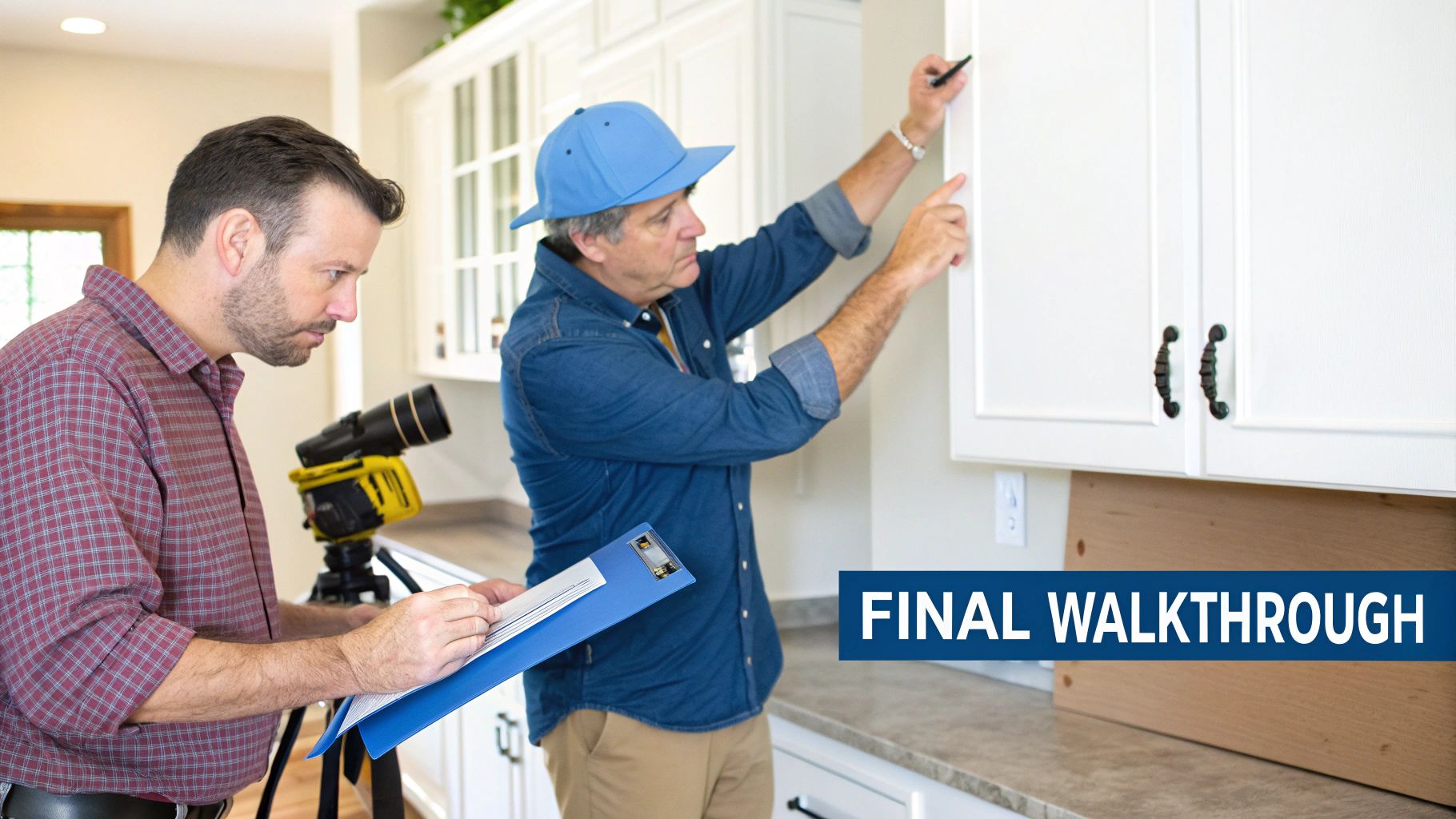
Whether it’s a commercial build-out for an expanding business or a home remodel, this process is far more than a simple visual check. It’s a methodical review where every detail, from the fit of a cabinet door to the finish on a freshly painted wall, is scrutinized against the project scope. Creating a detailed punch list ensures that even the smallest deficiencies are captured, tracked, and resolved before the final payment is made and the keys are handed over.
Why This Step Is Crucial
A thorough final inspection is the key to client satisfaction and a professional project closeout. For example, during the final walkthrough of a residential kitchen remodel, our team methodically verifies countertop fit, hardware installation, and plumbing functionality to ensure the space is move-in ready. Similarly, a final walkthrough for a commercial tenant improvement with a property manager confirms that every fixture is installed correctly and all code requirements are met before the tenant takes occupancy. This structured process prevents post-project disputes and ensures the finished product aligns perfectly with the client’s vision.
Actionable Implementation Tips
To execute a seamless final inspection and punch list process, follow these steps:
- Use a Standardized Checklist: Create a detailed final inspection checklist tailored to the specific project scope. This ensures no area, from electrical outlets to paint touch-ups, is overlooked.
- Schedule Ample Time: Book the final walkthrough with enough time scheduled to allow for minor, on-the-spot corrections, which can significantly shorten the final punch list.
- Document with Photos: Take clear photographs of the completed work as a whole, and then take separate, detailed photos of each identified punch list item. This visual evidence eliminates ambiguity.
- Prioritize the Punch List: Categorize items by urgency: safety issues (must-fix before occupancy), functional problems (affecting use), and cosmetic imperfections. This helps structure the final corrective work efficiently.
- Set a Clear Timeline: Agree on a specific timeframe for completing all punch list items. Follow up with a final re-inspection of the corrected work before issuing the final invoice and closing out the project.
Construction Quality Control: 10-Point Comparison
| Item | Implementation complexity | Resource requirements | Expected outcomes | Ideal use cases | Key advantages |
|---|---|---|---|---|---|
| Material Inspection and Certification | Moderate — procedural checks and documentation | QA inspector, receiving log, storage space, supplier certifications | Verified compliant, undamaged materials and valid warranties | Specialty coatings, exterior PNW projects, commercial tenant work | Prevents rework, ensures code/warranty compliance, builds trust |
| Surface Preparation and Substrate Assessment | High — diagnostic testing and remediation | Moisture meters, pH/salinity testers, trained technicians, drying time | Identified moisture/adhesion issues and prepared substrates for coatings | Post-storm restoration, concrete epoxy prep, moisture-prone exteriors | Prevents coating failure, extends coating lifespan |
| Dimensional Accuracy and Layout Verification | Low–Medium — measurement and plan verification | Laser/tape measures, levels, blueprints, trained measurers | Accurate layouts and alignment, reduced fitment errors | Additions, kitchen remodels, commercial fit-outs | Ensures design intent and code compliance, avoids costly rework |
| Paint Application Process Control | Medium — process and environmental controls | Environmental monitors, thickness gauges, applicators, primers | Consistent, durable finishes and documented coating thickness | Exterior PNW painting, specialty finishes, commercial coatings | Produces consistent quality, improves longevity and warranty compliance |
| Drywall and Interior Finish Quality Standards | Medium — multi-stage finishing and inspections | Skilled finishers, sanding tools, inspection lighting, primers | Smooth, defect-free surfaces ready for paint | Interior remodels, Level 4–5 finish requirements, commercial interiors | Reduces visible defects and touch-ups, enhances final appearance |
| Flashing and Waterproofing Verification | High — critical detail work and testing | High-quality sealants, fasteners, thermal imaging/water tests, skilled installers | Minimized water intrusion and protected building envelope | Roof restorations, window/door installations, coastal exteriors | Prevents leaks and moisture damage, preserves structural integrity |
| Structural Inspection and Load-Bearing Verification | High — engineering and code checks | Structural inspector/engineer, certified fasteners, permits, documentation | Safe, code-compliant load-bearing elements | Additions, island installations, mezzanines and expansions | Ensures occupant safety and long-term structural performance |
| HVAC, Plumbing, and MEP Rough-In Inspection | Medium–High — multi-trade coordination | Trades crews, pressure/static testers, labeling, photo documentation | Functional, accessible MEP systems with fewer hidden defects | Remodels with new MEP, commercial tenant improvements | Prevents costly post-closure repairs, ensures system efficiency |
| Safety Compliance and Fall Protection Inspection | Medium — continuous oversight and enforcement | Fall protection systems, scaffolding, PPE, training, inspection logs | Reduced injuries, OSHA compliance, documented safety practices | Multi-story painting, roofing, high-access restoration work | Protects workers, lowers liability and insurance risk |
| Final Inspection and Punch List Documentation | Low–Medium — administrative walkthrough and documentation | Standardized checklists, photos, client/inspector coordination | Documented completion, identified punch-list items before closeout | Project closeout, client handover, insurance claim completion | Prevents disputes, ensures client satisfaction and permit closure |
Partner with a Team That Puts Quality First
Moving from a conceptual plan to a finished, functional space is a complex journey filled with countless decisions and potential pitfalls. This comprehensive construction quality control checklist is designed to demystify that process, transforming it from an overwhelming task into a manageable, step-by-step roadmap to success. By systematically addressing each phase, from pre-construction verification to the final punch list, you create a framework for accountability, precision, and excellence.
The checkpoints we’ve explored, such as Material Inspection, Surface Preparation, and Waterproofing Verification, are not just isolated tasks. They are interconnected elements in a larger system designed to prevent costly rework, ensure structural integrity, and deliver a final product that stands the test of time. For local homeowners undertaking a remodel or businesses planning a commercial build-out, this structured approach is the most effective way to protect your investment and achieve your vision.
Key Takeaways for Your Next Project
Mastering quality control is less about memorizing a list and more about adopting a mindset of proactive diligence. Here are the most critical takeaways to implement immediately:
- Documentation is Your Strongest Ally: Verbal agreements are fleeting. A project binder, whether digital or physical, containing signed-off checklists, material certifications, photos, and communication logs provides an indisputable record of progress and standards.
- Early Detection Saves Everything: The cost and complexity of fixing an error skyrocket as a project progresses. Verifying foundation layout before concrete is poured is simple; adjusting a structural wall after drywall is installed is a nightmare. This principle applies to every trade, from MEP rough-ins to paint prep.
- Empowerment Through Specificity: Vague instructions lead to ambiguous results. Instead of asking if the “paint looks good,” a quality checklist asks, “Is the paint free of runs, sags, and holidays? Is the color consistent across all surfaces under various lighting conditions?” This level of detail removes subjectivity and sets clear, measurable standards for success.
Putting Quality Control into Action
The true value of a robust construction quality control checklist is realized when it becomes a living document, actively used by a dedicated team. It fosters a culture of shared responsibility where every team member, from the project manager to the specialty subcontractor, understands the quality standard and their role in upholding it. This collaborative approach ensures that potential issues are identified and resolved at the earliest possible stage, maintaining momentum and keeping the project on schedule and within budget.
For property owners and facility managers in Western Washington, this isn’t just about avoiding problems; it’s about achieving peace of mind. Knowing that a methodical, documented process is guiding your project allows you to focus on the bigger picture rather than worrying about the small details. It transforms the client-contractor relationship from a transactional service into a trusted partnership built on transparency and a mutual commitment to excellence. Ultimately, a project guided by a meticulous quality control process doesn’t just look better on day one, it performs better for years to come.
When your project demands a partner who has built quality control into the very fabric of their process, turn to the experts at Wheeler Painting & Restoration Services. Our decades of experience in residential and commercial construction in the Puget Sound region are founded on the meticulous principles outlined in this guide, ensuring your project is a resounding success. Start your project with confidence by visiting us at Wheeler Painting & Restoration Services to schedule your on-site consultation today.







 “Like” us on Facebook!