

Deck Contractor Guide for Puget Sound Homeowners
A lot of homeowners in Tacoma, Seattle, Bellevue, and the rest of Puget Sound start the same way. They step into the backyard on a dry afternoon, look at the slope, the view, or the patch of lawn no one uses, and think, “We should build a deck here.”
Then the practical questions show up fast. Will it hold up in this weather? Does the city require permits? What material lasts? How do you tell the difference between a solid deck contractor and someone who gives a slick bid but cuts corners where you can't see them?
Those questions are fair. Decks look simple when they're finished, but the work behind them isn't simple at all. The U.S. Deck & Patio Construction industry was projected to generate about $1.3 billion in revenue in 2026, which is a useful reminder that deck building is its own specialized trade, not just a side job for someone with tools (IBISWorld deck and patio construction industry overview).
In Western Washington, the difference between a deck that ages well and one that becomes a repair project usually comes down to details often overlooked. Water management. Ledger attachment. Hardware selection. Drainage. Permit compliance. Those aren't glamorous topics, but they're the ones that matter.
If you're still shaping ideas, it can also help to look at broader outdoor-living concepts before locking in your design. A practical example is this covered outdoor living guide, which can help you think through whether your deck should stay open or tie into a roofed space.
Your Puget Sound Deck From Dream to Plan
The first version of a deck project usually lives in your head. Maybe it's a simple platform off the back door for easier summer dinners outside. Maybe it's a larger structure with stairs down to the yard, space for a grill, and room to sit out even when the forecast looks questionable.
That early vision matters, but the next step is turning it into a plan that fits your house, your site, and the realities of building in a wet climate. In Puget Sound, the deck that looks good in a showroom photo isn't always the one you want attached to your home in February.
Start with how you'll use it
A deck contractor should ask practical questions before talking finishes and colors.
- How many people will use it regularly. A quiet morning coffee deck needs a different layout than one used for large family gatherings.
- Will you need stairs. Stairs affect framing, labor, site flow, and budget more than many homeowners expect.
- How much weather exposure the deck gets. Full sun, dense tree cover, and wind-driven rain all change material and maintenance choices.
- How the deck connects to the house. Door height, siding type, and waterproofing details all matter at the wall connection.
A good deck plan starts with use, not with a brochure photo.
Think about the site before the style
In Seattle, West Seattle, Issaquah, and Snoqualmie, two backyards on the same street can build very differently. One lot may be straightforward. The next may have drainage issues, limited access, a steep grade, or soil conditions that change footing work.
That's why experienced builders don't price responsibly from photos alone. They walk the site, look at how water moves, and study the connection points at the house before treating the project as a real build rather than an idea.
A clear plan also lowers stress. Once you know the deck size, rough layout, elevation changes, and likely material direction, the rest of the process becomes much easier to manage.
What homeowners usually worry about first
Homeowners aren't intimidated by choosing a board color. They're worried about making an expensive mistake.
A few concerns come up again and again:
| Concern | Why it matters in Puget Sound |
|---|---|
| Rot and moisture damage | Constant damp conditions expose weak flashing and poor ventilation quickly |
| Permits and inspections | Cities can differ in process, and missing approvals creates delays |
| Contractor quality | The visible finish can look fine even when hidden structural work is weak |
| Long-term upkeep | Some materials reduce routine maintenance, but none make water irrelevant |
A steady, methodical contractor helps. The project feels manageable when someone can translate the process into plain language, explain trade-offs clearly, and keep the focus on durability instead of shortcuts.
What a Professional Deck Contractor Really Does
A professional deck contractor doesn't just build a platform and bolt on rails. The job is part structural work, part project management, and part problem-solving around existing homes.
That distinction matters in older neighborhoods across Bellevue, Kirkland, Tacoma, and Seattle, where many deck projects aren't blank-slate installations. They're rebuilds, structural repairs, resurfacing jobs, or replacements tied to houses that have already settled, aged, and seen years of weather.

New build, repair, or full replacement
A lot of homeowners search for a deck contractor when they think they need a new deck, but their actual need may be more specific. Industry research shows that repair and remodeling of existing decks accounts for over 60% of decking demand, which tells you how much of this trade revolves around aging structures rather than brand-new construction (Principia decking demand assessment).
That has real consequences for hiring. A contractor who only talks design trends but can't evaluate framing, footings, rot, connection points, and railing safety isn't equipped for many Western Washington projects.
A professional should be able to tell you which category your deck falls into:
- Surface-level refresh when framing is sound and the main need is replacing deck boards, rail parts, or finishes
- Targeted structural repair when certain posts, ledgers, stairs, or joists have failed
- Full replacement when the structure has widespread deterioration, outdated construction methods, or code issues that make piecemeal repair a poor investment
The contractor's job starts before materials arrive
Good deck work begins with assessment and documentation. That includes measuring the site, looking at grade changes, checking the house connection, and deciding what has to be permitted.
It also includes communication. Homeowners should understand what will be saved, what will be demolished, what hidden damage might appear after demo, and how change orders will be handled if conditions behind the old deck differ from what was visible at the estimate stage.
Practical rule: If a contractor can't explain how they evaluate an existing deck, they probably shouldn't be rebuilding one.
The work behind the visible work
The visible portion of a deck gets most of the attention. Homeowners notice board spacing, rail style, stair layout, and overall appearance. Contractors pay attention to those details too, but they also spend a lot of time on what remains hidden after completion.
That includes:
- Structural connections that carry load safely back to the house and footings
- Drainage paths that keep water from collecting where framing stays wet
- Fasteners and connectors chosen for exterior exposure
- Transitions at doors and siding where mistakes can lead to long-term water intrusion
That's why deck work overlaps with broader residential remodeling and exterior envelope knowledge. On many homes, building a deck well means understanding the wall it attaches to just as much as the deck itself.
How to Choose Your Deck Contractor in Washington State
Hiring the right deck contractor is the part of the project that protects everything else. If you get this step right, the rest of the job usually runs smoother. If you get it wrong, even a decent-looking deck can turn into a dispute over scope, timeline, money, or hidden defects.
Homeowners in Tacoma, Seattle, New Castle, and Issaquah don't need a complicated screening system. They need a practical one.

The short list that actually matters
Start with the basics that reputable guides consistently emphasize. You should verify licensing and insurance, get an itemized written estimate, and avoid any contractor demanding full payment upfront, using milestone-based payments instead (deck builder hiring red flags and payment guidance).
That sounds simple, but it rules out a surprising amount of risk.
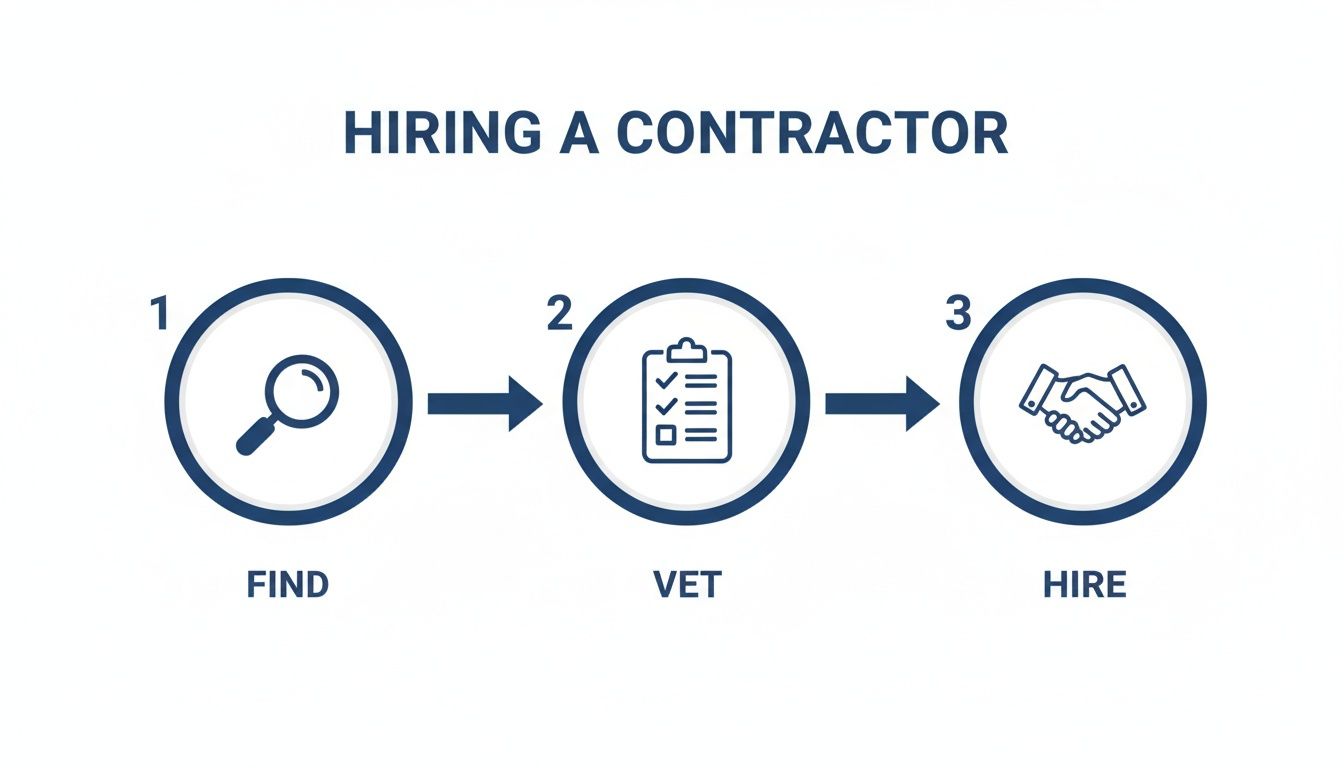
Use this checklist when comparing bids:
- Verify Washington credentials. Confirm the contractor is properly licensed and insured before you discuss final terms.
- Ask for an itemized estimate. You want labor, materials, scope, and exclusions stated clearly, not a single lump-sum line.
- Review local project experience. A contractor familiar with Seattle, Bellevue, West Seattle, or North Bend conditions will usually ask better questions about drainage, access, and permit issues.
- Check how payments are structured. Milestone billing is normal. Full payment before work starts is not.
- Read the contract slowly. Look for scope, materials, timeline, exclusions, permit responsibility, warranty language, and change-order process.
Questions worth asking in the estimate meeting
This part doesn't need to sound adversarial. A solid contractor should be comfortable answering direct questions.
Ask things like:
- Have you built or rebuilt decks on occupied homes like mine?
- What site conditions could change the scope after demolition?
- Who handles permits and inspections?
- How do you address waterproofing where the deck meets the house?
- What's excluded from this estimate?
- How will you communicate schedule changes or hidden-condition discoveries?
The answers tell you a lot. Clear, specific responses are a good sign. Vague reassurance usually isn't.
For homeowners comparing broader renovation partners, this guide on how to choose a general contractor is also useful because many of the same screening principles apply to deck work.
A quick visual overview can help if you're sorting through several bids at once:
Red flags that deserve immediate caution
Some warning signs are obvious. Others are easy to excuse in the moment because the bid looks attractive.
Watch for these patterns:
| Red flag | Why it matters |
|---|---|
| No itemized scope | You can't compare proposals fairly or enforce expectations later |
| Pressure to sign quickly | High-pressure sales often hide weak planning |
| Large upfront payment demand | It shifts project risk heavily onto the owner |
| No discussion of permits | A deck contractor should address permit responsibility early |
| No questions about the house or site | That usually means the estimate is based on assumptions |
If the estimate meeting focuses only on price and appearance, you're not hearing enough about the parts of the job that determine whether the deck lasts.
What transparency looks like in practice
A trustworthy contractor usually isn't the cheapest bid. That's especially true when one company is pricing climate-resilient details and another is leaving them out.
In practical terms, transparency looks like this:
- The contractor visits the site before final pricing.
- The proposal names materials rather than keeping them vague.
- Stairs, rails, and repairs aren't buried in a catch-all line item.
- Payment stages match work progress.
- The contractor explains what happens if demolition exposes hidden damage.
Wheeler Painting is one local option for homeowners and property owners who want a single contractor handling deck work within a broader residential or light commercial construction scope, especially when repairs, waterproofing, or related exterior work may overlap.
Designing for Durability in the Pacific Northwest
A deck in Puget Sound doesn't fail because rain exists. It fails because the design and construction details didn't respect the rain.
That's the real dividing line between a deck that stays serviceable and one that starts trapping water, loosening at the house, staining prematurely, or showing decay where no one can see it. In this region, the cheapest-looking bid often becomes expensive later because it ignores moisture behavior.

What actually causes trouble here
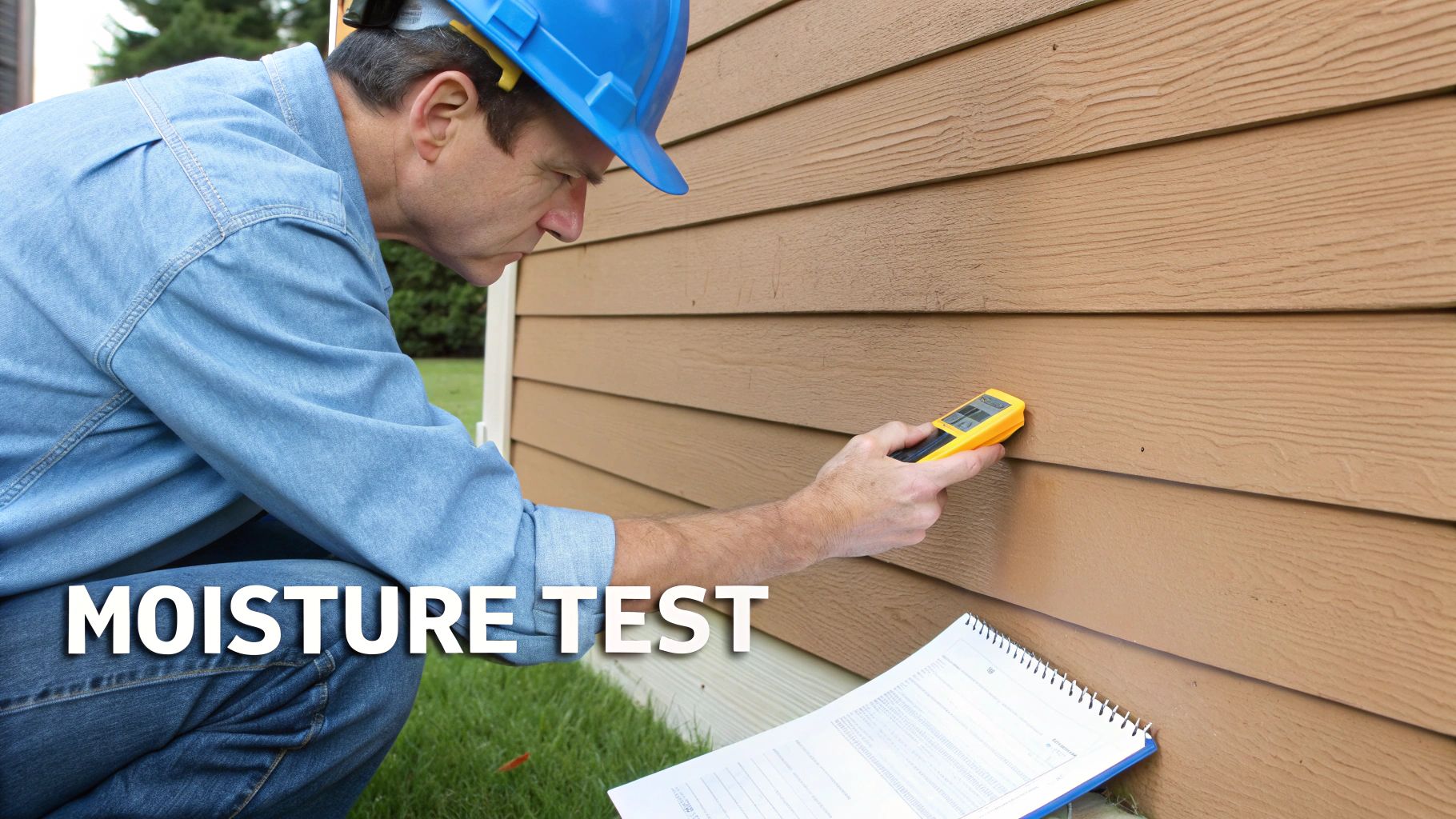
In wet climates like ours, deck problems are often tied to water intrusion and improper ledger attachment, not just surface wear. Builders who understand that from the start prioritize waterproofing details and corrosion-resistant hardware rather than treating them as optional add-ons (wet-climate deck durability guidance).
That's why climate resilience should shape the early design choices. Not after framing. Not after the boards are installed. Up front.
The board you walk on matters. The connection behind it matters more.
Material choices through a Puget Sound lens
Homeowners often ask whether they should choose cedar, pressure-treated wood, or composite. The answer depends on how they balance appearance, maintenance, upfront cost, and moisture exposure.
Here's the practical comparison:
| Material | Works well when | Trade-off to understand |
|---|---|---|
| Cedar | You want a natural wood look and accept routine maintenance | It needs consistent care and careful drying conditions |
| Pressure-treated lumber | Budget matters and the structure is designed well | It can still perform poorly if drainage and detailing are weak |
| Composite decking | You want lower routine surface maintenance | It still depends on proper framing, spacing, and water management below |
The mistake is assuming material alone solves durability. Composite can hide problems below. Cedar can perform well with proper detailing and maintenance. Pressure-treated lumber can last when the framing system sheds water instead of trapping it.
The details that separate durable decks from short-lived ones
The most important deck features in Western Washington often aren't the ones homeowners ask about first.
Look for a contractor who talks clearly about:
- Ledger flashing where the deck connects to the home
- Corrosion-resistant hardware for long-term exposure
- Airflow and drainage under the deck surface
- Stair design that doesn't create water traps
- Railing attachment points that stay solid without creating leak paths
If the contractor only discusses board brands and rail style, the conversation is incomplete.
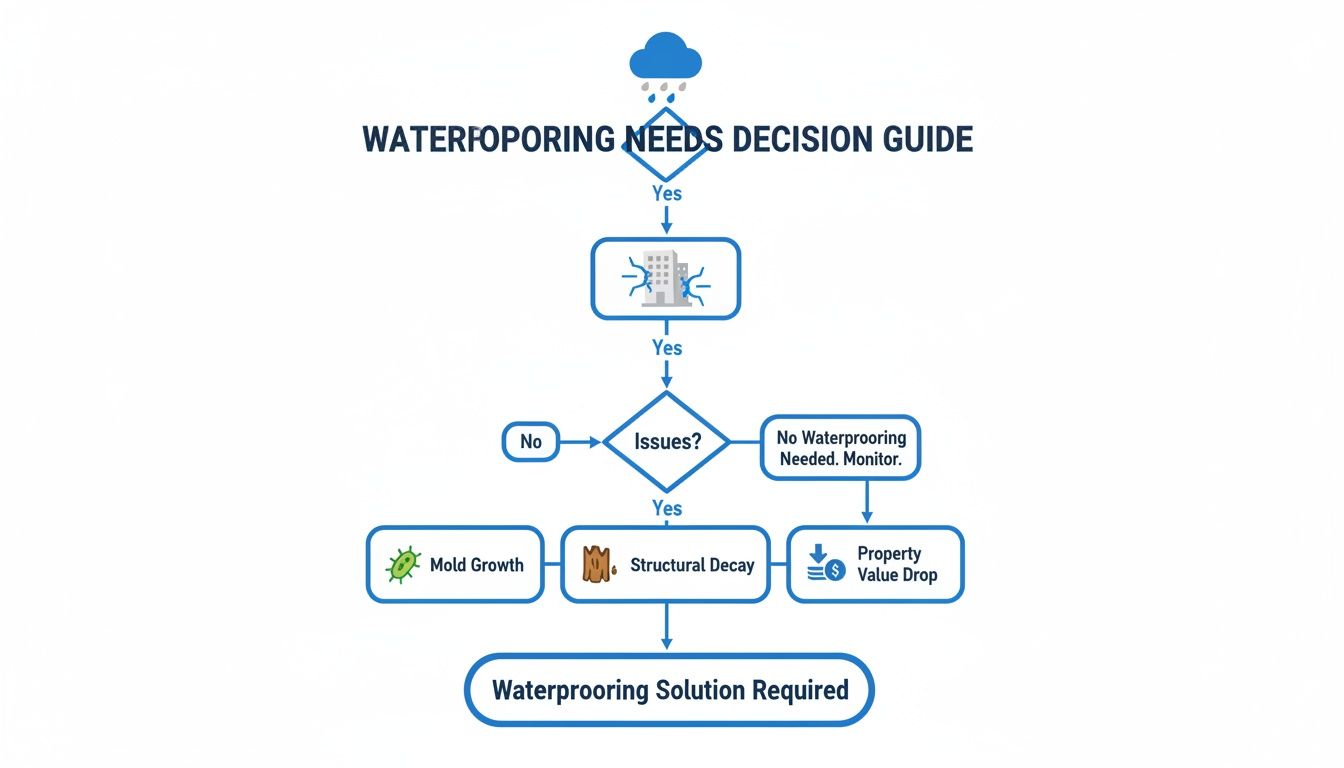
For homeowners sorting through moisture-related terms, this plain-language explanation of what waterproofing means in construction helps connect deck details to the larger goal of protecting the house itself.
What durable design sounds like in a real conversation
A climate-aware deck contractor usually says things that are less flashy and more useful. They talk about drainage gaps, house attachment, flashing sequence, hardware compatibility, maintenance access, and how wet debris collects in shaded areas.
They also push back when a design detail looks good in a rendering but creates a weak point in service. That's a good sign, not an annoyance.
Some trends don't age well here. Tight details that trap organic debris. Decorative choices that make inspection harder. Surface layouts that hold moisture at the house line. A durable deck is built to be cleaned, inspected, and maintained. It isn't just built to photograph well on day one.
The Build Process From Permits to Final Inspection
The construction phase gets easier once you know what should happen and in what order. Homeowners usually feel less anxious when the deck build stops being one big unknown and starts looking like a sequence of manageable steps.
The exact schedule varies by project size, city review, weather, and material availability, but the overall path stays fairly consistent.

What happens before construction starts
Once the contract is signed, the project usually moves into drawings, permitting, and preconstruction coordination. In some cities, that process is straightforward. In others, review can take longer depending on scope, site constraints, and what the deck attaches to.
Permit rules are local, so homeowners should expect differences between Seattle, Bellevue, and Tacoma. If you want a broad consumer-friendly explanation of how permit thinking affects project planning, these Richmond Tree Experts GA's permit insights are a useful general read even though your local requirements will still control.
A responsible contractor handles this stage deliberately. They don't treat permits as paperwork to “figure out later.”
The estimating habits that prevent surprises
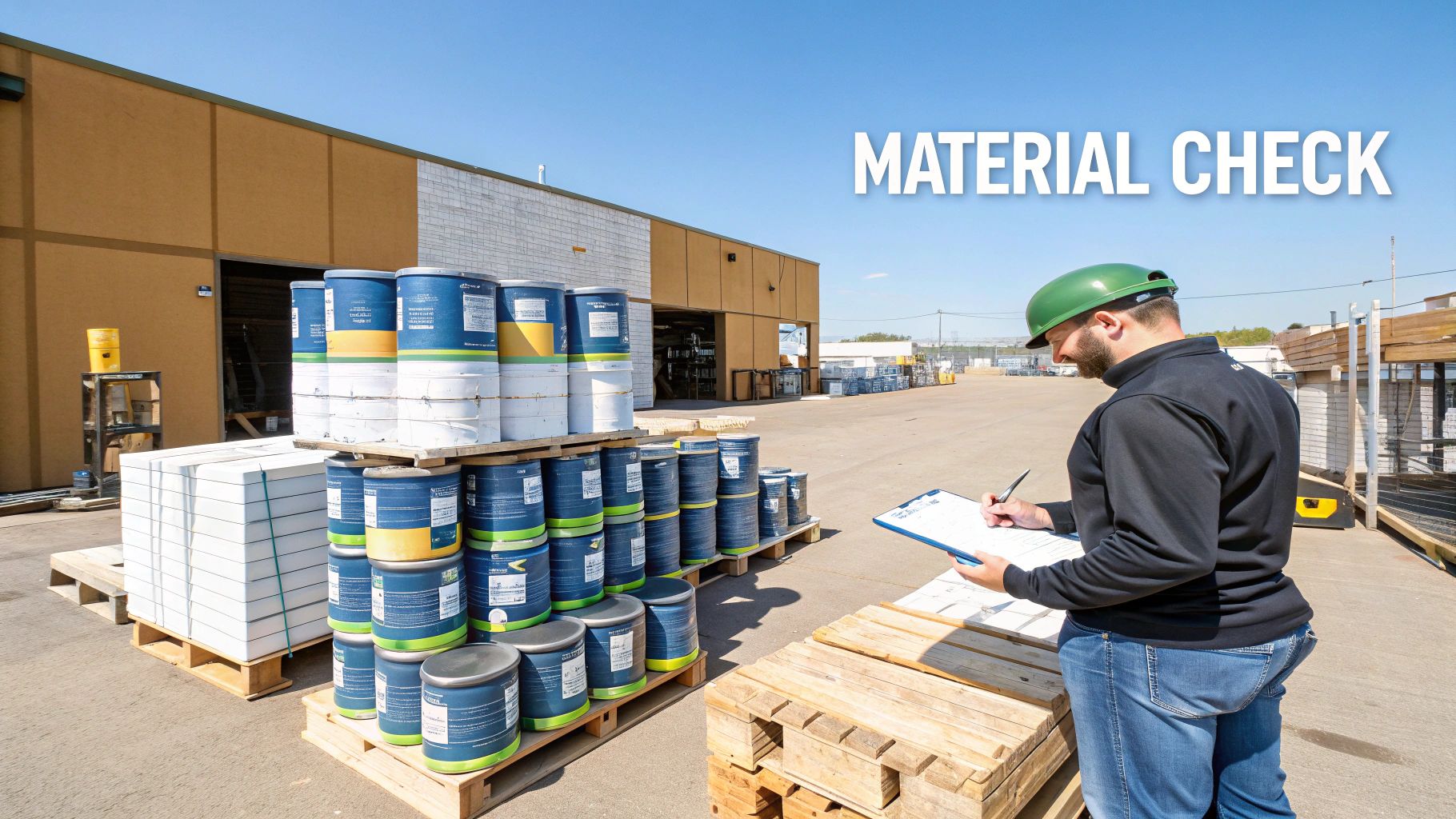
One of the best signs of an experienced builder is how they estimate. A practical workflow used by seasoned deck builders is to walk the site before pricing, verify grade, soil type, and drainage, call 811 for utility locates, break stairs out as a separate line item, and then audit actual waste after the job by counting leftover boards and sealed fastener boxes to improve future estimates. Projul's deck-builder guidance recommends that method and notes that the post-job waste audit takes about 15 minutes while giving the contractor useful data for refining the next estimate (Projul guidance for deck builders).
That kind of discipline matters because deck jobs often change at the edges. Stairs are more labor-intensive than they look. Grade changes alter footing work. Drainage can complicate excavation. Utility markings can affect where things go.
Clean projects usually start with careful planning, not with fast demolition.
What the homeowner should expect on site
Once permits and materials are ready, the build itself tends to move through a predictable sequence:
- Site prep and layout so footing locations, demolition limits, and access paths are clear.
- Footings and structural framing that establish the deck's load path and geometry.
- Decking, stairs, and rail installation once the structural skeleton is approved and ready.
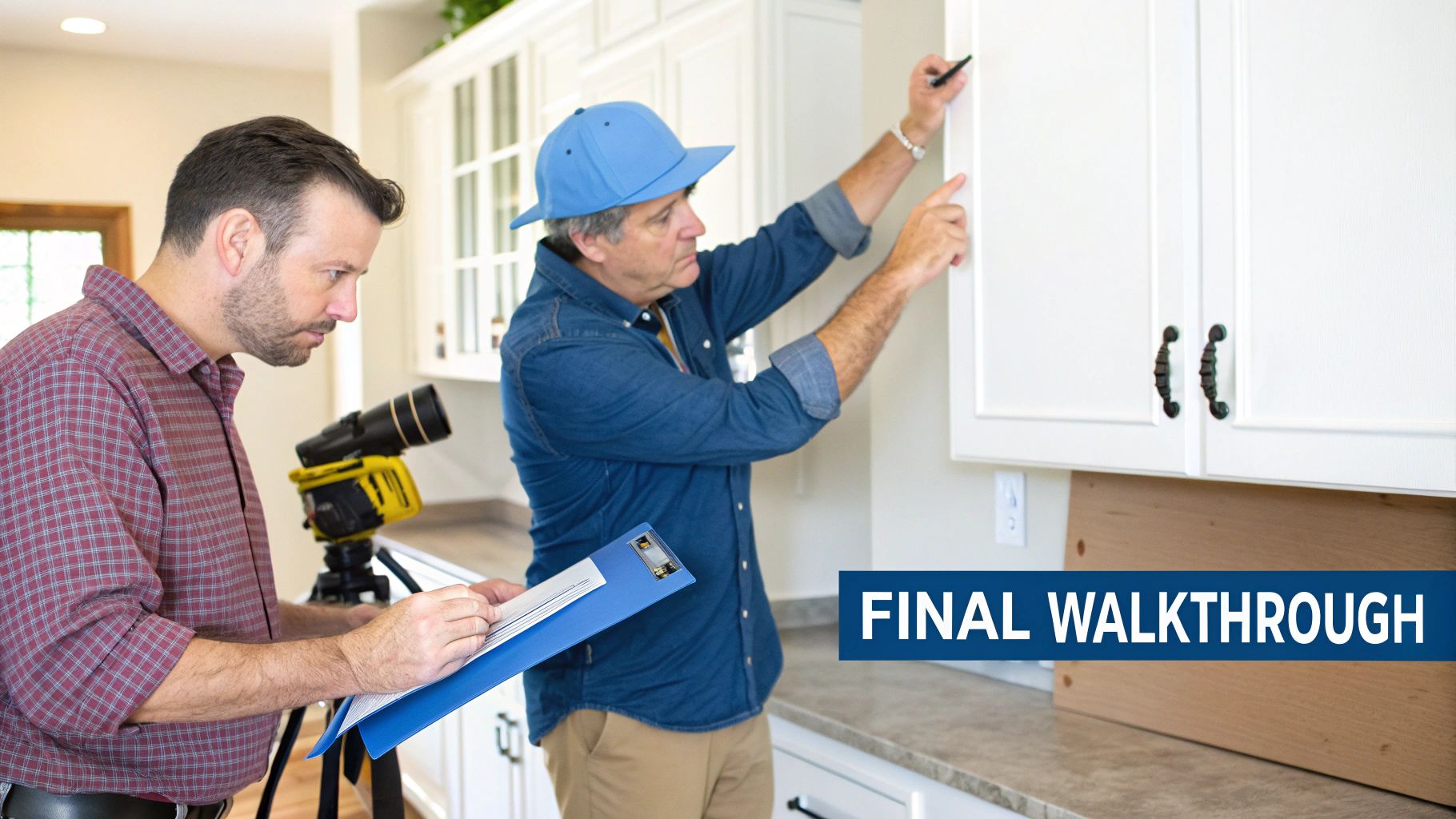
- Inspection and walkthrough to confirm compliance and finish details.
During this period, you should expect noise, material deliveries, and some temporary disruption around access doors or yard use. A good contractor keeps that disruption organized. They tell you when inspections are scheduled, when you should avoid certain areas, and what weather delays are affecting the schedule.
Final inspection means more than a sign-off
The last phase isn't only about passing inspection. It's also about making sure the homeowner understands what was built, how it should be maintained, and which details should be watched over time.
That walkthrough should cover rail stability, stair feel, drainage behavior, finish protection, and any follow-up items. A deck is safer and easier to own when the handoff is clear.
Protecting Your Investment With Proper Deck Maintenance
A deck project isn't finished when the crew leaves. It's finished when the structure stays sound through years of rain, debris, temperature swings, and normal use. That part depends on maintenance.
In Puget Sound, neglect usually shows up subtly first. Wet leaves collect in corners. Debris builds between boards. Coatings wear thin. Water lingers at transitions. By the time damage is obvious, the repair is rarely small.
The seasonal maintenance rhythm that works
Most homeowners don't need a complicated system. They need a repeatable one.
Use a simple routine through the year:
- Clear debris regularly. Needles, moss, and wet leaves hold moisture against surfaces and in board gaps.
- Inspect connection points. Look at rail posts, stair attachments, and areas near the house for movement or staining.
- Wash the deck surface carefully. Remove buildup without damaging wood fibers or forcing water into weak areas.
- Watch coated surfaces. If stain or protective finish is wearing unevenly, address it before exposed areas age further.
A helpful companion read on moisture-related wood deterioration is How to protect outdoor buildings, which gives homeowners a practical way to think about decay risk in exterior structures.
Maintenance is part of the original value
Many owners misread “low maintenance.” Low maintenance doesn't mean no maintenance. It means a different maintenance profile.
Wood decks often need more routine surface care. Composite reduces some finishing work but still needs cleaning, inspection, and attention to the framing environment underneath. Every deck benefits from periodic checks after stormy stretches and before the wettest part of the year.
Small maintenance tasks are cheap. Hidden structural repairs usually aren't.
When professional help makes sense
Some maintenance is easy to handle yourself. Some isn't. If the deck needs coating renewal, waterproofing work, structural review, or repairs around transitions and exposed weather lines, professional help can save time and prevent accidental damage.
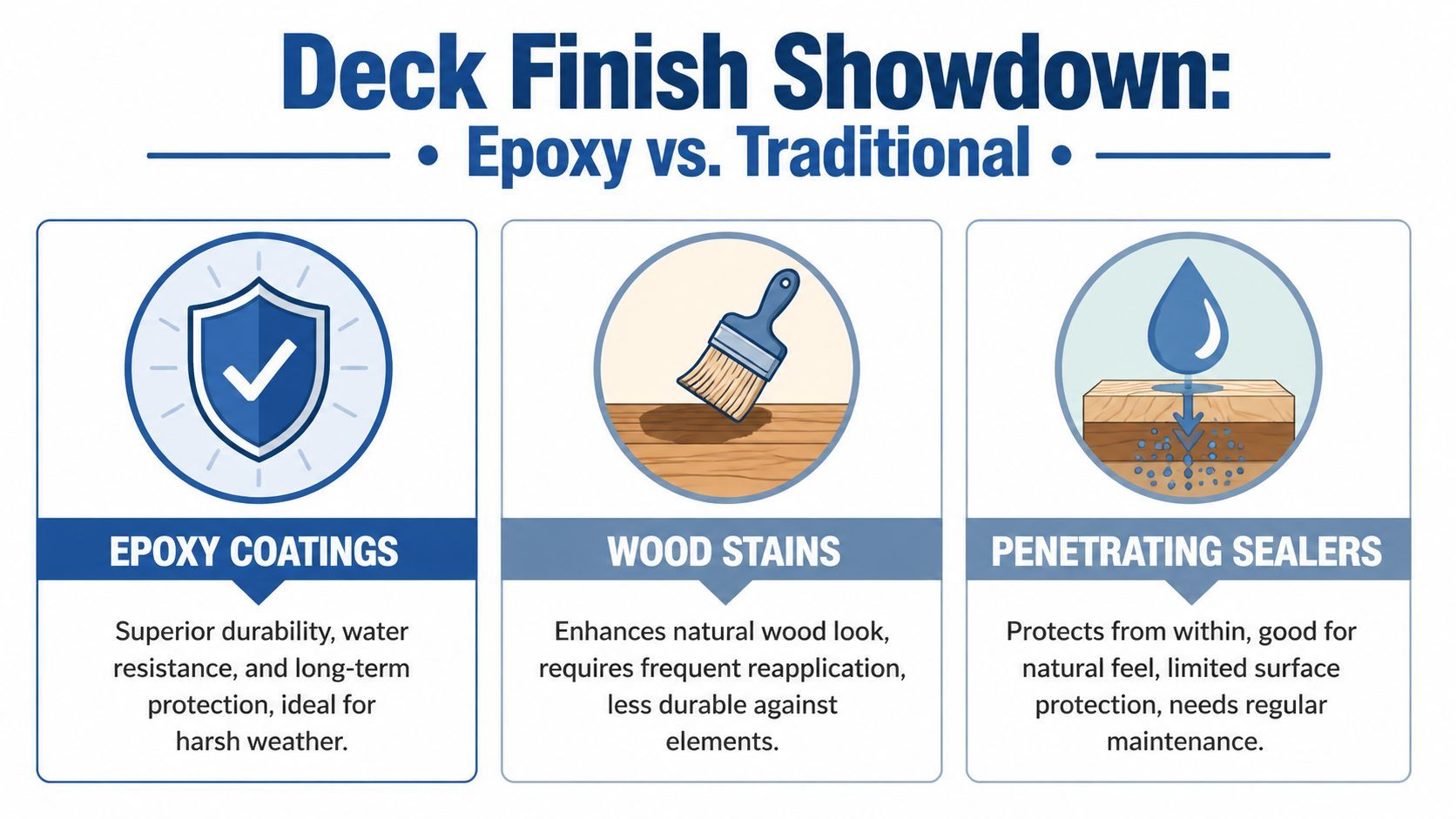
That's where related services matter. Deck and porch staining, waterproofing, and protective coatings all serve the same goal. They extend service life by keeping water from getting the upper hand. For owners evaluating finish protection options, this overview of epoxy deck coating can help clarify where specialty coatings fit and where a different deck protection approach may be more appropriate.
The best long-term result usually comes from treating maintenance as part of ownership, not as a rescue plan after visible failure. That mindset protects the structure, the appearance, and the money you put into the project.
If you're planning a new deck, replacing an aging one, or sorting out repairs on an existing structure, Wheeler Painting & Restoration Services can help you evaluate the project with a practical Western Washington lens. The right next step is usually a site visit, a clear scope, and an honest conversation about durability, permitting, waterproofing, and maintenance so you can move forward with confidence.



















 “Like” us on Facebook!