

8 Expert Colors That Go With Grey for Puget Sound Homes
You see this all the time around Puget Sound. A grey swatch looks clean and balanced under store lighting, then it goes on the wall in a Seattle living room or Tacoma office and our cloudy daylight pulls out blue, green, or brown that nobody noticed before. On a wet winter morning, that shift gets stronger.
That is why grey gives people trouble here. Western Washington light is soft, cool, and filtered for much of the year, so grey rarely reads the same way indoors as it did on the sample card. In south-facing rooms, it can still look settled and even. In north-facing rooms, older bungalows, and commercial spaces with limited natural light, the same grey can turn flat fast.
The fix is not abandoning grey. The fix is pairing it with colors that correct for our light instead of fighting it. Some combinations keep a room crisp without feeling cold. Others add warmth, depth, or contrast so the space still has life in January.
I have seen the same pattern in homes from Kent to Tacoma and in tenant improvement work across Seattle. Cool grey beside the wrong white can feel sterile. Warm grey with the wrong beige can look muddy. Get the pairing right, and grey becomes one of the most useful base colors you can put in a Puget Sound home or business.
Wheeler Painting has served local clients since 1991, and this is usually the point where product knowledge and field judgment matter more than showroom trends. If you are also weighing cabinet colors, our guide to kitchen cabinet paint color ideas is a practical place to start. For finishing touches, Black White and Grey Wall Art can help you see how grey palettes carry through decor without making the room feel one-note.
The pairings below are the ones that hold up in real Puget Sound light.
1. Grey and White
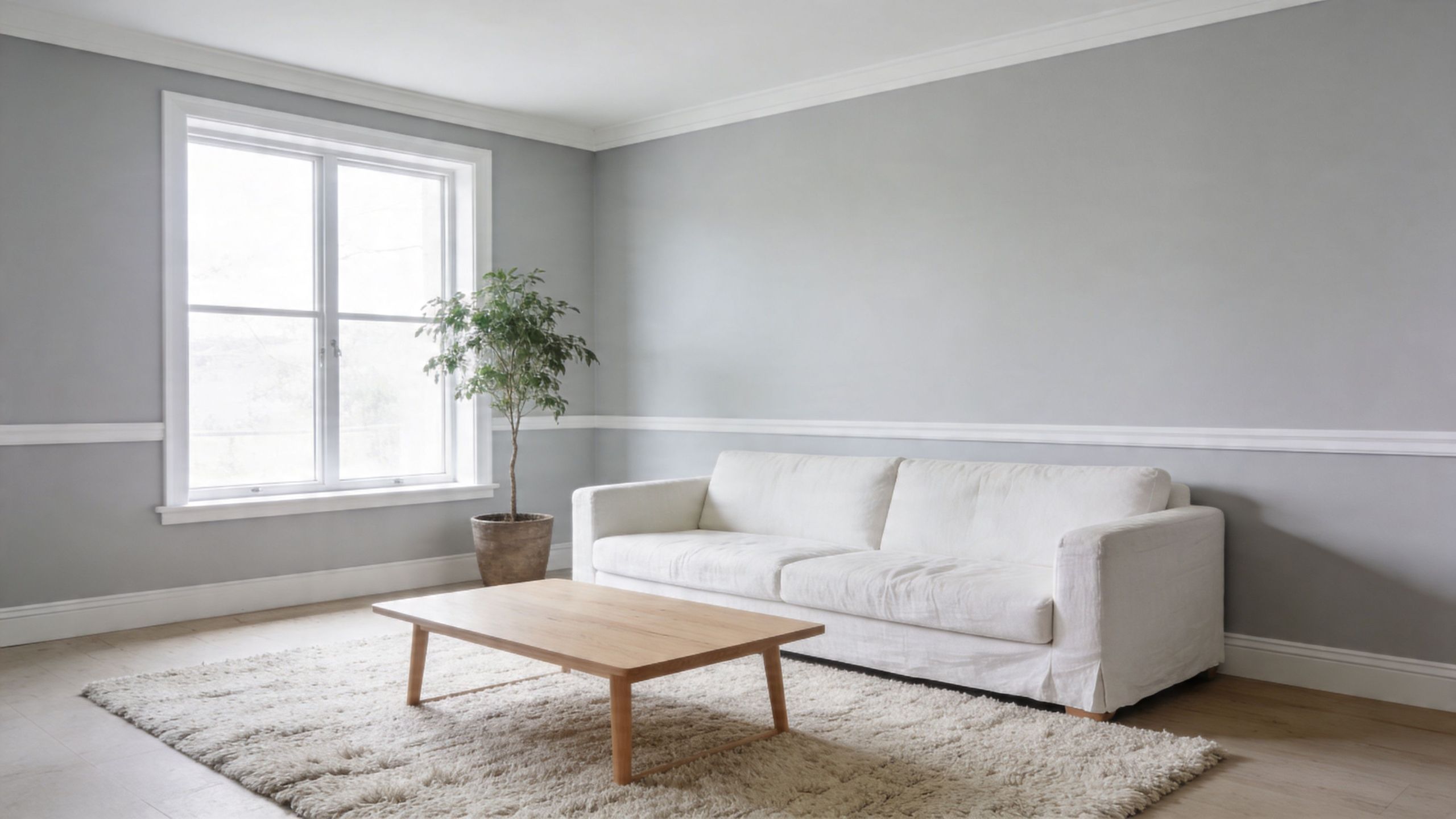
Grey and white is the safest pairing on this list, but safe doesn't have to mean dull. In Puget Sound homes, it works because white gives grey some lift. In commercial interiors, it keeps lines clean and readable.
The mistake people make is going too stark. A bright, icy white next to a cool grey can feel sharp in January light. In a Seattle condo or a Kent kitchen remodel, that can make the whole room read colder than intended.
How to keep it from feeling sterile
Use white to bounce light and grey to anchor the room. That balance works well in kitchens, hallways, offices, and reception areas where you want a clean finish without a clinical look.
A few practical fixes help:
- Pick a softer white for living spaces: Off-white and cream usually sit better with grey in residential interiors than a hard bright white.
- Add texture on purpose: Shiplap, textured drywall, matte cabinetry, stone, or wood grain keep the palette from going flat.
- Break up the vertical surfaces: Grey on lower walls or cabinetry with white above can give a room more shape.
If you're planning cabinets, Wheeler's guide to kitchen cabinet paint color ideas is a good place to compare how white and grey combinations read on millwork instead of just walls.
Practical rule: If the room already has limited natural light, don't rely on color alone. Use texture, trim contrast, and wood tones to keep grey and white from looking washed out.
This pairing also works well with black accents, framed prints, and simple decor. If you want art that reinforces the palette instead of fighting it, Black White and Grey Wall Art shows the kind of restrained contrast that often fits these interiors well.
2. Grey and Warm Beige
A lot of Puget Sound clients land here after living with a cool grey that looked fine on a paint chip and flat on the wall by November. Warm beige fixes that problem. It gives grey some life in our overcast light without pushing the room into a yellow or dated look.
I recommend this pairing most often in Tacoma family rooms, Kent bedrooms, and older Seattle houses with existing wood trim or warmer flooring. Grey still keeps the space current. Beige softens the finish enough that the room feels lived-in instead of chilly.
Undertone does the heavy lifting. In Western Washington light, a beige with too much yellow can turn muddy fast, especially on north-facing walls. A quieter beige, something with a sandy, taupe-leaning base, usually holds up better beside a warm grey.
Where this blend works best
This pairing earns its keep in bedrooms, family rooms, hallways, and open living areas where comfort matters more than contrast. I usually put beige on the larger surfaces and let grey handle the parts of the room that need definition. That could be trim, doors, built-ins, cabinetry, or a single wall that needs more weight.
A few practical rules help:
- Use beige on the biggest planes: Main walls, large textiles, and window treatments are good candidates.
- Use grey where you want structure: Trim, millwork, lower cabinets, and shelving read cleaner in grey.
- Check samples at different times of day: Morning and late afternoon light in Seattle and Tacoma can shift this pairing more than homeowners expect.
- Bring in natural texture: Linen, oak, jute, clay, and aged metal keep the room from feeling too smooth or one-note.
Warm grey and warm beige also solve a common local problem. They bridge old finishes and newer updates. If the house already has oak floors, alder doors, or stone with beige flecks, this palette usually ties things together better than a cooler grey would.
The result is quiet, steady, and easy to live with. In our grey daylight, that matters.
3. Grey and Navy Blue
If a client wants a room to feel sharper, more professional, and a little more refined, grey and navy is usually where the conversation goes. This pairing works especially well in offices, conference rooms, libraries, dens, and commercial lobbies.
In Seattle-area business spaces, navy gives authority without looking flashy. In residential work, it can make built-ins, accent walls, or lower cabinets feel grounded and expensive.
Why it works in commercial spaces
Neutral grey backgrounds help people focus, and grayscale palettes are widely used for that reason. Surveys cited by Phoenix Strategy Group's article on financial dashboard palettes report that 68 percent of dashboard users prefer grayscale bases for financial reporting, and the same piece recommends deep text on light grey backgrounds that maintain WCAG AA contrast above 4.5:1. Different field, same lesson. Grey is steady. Blue gives direction.
That translates well to paint. A soft grey wall with a navy feature wall, navy doors, or navy casework often reads cleaner than an all-blue room in our local light.
Grey and navy usually look better when navy stays in the supporting role. Too much navy can close a room in fast, especially on the north side of a building.
A few places this pairing earns its keep:
- Executive and client-facing rooms: Navy adds formality without going dark everywhere.
- Home offices and dens: Grey keeps the space usable all day, while navy gives it presence.
- Tenant improvement work: Reception desks, conference walls, and millwork often carry navy better than full walls do.
Add white or warm metallic accents if the room needs more lift. In a darker corridor or office suite, that extra contrast keeps the palette crisp instead of heavy.
4. Grey and Charcoal
When you don't want another color at all, the answer isn't "just use more grey." The answer is to use grey with intention. Light grey, mid grey, and charcoal can create a strong room, but only if each shade has a job.
This is one of the best colors that go with grey when the project leans modern, industrial, or refined. It works in loft-style interiors, retail spaces, offices, and contemporary homes where texture matters as much as color.
Tone-on-tone needs contrast somewhere
A monochromatic grey scheme can look polished. It can also look lifeless if every surface lands in the same value range. That's why tonal separation matters.
Guidance summarized by Simplified Science Publishing on color palettes for scientific figures and data visualizations recommends grey palettes with 15 to 30 percent saturation differences for distinguishability. That advice comes from visualization standards, but it maps nicely onto interiors. If your light grey wall, medium grey trim, and charcoal accent all sit too close together, the room loses definition.
Use contrast in more than one way:
- Change the sheen: Matte walls, satin trim, and a lower-sheen charcoal accent can separate surfaces without introducing a new color.
- Change the material: Concrete, painted drywall, black metal, oak, and stone keep a grey room from feeling one-note.
- Change the depth: Charcoal belongs on a focal wall, built-in, fireplace surround, or lower cabinet run, not necessarily everywhere.
If you're considering this kind of layered neutral palette outside as well as in, Wheeler's article on how to choose exterior paint colors helps sort out where tonal contrast matters most on a building.
The best monochromatic rooms don't depend on color variety. They depend on discipline.
5. Grey and Soft Green
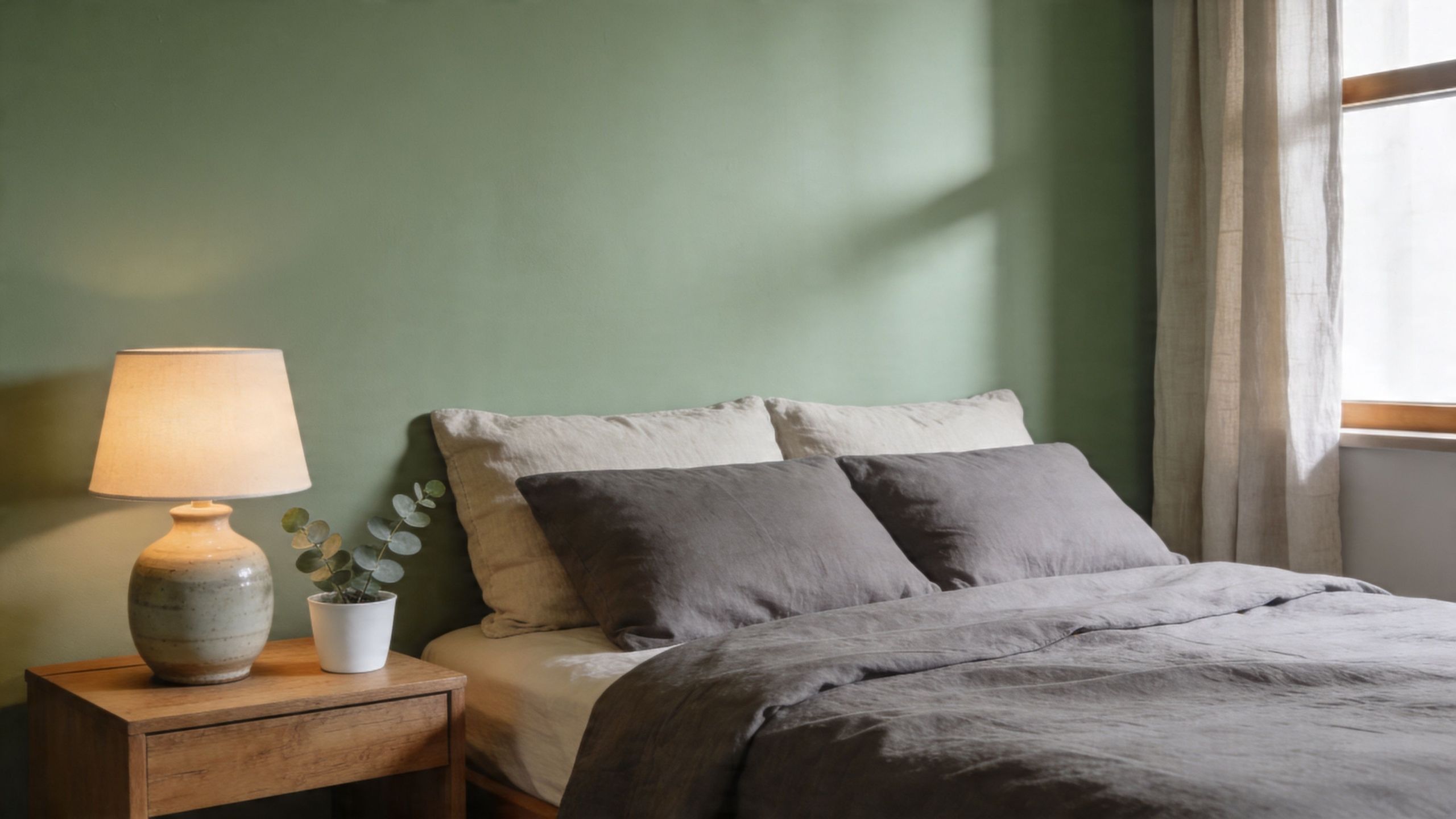
A Tacoma bedroom can look balanced on a paint chip and still turn cold by 3 p.m. under cloud cover. Grey and soft green usually avoid that problem. In Puget Sound light, a muted green gives grey enough life to keep the room from feeling flat, but it stays quiet enough to read as a near-neutral.
That matters in Western Washington homes and commercial spaces. Our daylight is often cool, indirect, and low contrast for much of the year. Colors that look clean and fresh in bright Southern light can read weak here. Soft sage, eucalyptus, and mossy greens tend to hold their shape better.
Keep the green muted and a little dirty
The best soft greens for grey are usually grayed-off greens, not clear bright ones. If the green is too crisp, the pairing can start to feel juvenile or overly minty, especially next to cool concrete, tile, or north-facing windows. A softer, earthier green has more tolerance for Seattle weather and for the blue cast many grey paints pick up indoors.
I see this work well in bedrooms, baths, therapy offices, waiting rooms, and home offices. The combination feels calm without going sleepy if you bring in one warming material, usually white oak, walnut, brass, or off-white textiles.
One caution. A soft green that seems barely there on a sample can take over a room once it is on four walls. Test it in the morning, then check it again at dusk and under lamps. In our area, that evening read matters.
Practical ways to use the pairing:
- Bedrooms and bathrooms: Grey tile, vanity, or bedding paired with soft green walls and warm wood accents.
- Home offices: Grey on the larger surfaces, green on a built-in, back wall, or alcove to soften the work feel.
- Commercial interiors: Grey as the base finish, with soft green in reception areas, treatment rooms, or quiet zones where clients need to relax.
Plants, stone, linen, and unfinished wood usually help this palette feel settled instead of styled. Around Puget Sound, grey and soft green work because they already belong to the view outside.
6. Grey and Warm Copper or Bronze
Metal isn't a wall color, but it changes how grey reads. Copper and bronze are especially useful when a grey room needs warmth without adding another paint color to the walls.
This pairing is common in kitchens, powder rooms, apartment upgrades, and higher-finish commercial interiors where hardware and lighting do a lot of visual work. In Seattle and Tacoma, it can rescue a cool grey palette that otherwise feels too flat under cloud cover.
Let the metal do the warming
Grey gives you a steady background. Copper and bronze add glow, especially under interior lighting in the late afternoon and evening, when natural daylight is doing less for the room.
The trick is restraint. One metal finish across the space usually looks more deliberate than a mix of brass, copper, black, chrome, and bronze all competing for attention.
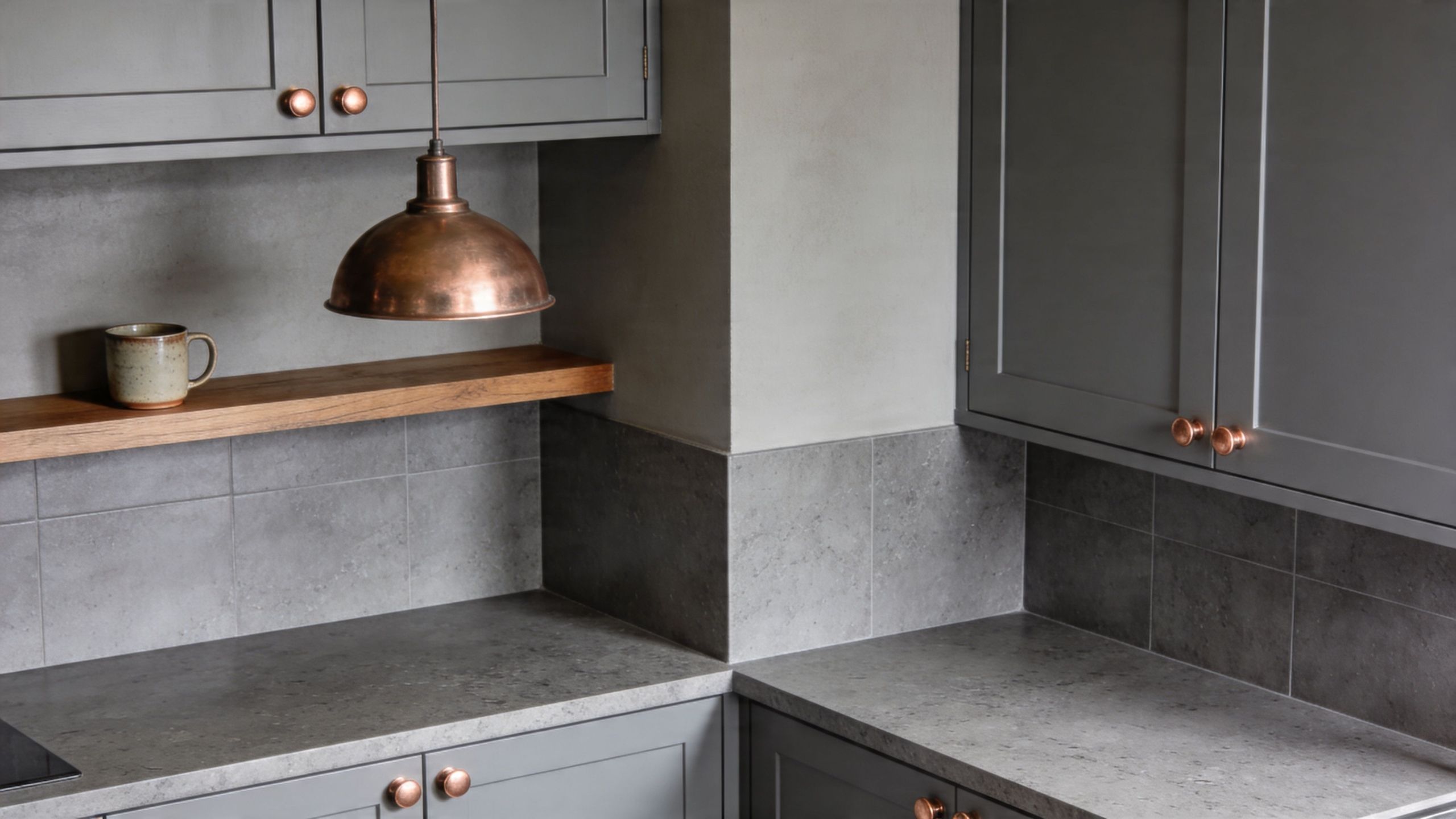
Good places to use this approach:
- Cabinet hardware: Grey cabinetry with bronze pulls is a dependable combination.
- Lighting: Pendants, sconces, and chandeliers can warm the room faster than repainting everything.
- Plumbing and mirror details: Bathrooms often benefit from this most because tile and paint both tend to skew cool.
This works best when the grey isn't already fighting another undertone. If the paint has a cool blue cast and the metal is very orange, the contrast can be sharp. Sometimes that's intentional. Sometimes it just feels off. Sample boards help sort that out before the finish materials are installed.
Done right, this pairing feels current without chasing trends.
7. Grey and Warm Taupe
Taupe is one of the most useful answers for people who are tired of plain grey but don't want to abandon it. It sits between grey and brown, which makes it easier to live with in spaces that need softness and polish at the same time.
This combination works especially well in living rooms, dining rooms, bedrooms, and offices where you want a more settled look than white and grey can provide. It also handles mixed materials well, including wood floors, stone counters, and warm upholstery.
Taupe solves a common grey problem
A lot of grey rooms fail because everything leans cool. In Puget Sound light, that can leave a home feeling drained of warmth. Taupe gives grey a partner that isn't yellow, isn't flashy, and doesn't fight for attention.
The underserved part of the conversation is durability and maintenance in real Western Washington conditions. Guidance summarized in Furn's discussion of colours that go with grey points to warm neutrals like taupe, beige, and cream as useful counters to grey's coolness, while also noting that homeowners often don't get enough advice on long-term performance in damp climates. That's a real issue here. A color can look great on day one and still be the wrong call if it shows every scuff in a busy hallway or feels dingy through a long winter.
A solid way to use this pairing:
- Taupe on the main walls: It softens the envelope of the room.
- Grey on trim or built-ins: It adds edge and architectural definition.
- Warm wood and fabric nearby: That keeps the room from drifting back into a cool mood.
Taupe doesn't create instant drama. What it does create is staying power.
8. Grey and Soft Blush Pink
Blush pink with grey sounds risky to some clients until they see the right version of it. The key word is soft. Not bubblegum. Not sugary. A dusty blush can take the edge off grey and make a room feel more livable.
This is mostly a residential move, but it can work in boutique commercial settings too. Bedrooms, nurseries, powder rooms, dressing areas, and some home offices all benefit from that slight warmth.
The undertone has to be right
Grey's biggest trap is undertone mismatch. A 2025 Color Marketing Group study referenced by House Beautiful's article on colors that go with gray found that 42 percent of failed schemes came from undertone blindness. That's a useful warning for any layered paint project. If the grey leans cool and the pink leans peachy in the wrong way, the room can go muddy fast.
A muted blush works best when it stays in the accent role.
- Use blush on smaller surfaces: Accent wall sections, decor, textiles, or an adjacent niche often work better than four full walls.
- Pair it with a warmer grey or greige: That usually looks more natural than pairing it with a cold steel grey.
- Add cream or white: Those lighter notes keep the palette from feeling too sweet.
If you're weighing whether pink belongs on an actual painted feature instead of only in decor, Wheeler's roundup of accent wall color ideas can help narrow down where a softer statement makes sense.
For bedding and styling direction, Styling Pink and Grey Bedding gives a good sense of how the palette stays balanced when pink remains muted.
Blush and grey isn't for every project. But when a room needs softness and still has to feel grown-up, it can be the best answer on the board.
8 Grey Color Pairings Comparison
In Puget Sound light, the wrong grey pairing can look fine on a fan deck and dull on the wall by midafternoon. This side by side view helps narrow the field based on how these combinations usually perform in Seattle and Tacoma homes, offices, and tenant spaces.
| Palette | Implementation complexity | Resource requirements | Expected outcomes | Ideal use cases | Key advantages |
|---|---|---|---|---|---|
| Grey & White: The Classic Minimalist Pairing | Low, straightforward painting and trim work | Minimal, two paints, decent natural or artificial light, added texture where needed | Clean, bright, timeless, rooms often feel more open | Kitchens, offices, minimalist residential interiors | Versatile, helps bounce limited daylight, gives accents room to stand out |
| Grey & Warm Beige: The Inviting Neutral Blend | Low to medium, requires careful undertone matching | Paint selection, natural textiles, wood finishes | Warm, approachable, comfortable without feeling yellow | Living rooms, bedrooms, family spaces | Takes the edge off cool grey, ages well, easy for many homeowners to live with |
| Grey & Navy Blue: The Professional Power Pairing | Medium, contrast and light levels need to stay balanced | Paint, accent furnishings, metallic finishes, strong lighting | Rich, grounded, professional presence | Corporate offices, executive suites, dens, built-ins | Conveys trust, creates strong focal points, holds up well in commercial settings |
| Grey & Charcoal: The Monochromatic Depth Strategy | Medium to high, tonal layering and lighting are critical | Multiple grey tones, varied textures, strategic lighting | Polished depth, cohesive modern or industrial look | Modern lofts, feature walls, contemporary commercial spaces | Adds depth without bringing in another hue, shows off texture and material changes |
| Grey & Soft Green: The Calming Natural Pairing | Low to medium, shade choice shifts a lot with available light | Paint, plants, natural materials, soft textiles | Calm, restorative, natural feel | Bedrooms, bathrooms, wellness spaces, biophilic offices | Brings life to grey, feels easier in cloudy Northwest light than many pastels |
| Grey & Warm Copper/Bronze: The Metallic Accent Strategy | Medium, finishes need coordination and decent fixture quality | Quality metallic hardware or lighting, paint, warm bulbs | Warm focal points, stronger contrast, more visual interest | Kitchens, bathrooms, upscale residential and commercial spaces | Adds warmth without repainting large color fields, works well with wood and stone |
| Grey & Warm Taupe: The Comfort Blend | Medium, taupe selection has to be precise | Paint, warm woods, subtle metallics, good lighting | Comfortable, timeless, quietly upscale | High-end residences, primary suites, polished offices | Balanced warmth, flexible with natural materials, steadier than beige in many grey schemes |
| Grey & Soft Blush Pink: The Modern Residential Softening Strategy | Low to medium, balance matters so it does not turn sugary | Accent paint, textiles, metallics, controlled lighting | Soft warmth with a gentle contemporary feel | Bedrooms, nurseries, accent walls, modern homes | Adds warmth and contrast in small doses, works best as an accent rather than a full-room commitment |
Bring Your Perfect Grey Palette to Life in Tacoma and Seattle
Choosing colors that go with grey is only part of the job. The ultimate test happens after the sample hits your wall, your trim, your flooring, and your lighting. That's where people in Seattle, Kent, Tacoma, and the towns in between usually find out that a color they liked online doesn't behave the same way in a north-facing bedroom or under office LEDs.
Puget Sound light is forgiving in some ways and unforgiving in others. It softens harsh colors, but it also exposes weak pairings fast. A cool grey with the wrong white can feel chilly all day. A warm greige with the wrong beige can go muddy by afternoon. In commercial spaces, the stakes are a little different, but the problem is the same. Facility managers and property owners need a palette that holds up in daylight, artificial light, and day-to-day use.
That's why sample placement matters. Test on more than one wall. Look at the paint in the morning, late afternoon, and evening. Check it next to flooring, counters, cabinets, and trim. In offices and tenant improvement work, check it under the actual lighting plan, not just by the window. A color that looks balanced in daylight can turn flat once overhead fixtures take over.
Grey still earns its place because it remains versatile. It can read modern, classic, residential, or commercial depending on what you pair with it. White keeps it crisp. Beige and taupe warm it up. Navy sharpens it. Soft green makes it feel natural here in Western Washington. Charcoal adds depth. Bronze and copper bring back warmth. Blush softens it in the right setting.
The common thread is undertone discipline. That matters more than trend. If the base grey is cool, give it a partner that supports that direction or intentionally contrasts with it in a controlled way. If the grey is warm, lean into that warmth instead of fighting it with something too icy. That one decision prevents a lot of expensive repainting.
For homeowners, that can mean a smoother kitchen remodel, bedroom refresh, or whole-house repaint. For commercial clients, it can mean a cleaner office renovation, a more polished lobby, or a tenant improvement package that gets approved without a lot of second-guessing. Wheeler Painting & Restoration Services handles both residential and commercial work across Puget Sound, and color consultation is part of making sure the final result looks right in the actual building, not just on a fan deck.
If you're planning interior painting, a remodel, or a tenant improvement project in Seattle, Kent, Tacoma, or nearby communities, Wheeler Painting & Restoration Services can help you narrow down the right grey palette, test it in your actual lighting, and turn it into a finished result that fits the space.

 “Like” us on Facebook!