

What Is an Elastomeric Paint? Your 2026 Waterproofing
Elastomeric paint is a thick, flexible, waterproof coating made for exterior masonry, and it's about 10 times thicker than traditional coatings while filling hairline cracks up to 1/16 of an inch. It acts like a rubberized shield for buildings, which is why it's such a strong fit for the Pacific Northwest's constant moisture.
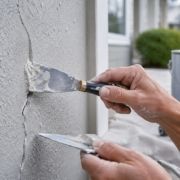
If you're looking at a stucco wall in Tacoma, WA and noticing tiny cracks, dark streaks, or moss showing up in the damp season, you're not overreacting. In the Puget Sound, small exterior problems rarely stay small. Water finds those weak spots, works its way in, and turns a cosmetic issue into repair work.
That's why homeowners, property managers, and facilities teams often ask what is an elastomeric paint, and whether it's better than standard exterior paint. The short answer is yes, in the right situation. It isn't a universal coating for every surface, but on stucco, concrete block, brick, and other masonry, it can be a very practical waterproofing system.
Protecting Your Property from Pacific Northwest Weather
A common Tacoma scenario goes like this. A building looks mostly fine from the curb. Then after another stretch of rain, someone notices bubbling near a window line, mildew on a shaded wall, or a hairline crack in stucco that seemed harmless last summer. That's how moisture trouble often starts in the Puget Sound.
On masonry surfaces, tiny cracks matter. Rain doesn't need a large opening. It only needs time, repeated exposure, and a wall surface that never fully dries out. In places like Seattle, WA, West Seattle, WA, and Bellevue, WA, that cycle happens over and over.
Why small cracks become big headaches
Traditional paint mostly adds color and a basic layer of protection. Elastomeric paint works differently. Think of it as a raincoat for the building, not just a finish coat. It's built to form a flexible outer membrane over stucco, concrete, and block so water has a harder time getting in.
For property owners trying to think ahead, broad exterior planning matters too. Resources on HIBCO ROOF storm protection can help frame how roofs, walls, drainage, and weather exposure all work together during heavy storms.
A wall doesn't fail all at once. Water usually gets invited in through small, ignored details.
That's also why wall coatings shouldn't be chosen in isolation. If you're comparing options for exterior moisture control, it helps to understand how waterproofing exterior walls fits into the larger building envelope.
Why this matters so much in Tacoma and nearby cities
In Tacoma, WA, Seattle, WA, Issaquah, WA, and Kirkland, WA, many homes and commercial buildings have surfaces that deal with constant dampness, shade, and seasonal movement. Stucco and concrete block can perform well here, but they need the right coating system.
Elastomeric paint is especially useful when a property owner wants more than a fresh color change. It makes sense when the primary goal is protection. That's true whether you're a homeowner searching for a residential contractor near me or a facility manager balancing facility maintenance, commercial renovations, and waterproofing decisions on a smaller tenant improvement project.
How Elastomeric Paint Creates a Waterproof Shield
Regular exterior paint is closer to a T-shirt. It covers the surface, but it doesn't do much when weather gets serious. Elastomeric paint is closer to a rain jacket. It's thicker, more flexible, and made to handle moisture and movement without splitting open.
That difference starts with how the coating film behaves after it cures. Instead of forming a thin decorative skin, elastomeric products create a high-build layer that can move with masonry.

Thick enough to act like a membrane
One reason this coating performs differently is thickness. Elastomeric paint requires a dry film thickness of 12 to 15 mils, compared with 1.5 mils for conventional paints, and that's why coverage rates drop to 50 to 65 square feet per gallon with a minimum of two coats needed to form a continuous waterproof membrane, according to Acrymax's explanation of elastomeric coating thickness.
That's a big jump from ordinary paint. You're not just changing color. You're building a protective layer.
The stretch is what makes it special
Flexibility is often a source of confusion. Buildings move a little. Stucco expands and contracts with weather changes. Concrete shifts. Minor settling happens. A rigid coating can crack when the substrate moves. Elastomeric paint is designed to stretch instead.
High-performance elastomeric coatings can show elongation ranging from 300% to 600%, and the 100% acrylic resin formulation creates a breathable film that lets moisture vapor escape from the wall cavity while blocking liquid water from the outside, as described in Sika's elastomeric coating technical overview.
That breathable-but-water-blocking behavior is a major advantage in damp climates. Walls need to shed rain from the outside, but they also need a way to let trapped interior moisture vapor out.
Practical rule: If a wall coating traps water inside, it can create a different problem than the one you started with.
If you want a broader building-science overview, this guide to essential home protection is useful for understanding where wall waterproofing fits into overall property care. For local context, it also helps to review what waterproofing in construction means before choosing a coating system.
Top Benefits for Puget Sound Homes and Businesses
The biggest reason people choose elastomeric paint in the Puget Sound isn't style. It's protection. In a climate where walls stay wet for long stretches, a coating that seals the surface and handles minor movement can prevent a lot of future trouble.
Better defense against rain and damp air
Elastomeric paint is about 10 times thicker than traditional coatings, it can fill hairline cracks up to 1/16 of an inch, and its service life often exceeds a decade, while resisting damage from water, UV radiation, and wind, according to The Craftsman Blog's breakdown of elastomeric paint performance.
For a stucco home in Snoqualmie, WA or a concrete block commercial wall in Tacoma, that matters. The coating helps stop wind-driven rain from reaching the substrate through tiny openings that standard paint may not cover well.
Why owners and managers like the long view
For commercial properties, this often becomes a maintenance question more than a paint question. If a facility manager is trying to reduce recurring touch-ups, deal with weather exposure, and avoid interior water complaints, a longer-lasting masonry coating can support a more stable facility maintenance plan.
That also ties into commercial construction near me searches from owners planning tenant improvement, office space renovation, retail build-outs, or broader commercial renovations. If the exterior shell is masonry and shows minor cracking, coating selection affects future maintenance work.
Here's a practical side-by-side comparison.
| Feature | Elastomeric Paint | Traditional Acrylic Paint |
|---|---|---|
| Film build | High-build coating designed to form a membrane | Thinner architectural coating |
| Crack handling | Can fill hairline cracks on masonry | Limited crack-bridging ability |
| Best surfaces | Stucco, concrete, block, brick, masonry | Broad use, but less specialized for crack-prone masonry |
| Moisture protection | Strong waterproofing value when properly applied | More basic surface protection |
| Movement tolerance | Built to flex with substrate movement | More rigid by comparison |
| Typical role | Protection-first system | Paint-first finish |
Helpful in shady, mildew-prone areas
In our region, north-facing walls and shaded elevations often stay damp longer. A properly chosen exterior system can help those surfaces stay cleaner and more stable over time, especially when paired with maintenance planning and the right prep work. If mildew is part of the problem, it's worth understanding how mold and mildew resistant paint fits into the broader solution.
A related idea shows up in roofing too. For owners evaluating whole-building protection, this article on understanding commercial roof coating ROI gives useful context on why higher-performance coatings can make sense when long-term protection matters more than the lowest upfront cost.
For Puget Sound exteriors, the question usually isn't whether the wall will get wet. It's how often, how long, and whether the coating can keep up.
Ideal Applications for Elastomeric Coatings
Elastomeric paint shines when the surface is masonry-based and the problem is exposure, hairline cracking, or repeated wetting. It's not the right answer for every building material, but when it matches the substrate, it can solve a very specific set of Pacific Northwest problems.

Where it works best
The most common good candidates include:
- Stucco exteriors on homes in West Seattle, WA or Bellevue, WA where small surface cracks show up after years of weather exposure.
- Concrete block walls on commercial properties in Tacoma, WA where moisture protection matters as much as appearance.
- Brick and masonry facades on older properties in Issaquah, WA or Kirkland, WA that need a breathable exterior barrier.
- Concrete surfaces that need a flexible coating rather than a standard paint film.
If you're planning residential remodeling, siding replacement, roof repair, or even exterior work tied to a bath remodel or kitchen remodel, coating decisions matter most where the exterior surface is mineral-based. The same applies to commercial properties handling facility construction services, institutional painting, or smaller tenant improvement work.
Roofing uses are real too
Elastomeric coatings aren't limited to walls. They're also used on roofing systems. American WeatherStar notes that elastomeric coatings are widely used to restore built-up roofs (BUR), modified bitumen, and concrete, often with 10 or 20-year warranty coverage that extends roof life and helps prevent leaks, as explained in their guide to elastomeric roof coatings.
That broader use helps explain why people describe the material as a membrane rather than just paint.
After seeing still images, a quick product walkthrough can help make the concept more concrete.
Where it's usually the wrong choice
Sound guidance is essential. Elastomeric paint is generally meant for masonry surfaces, not every exterior. It's usually not the best pick for wood siding, and it shouldn't be treated like a cure for active structural movement.
If a wall has major failures, loose substrate, water entering around flashing, or movement that keeps reopening large cracks, coating over it won't fix the root cause. That kind of issue needs repair first. On the right surface, elastomeric works well. On the wrong surface, it can create false confidence.
The Professional Application Process and What to Avoid
A Tacoma wall can look fine on a dry afternoon, then show its problems after a week of rain. Moisture hiding in stucco, chalky residue on old paint, and hairline cracks around window lines all change how an elastomeric coating bonds and performs. That is why application matters so much with this product.
A good elastomeric job works more like installing a thin exterior rain jacket than brushing on a color coat. If the surface underneath is dirty, weak, or still holding the wrong kind of moisture, the coating cannot do its job for long.
Why prep decides the outcome
Professional crews usually start with inspection before they start coating. They look for failed caulking, loose material, mildew, old coatings that are peeling, and cracks that need repair instead of simple coverage. On Puget Sound buildings, that step matters because shaded walls often stay damp longer than owners expect, especially on north-facing stucco and concrete block.
Cleaning comes next, and it is more than a quick rinse. The goal is to remove chalk, dirt, moss staining, and anything else that blocks adhesion. Primer may also be needed, depending on the substrate and the condition of the existing surface.

One simple question helps here. Is the wall ready to hold a flexible membrane, or does it only look ready from the driveway?
Application has to match the product
Elastomeric coatings need to be applied at the proper film build, usually in multiple coats, so the finished layer can act like a protective skin instead of a thin decorative paint film. If a contractor stretches the material too far, skips a coat, or applies it over a surface that has not fully dried, the coating may lose much of the water-resisting performance that made it appealing in the first place.
That is a common source of disappointment with do-it-yourself jobs. The bucket says paint, but the application acts more like a coating system.
Weather timing matters too. In western Washington, crews have to watch temperature, overnight moisture, and drying windows carefully. A wall that gets morning fog, limited sun, or constant tree shade can behave very differently from one on the south side of the same building.
Common mistakes to avoid
A few problems show up again and again on masonry exteriors:
- Coating over active water-entry problems, such as failed flashing, leaking windows, or roof runoff issues.
- Using elastomeric as a crack repair substitute when movement is still opening the wall.
- Applying over dirt, mildew, chalk, or loose paint and expecting long-term adhesion.
- Putting it on the wrong surface, especially wood or other materials better served by a different coating.
- Applying it too thin, which weakens the membrane effect owners are paying for.
Cost confusion often starts here. Elastomeric jobs usually require more prep, more material, and tighter application control than standard exterior painting. On stucco and concrete buildings in the Tacoma area, that extra work is often what separates a coating that sheds weather for years from one that starts failing early.
When to Choose Elastomeric Paint for Your Property
Elastomeric paint makes the most sense when your building has a stucco, concrete, block, brick, or other masonry exterior, and your main concern is long-term moisture protection rather than just a color refresh.
For many Puget Sound properties, the decision gets easier with a simple checklist.
A good fit usually looks like this
- You have masonry surfaces with hairline cracking or weather wear.
- Your property sees persistent rain exposure or stays shaded and damp for long periods.
- You want waterproofing performance, not just appearance.
- You're planning around long-term maintenance, whether that's for a house, mixed-use property, or light commercial facility.
- You want a coating that can move with the substrate instead of turning brittle.
It may not be the right choice if
- The surface is wood siding or another non-masonry material better served by a different system.
- The cracks are large or active, which points to repair issues first.
- Water is entering through windows, roofs, or flashing, where the underlying fix is elsewhere.
If you're in Tacoma, WA, Seattle, WA, New Castle, WA, Issaquah, WA, Bellevue, WA, Kirkland, WA, North Bend, WA, West Seattle, WA, or Snoqualmie, WA, local climate should be part of the decision. Damp air, repeated rain, moss, and slow drying times change how exterior coatings perform.
For property owners searching for a residential contractor near me or a commercial construction near me partner, the smartest next step is a site-specific assessment. A good coating choice starts with the wall, not the label on the bucket.
If you want a professional assessment of your stucco, concrete, or masonry exterior, Wheeler Painting & Restoration Services can help. Their team serves Puget Sound property owners with practical guidance, clear estimates, and experienced support for waterproofing, residential upgrades, tenant improvement work, facility maintenance, and exterior restoration.




 “Like” us on Facebook!