
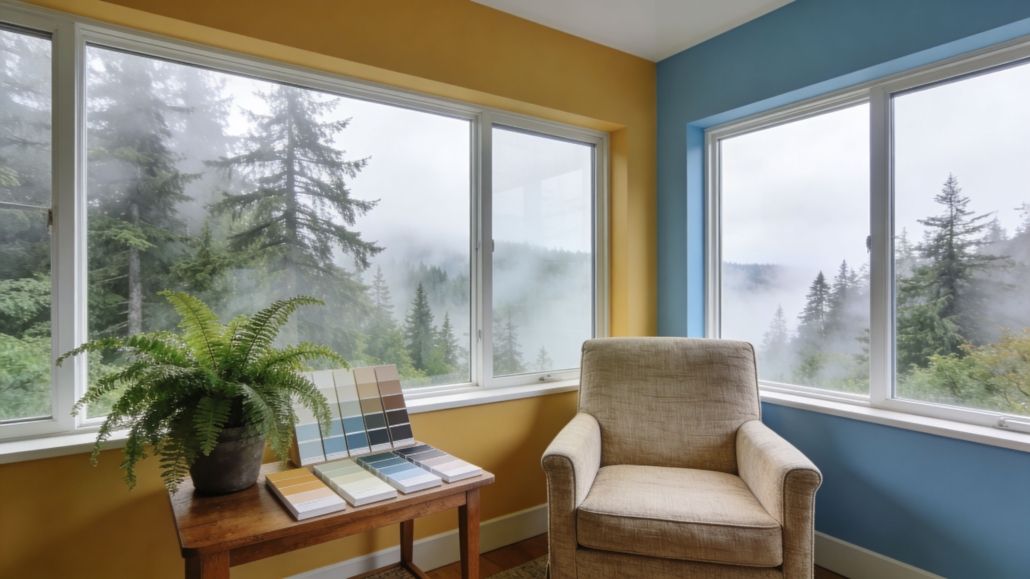
Best Sunroom Paint Colors for Puget Sound Homes
A lot of Puget Sound homeowners have the same experience. The sunroom looks cheerful in a listing photo or on a bright summer afternoon, but on a gray Seattle morning it suddenly feels flat, chilly, or oddly dull. Property managers see it too in tenant spaces and shared amenity rooms. The windows are large, the light is real, and yet the room still doesn’t feel inviting.
That usually isn't a furniture problem. It’s a paint color problem.
Generic advice often says to pick a crisp white and call it done. In our region, that can backfire. In high-humidity areas like Puget Sound, which averages 150-200 rainy days annually, standard bright white recommendations often fail because cool, indirect light can wash colors out or make them look dingy, according to this sunroom paint guide focused on moisture and light challenges. That’s why sunroom paint colors that look perfect in a store or in a warmer climate can feel off in Kent, Seattle, Tacoma, and the towns in between.
The good news is that a better result usually comes from a few practical adjustments, not from guessing harder. When you match color to the room’s direction, the quality of light, and the damp local climate, the space starts working the way homeowners hoped it would in the first place.
Brighten Your Home with the Perfect Sunroom Paint Color
A sunroom should feel like a place you want to walk into with your coffee, not a room you keep passing by because it looks cold half the year. That’s the frustration many homeowners run into after choosing paint from a tiny sample chip under store lighting. Once the color lands on the wall, the room can feel darker, greener, grayer, or more washed out than expected.
Why Puget Sound sunrooms are different
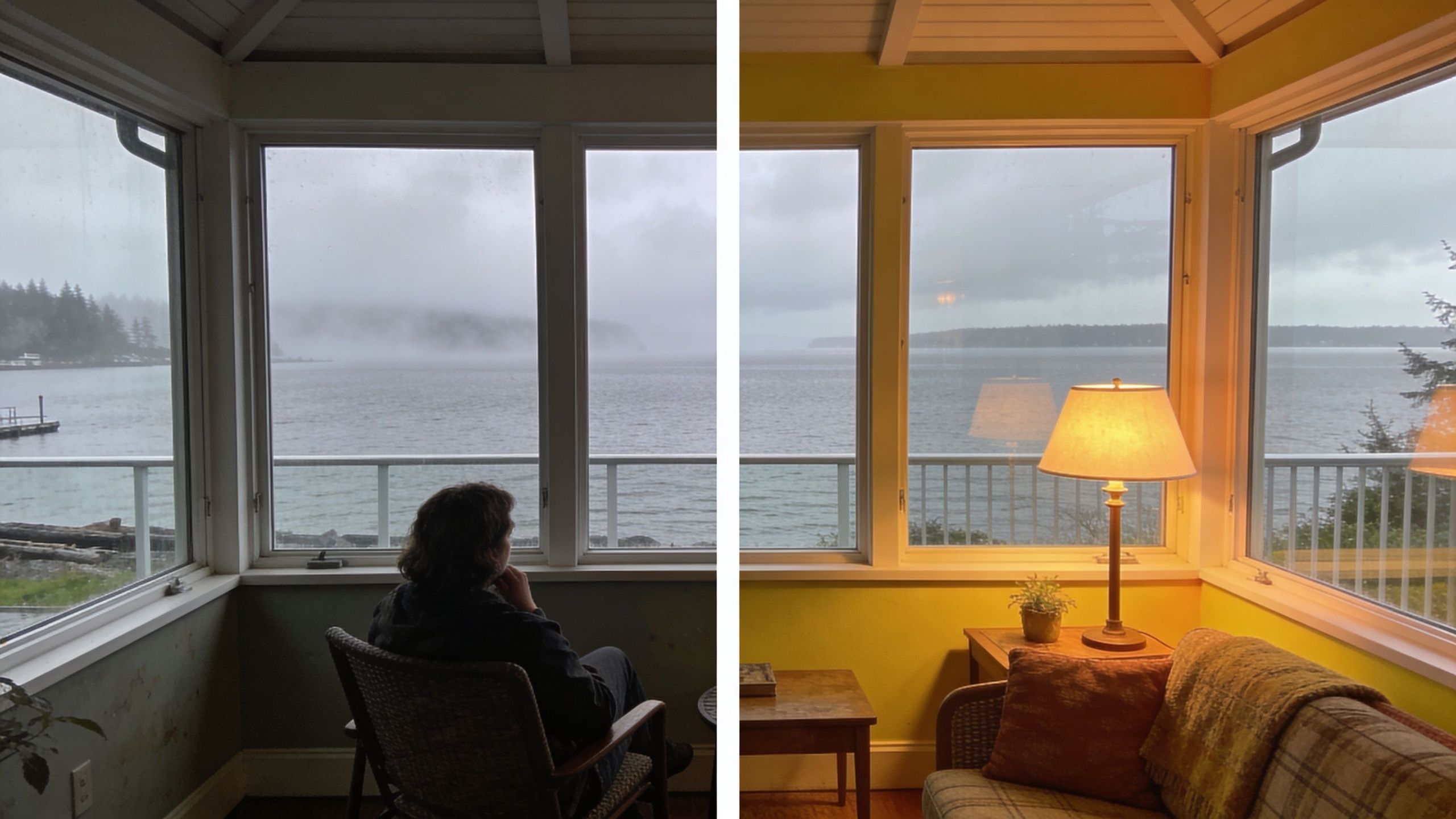
Homes around Seattle, Kent, and Tacoma don’t get the same kind of sunlight as homes in drier climates. We deal with overcast skies, fog, shifting cloud cover, and moisture that can linger near glass and trim. That changes how paint reads on the wall.
A bright white that feels clean in a showroom can turn stark or lifeless in a north-facing sunroom here. A pale pastel can disappear. Some warm creams can drift too yellow under gray daylight. That’s why smart sunroom paint colors in Western Washington often strike a balance between light reflection, undertone control, and moisture resistance.
Pick the color for the light you actually have, not the light you wish you had.
What homeowners usually get wrong
The most common mistake is choosing paint before studying the room. People often focus on the sofa, the flooring, or a favorite online photo and skip the bigger question. What kind of daylight does this room receive from morning to evening?
A better approach is to think about three things together:
- Direction of light helps you decide whether the room needs visual warmth or cooling.
- Local climate affects how bright, clean, or muddy a color will feel on cloudy days.
- Surface conditions matter because sunrooms often deal with condensation, mildew risk, and stronger UV exposure than other interior spaces.
When those pieces line up, house painting near me searches become a lot less stressful, because you’re no longer picking from endless swatches. You’re narrowing in on colors that fit the room.
Understanding How Light and Direction Shape Your Color Choice
The same paint can look calm in one sunroom and completely wrong in another. The reason is simple. Natural light changes color. It brings out undertones, softens some shades, and exaggerates others.
North and south exposures
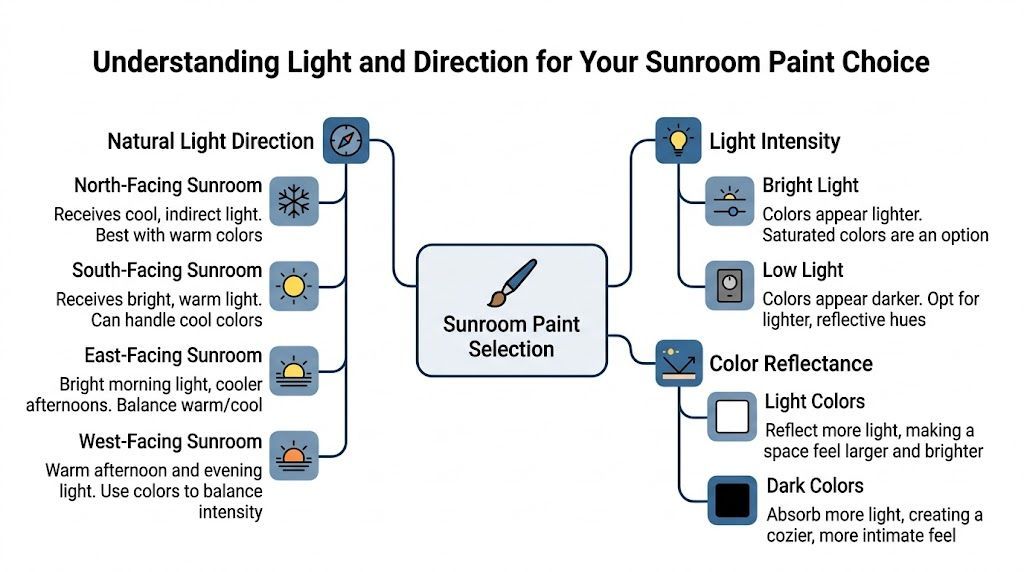
North-facing sunrooms receive cool, diffused light. That kind of light can make a room feel bluish or gray. Warm tones can help correct that. According to guidance on choosing paint for sunrooms based on exposure, warm tones such as honey yellows like Benjamin Moore Hawthorne Yellow HC-4 can increase perceived warmth by 20-30%, while south-facing rooms with intense light often do better with soft blues or greens such as Benjamin Moore Palladian Blue HC-144, which help reduce glare. The same source notes that UV-inhibiting paints can extend repaint cycles by 2-3 years in high-exposure spaces.
That’s the part many people miss. A warm shade in a cool room can feel balanced. That same shade in a hot, bright room may feel too heavy by midday.
East and west exposures
East-facing sunrooms usually get pleasant morning light and cooler light later in the day. West-facing rooms often stay flatter earlier, then become warmer and more intense in the afternoon. If your sunroom has windows on more than one side, pay attention to the wall that gets the strongest light for the longest stretch.
When homeowners compare samples, they sometimes say, “This one changed on me.” It didn’t change. The room did.
Morning light and afternoon light can make the same wall color look like two different paint chips.
Why LRV matters more than most people think
LRV means Light Reflectance Value. In plain language, it tells you how much light a paint color reflects. In a sunroom, that matters a lot.
A higher LRV generally helps a dim room feel more open. A lower LRV can create a cozy mood, but it may also make a shaded room feel smaller or heavier. That doesn’t mean every low-light sunroom needs plain white walls. It means the reflectance level should be part of the decision.
When glass needs help too
Sometimes paint alone won’t solve glare, heat, or fading. In especially bright rooms with large south or west exposures, homeowners may also look into professional home window film installation to soften harsh sunlight without giving up the benefit of the windows. That can make color choices more forgiving and improve comfort in rooms used all day.
A simple way to read your room
Use this quick field test before choosing sunroom paint colors:
- Stand in the room at 9 a.m. Notice whether the light feels blue, yellow, or neutral.
- Check again in midafternoon. This is when glare and washout show up.
- Look at trim, floor, and furniture together. Undertones bounce off each other.
- Watch a cloudy day on purpose. In the Puget Sound area, that’s often the truest test.
That small bit of homework saves a lot of repainting.
Matching Paint Colors to Your Sunroom Style and Mood
Once the lighting makes sense, the fun part starts. Sunroom paint colors don’t just control brightness. They shape how the room feels when you sit down, work, read, or gather with people.
If you want calm
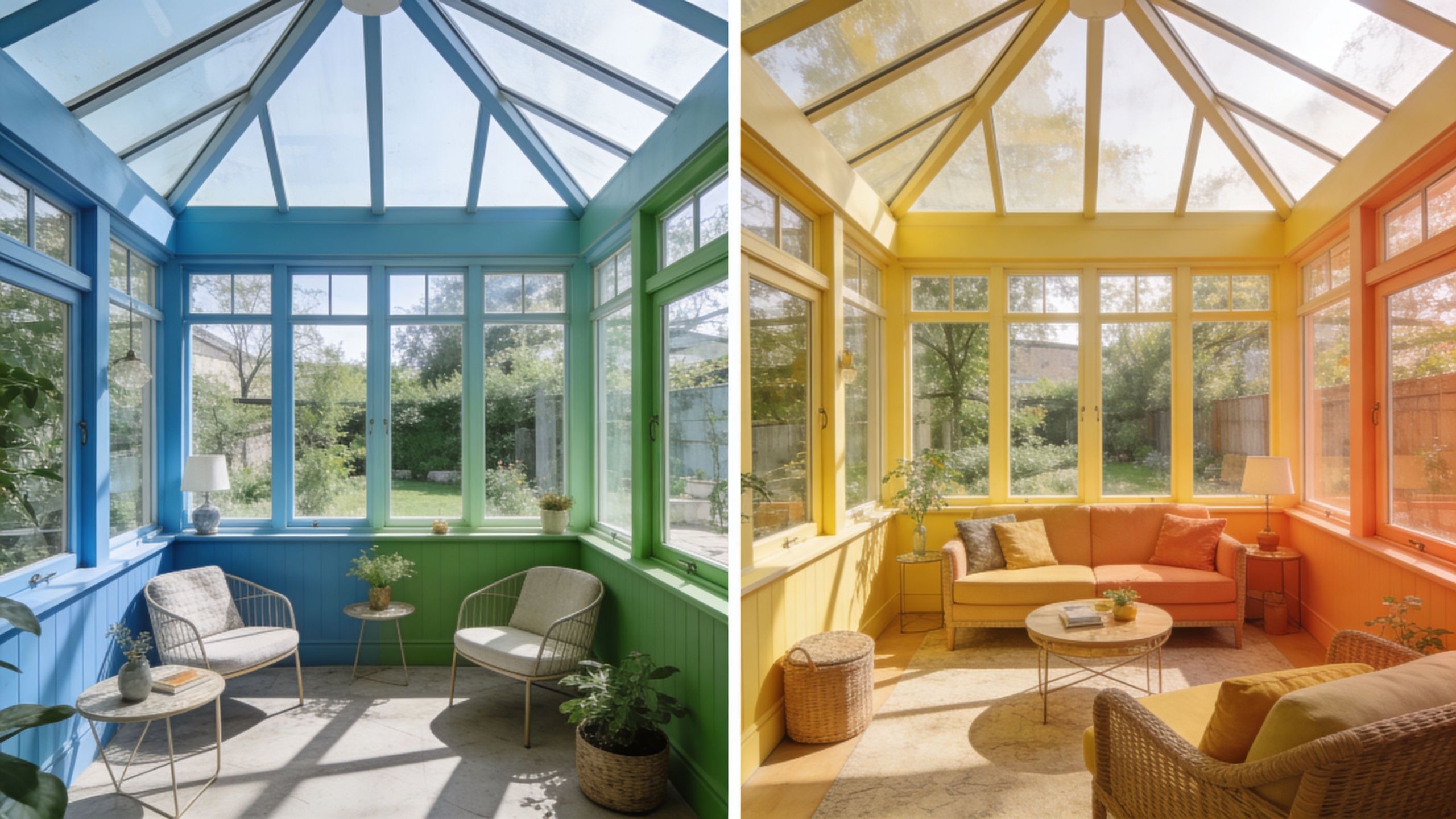
Soft blue-greens and muted sages tend to create a quiet, settled feeling. They work well in sunrooms used for reading, plants, or slower mornings. In many Puget Sound homes, these shades also sit nicely against wet greenery outside the windows.
If the room already has a lot of visual movement from window grids, wicker, tile, or patterned cushions, a quieter wall color keeps the space from feeling busy.
If you want energy
Warm yellows, peachy tones, and lively corals can make a sunroom feel cheerful even when the weather doesn’t cooperate. These choices often work best when the color is controlled. One wall, a softer version of the shade, or a balanced trim color can keep the room from feeling overly sweet.
Homeowners sometimes get nervous. They like the idea of color but worry the room will feel loud. Usually the fix isn’t abandoning color. It’s choosing a version with the right undertone.
A sunroom doesn’t need to be white to feel bright.
If your home has historic character
Classic homes around Tacoma, Seattle, and older neighborhoods in between often look best when the sunroom respects the age of the house. Historic color choices can still feel fresh if they’re used thoughtfully.
According to this overview of paint colors through the decades, the 1920s leaned into Art Deco pastels, the 1930s shifted toward muted earth tones, and the post-war 1950s brought back vibrant pastels like turquoise and pink. That same source notes that mid-century modern design increased sunroom glass area by 30-50%, and that restoring historic spaces with authentic palettes can boost value by 5-10%.
Matching the mood to the architecture
Here’s a practical way to pair style and mood:
- Craftsman or traditional homes often look grounded with muted green, clay, soft gold, or warm neutral tones.
- Mid-century homes can carry clearer color, including turquoise-inspired shades, crisp trim contrast, and playful accents.
- Contemporary additions usually benefit from restrained palettes, especially if the flooring, window frames, or furniture already make a strong statement.
If you’re torn between two directions, choose the mood first. It’s easier to narrow colors when you know whether the room should feel restful, social, cozy, or crisp.
Top Paint Palettes for Puget Sound Sunrooms
Most homeowners don’t need fifty options. They need a few reliable directions that fit local light. These palettes are built for the cool, shifting conditions common in Kent, Seattle, Tacoma, and nearby communities.
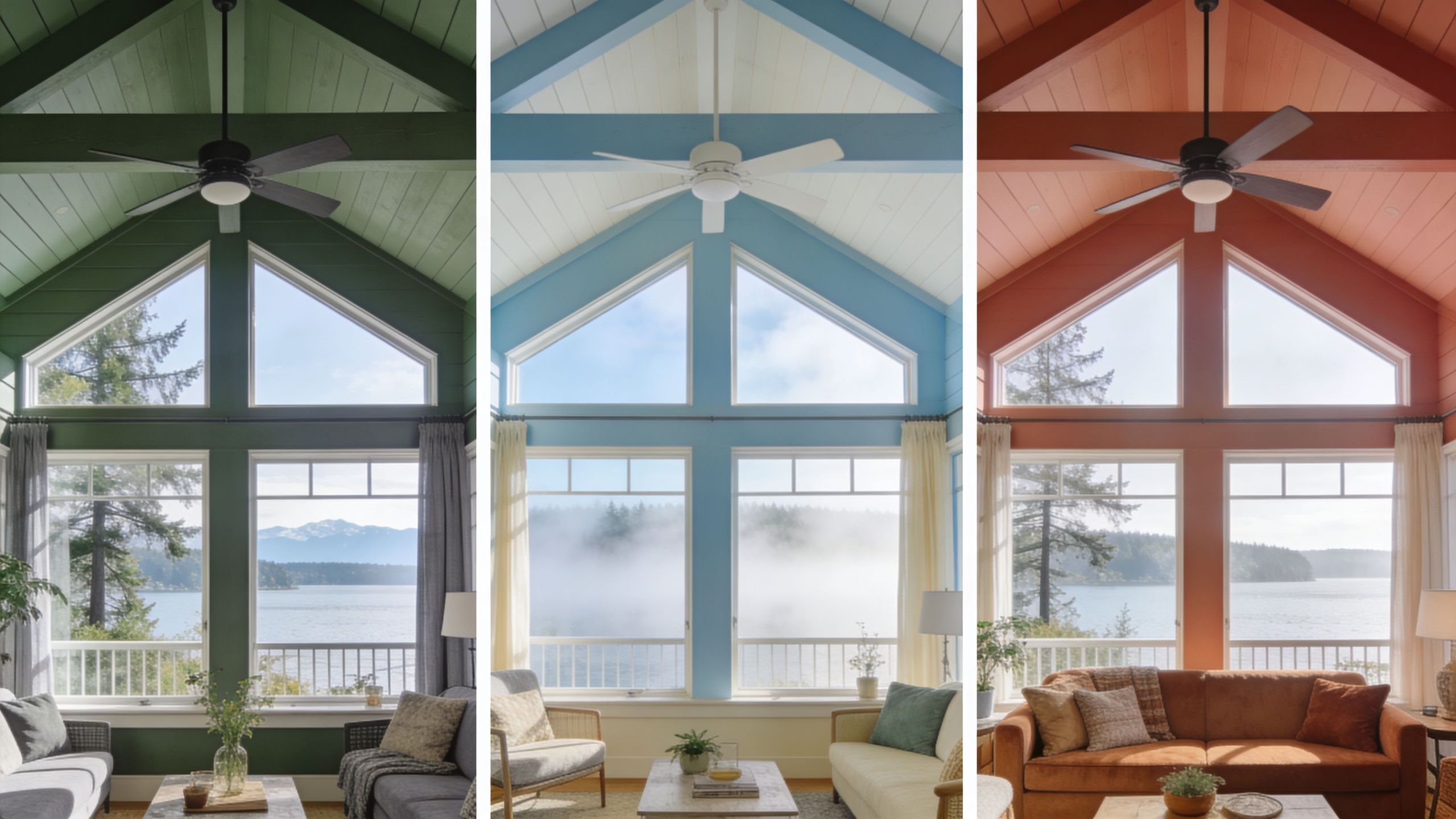
The gray-day brightener
This palette works well in north-facing or heavily shaded rooms.
- Wall color with a warm, light feel, such as Benjamin Moore Hawthorne Yellow HC-4
- Trim color with very high reflectance, such as Sherwin-Williams Extra White SW7006
- Accent idea in natural wood, wicker, or muted tan textiles
The goal here isn’t a loud yellow room. It’s a controlled warmth that keeps the walls from looking icy when the sky is overcast. For indirect-light spaces, this approach can make the room feel friendlier without fighting the architecture.
The coastal balance palette
This one suits south-facing rooms or spaces that get strong daylight for much of the day.
A soft blue or green wall color, like Benjamin Moore Palladian Blue HC-144 or Saybrook Sage HC-114, can calm the light and help the room feel less glaring. Pairing it with bright trim keeps things from going murky. This is often a good fit for homeowners who want a serene look rather than a sunny one.
For anyone refining adjacent spaces, especially living rooms or hallways that connect to the sunroom, this guide to colors that go with grey can help keep the transition smooth.
The shaded jewel-tone palette
Some low-light sunrooms don’t improve when you keep trying lighter and lighter paint. They improve when you stop fighting the mood and lean into it.
According to guidance for indirect-light rooms and sunrooms, many Puget Sound sunrooms receive 40-60% less light, and rooms like these often do best either with high-LRV paint such as Sherwin-Williams Extra White SW7006 or with bold jewel tones that appear to glow in low light. That gives homeowners two valid paths. Reflect more light, or use depth on purpose.
A deep green, rich sapphire tone, or moody blue can feel dramatic in a good way if the furnishings and trim support it.
Here’s a quick visual on how bold and light choices can both work in a sunroom:
The warm natural palette
This option works especially well for sunrooms that connect to decks, patios, or garden views. Think soft terracotta influence, warm beige, muted clay, and off-white trim. It feels grounded and comfortable, especially in homes with wood floors, rattan furniture, or earth-toned textiles.
Choose this route if you want the room to feel relaxed year-round instead of seasonally bright.
Selecting the Best Paint Finish for Durability
Color gets the attention, but finish decides a lot of the day-to-day performance. In a sunroom, that matters because walls and trim often deal with changing temperature, moisture near windows, and frequent wipe-downs around sills and doors.
What each finish actually does
| Sunroom Paint Finish Comparison | Appearance | Durability | Best For |
|---|---|---|---|
| Matte | Soft, low-shine look | Lower washability | Ceilings or low-contact walls in dry, stable areas |
| Eggshell | Slight softness with a bit more life | Good for everyday use | Main walls in many residential sunrooms |
| Satin | Noticeable soft sheen | Stronger cleanability and moisture resistance | Walls, trim, and active family spaces |
| Semi-gloss | Sharper shine and crisp contrast | Very durable and easy to clean | Trim, window casings, doors, and high-contact surfaces |
A practical rule for sunrooms
Most sunroom walls do well in eggshell or satin, depending on how the room is used. If kids, pets, plants, or commercial traffic are part of the picture, satin often makes more sense. It stands up better to wiping and tends to tolerate damp conditions more gracefully.
Trim is different. Window trim, stool areas, and door casings usually benefit from a tougher finish, often semi-gloss, because those surfaces get touched and cleaned more often.
Practical rule: Put more durability where hands, condensation, and sunlight hit hardest.
Don’t ignore UV and moisture
A finish won’t solve every problem by itself. Product selection matters too. In a room with lots of glass, it helps to use coatings designed to stand up to sunlight. This overview of UV-resistant paint options is useful if you’re comparing products for fade resistance.
For homes and commercial spaces with existing water staining, drywall softness, or mildew around trim, the surface may need repair and sealing before any finish goes on. That’s one reason residential contractor near me and commercial painting services near me searches often lead people to full-service teams instead of a simple paint-only approach. The prep work decides whether the finish lasts.
Test Your Paint Colors Like a Professional
Paint chips lie. Not because the color is wrong, but because the sample is too small and the lighting is too controlled. Sunrooms change by the hour, so your testing process has to match real conditions.
Use movable sample boards
Buy sample pots and paint them onto large poster boards or foam boards. Don’t paint test squares directly onto every wall unless you’re comfortable doing extra sanding and priming later. A movable board lets you test one color in several spots without marking up the room.
Check the room in real life
Move each board around and watch it under different conditions:
- Morning light shows whether the color turns too cold or too sugary.
- Afternoon light reveals glare and washout.
- Cloudy-day light is the big one for Western Washington.
- Evening light helps you see what happens when lamps take over.
According to this decade-by-decade color trend review, color preferences shifted quickly over time. The 2000s saw cooler grays and tinted neutrals rise 50% by 2010, and by the 2010s, cool grays made up 60% of selections. That quick change is a good reminder that trend photos don’t know your room. Testing does.
Look beyond the wall
A sample can look perfect until it sits beside your floor, trim, ceiling, and furniture. Hold the board next to those surfaces on purpose. If the room has dark wood trim, aluminum framing, or tile with a strong undertone, that will influence the final result.
Test fewer colors, but test them better. Three well-chosen samples usually teach you more than ten rushed ones.
Why Hiring a Professional Painter Delivers Better Results
Sunrooms look simple from a distance. Then the work proves more involved. Tall glass walls, tricky cut lines, moisture-prone trim, patched drywall, peeling sills, and hard-to-read lighting can turn a weekend project into a string of expensive do-overs.
A professional painter helps most when the room has conditions that punish small mistakes. That includes vaulted ceilings, stained drywall, older wood trim, condensation damage, or a connected remodel where the sunroom has to flow into nearby living space, office space, or a commercial tenant improvement.
Where DIY usually runs into trouble
- Prep work gets underestimated when old caulk, minor water damage, or surface chalking are present.
- Glass cleanup becomes risky if paint lands on window panes and someone reaches for the wrong scraper. If that’s already happened, this guide on how to efficiently remove paint from window glass is a helpful reference.
- Detail work slows everything down around mullions, trim transitions, and door frames. Homeowners comparing techniques often benefit from these tips for painting trim.
Why it matters for homes and commercial spaces
For homeowners, the payoff is a cleaner finish and a room that feels right in every season. For building owners and facility managers, the payoff is consistency, durability, and less disruption. That matters in office space renovation, retail build-outs, and smaller commercial construction near me projects where the sunroom or enclosed patio functions as a visible tenant-facing area.
Good painting is less about getting color on the wall and more about solving the room.
Your Sunroom Painting Questions Answered
Can you paint a sunroom with vinyl or aluminum framing nearby
Yes, but those materials need the right prep and the right product. Frames, adjacent trim pieces, and transition areas often require careful cleaning, scuffing, masking, and coating selection. This is one of those details that affects how professional the room looks when it’s finished.
What if my sunroom has dark wood trim
You have two paths. Keep it and choose wall colors that support it, or paint it and fully change the feel of the room. Dark wood often works well with muted greens, earthy neutrals, and some historic palettes. If you paint over it, the prep has to be thorough or the finish won’t hold up well.
Is white ever a good choice in a Puget Sound sunroom
Yes, but not every white. Undertones matter. Some whites lean blue and can feel cold. Others lean creamy and can look too yellow in gray light. Testing is the only safe way to know which white works in your exact space.
How do you prevent mold and mildew in a sunroom
Start with the room itself, not just the paint. Check for condensation, failed seals, leaks, and poor airflow. Then use coatings suited to damp conditions and make sure the surface is clean, sound, and dry before painting. In some spaces, waterproofing or repairs should happen first.
Are bold colors a bad idea in small sunrooms
Not always. In some shaded rooms, a bold color looks richer and more intentional than a washed-out pale color. The key is to choose it because it fits the light, not just because it looked dramatic online.
What if the sunroom connects to a kitchen, office, or commercial common area
Treat it as part of a larger color plan. The sunroom should have its own identity, but it shouldn’t feel disconnected from the rest of the property. That’s especially important in residential remodeling and commercial renovations where sightlines matter.
If you’re planning a sunroom refresh, a full residential remodel, or a smaller commercial upgrade in Kent, Seattle, Tacoma, or nearby communities, Wheeler Painting & Restoration Services can help you make confident choices and get the work done right. Their team handles residential and commercial construction, interior painting, exterior painting, drywall, waterproofing, tenant improvements, facility maintenance, and restoration work across the Puget Sound region. Reach out for a consultation if you want a practical plan, clear communication, and a finish built for local light and weather.







 “Like” us on Facebook!