

Drywall Repair Cost: A 2026 Puget Sound Guide
Common drywall repairs in 2026 usually land somewhere between around $300 and over $900, and the national average is $611. For homeowners and property managers around Puget Sound, the final number depends less on drywall alone and more on what caused the damage, where it sits, how visible the area is, and whether the repair needs patching or replacement.
A lot of people start looking up drywall repair cost after one annoying moment. A chair punches the wall in Tacoma. A tenant move-out leaves anchor holes in Bellevue. A leak shows up as a brown ring on a ceiling in West Seattle. The damage looks small, but the price feels uncertain.
That uncertainty usually comes from not knowing what contractors are pricing. You're not just paying for mud, tape, and a scrap of board. You're paying for setup, containment, drying time between coats, sanding, texture matching, priming, and the skill it takes to make a patch disappear instead of looking like a patch. In Seattle-area homes and commercial spaces, that last part matters a lot because repairs often sit in plain sight under natural light, office lighting, or smooth painted finishes.
That Unexpected Dent What to Know About Drywall Repair Costs
It often starts with something minor. A doorknob hits the hallway wall in Issaquah. Someone removes a wall-mounted TV in Kirkland and leaves a cluster of torn anchors behind. A property manager in Seattle walks a vacant suite and spots dents, stress cracks, and one stained patch under a window. None of that looks like a major construction job, but it still needs a clean repair if you want the wall to look right once it's painted.
Most drywall damage is fixable without a full remodel. The challenge is figuring out whether you're dealing with a quick cosmetic repair, a cut-out-and-patch job, or something bigger hiding behind the surface. Hairline cracks and small dents are usually straightforward. Water stains and soft drywall are different because the stain is often just the visible part of the problem.
What homeowners and managers usually want to know first
Individuals aren't asking for a perfect technical breakdown at the start. They want answers to three practical questions:
- Is this small or serious? A nail pop and a soft, damp ceiling stain don't belong in the same category.
- Can it wait? Cosmetic dents often can. Water-related damage usually shouldn't.
- Should I clean it, patch it, or call somebody? If you're still trying to figure out whether marks are dirt, scuffs, or actual wall damage, this expert wall cleaning advice is a useful first step before you assume the drywall itself is failing.
Practical rule: If the wall feels soft, swollen, crumbles when pressed, or shows repeat staining, treat it like a repair problem, not a paint problem.
In the Puget Sound area, drywall pricing becomes much easier to understand once you separate the visible damage from the actual work required. A tiny patch in a smooth bedroom wall is one thing. A stained ceiling in New Castle or Snoqualmie can involve access equipment, moisture checks, insulation concerns, and a lot more finish work.
That difference is why two repairs that look similar from ten feet away can price very differently.
Typical Drywall Repair Costs by Damage Type
Drywall repair cost makes the most sense when you sort it by damage type instead of asking for one flat number. Nationally, the average cost to repair drywall is $611, with a typical range of $296 to $925, and water damage is the most expensive category, often exceeding $1,550 because it may require moisture testing, insulation replacement, and mold remediation, according to HomeAdvisor's drywall repair cost guide.
Estimated Drywall Repair Costs by Damage Size and Type
| Repair Type | Typical Size | Estimated Cost Range |
|---|---|---|
| Small hole or patch | Small cosmetic damage | $50 to $150 |
| Minor defects such as dents or nail holes under 4 inches | Under 4 inches | $100 to $300 |
| Medium hole | Standard wall patch | $150 to $400 |
| Large repair area requiring new drywall pieces | Larger wall area | $500 to $800 or more |
| Ceiling repair | Small to extensive overhead repair | $350 to $1,500 |
| Water damage remediation | Moisture-related damage | Often exceeds $1,550 |
| Severe water damage or sagging panels requiring replacement | Extensive damage | $800 to $1,500+ |
| Hairline cracks or small dents | Minor cosmetic issues | $60 to $400 |
Those numbers are useful as a starting point, but they don't all represent the same kind of work.
What each category usually means in real life
Small holes and dents are often the least expensive because the repair area is limited. The trick is that the finish still has to blend. On a smooth wall in a living room or office corridor, the patch has to disappear under direct light.
Medium and larger holes usually need a more structured patch. That can mean cutting back to sound drywall, backing the opening, fastening in a new piece, taping seams, applying multiple coats of compound, sanding, then priming and painting.
Ceiling damage almost always costs more than the same damage in a wall. Working overhead is slower, messier, and harder to finish cleanly.
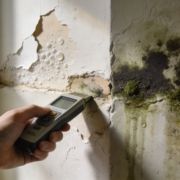
Water damage is the category that changes everything. Once drywall absorbs moisture, the job may no longer be a patch. It can become a replacement, and that changes the labor, cleanup, and repair method. If you're dealing with that specific issue, this guide to repairing water-damaged drywall is a good next read.
Water stains are often treated like surface blemishes at first. They're not. The key question is whether the drywall is still sound.
Why water damage climbs fastest
Water-damaged drywall gets expensive because the repair isn't just about appearance. Crews may need to remove wet material, check adjacent insulation, address contamination concerns, and replace larger sections to make sure damaged material is fully gone. That's why a stain from a roof leak or plumbing issue in Tacoma or Bellevue can move from "simple patch" to "restoration work" quickly.
Key Factors That Drive Your Final Price
Two drywall repairs can have the same hole size and very different prices. The biggest reason is that cost is driven by labor conditions, finish requirements, and access, not just square inches of damage.

Location of the repair matters more than people expect
A wall repair is usually simpler than a ceiling repair. Ceiling work consistently costs more, and small patches can start around $450, largely because crews need ladders or scaffolding, more floor protection, stronger dust containment, and enough skill to apply mud overhead without sagging. That's the practical reason ceiling pricing is higher, as noted earlier in the cost data.
If you've ever tried to sand or feather a patch over your head, you already know why. It's slower. It creates more mess. It also takes more finesse to make the repair disappear.
Finish level changes labor
Not all finished walls are equal. Some are heavily textured and forgiving. Others are smooth and show every ridge, flashing edge, and sanding mark.
A contractor may think about finish in levels, but the homeowner version is simpler:
- Basic utility finish works in lower-visibility spaces where appearance isn't under a spotlight.
- Standard finished wall needs seams and patches to blend into normal painted surfaces.
- High-visibility smooth finish takes more care because side lighting from windows will expose defects fast.
- Texture matching can add another layer of difficulty if the existing pattern has to be recreated convincingly.
Labor usually drives the bill
Drywall materials aren't typically the expensive part. Labor is. Licensed drywall contractors commonly charge $75 to $125 per hour, while handyperson labor often falls between $60 and $90 per hour. Finishing work such as painting and texturing can add $150 to $900 to the project when the surface has to be blended back into the surrounding wall.
That means a drywall repair cost isn't just about closing the hole. It's about making the wall look untouched afterward.
A patch that's technically complete but still visible under light isn't a finished repair. It's a patched wall waiting for someone to notice it.
The same damage can cost more in certain settings
A repair in an empty storage room is usually simpler than the same repair in:
- A furnished living room where floors and furniture need protection
- An occupied office where dust control and timing matter
- A lobby or reception area where the finish has to look spotless
- A textured ceiling where matching the surrounding pattern is the hard part
That's why drywall pricing feels inconsistent to people until they see the work conditions behind the quote.
Puget Sound Pricing for Your Home or Business
Seattle-area drywall pricing has its own rhythm. The materials may be standard, but the job conditions aren't. Homes in North Bend, older walls in Tacoma, condo work in Bellevue, and tenant improvement spaces in Seattle all bring different constraints that affect labor time, scheduling, and finish expectations.
Why local quotes vary
In major U.S. markets, small projects under 10 square feet often price at $75 to $100 per square foot, while large projects over 25 square feet tend to drop to $50 to $75 per square foot as economies of scale start to work in the client's favor, based on FieldCamp's drywall repair cost breakdown.
That matters in Puget Sound because many repair calls aren't large open areas. They're small but fussy:
- A patch behind a commercial door
- A repair above a stair landing
- A cluster of move-out damage in a corridor
- A small ceiling opening after plumbing access
Small jobs often carry the highest unit cost because setup doesn't shrink much just because the hole is small.
Residential and commercial jobs price differently
A homeowner in Issaquah planning a bath remodel may only need one or two visible repairs tied to the broader project. A property manager in Bellevue handling tenant improvement work may have multiple repair points spread across one suite. The second case often prices more efficiently because the crew can stay productive in one mobilization.
Commercial environments also add practical issues that homeowners don't always deal with:
| Setting | What affects cost |
|---|---|
| Occupied office | Dust control, work-hour limits, coordination with staff |
| Retail build-out | Deadline pressure, finish quality in customer-facing areas |
| Residential remodel | Paint match, furniture protection, clean transitions with existing finishes |
| Facility maintenance | Repeated small repairs across multiple locations or rooms |
Why Puget Sound properties need site-specific pricing
The drywall itself may be standard gypsum board, but the project isn't standard once you add access, moisture exposure, scheduling restrictions, and finish requirements. That's especially true in Seattle, West Seattle, Kirkland, and Snoqualmie, where coastal moisture, older housing stock, and active occupancy can all complicate what looks like a simple repair on paper.
For both homes and commercial spaces, local pricing only gets accurate when someone looks at the actual wall, ceiling height, texture, and surrounding conditions.
DIY Repair vs Hiring a Professional Contractor
DIY drywall repair makes sense in some situations. It also goes sideways fast when the patch sits in a visible area, the texture is tricky, or the wall damage is larger than it first looked.

When DIY is reasonable
For tiny cosmetic issues, DIY can be the practical choice. A basic patch kit is far cheaper than hiring someone out for a very small repair, and if you're dealing with a simple nail hole or a small ding in a low-visibility spot, that trade-off can be perfectly fine.
If you're learning the basics, this guide to patching drywall gives a solid overview of the process and helps you understand what tools and steps are involved.
DIY usually works best when the damage is:
- Small and isolated
- On a standard wall, not a ceiling
- In a low-visibility area
- Not water-damaged
- Not textured in a way that's hard to match
Why pro minimums feel high
Most professional contractors have a minimum job fee between $350 and $650. That surprises people until they look at what has to happen before the first coat of compound even goes on.
That minimum isn't arbitrary. It covers real overhead such as vehicle expense, fuel, insurance, tools, setup time, cleanup, and the scheduling impact of sending a crew or technician to handle one small repair instead of a larger block of work.
Job-cost reality: A tiny repair can still consume travel time, setup, dust containment, dry time planning, and a return visit. The hole may be small. The appointment isn't.
What DIY often misses
The hidden cost of DIY isn't always materials. It's the finish.
A first-time patch often ends up with one of these issues:
- A hump in the wall because too much compound stayed proud of the surface
- A visible square outline because the feathering wasn't wide enough
- Flashing after paint where the patch texture absorbs primer differently
- A ceiling repair that sags or telegraphs through
For visible cracking, especially recurring settling cracks, this article on fixing cracks in drywall helps clarify when a simple cosmetic approach is enough and when the repair should be reinforced and refinished more carefully.
The practical comparison
| Option | Best for | Main trade-off |
|---|---|---|
| DIY | Small cosmetic repairs in forgiving areas | Lower cost, higher risk of visible results |
| Professional repair | Visible walls, ceilings, texture matching, larger damage | Higher upfront cost, cleaner finish and less hassle |
If the wall is in a front room, a retail space, a hallway, or a ceiling people see every day, professional work usually saves frustration.
When to Replace Drywall and How to Handle Insurance
At a certain point, patching stops being the smart option. If drywall is soft, swollen, sagging, contaminated, or damaged across a wide enough area, replacement is usually cleaner and more reliable than trying to save compromised material.

The patch-to-replacement tipping point
For larger repairs, especially after water exposure, pricing often shifts from a flat repair charge to a per-square-foot replacement rate of $3 to $8 for materials and labor. That's why a repair that looks "medium-sized" can move past $1,000 once it requires full sheet replacement rather than a simple patch.
In practice, replacement often makes more sense when:
- The drywall has lost integrity
- The damaged section extends beyond a neat patch area
- Moisture has affected insulation or adjacent framing
- Mold or contamination is a concern
- The finish would be harder to hide with a patch than with a larger cut-out
A clean cut to sound material and a proper re-board often produces a better long-term result than trying to rescue drywall that shouldn't stay in place.
Insurance changes the process
When damage comes from a covered event such as a sudden leak, storm issue, or another insurable loss, the repair conversation becomes partly a documentation job. Owners need clear photos, scope notes, and a repair plan that separates cosmetic work from necessary replacement.
That matters for homes in Snoqualmie and West Seattle, but it's just as important for commercial properties where facility managers may need to coordinate with tenants, building ownership, and adjusters at the same time.
Here's a useful overview of what the repair process can look like from demolition through finishing:
What to document before work starts
If insurance may be involved, do these first:
- Photograph the damage clearly from wide and close angles.
- Record the source if known, such as a plumbing leak or roof intrusion.
- Note whether the drywall feels soft, stained, sagging, or smells musty.
- Avoid cosmetic cover-ups before the issue is documented.
- Get a professional scope so the adjuster sees what must be repaired versus what can be blended.
Insurance claims move more smoothly when the repair scope reflects the actual method required. A patched hole and a wet wall cavity are not the same kind of job.
Get a Clear and Accurate Quote for Your Project
The easiest way to understand drywall repair cost is to stop thinking of it as one number. The actual price depends on damage type, repair location, finish quality, and whether the job is a patch or a replacement. Once you know those four things, the quote usually stops feeling mysterious.
What to have ready before requesting a quote
A better estimate starts with better information. Before reaching out, gather:
- Photos of the damage from near and far
- Room details such as wall or ceiling location
- A short note on the cause, if you know it
- Whether the area is textured, smooth, occupied, or recently painted
- Any timing needs, especially for tenant improvement or facility maintenance work
That saves back-and-forth and helps narrow whether you're looking at a small repair, a larger drywall contractor scope, or restoration-related replacement.
Why detailed estimating matters
Good estimates aren't pulled from a guess. They come from measuring, checking access, identifying finish requirements, and deciding whether the surrounding area needs prep, protection, primer, paint, or texture matching. For property owners who want to understand how estimating systems work behind the scenes, tools like Exayard drywall bid software show the kind of line-item thinking that goes into professional takeoffs and quoting.
If you're planning a broader residential remodeling or commercial renovation project, this guide on estimating home renovation costs is also helpful for seeing how drywall fits into the bigger budget.
The most reliable quote comes from seeing the actual damage, not from trying to price a wall by description alone.
For homeowners searching for a residential contractor near me or property teams looking for commercial construction near me in Seattle, Tacoma, Bellevue, Kirkland, Issaquah, New Castle, North Bend, Snoqualmie, or West Seattle, the smartest next step is an on-site review. That's how you get a quote that reflects the actual work, not a generic range pulled from the internet.
If you want a straightforward assessment and a detailed proposal, contact Wheeler Painting & Restoration Services. They serve homeowners, business owners, and facility managers across Tacoma, Seattle, Bellevue, Kirkland, Issaquah, New Castle, North Bend, Snoqualmie, and West Seattle with practical guidance, transparent pricing, and repair scopes built around the actual condition of your property.



 “Like” us on Facebook!