Tag Archive for: drywall contractor

Textured Wall Finish: Your Puget Sound Guide

Walls usually become a problem right when you need them to look their best. A homeowner in Tacoma starts a kitchen remodel and notices every old patch telegraphs through fresh paint. A property manager in Bellevue turns over a tenant space and sees years of dings, uneven repairs, and mismatched drywall work under direct lighting. In West Seattle, an older plaster wall may have real character, but it may also carry layers of touch-ups that don't blend anymore.

That's where a textured wall finish often makes sense. Not as a shortcut, and not as a gimmick. Used correctly, texture can hide minor surface irregularities, add depth, and give a room a more finished look than a flat wall ever could. In the right setting, it also makes future wear less obvious, which matters in busy homes, retail spaces, offices, and other high-use interiors around Seattle, Issaquah, Kirkland, and Snoqualmie.

The catch is simple. Texture only helps when the finish matches the building, the lighting, and the maintenance expectations. Some textures are forgiving. Some are hard to patch cleanly. Some help an older wall feel intentional. Others can make a remodel look dated if they're too heavy for the space.

A lot of online advice stops at style names. That's not enough if you're the one paying for the work and living with it afterward. In the Puget Sound, moisture, gray daylight, tenant wear, and long-term upkeep all affect the right choice.

Transform Your Walls From Flawed to Flawless

A textured wall finish usually enters the conversation after someone has already tried the obvious fix. They've patched the dents, repainted the room, swapped bulbs, and still the wall looks tired. The problem often isn't the color. It's the surface.

In older Tacoma homes and some Seattle properties, walls carry a long history of repairs. You'll see filled anchor holes, skimmed cracks, old plaster transitions, and drywall patches from electrical or plumbing updates. In newer commercial spaces in Bellevue or Kirkland, the issue is different. The walls may be structurally fine, but the finish has to look clean under brighter, more directional lighting.

Where texture helps most

Texture works well when the goal is to make the wall feel intentional again, not merely covered up. A subtle finish can soften visual noise from small imperfections. A hand-applied finish can add warmth to a room that feels flat and overbuilt. On some commercial tenant improvement projects, the right texture also helps a space stay presentable between touch-ups.

Practical rule: If a wall has minor surface inconsistency across a broad area, texture often looks better than endless spot repairs followed by smooth paint.

That doesn't mean texture fixes bad substrate work. If the drywall is loose, the plaster is failing, or moisture is active, texture won't save it. It will only lock in a problem that reappears later.

Why owners choose it

Property owners usually choose a textured wall finish for one of three reasons:

  • Surface forgiveness. Small patchwork and unevenness become less noticeable.
  • Character. Rooms gain depth, especially when flat walls feel stark.
  • Practical wear. Everyday scuffs and minor flaws tend to read softer on many textured surfaces than on perfectly smooth walls.

For homeowners planning residential remodeling in North Bend or New Castle, that can mean a more livable finish. For facility managers handling office space renovation or retail build-outs, it can mean a wall system that looks steadier during occupancy.

Texture isn't always the answer. In some modern spaces, a flatter finish is the better fit. But when the wall already has a story written into it, texture often turns that from a problem into part of the design.

What Is a Textured Wall Finish Anyway

A textured wall finish is a finish system that gives the wall a deliberate surface profile instead of leaving it completely flat. Think of the difference between a smooth frosted cake and one finished with patterned icing. Both cover the surface. One also changes how light hits it, how imperfections show up, and how the whole room feels.

On interior walls, texture is often created with joint compound, plaster-style materials, or specialty finish products applied by spray, trowel, brush, or knife. On exterior walls, textured coatings and stucco-style systems do more than change appearance. They can also be part of the wall's protective layer.

More than decorative surface

People sometimes treat texture like a cosmetic add-on. Historically, it wasn't that simple. Historic masonry guidance notes that from the seventeenth to nineteenth centuries buildings were often covered with external plaster or render, then troweled smooth or scored to imitate ashlar stonework. That same guidance explains these finishes were engineered for weather-proofing and durability, not just appearance, and recommends three-coat work for finishes over 30 mm with the strongest coat first and each successive coat weaker (historic masonry finish guidance).

That matters because it reframes texture. Good finish work has always been about performance and craft together.

Why texture became common indoors

Wall finishing changed in the 20th century as drywall replaced a lot of traditional plaster practice. Industry history notes that USG marketed early drywall as a low-labor alternative to plaster, advertising in 1921 that it went up with “no time lost” waiting for materials or drying. Another milestone came in 1944, when beveled-edge Sheetrock panels helped make smoother joint finishing more practical and pushed interiors toward flatter wall aesthetics (history of walls and ceilings industry).

That's why modern homeowners often think of flat walls as standard and texture as optional. In reality, both approaches come from specific building eras and specific needs.

A textured finish changes more than looks. It changes how defects read, how light scatters, and how much craftsmanship the wall demands from start to finish.

If you're deciding between smooth and textured walls, it helps to stop thinking in trends first and start thinking in substrate, use, and upkeep.

A Guide to Common Texture Types and Styles

Some textures are quiet. Some announce themselves the minute you enter the room. The best choice depends on the age of the building, the amount of wall imperfection, and the look you want after paint goes on.

A visual guide comparing four common textured wall finishes: orange peel, knockdown, popcorn, and skip trowel.

Orange peel

Orange peel is one of the most common interior textures because it's subtle and forgiving. It leaves a fine, dimpled surface that reads clean from a distance and doesn't dominate the room.

This is often a practical choice for hallways, bedrooms, offices, and large wall areas where you want consistency without drawing attention to the finish itself. It works well in many residential remodeling projects because it helps hide minor substrate variation without looking heavy.

Knockdown

Knockdown starts with a sprayed texture that's partially flattened after it begins to set. The result is broader, softer islands of texture with less sharp relief than popcorn and more movement than orange peel.

It can suit living rooms, family spaces, and some commercial interiors where a little visual depth helps. It's more expressive than orange peel, but still controlled if applied well.

Skip trowel

Skip trowel is hand-applied. The finisher drags material across the wall so that smooth areas remain visible between raised patches and ridges. It tends to feel more custom and more architectural than sprayed textures.

In the right setting, skip trowel adds warmth and a lived-in feel. In the wrong setting, especially where a very crisp modern look is the goal, it can feel too rustic.

Comb and sand swirl

These are pattern-driven finishes. Comb textures use repeated lines or arcs. Sand swirl creates a circular or sweeping motion in the surface.

They can be attractive in the right home, but they're more style-specific than orange peel or knockdown. Because the pattern is deliberate, patching later usually takes a steadier hand.

Venetian plaster

Venetian plaster is not a casual texture choice. It's a decorative finish built through multiple passes to create depth, movement, and often a polished, stone-like effect. In high-end residential interiors or boutique retail spaces in Seattle or Bellevue, it can look exceptional when the architecture supports it.

It also exposes weak prep fast. If the substrate is wrong or the applicator isn't experienced, the finish won't feel refined.

Exterior stucco and textured coatings

Exterior texture belongs in a different category because performance matters as much as appearance. A textured exterior coating can help weatherproof the surface and visually soften patched masonry or cement plaster. If texture matching is important in restoration work, preservation guidance notes that custom aggregate selection may be needed, and natural aggregate is often required when an exact historic match matters because crushed aggregates are a relatively modern option with limited choices, as discussed in the earlier history section.

For anyone trying to document or compare finish options before a project starts, this guide to capturing texture in interior photos is useful because texture can disappear or look exaggerated depending on light and camera angle.

Comparing Finishes Durability Cost and Maintenance

The decision isn't just which texture looks good on day one. It's how that wall performs after cleaning, repainting, tenant turnover, drywall cuts, furniture scrapes, and years of normal use.

A lot of articles miss that point. One of the biggest gaps in existing content is maintenance and repair realism. The more useful question is what a finish will cost over the next 5–15 years in cleaning and repainting labor, not just what it looks like today (maintenance and lifecycle perspective).

Textured finish comparison

Finish Type Cost ($-$$$) Durability Ease of Cleaning Repair Complexity
Orange peel $ Good for everyday wall wear Fairly easy Moderate
Knockdown $$ Good when applied consistently Moderate Moderate to high
Skip trowel $$ to $$$ Durable surface character Moderate to harder High
Comb or sand swirl $$ Depends on pattern consistency Moderate High
Venetian plaster $$$ Strong finish presence, but appearance-sensitive Moderate High
Smooth wall $$ to $$$ Shows wear and flaws fastest Easy to wipe, hard to keep visually perfect High for seamless repairs
Exterior stucco or textured coating $$ to $$$ Built for exposure when specified correctly Depends on profile Moderate to high

What usually works best

For many homes and light commercial interiors, orange peel is the most balanced option. It hides modest imperfections, doesn't trap the eye, and is easier to blend than more dramatic textures.

Knockdown offers more depth and can age well visually, but patching has to be done carefully. If a plumber opens a wall and someone tries to spot-repair it too fast, the patch can flash under side lighting.

Skip trowel and decorative plaster finishes bring more character, but they also demand better expectations. They're not ideal if you expect frequent utility cuts, repeated patching, or low-skill maintenance touch-ups.

The more distinctive the texture, the more visible the repair work tends to be unless the same level of craftsmanship returns for the patch.

The style trade-off

Some textures hold up better in current remodels than others. Subtle finishes usually have a longer runway than aggressive ones. In Issaquah, Kirkland, and Bellevue remodels where owners want a cleaner look, a light orange peel or restrained hand texture often gives enough forgiveness without making the room feel dated.

Heavier textures can still be right for older homes, transitional spaces, and certain commercial properties. The key is honesty about maintenance. If you might smooth the walls later, heavy texture creates extra labor. If you need easy spot repairs, highly artistic textures may not be the practical choice.

The Application Process From Start to Finish

Texture work looks simple from across the room. Up close, it's a sequence job. Every stage affects the next one, and small mistakes compound fast.

An infographic showing the four steps of the professional textured wall application process with illustrative icons.

Surface preparation

Good texture starts before any material hits the wall. That means cleaning, patching, checking for loose areas, sanding transitions, and dealing with stains or moisture issues first. If the wall is new drywall, primer matters. If you're sorting out that step, this guide on whether you have to prime sheetrock before painting covers the basics well.

A textured finish won't hide structural movement, failing tape, or soft drywall. It will highlight those failures later.

Mixing and application

Application method changes the final profile. Product guidance shows that texture mix, airflow, and nozzle settings all affect how much material lands on the wall. Higher airflow reduces deposit, while lower airflow increases it. Knockdown textures also depend on timing, because the peaks need to be flattened while the material is partially set, not too wet and not too dry. For hand-applied contemporary plaster-style finishes, one published rule of thumb is about two-thirds paint to one-third compound, adjusted until the mix is no longer too runny to hold on the trowel (wall texturing guidance).

That's why texture jobs can't be treated like ordinary repaint work. The wall profile depends on mechanics, not just material choice.

Drying and finishing

Drying time isn't just waiting around. It affects whether the finish cures evenly and whether the next coat bonds as intended. On exterior textured products, technical sheets show heavier applications use more material and can extend scheduling. One textured basecoat lists a typical application rate of 350–500 g/m² depending on roughness and needs about 24 hours to dry at 20°C before overcoating (textured coating technical sheet).

Why pros get more consistent results

A pro controls variables that a DIY job often misses:

  • Batch consistency so one wall doesn't look different from the next.
  • Spray settings that match the material instead of fighting it.
  • Timing on knockdown so the finish flattens cleanly.
  • Sequencing that allows proper dry time before primer and paint.

One local option for drywall, painting, tenant improvement, and specialty finish work in Tacoma, Seattle, Bellevue, and surrounding areas is Wheeler Painting, which handles both residential and commercial projects.

Puget Sound Considerations for Textured Walls

A wall finish that looks fine in a dry climate may not be the right call in the Puget Sound. From Tacoma to North Bend, moisture shapes how buildings age. That doesn't mean textured walls are risky here. It means the finish has to match the exposure and the room.

A modern, neutral-toned living room featuring a textured wall finish, a large sectional sofa, and a scenic water view.

Moisture first, texture second

In bathrooms, basements, entry corridors, and exterior assemblies, substrate condition matters more than style. If dampness is recurring, you solve that before thinking about the finish profile. For interior spaces where moisture resistance is part of the plan, mold-aware coatings and prep methods are worth reviewing, especially in bathrooms and other damp zones. This overview of mold and mildew resistant paint is a useful starting point.

For exterior finishes, texture can be part of the protection system. Technical product guidance describes premium exterior textured coatings as engineered with flexibility, water resistance, and hairline crack-bridging ability to weatherproof cement plaster, brick, breeze blocks, and fibre cement while helping protect walls from dampness penetration.

Older walls in Western Washington

A lot of homes in Seattle, West Seattle, and Tacoma have walls that aren't perfectly true anymore. Some have patched plaster. Some have drywall over earlier finishes. Some have movement history around windows, trim, and previous remodel work.

In those cases, a light or moderate textured wall finish often makes more sense than chasing perfect flatness across every surface. It lets the wall read as coherent again. That's different from hiding neglect. It's choosing a finish that fits the building honestly.

In the Puget Sound, the best texture choice usually balances three things at once: moisture exposure, light quality, and how often the wall will need repair.

Light and design feel

Our local light is softer and grayer for much of the year. Texture interacts with that in a good way when it's restrained. A subtle finish can add warmth and shadow variation that keeps a room from feeling flat on overcast days. Under strong LED side lighting, though, heavy or inconsistent texture can cast busy shadows and make a room feel rougher than intended.

That's why the texture should match the room's use. In a calm living room in Snoqualmie, a gentle hand texture may add welcome depth. In a sharp office renovation in Bellevue, a lighter and more uniform finish usually feels cleaner.

DIY or Hire a Pro A Decision Guide for Washington Homeowners

Some texture work is reasonable for DIY. Most full-room texture projects are not.

If you're repairing a very small area and you already know the existing pattern, a homeowner can sometimes patch a simple orange peel or light knockdown acceptably in a utility area or low-visibility spot. That's especially true if the wall won't get strong side lighting.

DIY is realistic when

  • The patch is small and doesn't cross a large sightline.
  • The texture is simple and already familiar to you.
  • The room is forgiving because lighting and traffic are low.
  • You can tolerate variation if the repair isn't perfect.

Hire a pro when

  • The wall is prominent in a living room, lobby, corridor, or entry.
  • The finish is hand-applied such as skip trowel or Venetian-style work.
  • The substrate is questionable because cracking, moisture, or old plaster is involved.
  • The project affects schedule for a tenant improvement, bath remodel, kitchen remodel, or occupied commercial space.

A bad texture patch is one of those repairs people notice without knowing why. The pattern may be too dense, too flat, too sharp, or timed wrong. Once it's painted, fixing it often means widening the repair area rather than shrinking it.

If you're already dealing with wall movement or recurring stress cracks, repair comes before finish. This guide on how to fix cracks in drywall helps explain why cosmetic work alone usually doesn't hold.

For homeowners in Seattle, Tacoma, Snoqualmie, and nearby communities, the smart decision usually comes down to risk. If a mismatch will bother you every time you walk into the room, professional application is cheaper than doing the wall twice. For facility maintenance, office space renovation, and commercial renovations, it's even clearer. Consistency, schedule control, and repairability matter more than the lowest first-step cost.


If you're weighing a textured wall finish for a home, tenant improvement, or facility maintenance project in Tacoma, Seattle, Bellevue, Kirkland, Issaquah, North Bend, New Castle, West Seattle, or Snoqualmie, Wheeler Painting & Restoration Services can help you sort through the practical trade-offs and build a finish plan that fits the space, the substrate, and the maintenance reality. Reach out for a no-obligation estimate and a clear conversation about what will work, what won't, and how to keep the project stress-free from prep through final paint.

8 Key Signs of Water Damage in Walls

That musty smell after another long, wet Puget Sound winter is easy to dismiss. A faint odor in a basement in Kent, a small stain near a ceiling in Seattle, or bubbling paint in a Tacoma office can look like cosmetic wear instead of a warning. In practice, those small clues are often the first signs of water damage in walls, and they rarely stay small if the source is still active.

What makes wall damage tricky is that it hides well. Water moves behind drywall, paint, trim, insulation, and wall coverings before you see much on the surface. A pipe leak, roof intrusion, window failure, or drainage problem can soak materials out of sight for days. A crack as small as 1/8 inch in a pipe can release up to 250 gallons of water in a day, which is why hidden leaks can do real damage before anyone spots them.

Around Puget Sound, the usual pattern is familiar. Rain keeps coming, gutters overflow, basements stay cool and damp, and older homes and commercial buildings develop moisture paths that don't show up right away. If you're already wondering whether that stain, smell, or soft wall section means trouble, that's the right instinct. Water damage gets more expensive and more disruptive when people wait for "clearer" proof.

Even simple exterior drainage problems can push moisture where it shouldn't go. If you're troubleshooting below-grade moisture, this breakdown of how gutters cause basement leaks is worth reading alongside the interior signs below.

The good news is that walls usually give you warnings. You just need to know what they look, feel, and smell like. These are the signs I’d tell any homeowner, property manager, or facilities team to watch for before minor repair work turns into restoration.

1. Discoloration and Staining on Walls

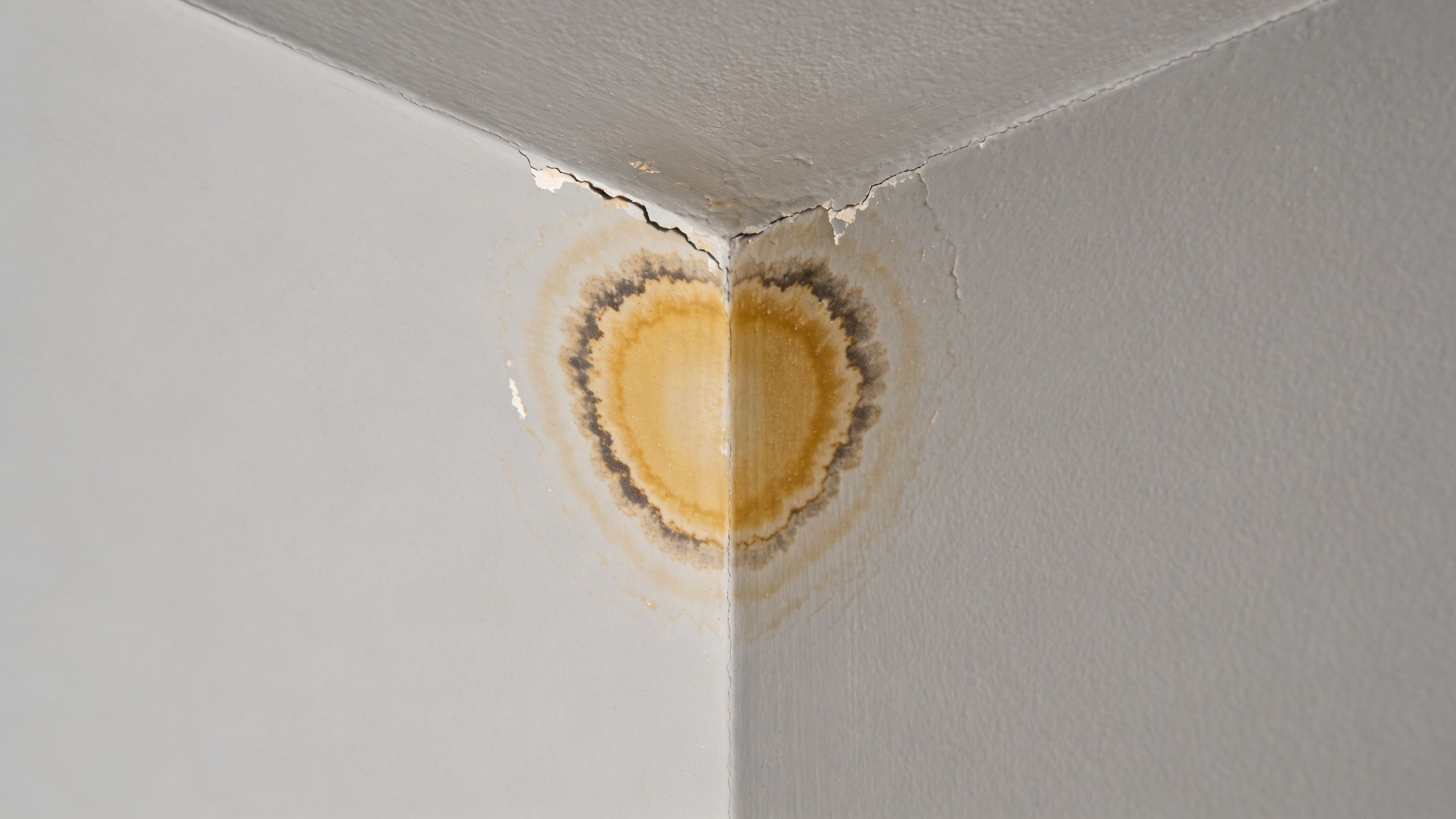
Stains are often the first sign people notice because they interrupt an otherwise normal wall. You see a yellow-brown ring on a ceiling line, a darker patch below a window, or blotchy discoloration behind a commercial tenant’s painted wall. Those marks matter because they usually mean water moved through the material at some point, and sometimes it’s still moving.

In homes between Seattle and Tacoma, I often see this after roof leaks, window failures, shower wall leaks, and basement seepage. A stain may look dry today and still point to an active problem. Water can wick through drywall and framing, then leave behind discoloration when it evaporates.

A close up view of water damage stains and peeling paint in the corner of a room wall

What staining usually tells you

Fresh stains often look darker and more irregular. Older stains tend to leave rings, spreading edges, or layered marks that show the wall got wet more than once. On basement walls, staining can also track the path of seasonal groundwater intrusion rather than a plumbing issue.

A practical mistake I see all the time is painting over the mark too early. That may hide the symptom for a while, but it doesn’t solve the leak, the moisture in the wall cavity, or the risk of damage continuing behind the finish.

Practical rule: If a stain changes shape, darkens after rain, or reappears after repainting, treat it as an active water issue until proven otherwise.

What works and what doesn’t

A few basic steps help you sort cosmetic damage from ongoing intrusion:

  • Take dated photos: Photograph the stain, then compare it after storms or plumbing use. That timeline helps contractors and insurers understand whether the issue is active.
  • Check nearby failure points: Look above the stain for roof penetrations, windows, plumbing lines, exterior walls, or bathroom fixtures.
  • Watch for companion symptoms: Peeling paint, musty odor, or softness around the area usually means the problem goes deeper than the finish coat.

What doesn’t work is assuming a dry-looking stain means the wall is fine. Water often travels before it shows itself. By the time discoloration appears, the wall has already had more moisture exposure than most owners realize.

2. Soft, Spongy, or Warped Drywall

If a wall feels soft when it should feel firm, take that seriously. Drywall loses strength quickly once it absorbs water, and it won’t regain that strength just because the surface dries out. The paper facing loosens, the gypsum core breaks down, and the wall starts to feel spongy, warped, or slightly swollen at seams and corners.

Bathrooms, kitchens, laundry areas, and basement perimeter walls are common trouble spots. In commercial spaces, I also see this after roof leaks where water runs down inside the wall and collects at the bottom plate before anyone notices.

Here’s a useful visual if you want to see how water-damaged wallboard behaves in real conditions:

What your hand can tell you

You don’t need to punch on walls to check them. A gentle press is enough. If one section gives more than the surrounding area, or if the drywall surface feels puffy, uneven, or loose near the baseboard, moisture has likely gotten into the wall system.

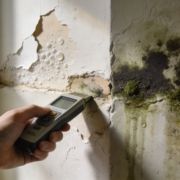
Professional crews usually verify this with a moisture meter. According to Belfor’s overview of wall water damage signs, moisture meters are a standard assessment tool for detecting hidden saturation before the surface fully fails. In the field, that matters because a wall can look almost normal while still holding enough moisture to keep deteriorating.

Repair trade-offs to understand

Spot repairs work when the wet area is limited and the leak was caught early. Full replacement is the better call when the drywall has lost shape, crumbles, or shows signs that moisture spread into insulation and framing. Trying to save softened drywall usually leads to callbacks.

If your wallboard is already compromised, this guide on repairing water-damaged drywall helps explain what can be patched and what usually needs removal.

  • Check lower sections first: Water often settles low, especially after wall-cavity leaks.
  • Mark the affected area: Painter’s tape around the soft section helps a contractor inspect the full spread.
  • Don’t reinstall finishes too soon: New texture and paint over wet wallboard fail fast.

Soft drywall is one of those signs of water damage in walls that people want to classify as "minor." Sometimes it is. But if the material is mushy, bowed, or separating, replacement is usually more honest and more durable than a cosmetic patch.

3. Mold and Mildew Growth

A common Puget Sound call goes like this: a tenant reports a musty smell near an exterior wall, maintenance wipes off a few spots, and a week later the staining is back. That pattern usually means the wall stayed damp long enough for growth to get established. The surface cleanup was never an adequate fix.

Visible mold on drywall, trim, corners, or wall seams is a moisture problem first and a cleaning problem second. The color can vary. Black, green, white, and gray all show up in the field. What matters is persistence. The U.S. Environmental Protection Agency notes that mold can begin growing within 24 to 48 hours when moisture is present, which is why a small leak behind a wall can become a larger repair job fast.

In our climate, I pay close attention to walls that stay cool, shaded, or poorly ventilated. That includes lower-level rooms, bathroom partitions, exterior-facing walls, and storage areas where furniture or shelving blocks airflow. In commercial buildings, break rooms, janitor closets, and suites with old window assemblies are repeat offenders. Occupants often notice the smell before they see the colony.

Surface spotting is often the part you can see, not the full extent of the problem.

That trade-off matters for both homeowners and property managers. A few dots on painted tile or metal may be a cleaning and humidity-control issue. Growth on drywall is different because the material is porous. If moisture got into the board, paper facing, insulation, or framing, wiping the face of the wall does not address what is feeding it.

The first job is to stop the moisture source. Then verify whether the wall is drying or still active. If paint nearby is also lifting, this guide on what causes paint to bubble on walls helps connect finish failure to moisture trapped below the surface.

For small areas, owners can document staining, improve ventilation, and avoid disturbing suspect material until the source is known. For larger areas, recurring growth, tenant complaints, or any case where drywall may need removal, bring in a contractor who can inspect the cavity and coordinate repairs. Wheeler’s page on restoration companies near me is a practical local starting point. If you want a comparison from a drier climate, this guide on how to identify mold in Phoenix homes is useful, but Puget Sound buildings usually deal with longer damp periods and slower drying times.

Spraying over the patch or painting it in leaves the wet conditions in place. The staining returns, the odor lingers, and the repair bill usually gets bigger once the wall is finally opened.

4. Peeling, Bubbling, or Flaking Paint

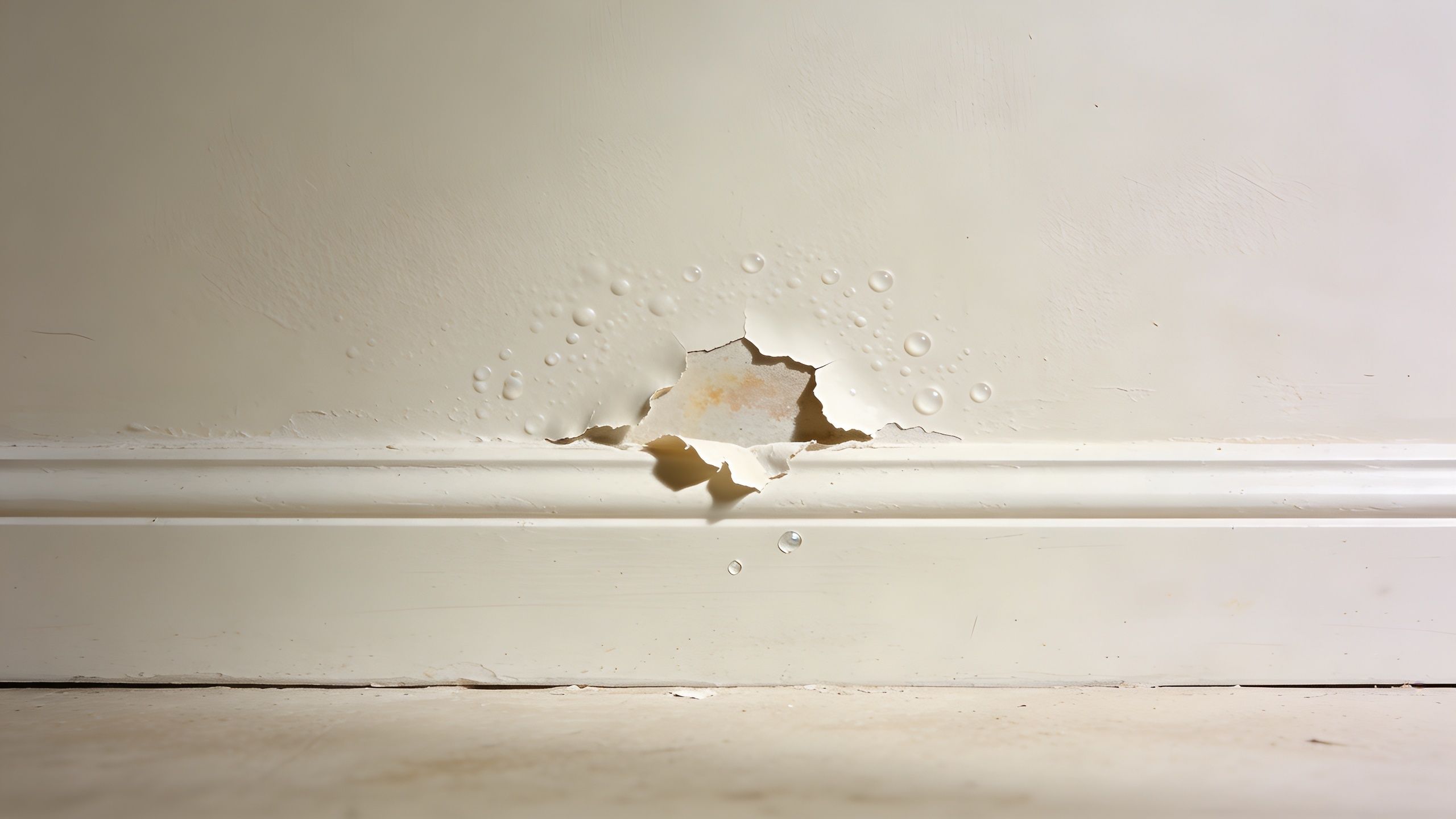
Paint tells on moisture before drywall fully gives out. When water gets behind the paint film, adhesion starts to fail. The finish blisters, bubbles, lifts at edges, or flakes away in patches. On interior walls, that often points to plumbing leaks, condensation, or moisture moving through the substrate. On exterior-facing walls, failed caulking, siding gaps, or window leaks are common culprits.

Bubbling paint is especially useful as a clue because it often signals current moisture pressure, not just old damage. If paint is actively tenting off the wall, something beneath it is still changing.

Close up of water damage showing bubbling, peeling paint and moisture stains on an interior wall surface.

Why repainting too early fails

A lot of owners want to scrape, prime, and repaint right away because the damage looks superficial. The problem is that moisture trapped in the wall keeps pushing outward. New paint doesn’t fix pressure, trapped vapor, or damp drywall. It just gives you a cleaner-looking failure for a short time.

According to Wheeler’s explanation of what causes paint to bubble on walls, direct and active water leaks are one of the main reasons paint films lose bond. That tracks with what we see on site. The finish problem is rarely the root problem.

A better way to judge paint failure

When I look at bubbling or peeling paint, I want to know three things first:

  • Is the substrate solid: If drywall underneath feels soft, this is no longer just a paint repair.
  • Is the pattern localized or spreading: Tight damage near a sink, window, or roof line can help narrow the source.
  • Did it happen after weather or water use: If the bubbling gets worse after rain, showers, or appliance cycles, that points you toward the cause.

For owners trying to sort cosmetic wear from moisture failure, paint distress has to be read with the wall, not by itself. If there’s stain, odor, or softness nearby, the fix needs to start behind the paint line.

5. Musty, Earthy Odor

You open a basement storage room in Tacoma after a week of rain, or open a commercial suite on Monday morning in Seattle, and the first thing you notice is the smell. It is damp, earthy, and stale. That odor usually means moisture has been sitting in building materials long enough for drywall, insulation, wood, or dust inside the wall cavity to stay wet.

Odor often shows up before you see clear staining or surface growth. That makes it one of the easier signs to dismiss and one of the more useful early warnings if you pay attention to where and when it appears.

Use the smell to narrow the source

A musty odor is more helpful when you treat it like a location clue instead of a whole-building problem. If it is strongest in a closet on an exterior wall, at the base of a stairwell, behind casework, or in one corner of a tenant space, that usually points to hidden moisture nearby. If it gets worse after rain, start with siding transitions, window perimeters, roof edges, and below-grade walls. If it rises after showers, sink use, or HVAC cycles, plumbing lines, condensate issues, or poor exhaust may be part of the problem.

That pattern matters in the Puget Sound area. Lower levels and partly below-grade walls here see recurring moisture pressure, especially through long wet seasons. The U.S. Environmental Protection Agency notes that mold can grow on damp materials within 24 to 48 hours, which helps explain why a persistent earthy smell deserves attention before visible growth spreads. EPA guidance on mold and moisture control lays out that moisture, not age or stale air, is the condition that drives the problem.

If the odor keeps coming back after cleaning or airing out the room, moisture is still present somewhere in the wall, floor edge, or adjacent cavity.

What helps, and what only buys time

Opening windows, running fans, or setting a dehumidifier can make the space easier to use for the moment. Those steps can also help during diagnosis because they reduce indoor humidity and make changes easier to track. They do not dry wet insulation inside a closed wall, stop foundation seepage, or correct a slow plumbing leak.

For homeowners, a practical first check is simple. Walk the space after heavy rain. Smell low along exterior walls, around window trim, near utility penetrations, and inside closets that do not get much airflow. For commercial property managers, compare odor patterns by suite, floor, and wall exposure. If one perimeter office or one basement corridor keeps developing the same smell, that usually points to a building-specific water path rather than a housekeeping issue.

At that point, the trade-off is straightforward. If the smell is light, isolated, and tied to a recent one-time moisture event, monitoring and basic drying may be enough. If it is persistent, seasonal, or coming from a finished wall with no visible source, it is time for a contractor to open the right area, confirm how far the moisture traveled, and repair the assembly correctly instead of covering over the symptom.

6. Visible Efflorescence and Mineral Deposits

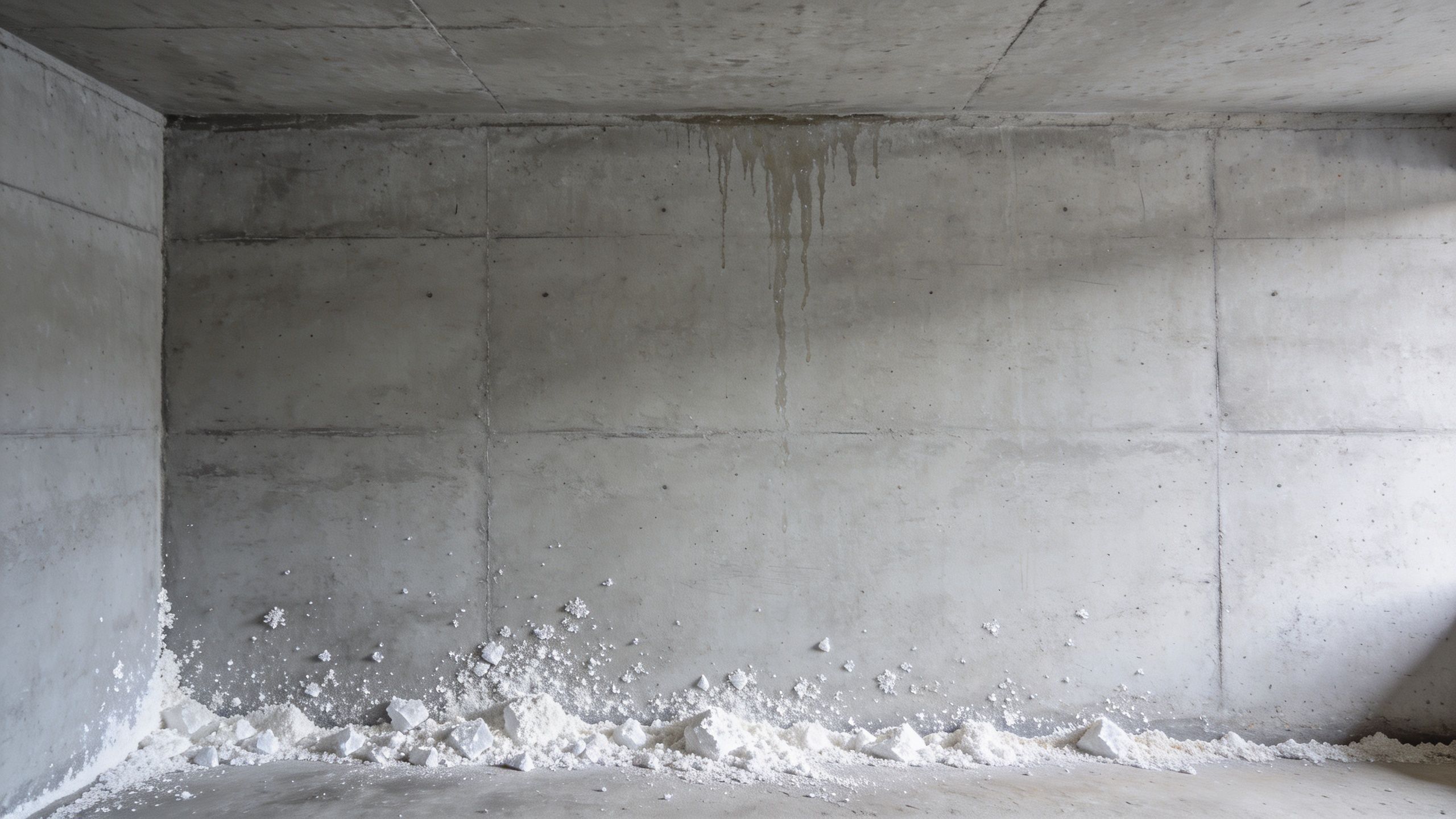
Efflorescence is the white, powdery, chalk-like residue you often see on concrete, block, or masonry walls. It isn’t mold, and it isn’t just surface dust. It forms when water moves through a porous wall, carries dissolved salts with it, and leaves those minerals behind as it evaporates.

In Western Washington basements, this is a common clue that moisture is pushing through foundation walls. The residue itself isn’t the main hazard. The moisture movement behind it is the issue.

A concrete wall showing signs of water damage with stains and white mineral efflorescence along the floor.

What efflorescence usually points to

Unlike a plumbing leak, efflorescence often indicates water pressure or seepage through below-grade material. It tends to show up in patterns. A broad band near the slab line suggests repeated moisture at the base of the wall. A vertical path may line up with a crack or a concentrated exterior drainage issue.

According to Servpro’s signs of water damage in walls overview, white mineral deposits are a key warning sign that moisture is actively moving through wall materials. That’s consistent with what we see in basements from Kent up through Seattle, especially after sustained rain and drainage problems.

The common mistake with basement walls

The mistake is sealing over the white residue without correcting the water path. Waterproof coatings have their place, but they perform better after the wall is evaluated, cleaned properly, and paired with the right drainage or waterproofing approach. If hydrostatic pressure is still working against the wall, cosmetic coating alone won’t hold up.

A few practical checks help:

  • Brush a small area clean: If the deposit comes back, moisture is still active.
  • Follow the pattern: It often points toward the direction water is entering.
  • Look outside too: Grade, gutters, downspouts, and hardscape often explain what’s happening inside.

Efflorescence is one of the clearest signs of water damage in walls when the wall is concrete or masonry. It tells you the wall is not just damp. Water is moving through it.

7. Rust Stains and Discoloration Around Metal Components

You pull a picture off the wall in a Tacoma office suite or a Seattle bungalow and find a rusty streak running down from a fastener, pipe cover, or corner bead. That kind of mark usually means the wall has been staying damp long enough to corrode metal, not just getting hit by a one-time splash.

Rust around metal parts gives you a different clue than ordinary wall staining. It points to moisture meeting steel, iron, or galvanized components inside or at the face of the wall. I see it in older homes around plumbing penetrations, plaster walls with metal lath, and exterior walls where flashing or window details have let in small amounts of water over time. In commercial properties, the usual trouble spots are mechanical rooms, rooftop unit penetrations, utility chases, and tenant improvement areas where pipes or conduit pass through finished walls.

Read the location before you read the color

A rust streak often starts higher than it looks. Water follows gravity, framing, fasteners, and the backside of finish materials before it shows itself. A small orange halo around a screw head can trace back to a slow leak above, repeated condensation on a cold pipe, or wet exterior air getting into the wall cavity.

If the stain is near plumbing, compare it with your recent water use. The EPA’s guidance on fixing household leaks notes that leaks can waste water before they become obvious, which is one reason an unexplained increase in the water bill deserves attention. For property managers, that check matters even more in multi-tenant buildings where a slow leak can keep working behind the wall long before a tenant reports visible damage.

Surface cleanup rarely solves this one. If the metal is still corroding, the stain usually comes back through primer and paint.

What to check before opening the wall

Start with the components closest to the stain and above it, not just the stained spot itself.

  • Pipe penetrations and escutcheons: Look for looseness, failed caulk, or signs of condensation.
  • Metal corner bead and fasteners: Rust here often means moisture has reached the drywall edge or framing connection.
  • Radiators, valves, and older plumbing lines: Slow weeps can stain a wall long before they drip to the floor.
  • Exterior wall details: Window perimeters, flashing transitions, and cladding joints are common sources in wet Puget Sound weather.

In plaster walls, rust can spread farther than people expect because metal lath carries the evidence across a wider area. In drywall, the damage may stay more localized at first, but wet insulation and hidden framing can still extend beyond the visible mark.

The repair scope depends on what caused the corrosion. Sometimes it is a straightforward plumbing fix and a small wall patch. Sometimes it means opening the wall, drying the cavity, replacing corroded metal, treating staining correctly, and rebuilding the finish so it does not bleed back through.

Rust stains do not always signal major structural failure. They do tell you moisture has been present long enough to leave a metal fingerprint, and that is worth taking seriously.

8. Cracking, Shifting, or Separation in Drywall Seams and Joints

Not every crack in a wall means water damage. Older homes settle. Materials expand and contract. Tape joints fail from age or poor workmanship. The challenge in Puget Sound is knowing when a crack is ordinary building movement and when moisture is pushing wall materials past their limit.

Water changes the shape of drywall. It swells, softens, and puts stress on taped seams and fasteners. That’s when you start seeing hairline cracks become wider, tape lift away, corners separate, or joints show a ridge that wasn’t there before.

How to read the crack

A drywall seam that opens near a bathroom, below a roof line, or along a basement perimeter wall deserves more suspicion than a random cosmetic crack in a dry interior hallway. If the crack also comes with staining, bubbling paint, softness, or odor, I’d assume moisture is involved until inspection says otherwise.

There’s also a real gray area in older local homes. Consumer Reports notes that wall cracks can reflect water-related compression from wood rot and mold, but they can also come from settling or workmanship issues, which is why a more careful evaluation is often needed in older structures according to this Consumer Reports discussion of water-damage signs.

In older Puget Sound homes, the question often isn't "Is this a crack?" It's "Why did it move, and does it change when the building gets wet?"

Practical ways to tell if it’s changing

You don’t need to guess. Mark the ends lightly with pencil, take a dated photo, and watch what happens after rain or over a few weeks. If a seam keeps widening, tape keeps releasing, or the wall around it grows softer, patching alone is wasted effort.

A few field habits help:

  • Track nearby weather or water use: Cracks that worsen after rain or plumbing use deserve faster attention.
  • Check the floor and trim nearby: Moisture problems often show in more than one material.
  • Wait on cosmetic patching: Finish repairs should come after drying, not before.

When seam failure is moisture-driven, the lasting fix usually involves finding the water source, removing compromised sections, drying the cavity, and rebuilding with appropriate materials. Otherwise the crack comes back, and usually larger.

8-Point Comparison: Signs of Water Damage in Walls

Indicator Implementation complexity Resource requirements Expected outcomes Ideal use cases Key advantages
Discoloration and Staining on Walls Low to detect visually; repair complexity variable Visual inspection, moisture meter, photos for insurance, contractor assessment Identifies likely water intrusion areas; evidence for claims; may reveal active leaks Quick checks after rainfall, attic and ceiling inspections, routine home walkthroughs Highly visible, easy for homeowners to spot, good for documentation
Soft, Spongy, or Warped Drywall Moderate detection (tactile); high repair complexity (replacement) Physical access, demolition tools, moisture meters, restoration contractors Confirms internal drywall degradation; typically requires panel replacement Bathrooms, basements, areas with repeated moisture exposure Definitive tactile confirmation of structural compromise
Mold and Mildew Growth Low to detect visually/olfactory; remediation complex and hazardous Mold testing, PPE, certified remediation contractors, possible lab analysis Removes biological hazards, improves indoor air quality, documents health risks Visible mold spots, musty odors, post-flood or prolonged moisture events Strong prompt for immediate professional action and health-focused remediation
Peeling, Bubbling, or Flaking Paint Low to moderate detection; moderate repair complexity Moisture meter, scraping tools, primers/paints, contractor for substrate repair Reveals active moisture beneath finish; requires substrate remediation then repaint Bathrooms, kitchens, exterior siding, areas near plumbing Early warning sign that often appears before deep structural damage
Musty, Earthy Odor Very low detection (olfactory); locating source can be complex Systematic inspection, smell-source tracing, dehumidifiers, professional assessment Early detection of hidden moisture/mold; leads to targeted inspection before visual signs Basements, closets, attics, enclosed spaces with poor ventilation Non-invasive early warning that often precedes visible damage
Visible Efflorescence and Mineral Deposits Low detection; remediation of source can be complex Brush/inspection, documentation, waterproofing contractors, drainage work Confirms active water movement through masonry; typically leads to waterproofing work Basements, concrete/masonry walls, foundations after snowmelt or heavy rain Maps water flow paths visually and indicates foundation moisture issues
Rust Stains Around Metal Components Low detection; repair complexity moderate to high if corrosion present Visual inspection, trace plumbing/HVAC, replace corroded parts, waterproofing Pinpoints water contact with metal; may reveal corrosion requiring component replacement Around pipes, penetrations, radiators, metal framing Precise localization of water pathways and evidence of prolonged exposure
Cracking, Shifting, or Separation in Drywall Seams Moderate detection; repair often extensive (tape/joint replacement) Measurement/monitoring, drywall removal/installation, moisture control, contractors Indicates swelling/adhesion failure; commonly requires joint remediation or panel replacement Seams, corners, taped joints after humidity cycles or leaks Clear visual sign of wall-system stress and need for comprehensive repair

Your Next Steps From Damage Control to Restoration

If you’ve spotted one of these signs, don’t panic. But don’t postpone action either. Water damage rarely improves on its own, and the longer moisture stays in a wall, the more likely you are to move from a manageable repair into mold remediation, structural carpentry, flooring replacement, or a full repaint after demolition and drying.

A good first pass is simple. Photograph what you see. Note whether it changes after rainfall, heavy plumbing use, or HVAC operation. Pay attention to whether the issue is isolated to one area or repeated across several walls. Those details help separate a small localized repair from a building-wide moisture problem.

For homeowners, the biggest mistake is usually cosmetic delay. People repaint a stain, recaulk a joint, or run a fan in a damp room and hope the problem settles down. For commercial property managers, the common mistake is deferring invasive inspection because a tenant can still use the space. In both cases, the wall often keeps deteriorating behind the finish.

The right next step depends on what you’re seeing. A single stain with a clear source may only require a focused repair after the leak is fixed and the wall is fully dried. Soft drywall, recurring odor, visible mold, or repeated basement moisture usually calls for a broader inspection. That’s where a contractor who can connect the whole chain matters. You don’t want one company identifying the issue, another opening walls, another handling coatings, and nobody owning the final result.

Wheeler Painting & Restoration Services handles that process as one accountable contractor for property owners in Kent, Seattle, Tacoma, and the communities in between. That matters because water damage repairs often overlap. The job may start with moisture detection and drywall removal, then move into repairs, waterproofing, specialty coatings, and repainting once the structure is stable again. If you’re managing a tenant improvement project or a facility maintenance issue, that single-point coordination saves time and confusion.

For owners also dealing with insurance questions, this guide to mastering property damage claims is a helpful companion to the repair side of the process.

One more thing matters in our region. Not every crack, smell, or stain means catastrophic damage. Some issues are limited and repairable without major demolition. But the only reliable way to know is to inspect the wall system thoroughly and early. In Puget Sound conditions, waiting for a small sign to become an obvious one usually costs more, disrupts more, and leaves you with fewer repair options.

If you’re seeing signs of water damage in walls, the goal isn’t to overreact. It’s to respond while the scope is still controllable. Find the source, verify the spread, remove what can’t be saved, dry what can be preserved, and rebuild the wall properly. That’s how you protect the building, the finish work, and the people using the space.


If you’ve noticed staining, soft drywall, peeling paint, musty odor, efflorescence, rust marks, or shifting seams, Wheeler Painting & Restoration Services can assess the damage and help you plan the next step. Whether you’re managing a home in Kent or a commercial property in Seattle or Tacoma, the team can identify the source, handle restoration and repairs, and bring the space back to a clean, finished condition.