
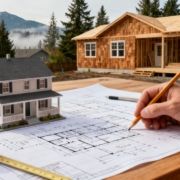
How to Plan a Home Addition: A Homeowner’s Guide for the Puget Sound
So, you're thinking about an addition. Before you get lost in paint swatches and Pinterest boards, there are four things you need to nail down first: checking if your property can even support an addition, getting crystal clear on your goals, figuring out the budget, and digging into local zoning rules. For homeowners in the Seattle, Kent, and Tacoma areas, getting these fundamentals right from the start is the difference between a smooth project and a series of expensive headaches.
Assessing Your Property and Project Goals
The very first move is a reality check. It’s tempting to jump straight to the fun stuff, but you need to know what’s physically and legally possible on your property. This initial homework grounds your project in the real world, whether you're on a tight lot in a dense Seattle neighborhood or have a bit more room to breathe out in Kent.
Taking the time to do this now will save you from major surprises down the road. It ensures the money you’re about to spend will translate directly into usable, valuable space for your home.

Evaluating Your Property's Physical Limits
Every single lot has its own set of rules and limitations. Your job is to uncover them. This goes way beyond just measuring your yard; it's about understanding what your property can actually handle from a structural and legal standpoint.
- Zoning and Setbacks: Your city or county planning department has rules about how close you can build to your property lines—front, back, and sides. These setbacks are non-negotiable. In cities like Seattle and Tacoma, these can be quite strict and will be the first thing that defines the potential footprint of your new addition.
- Lot Coverage: There’s also a limit on the total percentage of your lot that can be covered by buildings. This lot coverage calculation includes your house, garage, and any sheds, plus the addition you want to build. This number is absolutely crucial for figuring out how big a ground-floor addition can be.
- Existing Foundation and Structure: Is your current home strong enough? A second-story addition puts an incredible amount of stress on the original structure. For any vertical expansion, getting an expert to evaluate your home's foundation and framing is a must. A ground-level addition will get its own new foundation, but we still need to make sure the connection to the existing house is sound.
Defining the "Why" Behind Your Addition
Once you know your physical boundaries, it's time to get specific about your vision. Simply wanting "more space" isn't enough. A successful design solves a specific problem. What is yours?
A home addition is more than just construction; it’s an investment in your lifestyle. The most successful projects are those that are born from a clear, well-defined need, whether that's accommodating a growing family, creating a dedicated workspace, or enhancing your home's connection to the outdoors.
Think about the main purpose of this new space. Are you looking to build:
- A primary suite addition to create a quiet, private escape?
- An expanded family room for movie nights and get-togethers?
- A dedicated home office that isn’t the kitchen table?
- An in-law suite or ADU for multi-generational living?
The answer to that question will guide every decision that follows, from the floor plan and window choices to the lighting and outlet placement. A home office needs plenty of power and data ports, while a family room might need durable flooring and an open layout. As a trusted residential contractor near you, Wheeler Painting has seen time and again how a clear "why" leads directly to a more functional and beloved space.
Creating a Realistic Budget and Securing Financing
Alright, you’ve got the vision for your new space. Now comes the part that grounds your dream in reality: the money. Building a realistic, detailed budget is arguably the most important piece of the puzzle. It’s what keeps a project on track and prevents sleepless nights down the road.
This isn't just about one big number. It's about breaking down every single cost, from the architect's initial sketches to the final coat of paint, so you can move forward with confidence.
Understanding the True Costs of an Addition
So, what does a home addition actually cost? The honest answer is, it varies—a lot. Here in the Puget Sound area, project costs can range from a simple sunroom for around $22,000 to complex additions topping $115,000. And if you're talking about a high-end build or adding a second story, costs can easily exceed $300,000.
These numbers are influenced by size, the quality of finishes you choose, and the complexity of the work. If you're curious about what drives these figures in our region, we break it all down in this full cost analysis.
To give you a clearer picture, let's look at a typical 400 sq. ft. mid-range addition. Here in Western Washington, our team at Wheeler Painting knows our unique climate plays a role. Seismic requirements and the need for robust waterproofing can easily increase foundation and framing costs by 10-15% compared to other parts of the country.
Here's a sample budget table to show you where the money typically goes.
Sample Budget Allocation for a Mid-Range Home Addition
This table illustrates a typical percentage-based breakdown of costs for a standard home addition project in the Puget Sound area, helping homeowners understand where their investment goes.
| Project Phase | Percentage of Total Budget | Key Activities |
|---|---|---|
| Foundation & Masonry | 12% | Excavation, concrete pour, seismic retrofitting, blockwork |
| Framing & Roofing | 20% | Wall and roof structure, sheathing, shingles or metal roofing |
| Exterior & Windows | 15% | Siding replacement, trim, weather barriers, window and door installation |
| Mechanical Systems | 18% | HVAC, plumbing, and electrical rough-in |
| Interior Finishes | 25% | Insulation, drywall, flooring, paint, trim, fixtures |
| Soft Costs | 10% | Permits, architectural/design fees, engineering |
Keep in mind, these are just averages. A high-end kitchen or bathroom in your new space would shift these percentages significantly toward finishes and mechanical systems. For a quick, personalized estimate to get you started, our home addition cost estimator is a great resource.
The All-Important Contingency Fund
If we can offer one piece of advice from years of experience, it's this: plan for the unexpected. No matter how perfectly you plan, something will come up. You might open a wall and find hidden rot, or discover your old electrical panel can't handle the new load.
This is exactly what a contingency fund is for. It’s not a "nice-to-have," it's essential. We always tell our clients to set aside 15-20% of their total construction budget for these surprises.
Think of your contingency fund as project insurance. If you don't use it, you'll have extra funds for upgrades at the end. But if you need it, you’ll be incredibly relieved it’s there, preventing a small issue from derailing your entire project timeline and budget.
Common Financing Options for Your Project
Unless you’re paying with cash, you'll likely need to secure financing for your addition. The good news is there are several solid options available, and the right one just depends on your financial picture.
- Home Equity Line of Credit (HELOC): This works like a credit card secured by your home's equity. You can draw money as you need it to pay contractors in stages, and you only pay interest on what you use. It's incredibly flexible.
- Home Equity Loan: This is a more traditional loan where you get a lump sum upfront. It comes with a fixed interest rate and a predictable monthly payment, which is perfect if you have a firm quote from your builder and value budget stability.
- Cash-Out Refinance: With this, you take out a new, larger mortgage that pays off your old one. You get the difference in cash to fund the project. This can be a smart move, especially if you can lock in a lower interest rate than your current one.
Navigating these options can be tricky, so we always recommend sitting down with a financial advisor you trust. They can help you weigh the pros and cons and find the best path forward for your family. Getting your finances in order is the bedrock of a smooth and successful build.
Getting Through City Hall: Permits and Zoning in the Puget Sound

Before a single nail is hammered, you have to get through city hall. Every single city in our region, from Tacoma and Kent right up to Seattle, has its own unique rulebook for construction. This isn't just red tape—it's a process designed to make sure your new addition is safe, sound, and respectful of the neighborhood.
We’ve seen countless homeowners get their hearts set on a design only to find out it’s not allowed. Getting a handle on these local rules early on is the single best way to avoid frustrating delays and expensive redesigns later. A little bit of homework here goes a very long way.
First, You Have to Decode the Zoning
Think of zoning as your property's DNA. It defines the absolute, fundamental limits of what you can build, and you can’t change it. It's the first thing you need to understand.
When you’re planning an addition in the Puget Sound area, you'll hear these terms thrown around constantly:
- Setbacks: This is the required empty space between your structure and your property lines. If your city mandates a 15-foot rear setback, the back wall of your addition absolutely cannot be closer than 15 feet from your property's back boundary. No exceptions.
- Lot Coverage: This one is a big deal. It’s the total percentage of your lot that can be covered by buildings. Let's say you have a 5,000-square-foot lot with a 30% lot coverage limit. This means your house, garage, and the proposed addition combined can’t have a footprint larger than 1,500 square feet.
- Height Limits: These codes dictate how tall your home can be. This is obviously crucial for second-story additions and can even influence things like your roof pitch and interior ceiling height.
These rules aren't just slightly different between cities—they can be worlds apart. The regulations for a quiet Renton cul-de-sac will look nothing like those for a historic block in Seattle. Your first call should always be to your local planning department before you get too attached to any specific design.
The Permit Counter: Your Next Hurdle
Once you have a design that actually fits within your zoning limits, it’s time to get it approved. This means submitting a mountain of paperwork to your city’s building department for a formal review.
Depending on what your project involves, you’ll likely need a whole stack of permits.
The permitting timeline is a huge, often underestimated, part of the schedule. Around here, it's not unheard of for the permit review process to take just as long as the construction itself. A seasoned local contractor knows how to anticipate these waits and keep things from grinding to a halt.
For a typical home addition, expect to apply for:
- Building Permit: This is the master permit for the structure itself, covering the foundation, framing, roofing—the whole shell.
- Electrical and Plumbing Permits: Any new circuits or pipes require separate permits and inspections. This is non-negotiable for safety.
- Mechanical Permit: Installing a new furnace, heat pump, or other HVAC equipment? You’ll need a mechanical permit for that.
To even get in the door, you need a bulletproof set of construction documents. This means architectural blueprints, structural engineering calculations (especially vital in our seismic zone), and a detailed site plan. The most common reason for a permit application to be rejected is missing or incomplete information. This is where meticulous preparation pays off. As your residential contractor near you, we at Wheeler Painting handle the entire submission, follow-up, and paperwork headache, making sure every detail is perfect so your approval doesn't get stuck in bureaucratic limbo.
From Dream to Blueprint: Designing Your Home Addition
You’ve confirmed the budget and gotten the nod from your local planning department. Now for the fun part—turning those daydreams into a real, buildable plan. This is where your vision starts to feel tangible, moving from abstract ideas scribbled on a napkin to a detailed set of blueprints.
This stage is all about translating your family's needs and your personal style into a concrete design. We're moving beyond "we need another bedroom" to defining exact room dimensions, deciding where every window will go, and even picking out the specific style of trim. The goal here is a crystal-clear scope of work, which becomes the essential guide for your entire construction team.
From Rough Sketch to Permit-Ready Plans
The design journey happens in phases, with each step adding a new layer of detail and bringing your project into sharper focus. It’s a collaborative process that starts with your initial wish list and ends with the documents a builder needs to get to work.
Schematic Design: This is the big-picture starting point. We’ll take your goals and sketch out a basic floor plan. It's often the first time you'll see a visual of your future space, showing how the new rooms will connect and flow with your existing home.
Design Development: Once the basic layout is set, we start adding the meat to the bones. We’ll develop exterior views (elevations), refine the interior details, and often create 3D renderings to help you truly visualize the finished space. This is also when you'll begin selecting finishes like flooring, countertops, and light fixtures.
Construction Documents: This is the final, most technical step. We create the official blueprints that include everything needed for a successful build. In the Pacific Northwest, this means incorporating detailed structural engineering plans for our seismic codes and mapping out the precise locations for every light switch and electrical outlet.
As you move through this process, it’s good to remember that even small changes can have a ripple effect. If you decide you need to modify your house plan midway through, understanding the best way to do so can save you a lot of time and money down the road.
Architect or a Design-Build Firm?
A big question you’ll face is who should lead the design. For homeowners in the Seattle-Tacoma area, you generally have two solid options, each with its own rhythm.
Hiring an Architect First: This is the traditional path. You work with an architect to create a full set of plans. Once they’re complete, you take those plans to several residential contractors and ask them to bid on the job. This approach separates the design phase from the construction phase.
Choosing a Design-Build Firm: This newer, integrated model puts the designer and builder on the same team from day one. Your plans are developed with constant, real-time feedback on construction costs and feasibility. This synergy often leads to a smoother process and a design that’s baked in with budget realities from the start.
When the designer and builder are under one roof, accountability is built-in. There's no finger-pointing between separate companies if a problem arises. Everyone shares the same goal: delivering your project on time and on budget.
For many homeowners, the streamlined communication and single point of responsibility make the design-build route incredibly appealing. If this sounds interesting, you can learn more about the design-build project delivery method and see how it simplifies complex projects.
Critical Design Decisions for a Seamless Addition
A great addition is more than just extra square footage—it should look and feel like it was always part of your home. A few thoughtful design considerations can make all the difference.
First, focus on creating a natural extension of your existing home, not a box that looks tacked on. This means paying close attention to matching the roofline, siding, and window styles. Inside, think about how to create a smooth transition. Using the same flooring or carrying a trim detail from the old space into the new can make the entire house feel cohesive.
Function is just as important as form. How will the addition improve your daily life? Maximize natural light with smart window placement and think about how the new layout will affect foot traffic. A truly successful design makes a home more livable, not just larger. Our experience in residential remodeling helps us guide clients in Kent, WA, and the surrounding areas toward additions that are both beautiful and incredibly functional.
Finding and Hiring the Right Local Contractor
You’ve got your design, and now you’re facing what is arguably the most important decision of your entire home addition project: picking the right person to build it. This single choice will set the tone for the next several months. A great contractor makes the process feel manageable and even exciting, while the wrong one can turn your dream into a nightmare of delays, surprise costs, and constant stress.
Your mission is to find a reliable, professional residential contractor near you who is more than just a builder. You need a partner—someone who communicates well, understands your vision, and who you can trust with a significant investment. This isn't about finding the cheapest price; it's about getting the best value and peace of mind.
The Non-Negotiables of Hiring a Contractor
Here in Washington State, some things aren't just good ideas—they're absolute must-haves. Never, and we mean never, hire a contractor who isn't licensed, bonded, and insured. This trifecta is your primary layer of protection, separating the true professionals from the folks who could leave you high and dry.
- Licensed: This confirms they have met the state's requirements for competency and know the local building codes.
- Bonded: A bond is your safety net. If the contractor bails on the job, fails to pay their subcontractors, or breaks state laws, the bond helps cover your financial losses.
- Insured: This means they have general liability and workers' compensation. If someone gets hurt on your property or an accident causes damage, their insurance policy handles it, not your homeowner's policy.
Always verify these credentials yourself. Any reputable contractor will be happy to share their license number. You can—and should—look it up on the Washington State Department of Labor & Industries website to see if their status is active and in good standing.
Vetting Potential Building Partners
Once you have a shortlist of contractors who meet those basic requirements, it’s time to do some real homework. This is where you look at their portfolio, talk to people they’ve worked for, and see how they approach the bidding process.
This is also where collaboration is key. The early stages are a dance between you, your designer, and the builders you’re considering. Learning how to choose the right residential architect is a crucial part of this, as it ensures your vision is actually buildable from day one.
A contractor’s bid tells you more than just a number; it reveals their process. A detailed, line-item proposal shows they’ve dug into the plans and thought through every step. A vague, one-page estimate is often a red flag that you'll be hit with "unforeseen" costs later.
The path from a simple idea to a set of permit-ready plans and material choices is a journey in itself.
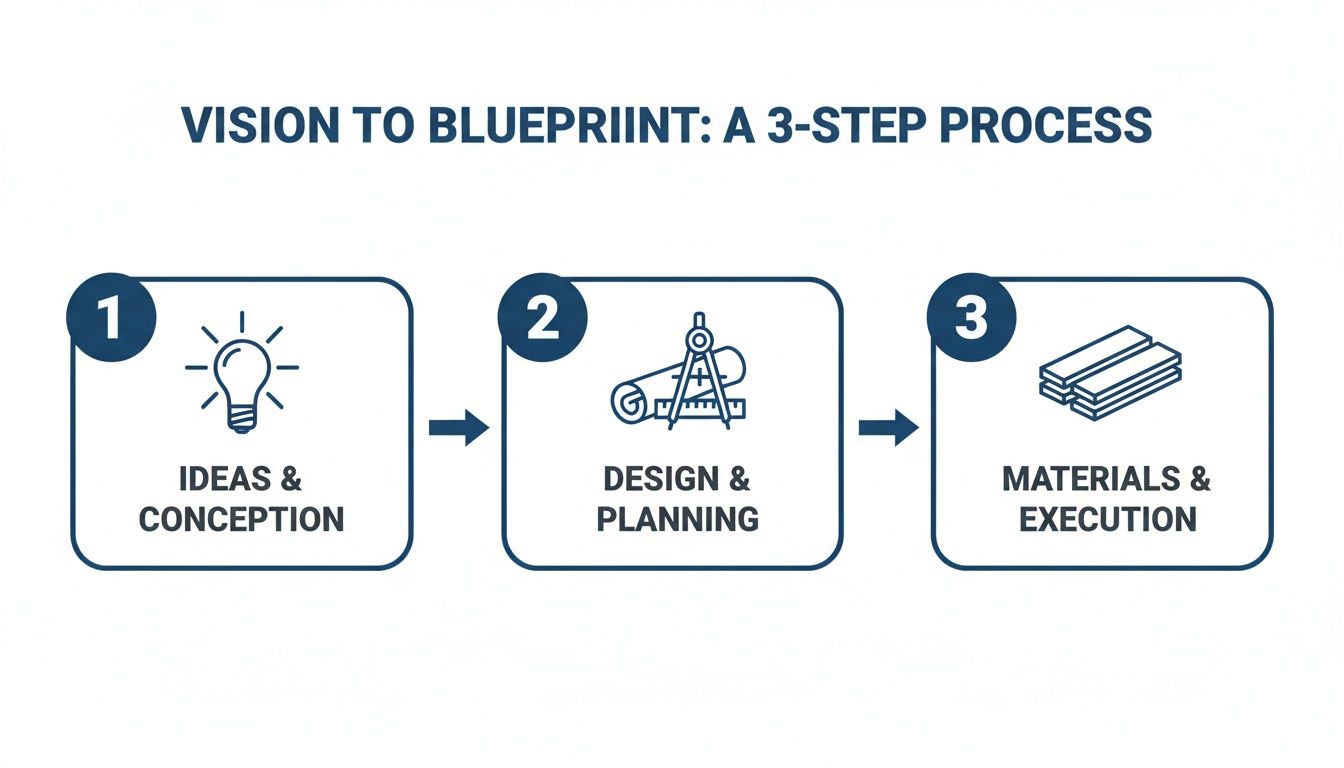
As you can see, having professional guidance is what turns a concept into a concrete, well-defined project.
Beyond the Bid: Your Partner in Project Management
When those bids come in, it’s tempting to jump at the lowest number. Don't. A bid that’s significantly lower than the others is a major warning sign. It often means the contractor has missed something, is planning on using cheap materials, or isn’t paying their crew a fair wage—all of which will end up costing you more in fixes, change orders, and headaches.
Instead, look for a partner. A great general contractor does so much more than swing a hammer. At Wheeler Painting, for example, we act as the central hub for the entire project. We manage the schedule, coordinate all the subcontractors (from foundation specialists to the crew handling the final interior painting), and ensure every detail meets our quality standards. For a deeper dive, you can check out our guide on how to choose a general contractor.
Ultimately, hiring the right contractor for your Kent, Seattle, or Tacoma home addition is about trust. You’re choosing a team with a proven local track record and a dedication to clear communication, turning a complex construction project into a smooth and successful reality.
Understanding the Return on Your Investment
Let's be honest: an addition is a massive undertaking, and while you're dreaming of that extra space, the financial side is always top of mind. It’s more than just a home improvement project; it's a major financial move. Thinking about the return on investment (ROI) from the very beginning is what separates a good project from a great one.
The goal is to build something that not only makes your life better today but also adds real, measurable value when it's eventually time to sell. It’s about making smart choices that will resonate with future buyers right here in our local market, whether you're in Kent, Seattle, or anywhere in between.
Maximizing Your Financial Return
We've seen it time and again: not all additions are created equal when you look at the numbers. In the Puget Sound market, some projects consistently bring in a much better return than others. Knowing what's in demand helps you pour your money into features that future buyers will actually pay a premium for.
Based on what we see in the field, these are some of the additions that really deliver:
- Primary Suite Addition: A true owner's retreat with a beautiful en-suite bathroom and a walk-in closet is a game-changer. It adds a layer of luxury and privacy that seriously boosts a home's perceived value.
- Expanded Family Room: For families, an open, spacious living area is a huge draw. This is the space where life happens, and a well-designed family room can easily become the heart of the home and a key selling point.
- Kitchen Expansion: A cramped kitchen is one of the first things buyers notice. Expanding your kitchen's footprint as part of an addition is almost always a winning bet. Spacious, modern kitchens are at the top of nearly every homebuyer's list.
Your project’s ROI hinges on three critical things: the quality of craftsmanship, the materials you choose, and how well the new space integrates with the original home. A seamless, high-quality build will always outperform a cheap, tacked-on-looking addition, no matter how big it is.
Smart Strategies for the Puget Sound Market
Knowing how to plan also means knowing when to stop. You have to be careful not to over-improve for your specific street or neighborhood. For example, spending $300,000 on an addition in an area where homes max out around $750,000 is a recipe for losing money. A local contractor who knows the area can give you a crucial reality check on this.
When you look at the data, home additions typically recoup 50-80% of their cost at resale. That makes them a pretty solid investment, especially as homeowners are looking for ways to modernize. A huge portion of homes in our area are over 40 years old, so additions are a fantastic way to update an outdated layout, often funded by the home equity people have built up. This market overview offers some great insights into how additions are driving value right now.
As a full-service residential contractor with decades of experience in the region, we at Wheeler Painting specialize in helping homeowners find that perfect balance between their dream and a sound financial strategy. We can guide you toward design choices and material selections—like durable siding replacement or critical waterproofing—that not only make your home better for you but also appeal directly to future buyers in the Pacific Northwest. That's how you make sure your investment serves you well today and pays you back tomorrow.
Your Home Addition Questions, Answered
Embarking on a home addition is a huge undertaking, and it's completely normal to have a list of questions. After helping countless homeowners across the Puget Sound, we've heard them all. Here are the straight-up answers to the ones that come up most often.
How Long Does a Home Addition Take From Start to Finish?
Realistically, you should plan for a home addition to take anywhere from 4 to 12 months. That’s from our very first conversation about your ideas to the final walkthrough.
This timeline splits into two distinct chunks. First, there's the design and permitting phase, which usually takes about 1 to 3 months. Then, once we have permits in hand, the actual construction can last another 3 to 9 months. The final schedule really hinges on the complexity of your project, any delays from our classic Pacific Northwest weather, and how swamped your local city permit office is at the moment.
Can I Live in My House During Construction?
Most of the time, absolutely. You can stay put. But, it's crucial to go in with your eyes open. Construction means a daily dose of noise, dust, and a bit of chaos added to your routine.
Any good contractor will make it a priority to seal off the work zone with plastic barriers to keep your living space as clean as possible. That said, if you're planning something massive—like a full second-story addition that involves removing the roof—it's often safer and far less stressful for your family to find a temporary place to stay.
What Are the Most Common Planning Mistakes to Avoid?
We see a few common missteps that can derail a project before it even gets off the ground. The biggest ones are almost always financial or administrative.
- Skimping on the budget. Always, always build a contingency fund of at least 15% into your budget. Unexpected issues will come up.
- Ignoring local rules. Don't wait to investigate zoning laws and building codes in your specific city, whether it’s Kent, Tacoma, or anywhere in between.
- Hiring the wrong person. Trying to save a few bucks by hiring an unlicensed or uninsured contractor is a recipe for disaster and often leads to shoddy work and expensive fixes.
Beyond those, starting demolition with a vague or incomplete plan is a major pitfall. Any ambiguity in the scope of work is a direct path to frustrating delays and a string of costly change orders.
Ready to turn your vision into a reality with a trusted local partner? Wheeler Painting has guided homeowners through every step of the home addition process, from initial design to final finishes. Let us make your project straightforward and stress-free.

 “Like” us on Facebook!