Tag Archive for: house painting near me

How Long Does House Paint Last? A Puget Sound Guide

TL;DR: Exterior paint in the Puget Sound lasts 5 to 7 years, while interior paint lasts 5 to 10 years on average. Those are only starting points. In Seattle, Tacoma, and Kent, rain, humidity, shade, and surface prep can shorten or stretch that lifespan in a big way.

If you're asking how long does house paint last, you're probably already seeing something that doesn't look right. Maybe the south side still looks decent, but the shaded wall has green staining. Maybe the trim is failing before the siding. Maybe an interior bathroom ceiling started looking tired long before the bedroom walls did.

That disconnect is normal in Western Washington. Generic national advice often assumes a drier climate, more sun, and fewer moisture cycles. Around Puget Sound, paint doesn't just age from time. It ages from wet siding, long damp mornings, mossy exposure, limited drying time, and surfaces that hold moisture longer than people expect.

A paint job is part finish and part protective shell. When that shell starts to weaken, the question isn't only cosmetic. It's whether the coating is still doing its job.

Is It Time to Repaint Your Puget Sound Property?

A homeowner in the Seattle area often notices the change gradually. First it's a little fading near the entry. Then the trim starts to look rougher than the field siding. After another wet season, a few spots begin to peel, and now the whole house looks older even if the structure is still in good shape.
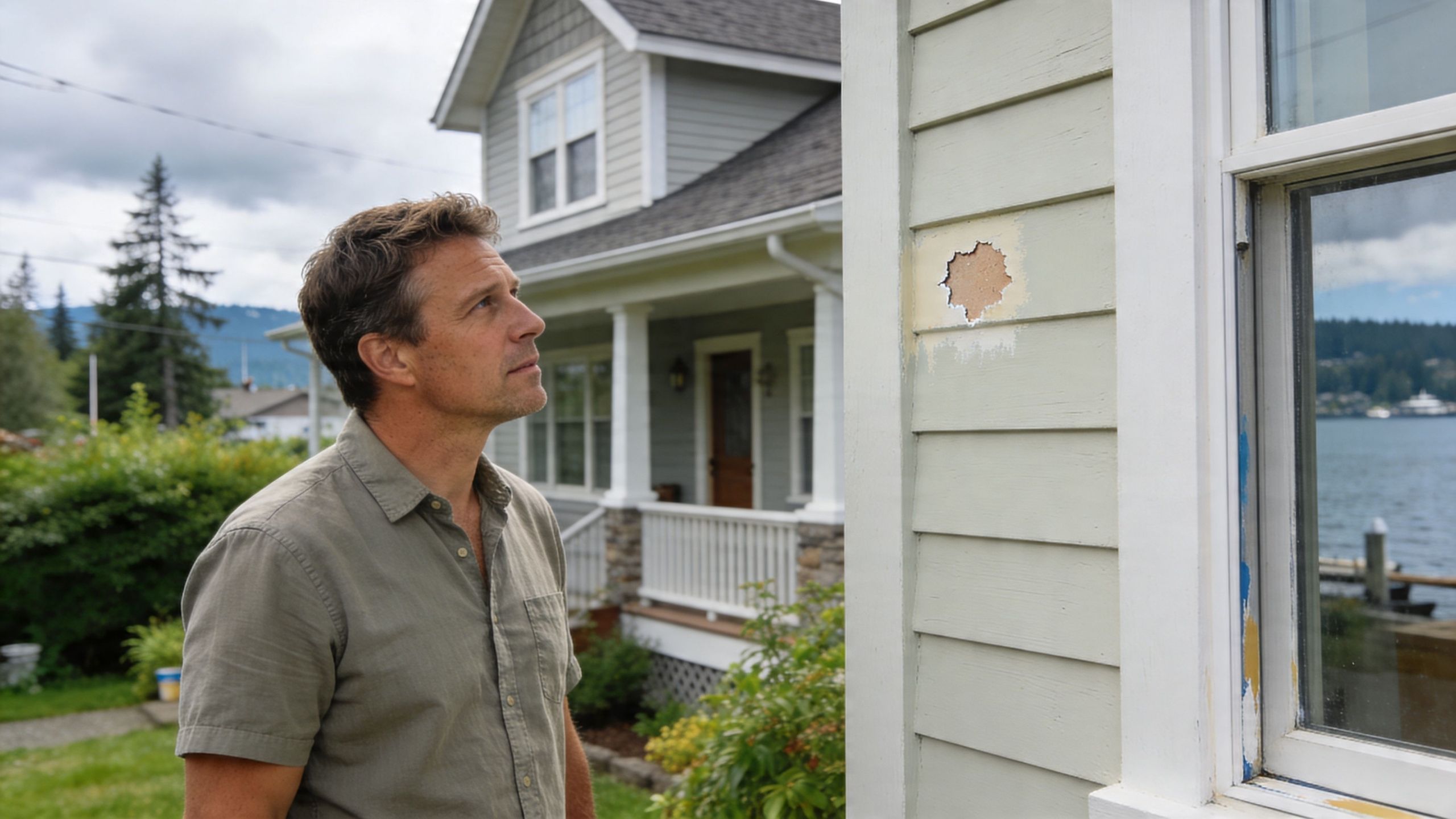
A man looking at peeling paint on the exterior siding of a light green house.

Property managers in Kent and Tacoma run into the same thing from a different angle. One building in the portfolio holds up fine, another starts showing mildew staining and edge failure sooner than expected, even though both were painted around the same time. The difference usually comes down to exposure, maintenance, and how well the original prep matched the building.

What homeowners usually notice first

The early signs aren't always dramatic:

  • Uneven color: One elevation fades or dulls faster than the others.
  • Dirty-looking walls: The paint film starts trapping grime, mildew, or airborne residue.
  • Peeling around joints: Trim corners, window heads, and lower siding courses often show trouble first.
  • A rough or chalky feel: The coating no longer feels sealed and stable.

A house can look only slightly worn and still be overdue for repainting in a wet climate. The coating often fails at edges and vulnerable details before broad walls look bad from the street.

That matters because repaint timing in Puget Sound is rarely just about curb appeal. It's about catching failure before moisture gets deeper into wood trim, siding edges, and caulk lines.

Why local guidance matters more than generic advice

A national blog may tell you paint should last a long time, and sometimes that's true in dry climates. But Seattle, Tacoma, and Kent aren't dry climates. Shaded walls stay wet longer. Moss and mildew are real maintenance issues. Marine air, tree cover, and repeated rain events all change the lifespan of a coating.

For owners searching for house painting near me or commercial painting services near me, the useful answer isn't a single number. It's whether your building is aging normally for this region or showing signs that need attention sooner.

The Real Lifespan of Exterior Paint in Washington

For wood siding in humid regions like Puget Sound, high-quality latex or acrylic paint typically lasts 5 to 7 years before significant degradation, and 100% acrylic latex formulations with mildewcides can extend that to 7 to 10 years on properly primed cedar or fir siding common in Western Washington, according to this paint lifespan guide for humid climates.
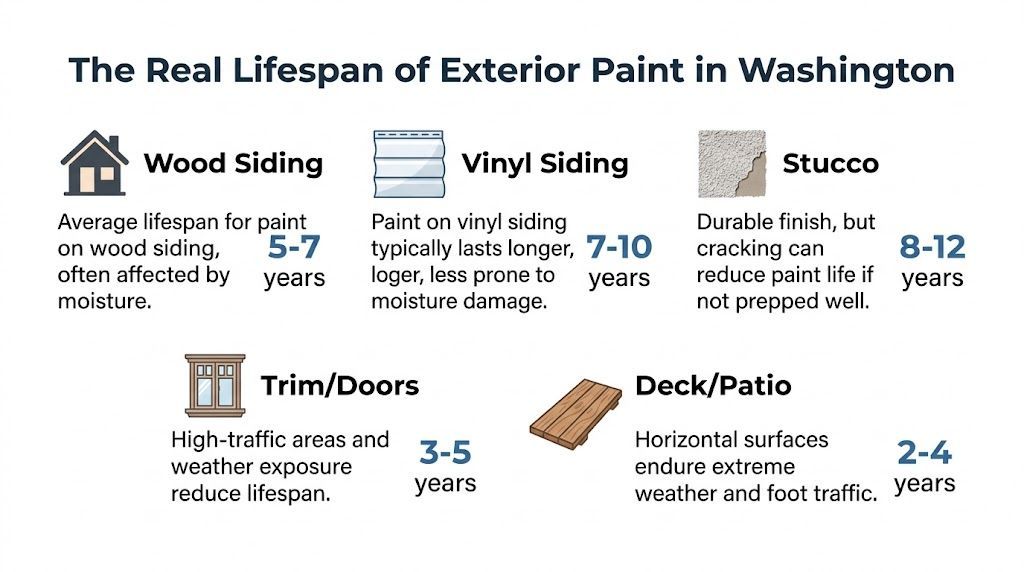
An infographic detailing the average lifespan of exterior house paint on various surfaces in Washington state.

Those numbers are the most useful baseline for our area because they match what owners experience here. Wet winters, mild but persistent moisture, and long shaded periods can wear on a paint film differently than intense inland heat does.

Why Puget Sound exteriors fail sooner than people expect

Exterior paint in Western Washington usually doesn't fail for one reason alone. Several things happen at once.

  • Moisture sits longer: Siding, trim, and caulk joints don't dry as quickly after rain.
  • Mildew grows on shaded faces: North and east elevations often look older first.
  • Wet-dry cycling stresses the film: Wood moves, coatings flex, and weak areas open up.
  • UV still matters: Even with cloud cover, sun breaks down binders over time and contributes to chalking.

The result is a coating that may look passable from the driveway but is already weakening at the details that matter most.

Practical rule: In Puget Sound, the wall that stays damp longest usually tells the truth about the condition of the paint job.

Siding material changes the timeline

Not every exterior surface behaves the same. Wood siding is the biggest concern because it absorbs and releases moisture. Cedar and fir, both common in Western Washington, can perform well when they are properly primed, sealed, and painted with the right product, but they also punish shortcuts.

Fiber cement is generally more stable than wood, so the paint film usually has an easier job. Brick and masonry present a different challenge. They don't move like wood, but they can hold moisture and telegraph failures if the wrong coating is used or if drainage issues are ignored.

Trim and doors often fail before broad siding fields because they take more abuse. Sun exposure, hand contact, sprinklers, and sharp edges all work against them. That's why a house can need selective repainting on details before the main body fully reaches end of life.

Paint grade isn't optional here

In this climate, the difference between a lower-grade exterior paint and a true 100% acrylic latex product isn't academic. Better binders hold up longer under damp conditions, and mildewcides help protect the surface where mildew pressure is persistent.

Cheap paint can look acceptable when it first goes on. What it usually doesn't do well is keep its film strength after repeated moisture exposure. Once the film weakens, blistering, peeling, and edge failure start showing up where water intrusion is already trying to happen.

A better coating still won't save a bad prep job. But in Seattle, Kent, and Tacoma, lower-grade paint narrows your margin for error fast.

Timing matters too

Even the right product can underperform if it's applied under poor conditions. Surfaces need time to dry, and the work window matters more here than in many other regions. If you're comparing repaint timing, Wheeler's guide on the best time to paint a house exterior is useful because scheduling around moisture exposure is part of getting the full life from the coating.

For building owners looking for a residential contractor near me or support with facility maintenance, this is the takeaway. Exterior paint lasts longest when the siding condition, product selection, and weather window all line up. If one of those pieces is off, the clock starts running early.

How Long Interior Paint Lasts Room by Room

Inside the building, the right question isn't just how long does house paint last. It's which room are we talking about. Interior paint wears according to traffic, moisture, cleaning frequency, and how people use the space.
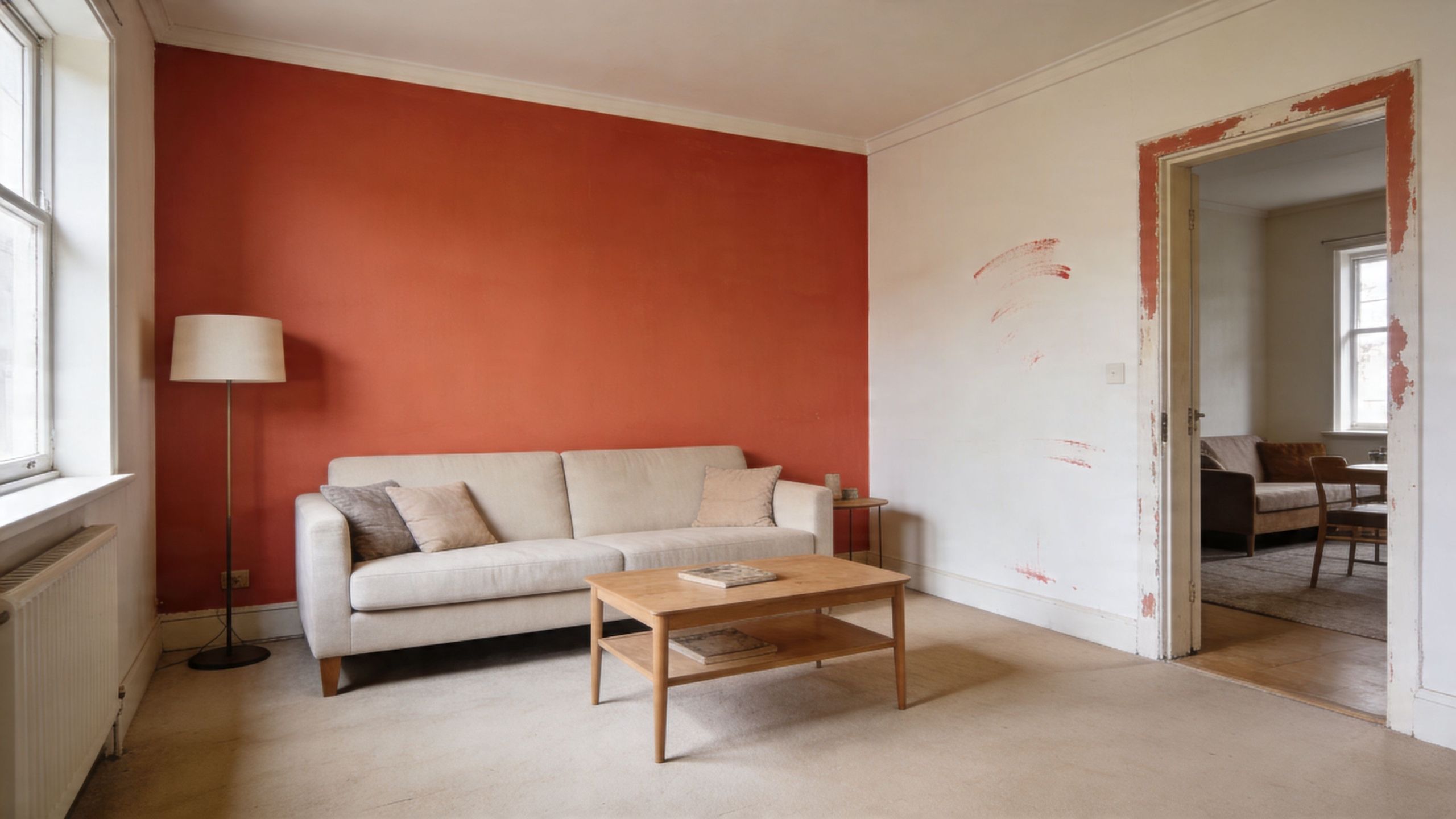
A minimalist living room with a beige sofa, wooden coffee table, and a burnt orange accent wall.

According to this interior paint lifespan reference, high-traffic areas like hallways and kitchens typically need repainting every 3 to 5 years, bedrooms and living rooms usually last 7 to 10 years, and bathrooms often last only 3 to 4 years because high humidity breaks down paint polymers.

High-traffic rooms wear out first

Hallways, stairwells, entry areas, break rooms, and active common spaces take constant contact. People brush walls, move furniture, carry bags, and leave marks that cleaning can't always solve without also wearing the finish.

Kitchens also age faster, but for a different reason. It's less about bumps and more about residue, cleaning, and moisture in the air. Even in a well-kept home, kitchen walls work harder than bedroom walls do.

For commercial interiors, this same pattern shows up in corridors, tenant entries, and shared use areas. An office with controlled use may hold paint well. A retail space or active common hallway usually won't.

Low-impact rooms can go much longer

Bedrooms and living rooms usually keep their appearance longer because they don't deal with the same daily abuse or humidity load. That doesn't mean they're maintenance-free. Sunlight, furniture scuffs, and lifestyle still matter. But these rooms generally age more slowly and more evenly.

Guest rooms are the classic example. They often look good long after the rest of the house has obvious wear because they don't see the same use.

Here's a simple planning view:

Room type Typical paint life Main reason
High-traffic areas 3 to 5 years Contact, scuffs, repeated cleaning
Kitchens 3 to 5 years Heat, moisture, residue
Bathrooms 3 to 4 years Humidity and repeated moisture
Bedrooms and living rooms 7 to 10 years Lower wear and lower moisture

Bathrooms are their own category

Bathrooms deserve separate treatment because humidity changes everything. Repeated showering introduces moisture that weakens adhesion over time, and poor airflow makes the problem worse. In Puget Sound homes, where ambient moisture is already part of daily life, a bathroom without good ventilation can age paint quickly.

That doesn't always start as peeling. It may begin as dullness, patchy sheen, or recurring surface discoloration that returns after cleaning.

A quick visual example helps here:

What owners should do with this information

Use room-by-room repaint cycles for planning, not panic. If a hallway looks tired after a few years, that doesn't mean the whole house or whole tenant suite needs repainting at once. It means the maintenance schedule should reflect real use.

  • Prioritize active zones: Entry halls, corridors, and kitchens usually need attention first.
  • Budget bathrooms separately: Moisture-prone rooms rarely stay on the same cycle as dry rooms.
  • Match finish to function: Washability and moisture resistance matter more in workhorse spaces.
  • Think by occupancy type: A family home, office suite, and retail build-out all wear differently.

For owners managing commercial construction near me searches or planning tenant improvement work, that's often the practical path. Repaint where use demands it, not just where the calendar says you should.

Four Key Factors That Determine Paint Durability

Paint lifespan isn't controlled by paint alone. Four things decide whether a coating holds up or disappoints in Western Washington: the product, the prep, the environment, and the application itself.
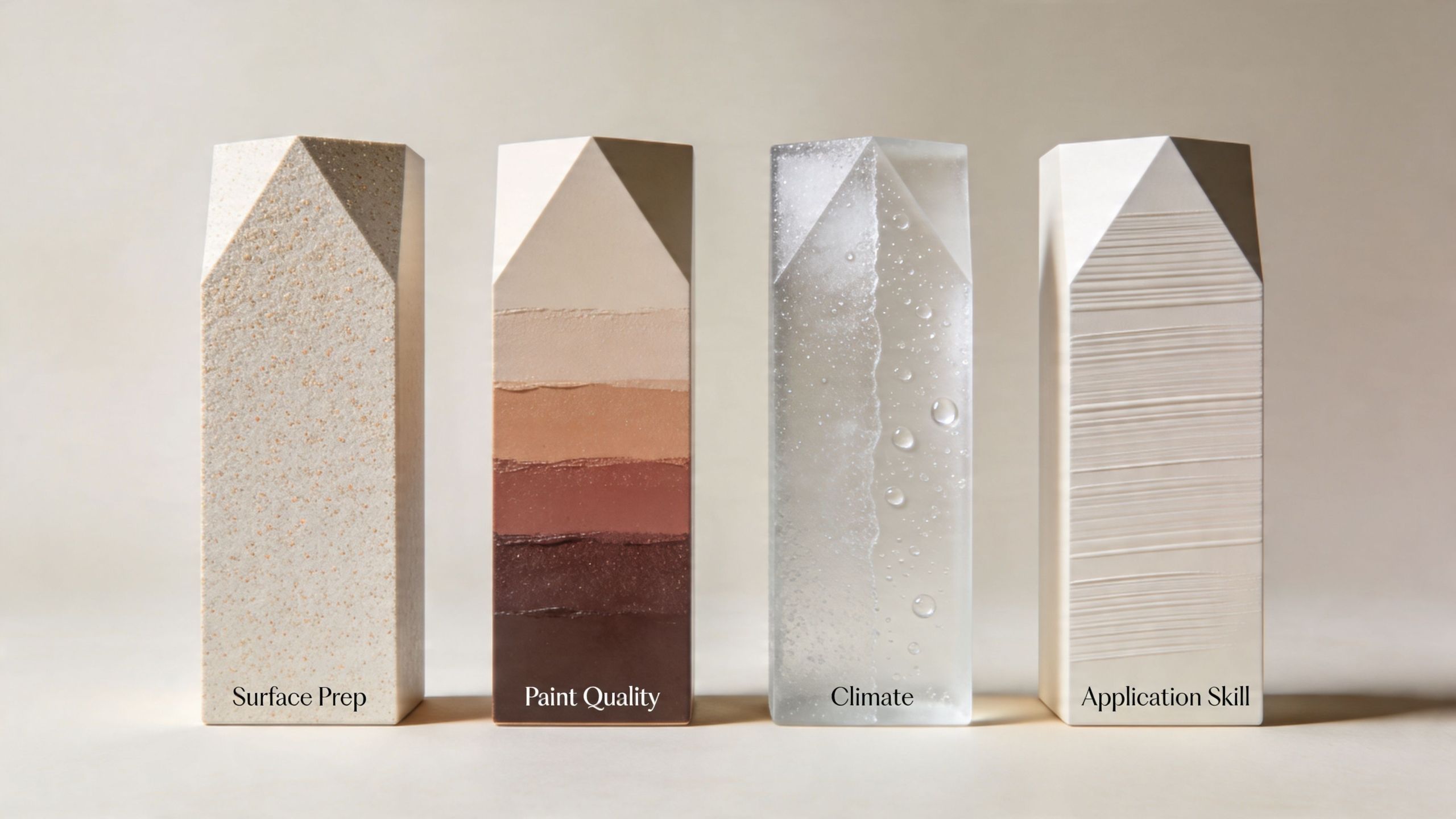
Four geometric pillars displaying textures representing surface preparation, paint quality, environmental climate, and application skill factors.

When those four line up, paint lasts closer to its full potential. When one fails, the whole system gets weaker.

Paint quality

Material selection matters most when the surface is exposed to moisture, abrasion, or cleaning. On exteriors, stronger acrylic binders are better suited to a damp climate. Indoors, the right finish helps walls resist scuffs, washing, and humidity.

This isn't about buying the most expensive can on the shelf. It's about using a coating that fits the substrate and the environment. A bargain product on a demanding surface often costs more later because the repaint cycle comes sooner.

If UV exposure is part of the problem, especially on sun-hit walls, doors, or trim, it helps to understand how UV-resistant paint fits into the bigger durability picture.

Surface preparation

Prep is where long-lasting jobs are won or lost. A surface can look paintable and still be a bad candidate for coating if it's dirty, chalky, damp, unstable, or carrying hidden failure at joints and edges.

On exterior work, prep may involve washing, scraping, sanding, spot priming, caulk replacement, and in some cases carpentry or siding replacement before paint begins. On interiors, prep often means drywall repair, stain blocking, patching, and making sure the substrate is clean enough for proper adhesion.

If mildew is painted over instead of removed, or if damp siding is coated because the schedule is tight, the finish usually tells on that shortcut later.

For owners comparing cladding options on future projects, this guide to siding materials is useful background because the substrate itself affects how hard the paint system has to work.

Environmental exposure

Puget Sound weather creates a slow, persistent kind of wear. Rain is obvious, but the harder issue is often extended dampness. Shaded walls, overgrown landscaping, clogged gutters, and splash-back near grade all keep surfaces wetter longer.

Indoors, the environmental issue is usually ventilation. Bathrooms, laundry areas, kitchens, and commercial wash zones punish coatings when airflow is poor. That doesn't always produce immediate failure. It often gradually shortens the useful life until the room suddenly looks older than the rest of the building.

A few examples show how exposure changes outcomes:

  • South-facing trim: More sun, more UV stress, faster fading.
  • North-facing siding under trees: More shade, more mildew pressure, slower drying.
  • Bathroom ceilings: Repeated humidity load, especially when fans are weak or rarely used.
  • Retail entries: Frequent touch points, frequent cleaning, higher wear.

Application skill

Even good paint on a well-prepped surface can underperform if it's applied poorly. Thin coverage, rushed dry times, missed caulk failure, sloppy cut lines around joints, and bad timing with weather all shorten the life of the coating.

Application skill also includes knowing when not to paint yet. In this region, patience matters. A surface that still holds moisture shouldn't be coated just because the calendar says the crew is due on site.

For smaller residential work and mid-size facility maintenance, Wheeler Painting & Restoration Services is one option owners use when they need painting tied to broader repair scope such as drywall, trim repair, waterproofing, or tenant improvement, where durability depends on the whole assembly being addressed rather than just the finish coat.

Your Puget Sound Paint Inspection Checklist

A good inspection doesn't require specialty equipment. You can learn a lot just by walking the property slowly and checking the same trouble points a contractor checks first. The goal isn't to diagnose every technical issue. It's to spot whether the paint is still protecting the building or just covering it.

What to look for outside

Start with the elevations that stay wet longest, then move to trim, doors, and lower siding.

  • Chalky residue on the surface: Rub your hand lightly across the paint. If color dust transfers easily, the binder may be breaking down.
  • Blistering or bubbling: Raised areas often point to trapped moisture or adhesion failure.
  • Cracking or alligatoring: When paint loses flexibility, it can split into a cracked pattern instead of moving with the substrate.
  • Peeling at edges and joints: Check butt joints, trim corners, window heads, and horizontal transitions.
  • Mildew or dark staining: In Puget Sound, persistent staining on shaded walls often signals prolonged moisture exposure, not just dirt.

What to look for inside

Interior problems usually show up where moisture, cleaning, or repeated contact are concentrated.

Area Warning sign What it often means
Bathroom walls or ceiling Dull, patchy, or peeling finish Moisture stress or weak ventilation
Hallways and entries Scuffs that won't clean off Finish is worn, not just dirty
Kitchen walls Staining or uneven sheen Residue buildup and repeated washing
Window-adjacent walls Fading or patchiness Surface is aging unevenly

Walk the building in daylight if you can. Early failure is easier to spot when raking light shows sheen changes, raised edges, and surface texture.

A few places people miss

Some of the most useful inspection spots aren't the largest walls. They're the details.

  • Below gutters and downspouts: Overflow and splash patterns often show here first.
  • At the bottom edge of siding: Ground moisture and poor drainage stress these areas.
  • Door frames and thresholds: Repeated use and weather exposure hit these hard.
  • Behind shrubs: Airflow drops, drying slows, and mildew pressure rises.

If you see multiple signs at once, cleaning and touch-up may not be enough. At that point, it helps to understand whether the surface needs localized prep or full coating removal. This overview on how to remove old paint gives a useful starting point for what that process can involve.

Extend Your Paint's Life With Practical Maintenance

Most paint jobs don't fail overnight. They lose life in small steps. A little mildew that isn't cleaned. A gutter overflow that keeps soaking one wall. A bathroom fan that never quite clears the room. Maintenance works because it interrupts those small problems before they become coating failure.

Exterior habits that help

You don't need to baby your exterior paint, but you do need to keep water and organic buildup from sitting on it too long.

  • Wash siding carefully: Remove surface grime and mildew without damaging the paint film. If you're deciding how often to pressure wash your house, use methods that clean the surface without forcing water into joints or behind siding.
  • Keep gutters and downspouts working: Overflowing gutters shorten paint life fast, especially at fascia, trim, and lower walls.
  • Trim back vegetation: Shrubs and tree branches reduce airflow and keep walls damp.
  • Handle failed caulk early: Small openings around trim and penetrations can turn into paint failure if water keeps getting in.

Interior habits that matter

Interior maintenance is usually about moisture control and gentle cleaning.

  • Use bath fans consistently: Let surfaces dry out after showers.
  • Clean with mild products: Aggressive scrubbing can burnish or wear the finish.
  • Touch up damage early: Small chips and scuffs are easier to deal with before they collect dirt and expand.
  • Watch recurring stains: If a mark keeps returning, the issue may be moisture, not paint alone.

Store leftover paint the right way

Touch-up paint is only helpful if it's still usable. According to Consumer Reports on leftover paint storage, leftover latex paint can remain usable for up to 10 years if stored correctly. Warning signs include bulging cans, a thick rubberlike film on the surface, or paint that fails to mix uniformly. If you're unsure, test it on cardboard before putting it on the wall.

That advice matters for homeowners doing phased room updates and for property managers holding stock for routine touch-ups. Good labeling helps too. Keep the room name, color, sheen, and date on the lid so the paint is useful later, not a guessing game.

Hiring a Professional vs DIY Painting A Cost and Quality Guide

DIY painting can make sense for a small, simple room with sound walls and easy access. It gets harder when the project includes exterior prep, moisture problems, ladder work, repaired substrates, or color matching across a larger property.

The hidden cost in DIY usually isn't the roller cover or brush. It's time, prep, and rework. Most paint failures people blame on product quality are really prep failures, application timing issues, or skipped repairs underneath the coating.

When DIY is usually reasonable

A do-it-yourself approach is often workable when:

  • The surface is already sound: No peeling, moisture damage, or patching issues.
  • Access is straightforward: Standard walls, limited masking, no major safety concerns.
  • The stakes are low: A secondary room or light refresh where minor imperfections are acceptable.

When professional work usually pays off

Hiring a contractor is the better value when the building needs more than color change.

  • Exterior painting in Puget Sound: Moisture timing, mildew treatment, and substrate condition matter too much to guess at.
  • Commercial or occupied spaces: Scheduling, protection, workflow, and finish consistency matter.
  • Projects tied to repairs: Drywall work, trim replacement, waterproofing, and surface correction should be handled as one scope.
  • Difficult surfaces: High walls, failing wood trim, older coatings, and detail-heavy exteriors need experience.

Professional painting isn't just about getting paint onto a surface. It's about knowing what has to happen before and after the coating so the job lasts.

For owners comparing bids, the smart question isn't "What's the cheapest way to get color on the wall?" It's "Which approach gives this building the longest useful life with the fewest callbacks?"

Protect Your Investment With a Professional Assessment

In Seattle, Tacoma, Kent, and the towns in between, paint life depends less on generic timelines and more on moisture, exposure, prep quality, and maintenance. Exterior coatings on wood siding often live in the 5 to 7 year range in our climate, while interior paint can last far longer or wear out much sooner depending on the room and how it's used. The difference is local conditions.

If your property is showing mildew, blistering, chalking, peeling, or uneven wear, a careful inspection is the right next move. It helps you decide whether you need cleaning, repairs, touch-up work, or a full repaint.


If you'd like a practical, no-pressure evaluation of your home, facility, office, or tenant space, contact Wheeler Painting & Restoration Services to discuss the condition of the surfaces, likely causes of wear, and the most sensible next step for your property.
10 Master Bedroom and Bathroom Ideas for 2026

Most master bedroom and bathroom ideas look beautiful in photos. They rarely answer the hard questions that matter in Western Washington. What materials hold up in a damp climate? How do you open up an older layout without creating moisture problems? Where should you spend on a full remodel, and where can skilled restoration work give you a longer life without tearing everything out?

That gap matters. A master suite isn’t just a decorating project. It’s a combination of layout, waterproofing, lighting, ventilation, finishes, and daily comfort. If one part is handled poorly, the whole room can feel off. A stunning shower loses its appeal fast if the glass is always fogged, the floor feels slippery, or storage is too cramped to use well.

The strongest designs balance beauty and construction reality. In 2025, spa-like design became the top U.S. bathroom trend, with over 70% of experts surveyed by Statista identifying it as the leading preference, up from over 50% in 2024, reflecting a move toward bathrooms that feel more like personal wellness spaces connected to the bedroom (Statista bathroom design trends). That direction fits what many homeowners in Seattle, Kent, Tacoma, and nearby communities already want. They’re asking for calmer finishes, better flow, and practical upgrades that make the suite easier to live in every day.

If you’re collecting inspiration, these bathroom renovation ideas can help spark visual direction. But inspiration works best when it’s paired with contractor guidance, realistic material choices, and a plan for your actual home.

The ideas below get there quickly. You’ll find spa-style bathrooms, open-concept layouts, walk-in showers, smart technology, textured bedroom walls, and fireplace-centered bedrooms. Each one includes simple design guidance plus Puget Sound-specific advice from the kind of contractor homeowners often search for when they need a residential contractor near me, house painting near me, or help with waterproofing and remodeling from one accountable team.

1. Spa-Inspired Bathroom with Natural Materials

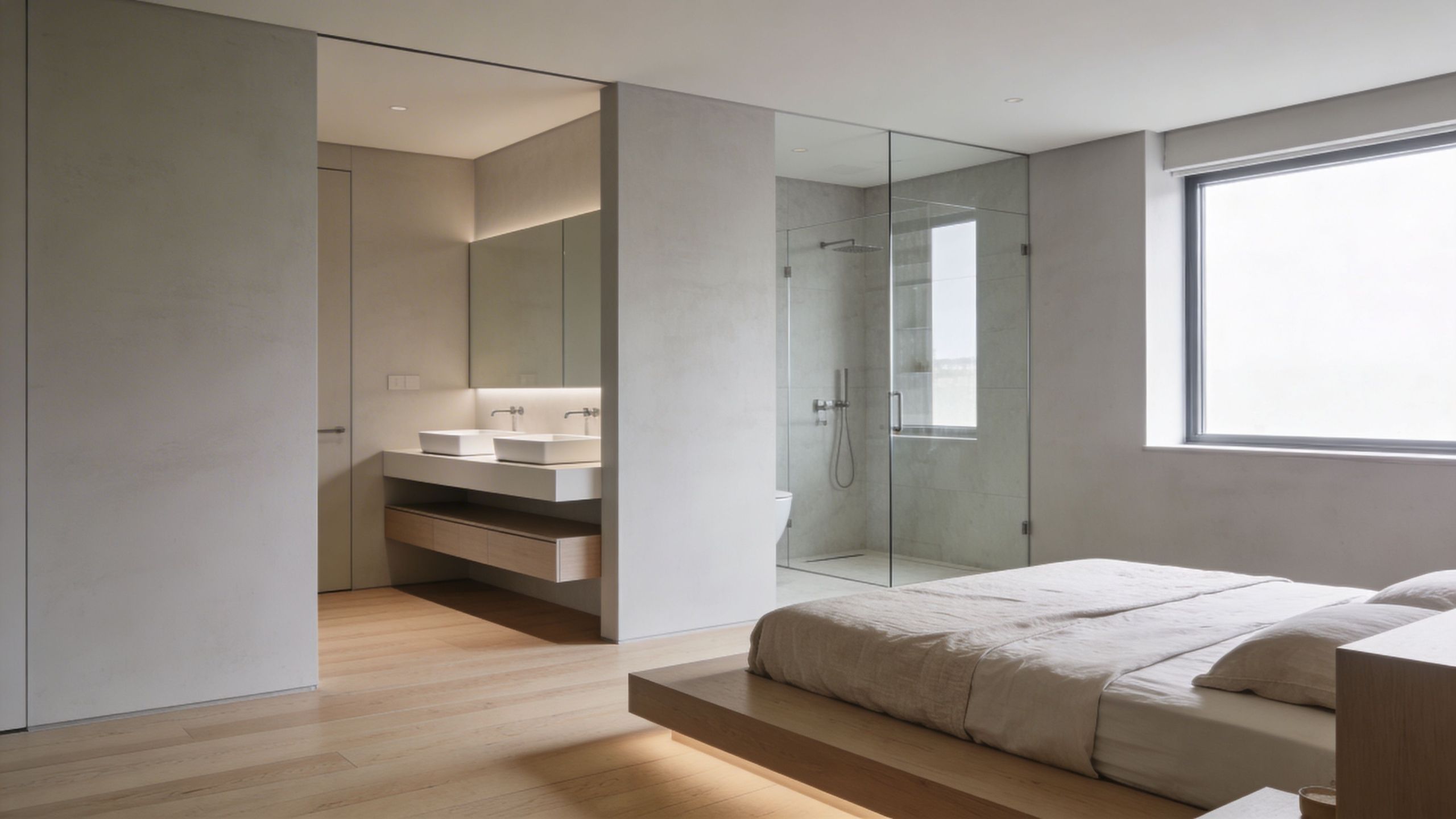
A modern minimalist master bedroom featuring an open plan bathroom with twin sinks and a glass shower.

A spa-inspired bathroom works because it slows the room down. Instead of sharp contrast and visual clutter, it leans on soft wood tones, stone-look surfaces, warm whites, muted greens, and simple hardware. The room feels quieter before you even turn on the shower.

In Western Washington, this style pairs well with natural light, evergreen views, and homes that already have cedar, fir, or oak details elsewhere. A Kent homeowner might use wood-effect porcelain tile instead of real wood near the tub. A Seattle condo owner might bring in a floating vanity with a walnut finish and a light terrazzo-look floor. A Tacoma remodel might add a freestanding tub, a tiled shower wall, and warm brushed metal fixtures for a hotel-like feel.

What makes it feel like a retreat

The details matter more than the square footage.

  • Choose grounded materials: Porcelain tile that mimics limestone, slate, or oak gives the organic look without the maintenance concerns of softer natural materials in wet areas.
  • Layer the lighting: Recessed ceiling lights, vanity sconces, and a dimmable accent light near the tub create flexibility for morning routines and evening wind-down time.
  • Keep storage quiet: Recessed medicine cabinets, toe-kick drawers, and built-in niches keep everyday items out of sight.

The 2025 NKBA Bath Trends Report, referenced in the verified trend summary, points to layouts that expand and rearrange space into connected wellness zones, including “his and hers” areas and even freestanding tubs in bedroom-adjacent settings. That’s one reason this design keeps showing up in high-end remodel conversations.

Practical rule: In a spa-style bathroom, waterproofing and ventilation should be installed before you fall in love with the finish materials. Moisture management is what protects the calm look you’re paying for.

Natural materials also need the right support behind them. Sealed grout, quality membranes, and careful surface prep make a visible difference over time. If you’re planning a wet room or open shower area, Wheeler Painting’s approach to waterproofing for wet room spaces is especially relevant in homes across Seattle, Kent, and Tacoma.

For more visual inspiration on this style, this guide to Spa Bathroom Design shows how layered finishes can create a relaxed, upscale feel.

2. Open-Concept Master Suite with Integrated Bathroom

An open-concept suite removes some of the barriers between sleeping, dressing, and bathing. Done well, it feels airy and modern. Done poorly, it creates privacy issues and lets moisture drift where it shouldn’t.

That’s why this idea works best when the layout includes gentle separation instead of total exposure. A walk-through closet, a half wall, frosted glass, slatted wood divider, or floor transition can define each zone without making the suite feel closed in.

Where open plans work best

This layout often shines in:

  • Loft-style homes: Fewer walls already fit the architecture.
  • Primary suites with exterior light on two sides: Daylight can reach both the bedroom and bath.
  • Older homes getting a major reconfiguration: Removing a small hall or awkward partition can make the whole suite feel larger.

A Seattle homeowner might place the vanity area along one wall, then tuck the toilet and shower behind a pocket door. In a Kent rambler, the closet can become the transition zone between the bedroom and bathroom. In Tacoma, a converted attic suite may use a glass partition under a sloped ceiling to borrow light without sacrificing function.

The best open-concept suites also use durable finishes in the transition areas. Moisture-resistant drywall, quality primer, washable paint, and well-detailed flooring transitions matter because bathroom humidity won’t stop neatly at the tile line.

The trend toward connected bedroom and bath spaces isn’t just visual. It tracks with current renovation preferences. The 2025 U.S. Houzz Bathroom Trends Study, referenced in the verified data, notes that faucets, lighting, flooring, and wall finishes are among the most frequently upgraded features in bathroom renovations, which fits the integrated approach where these surfaces need to work together across connected spaces.

Open-concept design should still give you at least one place to close a door. Most homeowners love visual openness, but they still want privacy when they need it.

If you like the idea but worry about maintenance, focus on hidden infrastructure. Keep plumbing access practical, put humidity control close to the bathing zone, and use premium finishes where the bedroom meets the bath. That combination gives you the clean look people want from master bedroom and bathroom ideas without making the room feel fragile.

3. Dual Vanities with Separate Sinks and Storage

Why do so many primary bathrooms still feel crowded when they are used by two adults every day?

A dual-vanity layout fixes a very ordinary problem. Two people need room at the same time. Separate sinks help, but the bigger win is personal territory. Each person gets a mirror, landing space for daily items, and storage that does not turn the countertop into a catchall.

That distinction matters. A long cabinet with two sinks can still function poorly if both users share one drawer bank, one light source, or one crowded stretch of counter. A well-planned setup works more like two compact workstations placed in the same room.

Layout choices that fit real homes

The best arrangement depends on the room shape, not just the style photo you saved.

  • Side-by-side vanities: A smart fit for a wide wall where plumbing can stay grouped together.
  • Split vanities: Useful when windows, doors, or a narrow footprint break up the room.
  • Vanity plus center storage: A practical option if you want two sinks but also need a linen tower, seated makeup area, or charging drawer between them.

Older Western Washington homes often need a more customized approach. In Seattle, keeping both sinks on the original plumbing wall can control labor costs and reduce wall repair. In Kent, a center tower can add storage without making the room feel packed. In Tacoma, a narrower bathroom may work better with vanities facing each other, especially if the goal is clear walking space instead of one oversized cabinet run.

Materials matter here too. Painted wood cabinets need a durable finish because damp air and wet hands wear down cheap coatings fast. Quartz counters are popular for a reason. They resist water, daily products, and frequent cleaning with less upkeep than many natural stones. If the vanity area sits close to a shower, ask your contractor how splash zones will be protected and where caulk joints will need periodic maintenance.

Storage design is where this idea goes from good to useful. Drawers usually serve people better than deep under-sink cabinets because you can see what you own instead of stacking products in the dark. U-shaped drawers around plumbing, divided organizers, and dedicated outlets inside a drawer can make a busy morning feel much calmer.

Lighting should support the vanity, not just decorate it. Sconces or vertical fixtures near face level reduce shadows better than a single ceiling light. Separate switches help if one person gets up earlier. Small decisions like that often improve daily use more than a dramatic finish upgrade.

If your current bath has a tub taking up valuable wall space, a tub-to-shower conversion for a more efficient primary bathroom layout can free room for better vanity placement and storage.

Wheeler Painting often helps homeowners connect these choices to the full remodel picture. The cabinet style has to match the room. The paint finish has to tolerate humidity. The budget has to account for plumbing, electrical updates, and the small trim details that make a custom vanity look intentional instead of patched in later.

For homeowners collecting master bedroom and bathroom ideas, dual vanities earn their place because they improve how the room works every single day. In Western Washington, the best version pairs that convenience with moisture-aware materials, careful layout planning, and contractor guidance that respects the house you have.

4. Walk-In Shower with Frameless Glass Enclosure

A frameless glass shower can make the whole bathroom look larger. That’s the visual payoff. The construction payoff comes from better access, easier cleaning, and a layout that can support aging in place more gracefully than a traditional tub-shower combo.

This style is especially strong in Western Washington homes where people want a cleaner, less bulky look without sacrificing durability. Large-format tile, a linear drain, and a near-curbless entry can make an older suite feel far more current.

Why this feature keeps gaining attention

The visual appeal is obvious, but there’s also a practical reason more homeowners ask for this setup. In the verified market summary, AIA’s Q1 2025 survey is cited as showing a 4-point rise in the popularity of doorless showers. That aligns with what many remodelers are hearing from clients who want easier entry and a more open bathroom.

A Tacoma homeowner may replace an oversized corner tub with a generous shower and bench. In Seattle, a smaller footprint can still feel luxurious if the tile extends continuously and the glass stays minimal. In Kent, this is often one of the best ways to modernize a dated primary bath without forcing a full expansion.

Details that make it work

A frameless shower depends on technical execution.

  • Slope the floor correctly: Water has to move to the drain consistently.
  • Use a full waterproofing system: This is not the place for shortcuts behind the tile.
  • Pick tile for maintenance as well as style: Porcelain often gives the easiest long-term care.
  • Plan splash control: The prettiest glass layout still needs to keep water where it belongs.

Many homeowners arrive at this idea after realizing they barely use the tub. If that sounds familiar, Wheeler Painting’s work on tub to shower conversions is worth reviewing when you’re planning layout and finish changes.

A glass shower only looks simple. Underneath it, the drain placement, waterproofing sequence, and tile prep have to be exact.

In the verified trend summary, wet rooms were also noted as popular for aesthetics, universal design, and easier cleaning. That helps explain why open shower concepts continue to shape current master bedroom and bathroom ideas across the region.

5. Statement Lighting and Mirrors as Focal Points

Some bathrooms have good bones but still feel flat. Lighting and mirrors can fix that faster than many homeowners expect.

A sculptural mirror or a well-chosen light fixture gives the room a center of gravity. It pulls the bathroom out of the purely functional category and into something that feels finished. This is especially useful when the tile is simple and the cabinetry is understated.

In a Seattle condo, a pair of vertical sconces beside a rounded mirror can soften a boxy room. In a Kent home, a black-framed oversized mirror can anchor a long vanity. In Tacoma, antique brass pendants over a furniture-style sink cabinet can bring warmth to a remodel that otherwise uses cool tile and white walls.

How to make focal points useful, not just decorative

Good bathroom lighting usually comes from layers, not one fixture.

  • Task lighting: Place it near face level at the mirror for shaving, makeup, and grooming.
  • Ambient lighting: Recessed or ceiling-mounted fixtures fill the room evenly.
  • Accent lighting: LED strips under floating vanities or behind mirrors add depth.

Mirror choice matters just as much. Large mirrors bounce light and make tighter rooms feel wider. Framed mirrors can connect the bathroom to the bedroom’s style language. Anti-fog features are helpful in heavily used suites, especially where one person showers while the other gets ready.

The verified trend summary notes that lighting is among the most upgraded elements in current bathroom remodels. That tracks with everyday experience. Homeowners notice bad lighting immediately, even if they can’t always explain why the room feels off.

A good rule is to avoid relying on a single overhead fixture. It creates shadows where people least want them. Separate dimmers also help. Bright light for early mornings. Softer light for evenings. Same bathroom, better experience.

If you already have a solid vanity and don’t want a full remodel yet, this may be one of the smartest upgrades to borrow from more expansive master bedroom and bathroom ideas.

6. Heated Floors and Towel Racks with Radiant Systems

What makes a primary bathroom feel warm and restorative on a cold Western Washington morning? Often, it is not a larger footprint or a more expensive vanity. It is the comfort built under your feet and into the daily routine.

Heated floors change the first few minutes of the day. Instead of stepping onto cold tile after a shower, you get steady warmth across the surface. In a region known for damp air, gray mornings, and long stretches of cool weather, that small shift can make the whole room feel more inviting. A heated towel rack adds another layer of comfort. It dries towels faster, helps reduce that clammy feeling, and gives the bathroom a polished hotel-like finish without requiring a full luxury budget.

Here’s a quick visual overview of the concept:

Where radiant heat makes the most sense

Radiant systems usually work best during a full remodel, when the floor is already being opened up and rebuilt. That timing matters. The heating layer, tile underlayment, waterproofing, and finish floor all have to work as one assembly, much like the layers in a rain jacket. If one layer is installed poorly, the whole system performs worse.

Tile is usually the best partner for radiant heat because it conducts warmth well and stands up to moisture. In Seattle, electric heat mats are a common fit under porcelain tile in older primary bathrooms where homeowners want better comfort without changing the room’s basic layout. In Tacoma, a remodel that includes a curbless shower may pair radiant flooring with careful slope planning and waterproofing so the room feels open and functions well in wet conditions. In Kent, programmable thermostats can help families warm the bathroom before the morning rush while keeping energy use under control.

The details decide whether this upgrade feels worth the cost. Subfloor flatness affects how evenly the tile sits. Waterproofing matters even more in Western Washington homes, where moisture management is already a year-round concern. Thermostat placement should be easy to reach and logical for how the suite is used. Contractors such as Wheeler Painting can help homeowners coordinate those parts early, before tile selections and finish schedules lock everything in.

This kind of upgrade also tends to age well. Paint colors come and go. Warm floors and dry towels stay useful. If the budget cannot cover every luxury feature in a primary suite, radiant comfort is often one of the smarter places to spend because you notice it every single day.

7. Custom Tile Work with Geometric or Artistic Patterns

Tile is where a bathroom can become personal. Paint color changes the mood. Tile changes the character.

That doesn’t mean every surface needs a bold pattern. In fact, the most successful custom tile work often uses restraint. One geometric floor. One shower wall. One niche lined in a contrasting finish. Those focused moves can make the room memorable without overwhelming it.

A Tacoma homeowner might choose a stacked vertical tile in a deep green shower wall. A Seattle remodel could use a quiet Japanese-inspired mosaic on the floor with plain wall tile above. In Kent, a farmhouse-leaning suite might use patterned cement-look porcelain on the floor and simple white walls to keep the room grounded.

Smart ways to use pattern

If you want custom tile to age well, start with one strong move.

  • Feature wall: Works well in the shower or behind a freestanding tub.
  • Patterned floor: Adds personality while keeping vertical surfaces calm.
  • Inset details: Niches, borders, or vanity backsplashes let you experiment at a smaller scale.

The verified Houzz trend summary notes that flooring is one of the most commonly upgraded elements in bathroom renovations. That makes sense. Flooring carries a lot of visual weight, and a well-chosen tile pattern can set the tone for the entire suite.

Pattern also needs maintenance planning. Light grout can look fresh and bright, but it may demand more upkeep in high-use showers. Handmade tile has charm, but variation has to be expected and embraced. Large-format tile minimizes grout lines, while mosaics increase slip resistance and visual texture.

Custom tile should be drawn out before installation begins. A good contractor will map cuts, centering, transitions, and niche locations before the first box is opened.

Experienced installation is necessary for specialty layouts. Specialty layouts expose mistakes fast. When tile wraps corners, meets glass, or runs continuously into a niche, precision is part of the design.

Among all master bedroom and bathroom ideas, this one gives homeowners the clearest chance to express their taste without changing the full layout.

8. Smart Bathroom Technology Integration

Smart bathroom technology works best when it solves daily annoyances. It doesn’t need to feel futuristic to be worth adding.

A few upgrades already feel normal in high-functioning primary baths. LED mirrors with built-in defogging. Digital shower controls. Quiet humidity-sensing fans. Bidet-integrated toilets with adjustable settings. Motion-based lighting for nighttime use. These features improve comfort, but they also reduce friction in the room.

A Seattle homeowner may want preset shower temperatures for different family members. A Kent couple might prioritize a mirror that stays clear after hot showers. In Tacoma, a primary bath remodel could include better fan control and smart lighting scenes that shift from bright task lighting in the morning to softer evening use.

Keep the technology easy to live with

The best smart upgrades share a few traits:

  • Manual backup controls: You don’t want the shower unusable because an app is acting up.
  • Simple interfaces: Guests and family members should understand the system quickly.
  • Strong rough-in planning: Wiring, power locations, and device clearances need to be set before finishes go in.

This category aligns with a larger remodeling shift. In the verified market summary, the U.S. bathroom remodeling market is described as being shaped by modern design and smart tech integration, while electrical upgrades rose from 26% to 39% of projects in the cited trend data. That jump matters because smart bathrooms usually depend on cleaner electrical planning than older rooms were designed to support.

Bidet-integrated toilets also fit into this discussion. In the verified North America summary, they’re highlighted among current trends tied to comfort and aging-in-place thinking. For many homeowners, that makes them less of a luxury item and more of a usability upgrade.

Smart features should still sit inside a timeless design. A calm tile palette, durable paint, and simple cabinetry will outlast any single device cycle. Technology can update over time. The room itself should still look good if you swap hardware or controls later.

9. Luxe Master Bedroom Wall Finishes with Shiplap and Textured Paint

A strong primary suite doesn’t stop at the bathroom door. The bedroom needs the same level of intention. Wall finishes are one of the easiest ways to make that happen.

Flat painted drywall can look clean, but it doesn’t always add much warmth. Shiplap, tongue-and-groove paneling, limewash-style texture, and specialty paint finishes bring shadow, dimension, and softness. In Western Washington homes, those finishes often pair well with natural woods, cozy lighting, and the quieter color palettes many homeowners prefer now.

A Kent homeowner may use painted vertical paneling behind the bed to give the room height. In Seattle, a textured accent wall in a muted mineral tone can add depth without making the room busy. In Tacoma, a farmhouse-inspired suite might combine warm white shiplap with stained wood nightstands and matte black lighting.

Best uses for decorative wall finishes

These options work especially well in bedrooms because they aren’t exposed to the same direct moisture as the bathroom.

  • Accent wall behind the headboard: The most common and often the most effective.
  • Ceiling treatment: Great for vaulted rooms or top-floor suites.
  • Lower-wall paneling: Useful if you want architectural detail without committing to a full wall treatment.

The broader bath and furniture market points to why storage and finish choices are becoming more important in suite design. In the verified North America market summary, bathroom furniture is projected to grow from a USD 7.5 billion North American market in 2022 to USD 13.1 billion by 2031 at a 6.5% CAGR, with cabinets holding a leading role in the category and wood materials remaining prominent in buyer preferences (North America bath remodeling market outlook). That same preference for warm, functional materials carries naturally into the bedroom side of the suite.

If you’re deciding between color directions, Wheeler Painting’s ideas for accent wall color ideas can help narrow the palette before you commit to paneling or texture.

The key is prep. Textured and specialty finishes only look polished when the substrate is patched, primed, and straight. That’s where experienced painting crews separate a custom look from a rushed one.

10. Master Bedroom Fireplace as Architectural Feature

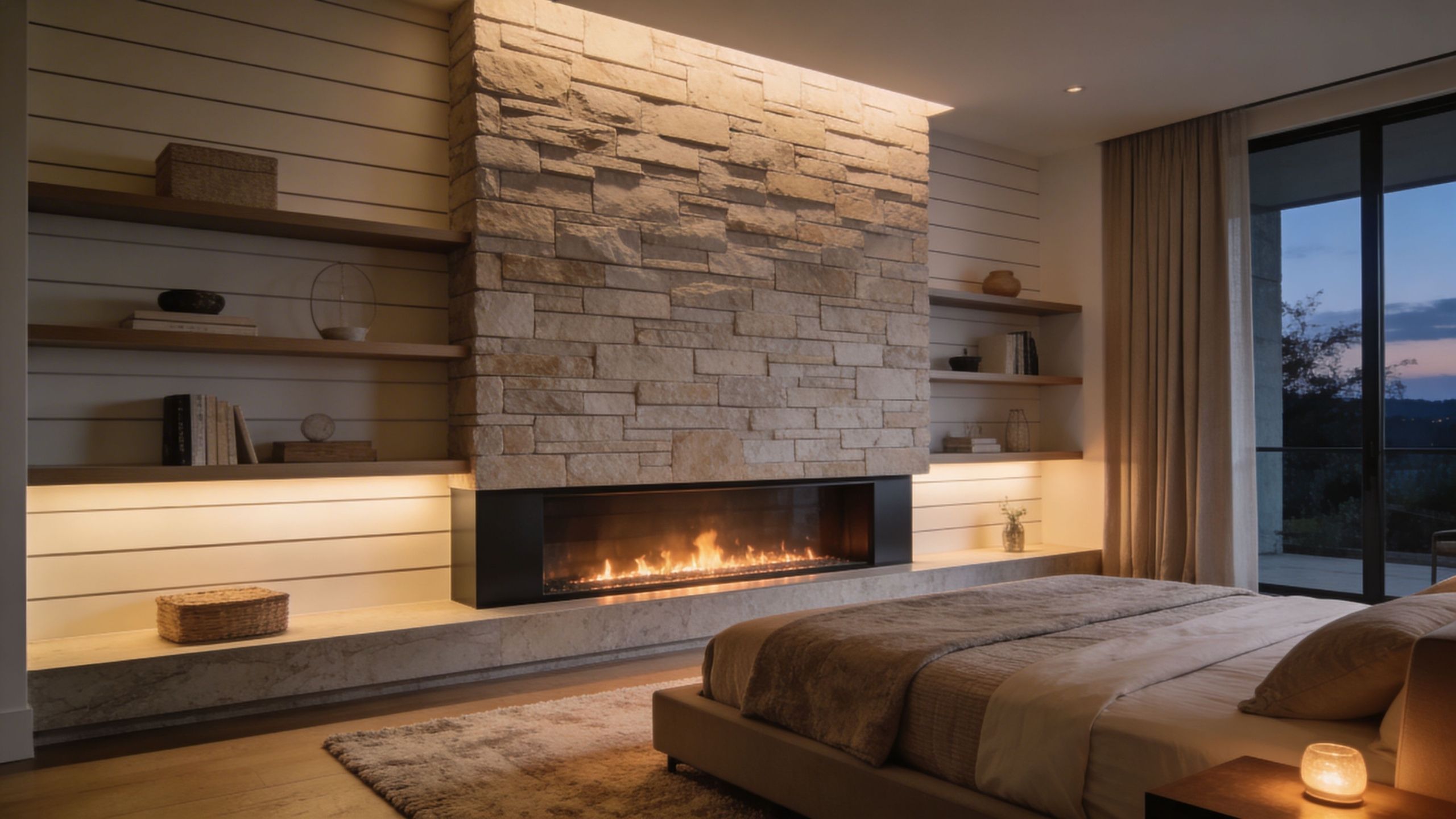
A fireplace gives the bedroom a focal point that furniture alone can’t create. It anchors the room. It also changes how the suite feels at night, especially during cooler months in Western Washington.

This feature can work in different styles. A sleek electric unit suits a contemporary Seattle suite. A direct-vent gas fireplace with a stone surround fits many Tacoma homes. In Kent, a painted wood mantel with built-ins can bridge farmhouse and transitional design.

A luxurious bedroom featuring a stone fireplace, built-in shelving, and warm ambient lighting for a relaxing atmosphere.

How to design around the fireplace

A fireplace should feel integrated, not dropped into the room.

  • Center the furniture plan around it: Bed placement, seating, and circulation all change once the wall has a focal feature.
  • Coordinate the surround with the bathroom finishes: Stone, tile, paint color, or wood tone can connect the whole suite.
  • Keep the wall composition balanced: Symmetrical sconces, cabinets, or art often help.

This idea becomes especially effective in larger suites where the bedroom and bath are meant to feel like one retreat. In the verified trend summary, organic materials such as wood-effect porcelain tile, terrazzo, and marble are described as helping create warm, hotel-like environments. A bedroom fireplace extends that same hospitality-minded feel onto the sleeping side of the suite.

There’s also a planning benefit. A fireplace wall can hide wiring, provide a clear location for a television if desired, and give the room a natural feature wall so other finishes can stay quieter.

For homeowners who want master bedroom and bathroom ideas that feel elegant without relying on lots of decor, this is one of the strongest architectural moves available. The room gains warmth, structure, and a clear visual identity.

10-Point Master Suite Design Comparison

Item Implementation complexity Resource requirements Expected outcomes Ideal use cases Key advantages
Spa-Inspired Bathroom with Natural Materials High, structural, waterproofing, specialist trades High, natural stone, premium fixtures, skilled labor, ventilation Luxury wellness retreat; higher resale value; timeless look Master-bath remodels, luxury homes, wellness-focused owners Durable natural materials; relaxation and strong market appeal
Open-Concept Master Suite with Integrated Bathroom High, wall removals, HVAC/vent planning, privacy solutions High, structural engineering, upgraded HVAC, waterproofing Airy, hotel-like flow; increased light; privacy trade-offs Lofts, contemporary homes, projects prioritizing openness Maximizes perceived space; modern aesthetic; improved light
Dual Vanities with Separate Sinks and Storage Moderate, additional plumbing and cabinetry coordination Moderate, extra plumbing runs, cabinets, countertops, fixtures Better morning flow; individualized storage; resale boost Couples’ master baths, family homes with shared routines Reduces conflicts; personalized storage; scalable layout
Walk-In Shower with Frameless Glass Enclosure Moderate–High, precise waterproofing and glass installation Moderate, tempered glass, membrane, quality tile, pro installers Open, spa-like shower; easy maintenance; improved accessibility Modern renovations, ADA-friendly designs, luxury baths Showcases tilework; easy to clean; contemporary appeal
Statement Lighting and Mirrors as Focal Points Low–Moderate, electrical upgrades and secure mounting Low–Moderate, designer fixtures, wiring, dimmers, mirror supports Immediate visual impact; improved task lighting; style refresh Cosmetic updates, boutique or designer bathrooms Fast aesthetic upgrade; customizable focal points
Heated Floors and Towel Racks with Radiant Systems High, electrical/hydronic installs, coordination with flooring High, radiant kits/loops, thermostats, pro installation, compatible flooring Consistent warmth; comfort; reduced moisture issues when zoned Cold climates, luxury builds, aging-in-place projects Year-round comfort; energy-efficient when zoned; accessibility
Custom Tile Work with Geometric or Artistic Patterns High, detailed layout, experienced tile craftsmen High, specialty tiles, skilled labor, waterproofing, design time Unique, art-forward surfaces; durable and high-impact finish Accent walls, designer bathrooms, culturally inspired projects Strong visual identity; durable surfaces; highly customizable
Smart Bathroom Technology Integration High, electrical/IT integration, compatibility planning High, smart fixtures, robust WiFi, control hubs, professional setup Automated convenience; energy/water savings; tech-forward appeal Tech-savvy homes, luxury developments, automated living Automation, accessibility features, modern user experience
Luxe Master Bedroom Wall Finishes: Shiplap and Textured Paint Moderate, preparation and skilled finishing work Moderate, shiplap materials, specialty paints, skilled painters Added depth, warmth, and architectural interest Accent walls, transitional style bedrooms, cozy retreats Affordable impact; hides imperfections; acoustic benefits
Master Bedroom Fireplace as Architectural Feature High, venting, structural work, code compliance High, fireplace unit, surround materials, ventilation, permits Strong focal point; supplemental heat; elevated ambiance Luxury bedrooms, cold-climate homes, romantic designs Creates centerpiece; increases value; enhances comfort

Next Steps to Realize Your Master Suite Vision

The best master suites don’t come from chasing every trend. They come from making a few good decisions in the right order.

Start with how you want the suite to function. Do you need more storage? Better morning flow for two people? A shower that’s easier to enter? A bedroom that feels warmer and more finished? Those answers shape the layout before you start picking tile, paint, or plumbing fixtures.

That order matters in Western Washington. Homes in Seattle, Kent, Tacoma, and the communities between them often have older framing, past moisture issues, tight footprints, or additions built in stages over time. A beautiful concept has to be matched to what the home can support. That’s why strong planning usually begins with site-specific questions about ventilation, waterproofing, floor levels, lighting access, and wall condition.

Budgeting works the same way. Some homeowners need a full layout change. Others can get excellent results by restoring what’s sound and targeting the updates that matter most. The verified data notes an underserved need around budget-friendly restoration in aging Puget Sound bathrooms, especially where specialty painting, waterproofing, coatings, and repairs can extend the life of a room without a total teardown. That matters for people who want progress now without committing to the largest possible remodel on day one.

It also helps to time your project well. In the verified market summary, remodeling decisions are shown to cluster early in the year, with many starts happening by early summer and many completions landing in midsummer. For homeowners, that’s a reminder to begin planning before you want construction to start. The earlier you define the layout, finishes, and priorities, the smoother the process tends to be.

If your home has an awkward primary bath, an older suite layout, or signs of wear around tile, drywall, trim, or cabinetry, don’t assume you need to copy a magazine-perfect design. Many of the most successful projects adapt ideas to the house instead of forcing the house to imitate a showroom. A narrow room may benefit more from a frameless walk-in shower than a tub. An open-concept suite may need strategic separation rather than full exposure. A dated vanity wall may only need better lighting, storage, and finish work to feel current.

That’s where local contractor guidance becomes valuable. Wheeler Painting & Restoration Services has served the Puget Sound and Western Washington since 1991, bringing more than 30 years of regional experience to remodeling, restoration, painting, coatings, and waterproofing. For homeowners looking for a residential contractor near me, house painting near me, or a team that can handle both construction and finish work, that combination is useful because it keeps the process more coordinated. One team can evaluate the structure, protect wet areas, repair surfaces, and deliver the finished look.

If you’re narrowing down your favorite master bedroom and bathroom ideas, collect a few that match your home’s layout and your daily routine. Then compare them against what the room really needs. Better storage, stronger waterproofing, smarter lighting, and durable finishes often create more lasting value than the flashiest design move.

Ready to move from inspiration to a real plan? Schedule a consultation with Wheeler Painting to get personalized design advice, realistic timelines, and a clear scope for your Seattle, Kent, or Tacoma project. A calm, functional master suite starts with the right layout and the right builder.


If you're planning a master suite remodel, restoration project, or finish upgrade in Seattle, Kent, Tacoma, or the surrounding Puget Sound area, Wheeler Painting & Restoration Services can help you turn ideas into a clear, buildable plan. From waterproofing and drywall repair to residential remodeling, specialty finishes, interior painting, and commercial construction support, Wheeler offers one accountable team to guide your project from consultation through completion.