
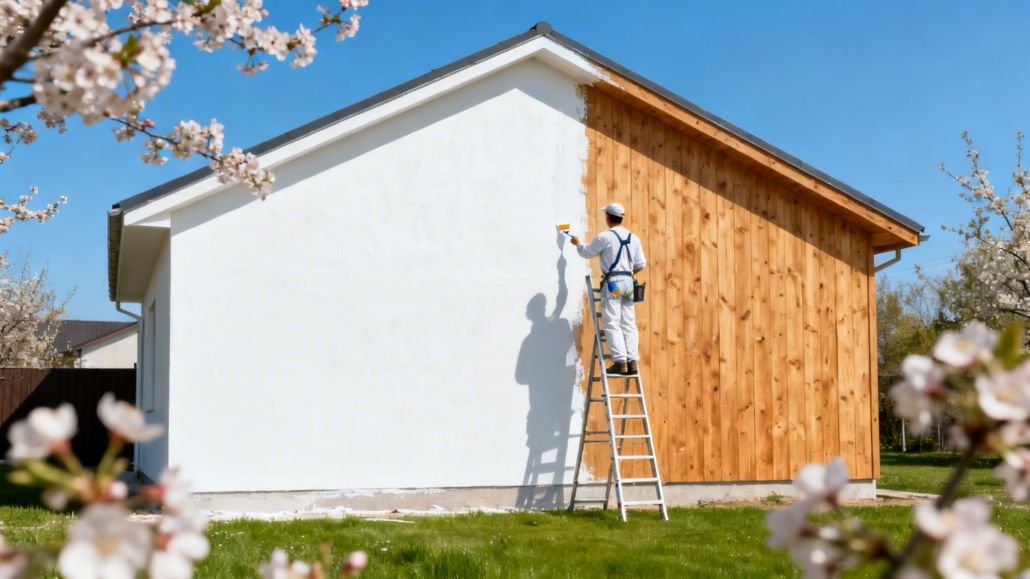
Best Time to Paint Your House Exterior: A Guide for Puget Sound Property Owners
Let's get straight to the point: if you're planning to paint your house exterior in the unpredictable climate of Western Washington, your best bet is from late spring through early fall. This ideal window, generally running from May through September, gives residential homes and commercial buildings the best possible chance at a beautiful, durable finish that will last for years.
Finding the Perfect Window for Exterior Painting in the Puget Sound
Timing a painting project in our region is everything. Think of it as giving the paint the perfect environment to do its job—curing into a hard, protective shell that can stand up to our notoriously damp winters. Nailing this timeframe is the single most important step toward a successful project that not only boosts your curb appeal but also protects your property investment.
This decision is critical whether you're a homeowner looking to refresh your siding or a facilities manager scheduling a large-scale commercial renovation. A well-timed project is your best defense against costly failures like peeling, blistering, and premature fading, which are common when paint is applied in less-than-ideal weather.
The Goldilocks Zone for Painting
For anyone living in the Puget Sound, the goal is to find that “Goldilocks” period—not too hot, not too cold, and definitely not too wet. This simple timeline shows the ideal, acceptable, and risky times for exterior painting right here in our community.

As you can see, summer offers the most reliable window. The shoulder seasons of spring and fall can be a gamble, and winter is a definite no-go for a quality finish.
This seasonal sweet spot is backed by decades of on-the-job experience and paint chemistry. Here in the Puget Sound, the prime time to paint is when temperatures are consistently between 50°F and 85°F. Why? Because most exterior latex paints are formulated to adhere and cure best within this range. The absolute sweet spot for maximum durability is actually a bit cooler, around 50–70°F. You can dig deeper into how temperature affects paint application with resources from industry leaders.
Choosing the right time to paint isn't just about convenience; it's a strategic decision that directly impacts the longevity and performance of your home or building's protective coating. A project completed in July will almost always outperform one rushed in November.
To give you a clearer picture, here’s a quick breakdown of what to expect throughout the year.
Puget Sound's Annual Painting Calendar at a Glance
This table summarizes the painting conditions for each season, helping you plan your exterior project with confidence.
| Season | Months | Conditions & Temperature | Paint Application Suitability |
|---|---|---|---|
| Winter | December–February | Cold, rainy, and often freezing. Temps regularly dip below 40°F. | Not Recommended. High risk of paint failure due to moisture and low temps. |
| Spring | March–May | Unpredictable. Mix of sun and rain, with temps often fluctuating below 50°F. | Risky. Possible, but requires careful weather monitoring. Late May is more reliable. |
| Summer | June–August | Warm, dry, and stable. Temps consistently stay in the 60s-80s. | Ideal. This is the prime season for exterior painting with the best results. |
| Fall | September–November | Variable. Early fall can be great, but rain and cooler temps increase by October. | Acceptable to Risky. September is often excellent, but the window closes quickly. |
Ultimately, a paint job is only as good as the conditions it's applied in, which is why timing is so crucial in our unique climate.
Why This Timing Matters for Your Property
Whether you’re managing a retail build-out or planning a simple residential repaint, proper paint adhesion is your first line of defense against the elements.
Painting during the optimal summer window provides several key benefits:
- Superior Adhesion: Paint bonds much more effectively to surfaces that are warm and completely dry, which is the best way to prevent future peeling and chipping.
- Proper Curing: Consistent, mild temperatures allow the paint to cure (harden) correctly, forming a tough, resilient film that protects your property.
- Avoiding Moisture Issues: Lower humidity and less rainfall mean moisture won’t get trapped under the new paint, which is what causes ugly blistering and bubbling.
- Predictable Scheduling: Booking your project during stable weather helps local contractors deliver on time and on budget, without frustrating weather delays.
At the end of the day, respecting the season ensures your investment pays off. A professional finish applied under the right conditions will protect your siding and trim for years to come, saving you the headache and expense of premature repairs.
How Weather Science Impacts Your Paint Job

Ever notice how professional painters seem obsessed with the weather forecast? It’s not just about staying dry. The real secret to a lasting paint job is understanding how the science of weather interacts with the chemistry of paint. This is what separates a beautiful, durable finish from one that starts failing in just a year or two.
Applying paint is a chemical process. For it to properly cure into a hard, protective layer, it needs the right atmospheric conditions. Get it wrong, and you're looking at a mess that leads to costly repairs.
The Temperature Sweet Spot
Temperature is the most important piece of the puzzle. The vast majority of exterior latex and acrylic paints are formulated to be applied when both the air and surface temperatures are between 50°F and 85°F.
Too Cold (Below 50°F): When it's too chilly, the chemical reactions that allow paint to cure slow down significantly. The paint can't form a strong bond with the surface, which is a recipe for future cracking and peeling.
Too Hot (Above 85°F): On the flip side, extreme heat makes the paint dry way too fast. This prevents the paint from leveling out smoothly, leaving you with ugly brush marks and an uneven texture. This rapid surface drying can also trap moisture underneath, causing blisters and bubbles.
Here in Western Washington, that means we’re always looking for those precious days where the temperature will reliably stay above 50°F for a full 24-hour cycle—especially overnight. This gives the new paint a fighting chance to begin curing properly.
Humidity and the Dew Point Danger
Just as critical as temperature is the amount of moisture in the air, or humidity. The ideal range for most paint jobs is a relative humidity between 40% and 70%. When the air is too damp, the water in latex paint can't evaporate efficiently, which dramatically slows down drying time.
This leads us to a common problem that trips up many property owners: the dew point.
The dew point is the exact temperature at which air gets so saturated with moisture that dew begins to form on surfaces. If your siding's temperature drops to the dew point while your new paint is still wet, it’s like giving your house a fine mist of water—effectively ruining the finish.
This is a classic issue during the cool evenings of spring and fall in the Puget Sound. A seasoned professional knows to watch this closely. A non-negotiable rule is to stop painting when the surface temperature is within 5°F of the dew point. This foresight prevents an entire day's work from being ruined and is a huge reason why hiring an experienced residential or commercial painting contractor makes all the difference for a reliable result.
Why Professional Painters Often Prefer the Fall
Most people think of summer as prime time for exterior painting, but ask any seasoned pro in Western Washington, and they'll likely let you in on a little secret: early fall is often the real best season for the job. That window from September into early October gives us a unique set of advantages we rely on to deliver a superior, long-lasting finish on homes and commercial buildings alike.
This isn't just a preference; it's a strategic move based on the science of how paint actually works. The intense, direct heat of summer can be a problem, causing paint to dry too quickly. When that happens, solvents get trapped, and the paint can't form a strong, even bond with the surface—a classic recipe for premature failure.
The Perfect Mix of Temperature and Humidity
Fall in the Puget Sound region offers a much more stable and forgiving environment. The weather usually settles into a rhythm of mild, warm days and lower humidity—the absolute sweet spot for painting. Instead of getting baked onto the siding by the harsh summer sun, the paint is able to dry and cure at a slower, more predictable rate.
That slower cure time is the key to durability. It gives the paint polymers the time they need to cross-link correctly, creating a much harder, more resilient film. This powerful bond is exactly what you need to protect your property from our long, damp winters, whether it’s your home's siding or a large commercial exterior.
Forget the "Hotter is Better" Myth
It’s a common belief that the hottest, sunniest days are perfect for painting. Truthfully, that’s almost never the case.
- The Summer Heat Problem: High temperatures cause the paint to "skin over" almost instantly, trapping moisture underneath. This is a leading cause of bubbles and blisters.
- The Fall Stability Advantage: Cooler fall temperatures allow the liquids in the paint to evaporate evenly. This ensures the entire layer cures as one solid, cohesive unit.
The goal of a professional paint job isn't just to get the paint to dry fast; it's to make sure it cures properly. Fall’s moderate weather gives us the ideal timeline for this crucial chemical process, leading to a finish that’s tougher and more weather-resistant.
It’s all about focusing on long-term quality over short-term speed. We’re not just trying to make a building look good for a season; we’re creating a protective shield that will perform for years.
Why Fall is a Smart Move for Property Owners
For homeowners and facilities managers, the benefits of painting in the fall are clear. In a mild climate like ours, fall stands out by offering lower humidity and stable temperatures that dramatically reduce the risk of paint failure. September and October typically give us average temperatures of 60-70°F with humidity dropping to 50-60%. Compare that to summer's 70%+ humidity peaks, which can disrupt film formation and shorten the paint's lifespan. You can find more details on how weather impacts paint adhesion on AGWilliamsPainting.com.
Here at Wheeler Painting, we often guide our clients toward this "secret season" because it aligns with our commitment to dependable craftsmanship. Whether we’re tackling a complex office space renovation or providing expert exterior painting for a neighborhood home, we always aim for the conditions that will give you the most durable and flawless result. By understanding and taking advantage of the fall painting season, we help you protect your investment.
The Critical Role of Surface Prep and Curing
You can have the perfect weather and the ideal season, but none of it matters if the surface of your home isn’t properly prepared. A professional paint job that lasts for years is built on a foundation of meticulous prep work. This is the single biggest difference between a finish that lasts a decade and one that starts to fail after a couple of seasons.
This is where our focus shifts from when you paint to how a surface needs to be treated before a single can is even opened.
New paint needs a clean, stable, and completely dry surface to grab onto. Skipping or rushing this groundwork is a recipe for disaster, and for us, it's a non-negotiable part of any project, from a simple residential repaint to a full commercial construction job.
The Foundation of a Flawless Finish
Before our team even thinks about laying down a coat of primer, we follow a strict preparation process. It’s all about creating the perfect canvas for your new paint.
Our essential steps always include:
- Thorough Cleaning: First, we get rid of years of built-up dirt, grime, mildew, and pollen. This usually means a professional power wash to strip away anything that could get between the new paint and the siding.
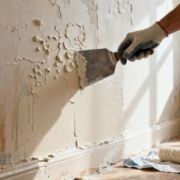
- Scraping and Repairing: Next, we get hands-on, scraping away every bit of loose or peeling paint. If we find wood rot or damaged siding, we repair or replace it to create a solid surface.
- Sanding for Adhesion: After scraping, we sand the edges to feather them smoothly into the surrounding surface. This is crucial for getting that seamless look and helping the new paint bond tightly.
- Priming Bare Spots: Any exposed wood or repaired areas get a coat of primer. Primer is the ultimate bonding agent, sealing the surface and preventing old stains from bleeding through.
This is where true craftsmanship makes a difference. It’s time-consuming, but it’s what a quality paint job is all about. To learn more about how this first stage sets up the entire project for success, check out our guide on the benefits of professional power washing services.
The Hidden Importance of Curing Time
Once the last coat of paint is on, another critical phase begins: curing. This is easily the most misunderstood part of the whole process. Paint might feel "dry to the touch" within a few hours, but it’s nowhere near fully hardened.
Curing is the chemical process where the polymers in the paint cross-link and bond together, forming a hard, durable film. This takes a lot longer than simple drying and can last up to 30 days, depending on the paint and the weather.
It’s a lot like pouring concrete. You can walk on a new sidewalk after a day, but it takes nearly a month for that slab to reach its maximum strength. Paint is no different. While it’s curing, it's still vulnerable.
That’s why a professional team’s patience is so valuable. We manage the project to give the paint the uninterrupted time it needs to cure into a tough, weather-resistant shield. This attention to the "unseen" part of the job is what protects your investment and ensures your property can stand up to Puget Sound winters for years to come.
Getting Your Painting Project on the Calendar

Knowing the perfect window for exterior painting is one thing, but actually getting the project done right is another. It all comes down to smart planning and scheduling. Whether you're a homeowner or a facilities manager, a little foresight can transform a potentially chaotic job into a smooth, rewarding experience.
The best local painting contractors get booked up fast. Their schedules for the prime summer and early fall seasons often fill up months in advance. If you start calling around for estimates in June, you’ll likely find that the top-tier crews are already booked solid through September.
Locking in Your Spot
This is where being proactive pays off. By reaching out to a trusted local contractor in the late winter or early spring, you’re not just getting a quote—you’re securing your spot in that coveted prime-weather window.
Booking early does more than just get you on the list.
- You get your first choice of painters. You won’t be stuck settling for a less experienced crew.
- It’s far less stressful. Planning ahead eliminates the last-minute scramble and gives you plenty of time to choose colors and ask questions.
- It creates a weather buffer. If a surprise squall delays the start, your project is still a priority and can be easily shifted within the optimal season.
What to Expect From a Professional Consultation
Once you’ve scheduled a consultation, a true professional will have a two-way conversation with you, listening to your goals while inspecting every inch of your property.
During this on-site meeting, the contractor should be assessing the condition of your siding, trim, and other surfaces. They’ll point out areas needing extra attention—like scraping, sanding, or wood repair—and walk you through the best product options for our climate.
A detailed, itemized proposal is the hallmark of a true professional. It should spell out every single step, from the exact prep work and materials to the project timeline and total cost. No surprises, no ambiguity.
This document is your project's blueprint. It empowers you by showing exactly what you're paying for and setting clear expectations. To get a sense of how detailed this process should be, take a look at a professional construction quality control checklist; it reveals how meticulous planning leads to a successful outcome.
Prepping Your Property for the Painting Crew
With your project officially booked, the final step is getting your home or building ready. A little bit of prep on your end helps the entire project run more efficiently.
Here are a few simple things you can do:
- Clear the perimeter. Move patio furniture, grills, potted plants, and hoses at least 10-15 feet away from the exterior walls.
- Trim back landscaping. Cut back any shrubs, vines, or tree branches that are touching or hanging close to the siding.
- Plan for family and pets. Figure out a plan to keep kids and pets safely away from the work zone.
- Point out the essentials. Make sure the crew knows where to find outdoor water spigots and electrical outlets.
By taking care of these small tasks, you create a work environment where the pros can focus on what they do best: delivering a beautiful, durable finish.
Finding the Right Partner for a Flawless Finish

Knowing the perfect time to paint is half the battle. The other half is finding a local professional who can deliver a paint job that lasts. Bringing it all together requires a team that truly understands the unique challenges of the Puget Sound climate.
That's where we come in. As a trusted local provider, we have decades of hands-on experience, from cozy residential repaints to large-scale commercial painting and construction projects that need to stay on schedule. We understand how to navigate logistics and keep disruptions to a minimum, no matter the job.
Our promise is simple: top-tier craftsmanship, dependable schedules, and a completely transparent, stress-free process. We're here to deliver a beautiful, durable finish that protects your investment.
So, whether you're planning a full siding replacement or just searching for the best exterior painters near me, our team is ready to help. If you're looking for a trusted local expert who treats your project with the care it deserves, your search ends here.
Ready to get started? Contact Wheeler Painting for a detailed, no-obligation consultation and see how our community-focused approach makes all the difference.
Your Top Exterior Painting Questions Answered
When you're thinking about painting your property's exterior, a lot of questions come up. As a local painting and construction company that has served the Pacific Northwest for years, we hear the same concerns time and again. Here are some simple, straightforward answers to the questions we get asked most.
Can You Paint My House Exterior If It Rains?
In a word: no. We can't, and frankly, no professional painter ever should. Applying paint in the rain or when it's about to pour is asking for trouble.
Fresh paint needs a few hours of dry weather to form its initial protective "skin." Rain hitting it too soon can wash the paint right off your siding or leave ugly streaks and blisters. We're constantly watching the local forecast and will only start painting when we see a clear, dry window. If a surprise shower does pop up, we wait until the surface is bone dry, which can sometimes mean waiting a full day or more.
How Long Does Siding Need to Dry After Pressure Washing?
This completely depends on the weather. On a perfect, warm summer day here in Western Washington, wood or composite siding might be ready for primer in about 24-48 hours.
However, if we're working in the cooler, damper days of late spring or early fall, that drying time can easily stretch to 3-4 days. Painting over a damp surface traps moisture underneath, which is the number one cause of blistering and peeling paint. Our crew doesn't guess; we use professional moisture meters to get an exact reading. We won't touch a surface with a primer brush until we know for a fact it's dry enough for the paint to hold tight.
Is It Ever Possible to Paint in the Winter?
Generally, winter is the worst time for an exterior paint job. You’re fighting a constant battle against low temperatures, high humidity, and limited daylight. While special low-temperature paints exist that claim to work in weather as cold as 35°F, their use is extremely limited.
Think of these specialty paints as a last resort for urgent touch-ups or a commercial project with a deadline that absolutely cannot move. For nearly every home and commercial building, trying to paint in the winter is a gamble. The risk of paint failure and a much shorter lifespan just isn't worth it. We will always advise waiting for that prime spring-to-fall window to get the durable, high-quality finish you're paying for.
How Does Timing Differ for Commercial Properties Versus Homes?
The science behind a great paint job doesn't change—the perfect weather conditions are the same whether we're painting a house or a storefront. The real difference is all about logistics and scheduling.
Commercial painting projects, like updating a retail space or an office building, usually come with tight deadlines and the need to work around business hours to avoid disrupting customers and employees. This makes the stable, predictable weather of late summer and early fall even more critical for our commercial clients. With our extensive experience in commercial renovations, we excel at building detailed plans that respect your business operations while ensuring every coat of paint goes on during the perfect weather window for a flawless, long-lasting result.
Your property deserves a finish that can handle whatever the Pacific Northwest throws at it. Whether you’re a homeowner preparing for a residential remodeling project or a facilities manager undertaking a large-scale commercial renovation, trust the local experts who live and work in the Puget Sound climate. For dependable craftsmanship and a stress-free process, contact Wheeler Painting & Restoration Services for a detailed estimate today at https://wheelerpainting.com.





 “Like” us on Facebook!