
How to Remove Old Paint Like a Pro in Puget Sound
That cracked, peeling paint isn't just an eyesore—it's the only thing standing between you and a beautiful, durable finish. For homeowners and business owners alike, getting rid of that old layer is the most important part of any paint job. The process comes down to four core methods: good old-fashioned manual scraping, chemical stripping, heat application, and media blasting. Choosing the right one depends on what you're working with and the size of your project.
Your Guide to Removing Old Peeling Paint
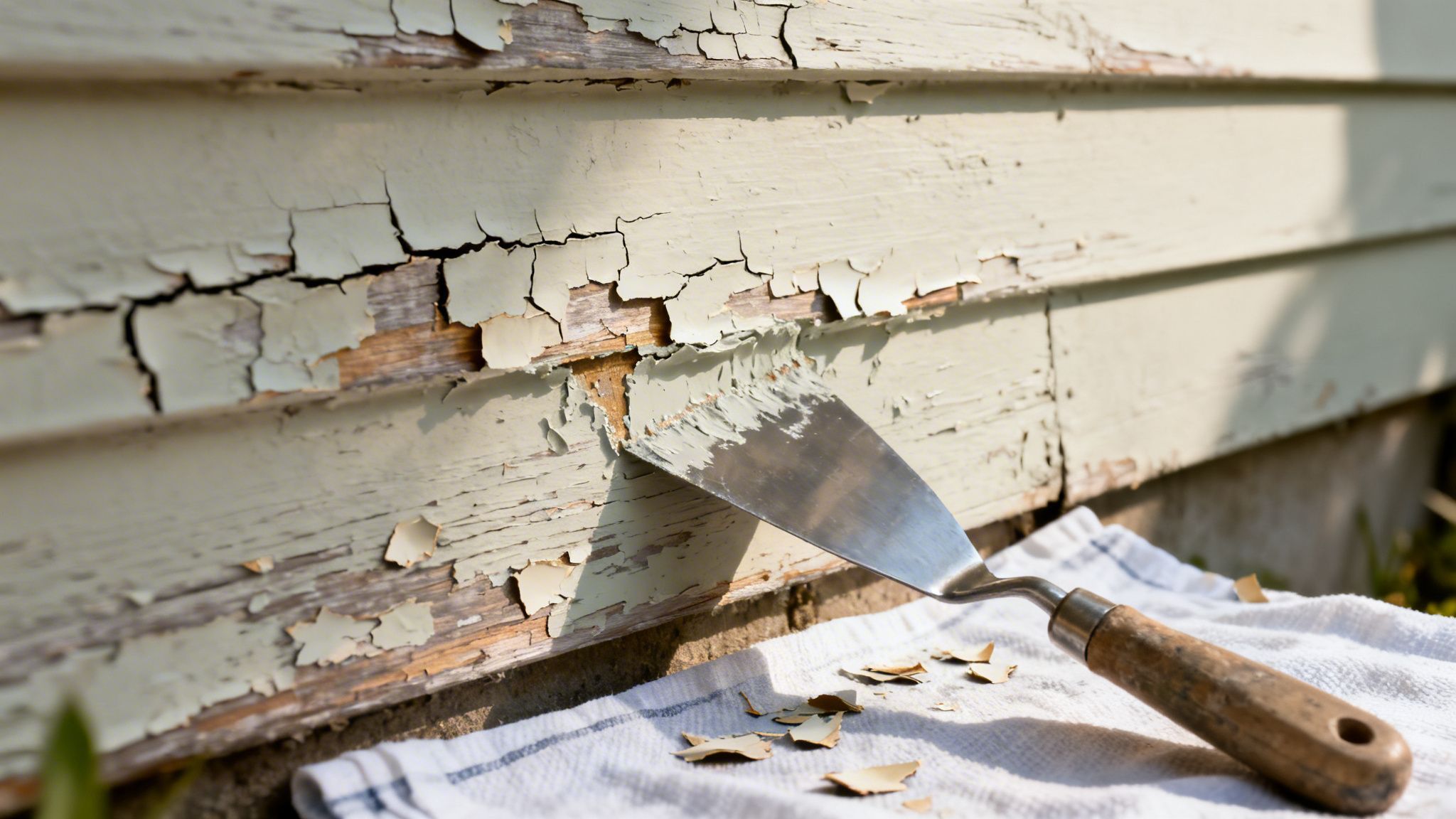
Whether you're a homeowner tackling a weekend project or a facilities manager planning a major refresh, knowing how to properly remove old paint is the key to success. When you strip and prep a surface the right way, your new coat of paint will adhere properly, look fantastic, and hold up for years to come. This guide is designed to give you a clear, practical path forward, helping you feel less overwhelmed by the process.
We'll break down the tools and techniques we use in the field, because a professional-grade finish starts with understanding the fundamentals—especially here in the demanding Puget Sound climate. Our goal is to provide simple, helpful terms to build your confidence.
Understanding Your Options
Before you grab a scraper or can of stripper, it helps to see the big picture. Every method has its place, from small residential touch-ups to large-scale commercial renovations.
Here's a quick look at how these methods compare.
Paint Removal Methods at a Glance
| Method | Best For | Difficulty Level | Key Tools |
|---|---|---|---|
| Manual (Scraping/Sanding) | Small areas, already flaking paint | Low | Scrapers, sanders, wire brushes |
| Heat Guns | Multiple paint layers on wood, metal | Medium | Heat gun, scrapers, respirators |
| Chemical Strippers | Intricate details, metal surfaces | Medium | Stripper, brushes, scrapers, PPE |
| Media Blasting | Large exterior surfaces, industrial jobs | High (Pro-level) | Blasting equipment, compressor, media |
As you can see, the right tool for the job really depends on the situation. Let's dig a little deeper into these options.
- Manual Methods (Scraping & Sanding): This is your go-to for small patches where paint is already failing. It’s straightforward but labor-intensive.
- Heat Guns: These are great for softening thick, stubborn layers of old paint on durable surfaces like wood siding, making it much easier to scrape away.
- Chemical Strippers: Perfect for furniture with intricate details or for removing paint from metal without causing damage. The chemicals do the hard work of dissolving the paint's bond.
- Media Blasting: This is the heavy-duty, professional option for huge projects, like stripping an entire commercial building or cleaning industrial equipment.
The key is matching the method to the surface material, the number of paint layers, and the scale of the job. A heat gun might be ideal for vintage wood trim but a poor choice for drywall.
Choosing the wrong method doesn't just waste time—it can permanently damage the surface underneath. We've seen it happen. A simple repaint can quickly turn into a costly repair, which is a real risk for historic homes and commercial buildings alike.
As a local general contractor serving Western Washington since 1991, we’ve handled it all. From restoring classic Puget Sound homes to prepping large retail spaces for a new look, our team at Wheeler Painting & Restoration Services knows how to pick the right strategy. We're sharing our hands-on experience here to help you get started with confidence.
Safety First: Prepping Your Work Area Like a Pro
Before a single flake of old paint comes off the surface, your most important job is setting up a safe and contained workspace. We can't stress this enough. Whether you're working on a bathroom in your home or a large commercial space, this step is non-negotiable. It’s how we protect our crew, and it’s how you’ll protect yourself, your family, or your employees from potential hazards.
The biggest concern is always lead-based paint. If your property was built before 1978, you have to work under the assumption that it's there. The EPA's data is sobering: a staggering 87% of homes built before 1940 contain lead paint. The moment you scrape, sand, or heat that paint, you can release toxic dust and fumes. This is a serious risk that requires careful management.
Identifying and Dealing with Lead Paint
So, what's the first move? Test for lead. You can find an EPA-recognized lead test kit at most hardware stores. They're straightforward to use and give you a clear answer on the spot.
If that test comes back positive, the game changes. You are now dealing with hazardous material, and there are strict federal and local rules for handling and disposal. Honestly, for most property owners, this is the point where you should put the tools down and call in a certified professional. At Wheeler Painting, our teams are fully trained and certified in lead-safe practices. We have the proper equipment and knowledge to manage the risk correctly from start to finish.
Your Personal Protective Equipment (PPE) Checklist
Even if you’ve ruled out lead, paint removal is messy work. You'll be dealing with dust, debris, and potentially strong chemicals. Your PPE is your personal shield. The gear you need depends on the removal method you choose.
- Respirator: For any kind of sanding or dry scraping that creates dust, an N95 or P100-rated respirator is a must. If you're using chemical strippers, you absolutely need a respirator with organic vapor cartridges to protect your lungs from fumes.
- Eye Protection: Don't even think about starting without it. Safety glasses are good; sealed goggles are better. They'll keep paint chips, dust, and chemical splashes out of your eyes.
- Gloves: For scraping and sanding, a pair of heavy-duty work gloves will do. For chemical strippers, you need chemical-resistant gloves—usually butyl or nitrile—to prevent skin burns.
- Coveralls: A simple set of disposable coveralls keeps dust and chemicals off your skin and clothes. This makes cleanup easier and prevents you from tracking contaminants through your home or job site.
When the job is done, it's just as important to follow the right steps for removing personal protective equipment (PPE) to avoid spreading any contaminants.
Containing the Mess
Proper containment is what separates professionals from amateurs. It protects the rest of your property and makes the final cleanup much easier.
First, remove everything you can from the room—furniture, rugs, décor, and equipment. For heavy items you can't move, cover them completely with thick plastic sheeting and tape down every seam.
Next, cover the floor with a quality drop cloth (canvas works well) and extend it several feet beyond your work area. If you're inside, use plastic sheeting and tape to seal off doorways and shut down any HVAC vents. You do not want dust getting into your ventilation system.
Pro Tip: When you lay down drop cloths, overlap them by at least a foot and tape them together. This small detail prevents dust and paint chips from getting into the cracks while you work.
It's also interesting to see how the industry is shifting toward safer products. There's a growing demand for more effective paint removers, with a push toward sustainable, bio-based solvents. The market is projected to see a 3.7% CAGR through 2030 as these newer, safer formulas become standard. This is great news for both professionals and DIYers. You can learn about the paint remover market's growth and see how these trends are shaping the products we use.
Choosing Your Removal Method From Scraping to Stripping
Alright, your space is prepped and you're ready to tackle that old paint. Now for the real question: how are you going to get it off? The path you choose impacts your timeline, budget, and the quality of your final finish. From basic scraping to heavy-duty media blasting, let's walk through the options so you can pick the right tool for your project.
But first, a crucial safety check. Before you touch a single paint chip, you have to think about lead. This is non-negotiable, especially in Western Washington where we have so many beautiful older homes and commercial buildings.
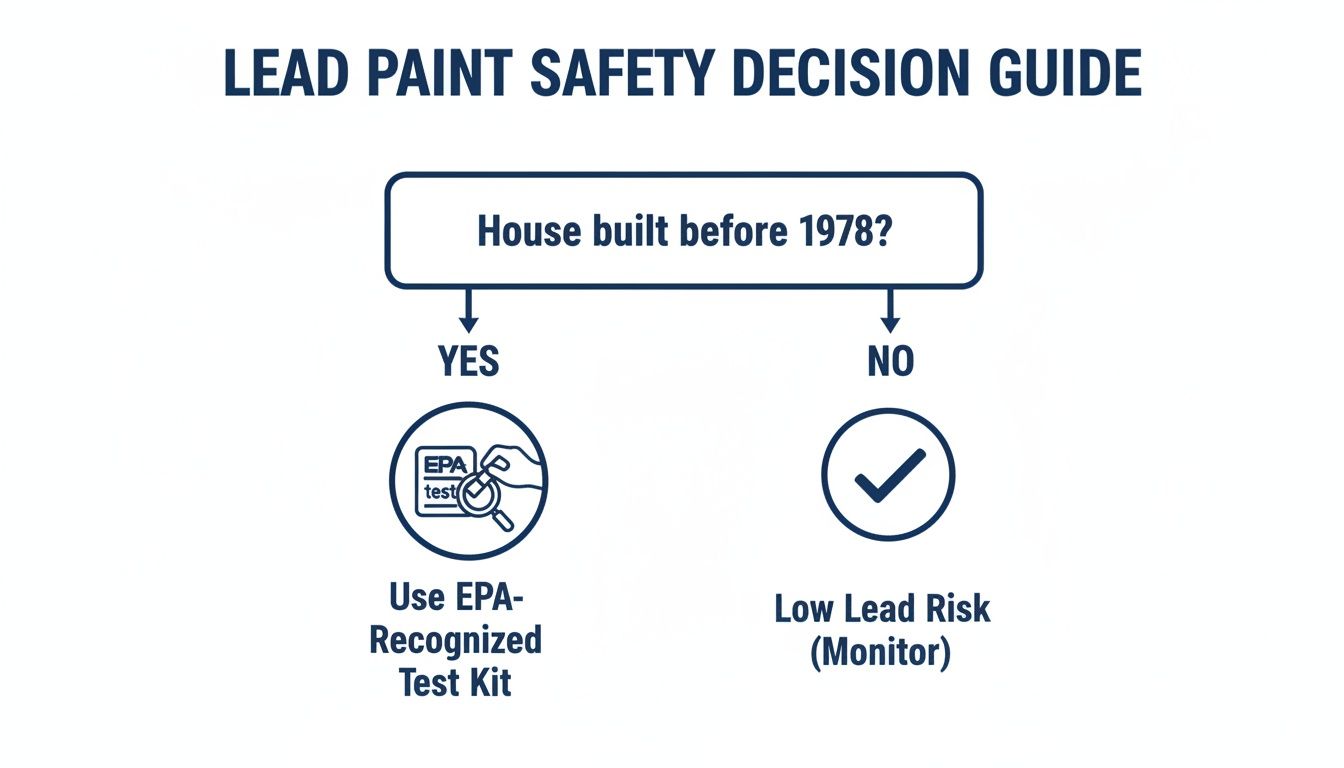
Use this guide as your starting point. The rule is simple: if the building was constructed before 1978, you must test for lead before you do anything else.
Manual Scraping and Sanding
This is the foundation of paint removal, relying on good old-fashioned elbow grease. It’s the natural starting point for nearly any project, especially where paint is already peeling, bubbling, or cracking.
You'll want to tackle any loose, flaky areas on wood, metal, or drywall with this method first. Even if you plan to use another technique later, you always start by scraping off the easy-to-remove sections.
Your go-to tools here will be a 5-in-1 painter's tool, a set of pull scrapers with various blade profiles, and a stiff wire brush. Once the loose paint is gone, you can move on to sanding—a power sander for large, flat areas and flexible sanding sponges for getting into detailed curves.
A pro tip: Don't force a flat scraper on a curved piece of trim. You’ll just end up gouging the wood. Match your scraper’s shape to the surface. It takes a little more time but ensures a clean removal and avoids a repair job.
Using a Heat Gun
When you're facing multiple, stubborn layers of paint, a heat gun can work wonders. By applying high heat (often 750 to 1,000°F), the paint softens and bubbles, letting you peel it away with a scraper.
Imagine stripping an old door with five coats of paint. Scraping it cold would be an exercise in frustration. With a heat gun, you can often lift those layers in long, satisfying sheets.
Be warned, though: heat guns pose a very real fire risk, especially on old, dry wood. More importantly, they can vaporize lead paint, creating toxic fumes you can easily inhale. This is why the EPA's RRP rule strictly limits their use on pre-1978 properties.
Never use a heat gun on:
- Drywall or plaster, as it can easily scorch the surface.
- Vinyl siding, which will melt almost instantly.
- Any surface near flammable materials like drapes or insulation.
Applying Chemical Strippers
For intricate surfaces—think detailed crown molding, antique furniture, or ornate metal railings—chemical strippers are often the best solution. They work by dissolving the paint’s bond, doing the hard work for you.
You'll generally find two types:
- Solvent-Based: These are the traditional, fast-acting strippers. They're incredibly effective but release potent fumes (volatile organic compounds or VOCs). If you use them, you need fantastic ventilation and a respirator rated for organic vapors.
- Caustic-Based: These are often sold as thick pastes. They work more slowly—you might apply the product, cover it, and let it sit for hours. They have lower VOCs but can be messy to clean up and may darken some woods.
If a business owner needs to restore an old, ornate metal gate at their property's entrance, a chemical stripper is the perfect choice. It gets into every detail without the abrasion of sanding, preserving the metalwork.
Media Blasting
When the job is huge, professionals turn to media blasting. This process uses a high-pressure airstream to shoot abrasive particles (the "media") at a surface, literally blasting the paint off.
This is absolutely not a DIY technique. It requires expensive, specialized equipment and a skilled operator to avoid destroying the underlying surface. For a facilities manager stripping a large concrete warehouse or a steel-framed industrial building, however, it’s the fastest and most efficient option.
Common media types include:
- Sand: The classic choice, but creates hazardous silica dust.
- Soda: Gentle and cleans the surface simultaneously.
- Walnut Shells: A biodegradable option that’s great for softer materials.
- Glass Beads: Used for creating a fine, polished finish on metal.
For massive commercial renovations or removing tough industrial coatings, nothing matches the power of media blasting. For most home projects, it’s overkill. When a project feels overwhelming, that's your cue to call in a professional. At Wheeler Painting, we have the experience to handle everything from residential home improvement services to those big "commercial construction near me" projects, ensuring the right method is used safely and effectively.
Mastering Surface-Specific Removal Techniques
Not every surface is created equal. Using the wrong paint removal technique can turn a simple project into a costly repair. A method that works beautifully on rugged wood siding might ruin delicate interior drywall. This is where experience pays off—knowing which tool and technique to use for the job at hand.
Whether you're a homeowner in the Puget Sound area or a facility manager overseeing a commercial renovation, let’s walk through the right way to tackle the most common surfaces. These are the field-tested strategies we use every day to get professional results.
Preserving Wood Siding and Trim
Wood is probably the most common material people need to strip, from exterior siding to historic interior trim. The goal is always to get the old paint off without gouging or splintering the wood.
For flat, exterior wood siding, a combination of scraping and sanding is often your best bet. Start with a sharp pull-scraper to lift away all loose, peeling paint. Once the bulk of it is gone, an orbital sander with medium-grit paper will smooth out the remaining paint edges.
The secret to handling curved or detailed trim is to ditch the flat scraper. You'll inevitably dig into the wood. Instead, invest in a scraper set with multiple blade profiles—concave, convex, and pointed. Matching the blade to the trim's contour makes all the difference.
If you’re facing thick layers of paint on old wood, a heat gun can be helpful, but you must be careful. It softens the paint for easy removal but is also a fire hazard, especially with the aged wood found in many historic Western Washington homes. Always keep a water spray bottle handy to mist the area.
Tackling Metal Railings and Fixtures
From wrought-iron fences to steel handrails in a commercial building, metal presents its own challenges. The main goal here is to strip the paint completely while prepping the surface to prevent rust—a constant battle in our damp climate.
For metal, especially ornate pieces, chemical strippers are often the most practical choice. A gel-based stripper clings to vertical surfaces like railings, dissolving multiple paint layers without the abrasive damage of sanding. Apply the stripper, let it work, and then use scrapers and wire brushes to clear away the softened paint. To learn what comes next, our guide on how to properly paint metal surfaces has you covered.
After stripping, it’s critical to clean the metal to remove all chemical residue. Any leftover stripper will ruin your new primer and paint. Wipe the surface down with mineral spirits or the recommended solvent, then apply a rust-inhibiting metal primer as soon as possible.
Stripping Porous Masonry Like Brick and Concrete
Brick and concrete are tough, but their porous nature means paint can seep deep into the surface, making it difficult to remove without scarring the material.
For light paint jobs, a pressure washer paired with a specialized masonry cleaner can sometimes work. But for a fully painted brick wall, you'll likely need a caustic-based chemical stripper. These thick pastes are applied to the surface and covered with paper or plastic, letting them sit for up to 24 hours. This poultice method actually draws the paint out from the brick's pores.
It's a messy, patient process, but it's the surest way to strip paint from brick without damaging it. For huge projects, like an entire commercial facade, media blasting with a gentle abrasive might be the answer, but that's a job strictly for professionals.
Handling Delicate Interior Surfaces
When you move indoors to surfaces like kitchen cabinets and drywall, you need a much lighter touch. Aggressive scraping, high heat, or harsh chemicals can easily ruin these materials.
Drywall: Never use a heat gun or caustic strippers on drywall. The heat can scorch the paper, and moisture from strippers will weaken the gypsum core. The right way is to carefully scrape any peeling paint, then use a sander to feather the edges. You may need to skim-coat the area with joint compound to get a perfectly smooth surface.
Kitchen Cabinets: If you're stripping paint from wood cabinets, a quality solvent-based stripper is a good choice. It works faster and is less likely to raise the wood grain than water-based options. Ensure you're in a well-ventilated space and wearing a respirator with organic vapor cartridges.
Windows and Glass: Getting old paint off glass panes without scratching them is a common headache. You can learn some great techniques on how to remove paint from window glass like a pro.
This demand for proper paint removal is huge. The global paint remover market hit $1.805 billion in 2023 and is on track to reach $3.179 billion by 2033, spurred by post-pandemic renovation booms. Here in Puget Sound, where regional data suggests 40% of commercial spaces need a refresh every 5-7 years, calling in a pro like Wheeler Painting helps you avoid the 25% failure rate from chemical burns or residue common in DIY jobs.
Prepping for a Flawless New Coat of Paint
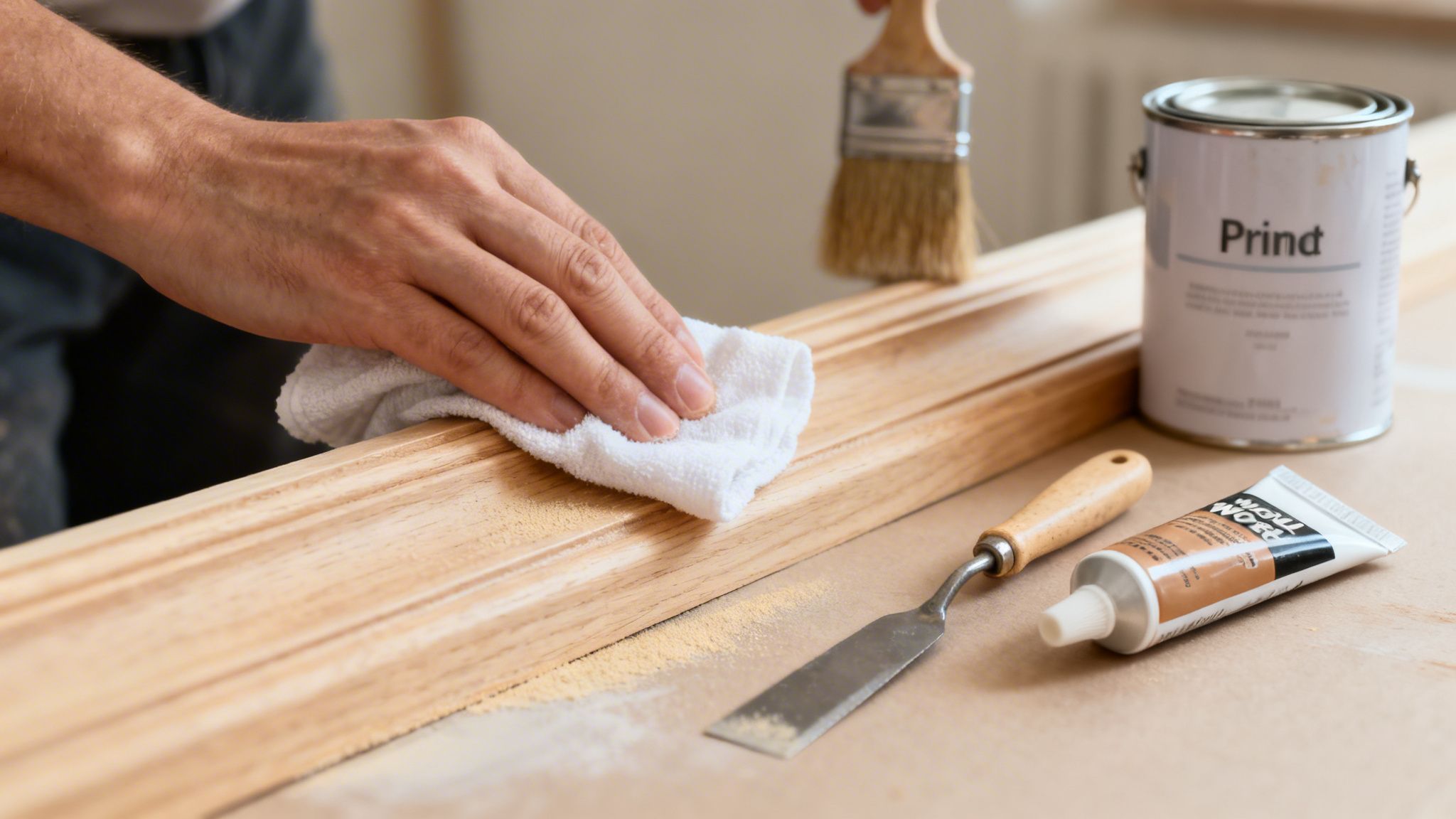
Getting all that old paint off feels like a huge win, but the job’s not over yet. What you do next is what separates a decent DIY paint job from a professional finish that lasts. This final prep work creates the perfect canvas for your new coat of paint.
We've seen it countless times—property owners get impatient here. Rushing this step is a surefire way to watch your new paint start failing in less than a year. A clean, smooth, and properly prepared surface is the foundation of a great paint job, whether you're updating a room or tackling a large commercial project.
Clean and Neutralize the Surface
After stripping, your surface is likely covered in dust, paint flakes, and possibly chemical residue. The first thing you need to do is get it completely clean. This is non-negotiable if you used a chemical stripper, as any leftover residue will ruin your primer.
A simple wipe-down with warm water and a powdered detergent usually does the trick, followed by a clean water rinse. For wood that's been chemically stripped, we often recommend a final rinse with a vinegar-and-water solution to neutralize any lingering chemicals.
This whole process of stripping old coatings is a massive business. The global paint remover market hit roughly $6.8 billion in 2023, driven by a boom in renovation projects. In North America alone, the market is worth about $2.0 billion, as property owners—especially in places with tough weather like the Puget Sound—look for better ways to refresh their buildings. You can see more on the trends shaping the paint remover market on datainsightsreports.com.
Make Those Necessary Repairs
Now that the surface is bare and clean, you can see every little flaw. This is your chance to fix them. It's tempting to paint over dings, gouges, and cracks, but they will show through the new paint.
- For Wood: Use a high-quality, sandable wood filler and a putty knife to fill any gouges, old nail holes, or cracks. Overfill the spot slightly to allow for shrinkage, then sand it perfectly flush.
- For Drywall: Use spackling or joint compound for small holes and cracks. For larger repairs, use drywall tape with your compound to prevent cracks from returning.
- For Masonry: On brickwork, repair any crumbling mortar joints. For concrete, fill cracks with a dedicated masonry patching compound. This is key to preventing water intrusion.
Taking the time to make these small repairs is what creates that flawless, uniform look. It’s the difference between a project that looks "finished" and one that looks professionally executed.
Sand Smooth and Prime for Success
Even after patching, your surface probably isn't perfectly smooth. A final sanding creates a uniform texture for the paint to grip. For most surfaces, a quick pass with fine-grit sandpaper (180-220 grit) is all you need. The goal isn't to remove more material, but to "scuff" the surface.
Wipe away all sanding dust with a tack cloth. Now, you're ready for the most important step before painting: primer. A good primer does three critical jobs:
- Seals the Surface: It prevents porous materials like bare wood or fresh drywall mud from soaking up your expensive topcoat.
- Improves Adhesion: It gives the new paint a solid surface to grab onto, which is your best defense against peeling.
- Blocks Stains: It prevents any stubborn stains or tannins from bleeding through and ruining your new paint color.
Choosing the right primer is key, especially after patching drywall. If you’re working with sheetrock, our guide can walk you through the specifics of whether you need to prime sheetrock before painting. Follow these prep steps, and you're guaranteeing a new paint job that won't just look incredible—it will last.
When to Call a Professional for Your Project
There's a real satisfaction in tackling a project yourself, but with paint stripping, it's crucial to know the difference between a manageable task and a job best left to the pros. Sometimes, the smartest move is knowing when to step back to protect your property, your schedule, and your health.
The biggest non-negotiable is the potential for lead-based paint. If your home or commercial property was built before 1978, you must assume lead is present until proven otherwise. Once lead is confirmed, the project becomes a hazardous material abatement. Federal and local laws have specific, strict rules for handling this to prevent toxic dust from contaminating your property and harming people.
For projects involving lead paint, hiring an EPA Lead-Safe Certified firm like Wheeler Painting & Restoration Services isn't just a good idea—it's essential for safety and compliance. We have the specialized training, containment systems, and disposal methods to manage the risk correctly.
Assessing Project Scale and Complexity
Beyond the critical issue of lead, the sheer size and complexity of the job can quickly overwhelm even the most ambitious person. Stripping a single piece of furniture is one thing; stripping the entire exterior of a multi-story building is another beast entirely. The time, labor, and specialized equipment required for large-scale work are often more than a property owner can manage.
Think about these real-world scenarios where calling a pro makes all the difference:
- Large Commercial Spaces: We often work on retail build-outs and office space renovations where thousands of square feet of surfaces need stripping on a tight deadline. Our crews use equipment like industrial media blasters to get the job done efficiently, minimizing downtime for the business.
- Multi-Story Exteriors: Working high up on ladders and scaffolding isn't just difficult, it's dangerous. Our teams are fully trained, licensed, and insured for working at height, which takes all that risk off your shoulders.
- Intricate Historic Details: Old homes are filled with beautiful, often irreplaceable, woodwork. Trying to strip a century-old mantle or detailed crown molding without the right touch can easily lead to permanent damage. This work demands a finesse that only comes from years of experience.
Hiring a professional team means you're not just paying for labor; you're paying for a guaranteed result. You get the benefit of our experience and avoid the common pitfalls that can ruin a surface. For these bigger jobs, knowing how to choose a general contractor is your first step toward a successful project.
The Value of Professional Efficiency
Finally, you have to ask yourself what your time is worth. A project that could consume all your weekends for a month is often something our crew can complete in just a few days. For business owners and facility managers in the Puget Sound, that speed is everything—it means less disruption and a faster return to business as usual.
When you bring in Wheeler Painting, you're investing in a smooth, streamlined process. We handle the assessment, the messy removal work, and the proper disposal of all waste. You're left with a clean, perfectly prepared surface, ready for its new finish. For any significant residential or commercial construction near me project, calling in the experts is the smartest and safest decision you can make.
Your Paint Removal Questions, Answered
Over the years, we've heard just about every question there is when it comes to stripping old paint here in the Puget Sound. It’s a job that seems straightforward but can quickly get complicated. Here are some of the most common things people ask us, with straightforward answers from our experience in the field.
Can I Just Paint Over Old Peeling Paint?
This is probably the number one question we get, and the answer is always a firm no. You should never paint over peeling, cracking, or bubbling paint.
Think of it this way: the new paint needs something solid to stick to. If the layer underneath is already failing, your fresh coat has a weak foundation and will start to peel right along with the old stuff, often in a matter of months. You'll just end up with a bigger, more expensive problem. Proper prep means removing all the unstable paint first.
How Do I Know if I Have Lead Paint?
This is a critical safety question. If your house or commercial building was built before 1978, you should assume it has lead-based paint until you prove otherwise.
The only way to be certain is to test for it. You can pick up an EPA-recognized lead test kit at most hardware stores for a quick check.
For a definitive answer, especially before a large project, hiring a certified professional to conduct an inspection is the safest route. This is particularly important for facilities managers or business owners responsible for employee and public safety.
What Is the Fastest Way to Remove Paint From a Large Area?
Everyone wants to find the quickest method, but the "fastest" way really depends on the job. For a DIYer tackling a large, flat surface like wood siding, the most efficient approach is often a combination of scraping the loosest flakes off, then using a power sander.
However, for large-scale commercial renovations or industrial jobs, media blasting is almost always the quickest and most thorough method. This isn't a DIY task—it requires specialized equipment and a skilled operator who knows how to strip the paint without damaging the substrate. It's our go-to for big concrete walls or structural steel.
Feeling overwhelmed by a paint removal project? Whether it’s a historic home restoration or a large-scale commercial space, Wheeler Painting & Restoration Services has the expertise to handle it safely and efficiently. Let our team deliver a perfectly prepped surface for a flawless finish. Contact us today for a professional consultation.

 “Like” us on Facebook!