
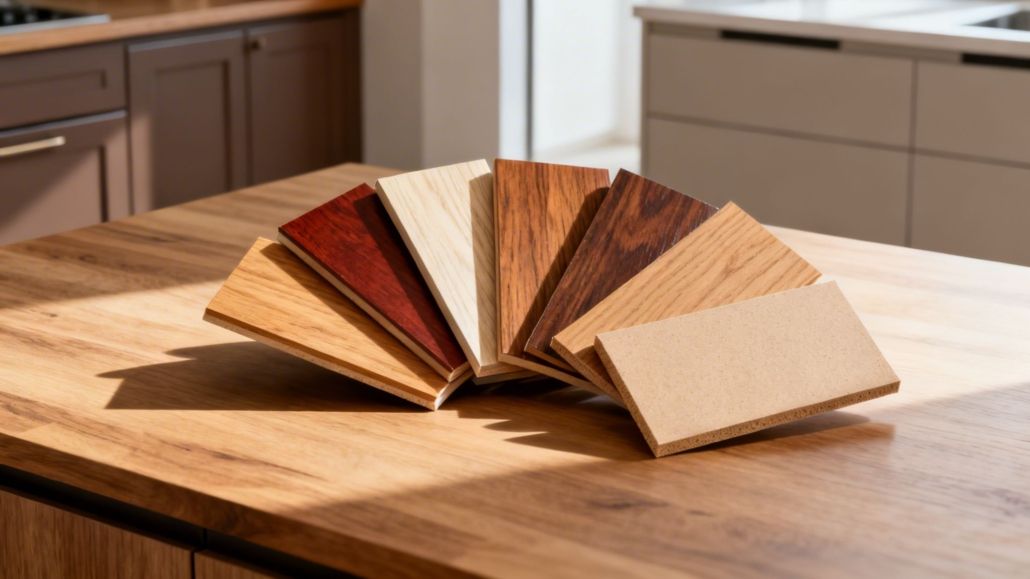
Top Types of Kitchen Cabinet Woods: A 2026 Guide
Your kitchen cabinets are more than just storage; they are a defining element of your room's character, durability, and overall value. For homeowners and business owners planning a remodel in areas from Kent to Seattle, selecting the right material is a critical first step. With the Pacific Northwest's unique climate, understanding the different types of kitchen cabinet woods and how they perform is essential for a long-lasting, beautiful result.
This guide breaks down the most popular and practical options, from timeless hardwoods like Oak and Maple to versatile engineered materials. We'll explore the specific characteristics of each, including hardness, grain patterns, and how well they accept stains and paint. Making an informed decision on your kitchen's foundation starts with understanding these materials. To dig deeper into the specifics, a great resource is Choosing the Right Hardwood for longevity and style.
Whether you're a homeowner in Tacoma embarking on a full residential remodeling project or a facility manager overseeing tenant improvements, knowing your wood options ensures your investment stands the test of time. As a trusted local contractor, Wheeler Painting provides the professional insights needed to navigate these choices, helping you start your project on a solid footing. We will cover the pros and cons of ten distinct materials, giving you the clarity needed to match the perfect wood to your design vision and functional requirements.
1. Oak (Red & White)
Oak stands as one of the most reliable and popular types of kitchen cabinet woods in North America, prized for its strength, availability, and classic appeal. It is a go-to hardwood for both large-scale manufacturers and custom cabinet makers throughout the Pacific Northwest. Oak is divided into two primary species, red and white, each offering unique characteristics for your kitchen remodel in the Seattle or Tacoma area. Red oak typically has a warmer, pinkish hue with a more pronounced, open grain, while white oak is lighter, often with golden or gray undertones, and features a tighter, more linear grain.
Characteristics and Suitability
Oak's strong grain pattern is its defining feature, making it an excellent choice for traditional and farmhouse kitchens, a style often seen in homes from Kent to Bellevue. Its Janka hardness rating is impressive, with red oak at approximately 1290 and white oak even higher at around 1360. This durability ensures it can withstand the daily wear and tear of a busy kitchen.
- Red Oak: Known for its dramatic, wavy grain. It readily absorbs stains, but its porous nature can sometimes lead to a blotchy finish without proper preparation.
- White Oak: Slightly harder and more water-resistant due to its closed-grain structure (tyloses). This makes it a superior option for kitchens with high humidity or frequent moisture exposure, a key consideration in the Puget Sound climate.
Finishing and Maintenance Tips
Proper finishing is crucial to bring out oak's natural beauty and protect it for years. To achieve an even finish, especially on porous red oak, applying a pre-stain wood conditioner is a critical first step. For homeowners looking to tackle this themselves, our guide on how to stain wood cabinets provides a detailed walkthrough. A water-based polyurethane topcoat offers excellent moisture resistance and durability without the yellowing that oil-based finishes can develop over time. Careful sanding between each coat of finish will create a smooth, professional-quality surface that is easy to clean and maintain.
2. Maple
Hard maple is a premium cabinet wood, prized for its fine, uniform grain and exceptional hardness. Native to North America, maple offers superior durability and stability, making it an excellent choice for high-use kitchen environments. Its light, creamy color provides a clean, bright canvas, making it a favorite for contemporary and transitional kitchen designs in high-end homes and commercial spaces from Seattle to Tacoma. This tight grain structure makes it suitable for both natural stains and flawless painted finishes, a quality valued by professional cabinet makers and painting contractors.
Characteristics and Suitability
Maple’s defining trait is its smooth, subtle grain pattern, which lends a refined and modern look to cabinetry. With a Janka hardness rating of around 1450, it is one of the more durable types of kitchen cabinet woods, easily resisting dents and scratches from daily activity. This resilience makes it a practical investment for busy family kitchens and high-traffic commercial settings. Its clean aesthetic is particularly well-suited for minimalist, contemporary, and transitional styles, offering a sleek alternative to more pronounced grains like oak.
- Grain & Color: Features a fine, consistent texture with colors ranging from creamy white to a light golden hue. The subtle grain avoids overpowering the kitchen's overall design.
- Stability: Maple is a very stable wood, less prone to shrinking and expanding with the temperature and humidity shifts common in the Puget Sound region. For optimal performance, it's still crucial to allow the wood to acclimate in the environment before installation.
Finishing and Maintenance Tips
Maple's non-porous surface creates a perfect base for paint, resulting in a smooth, even, and professional-grade finish without a heavy grain texture showing through. For those who prefer a natural look, a clear coat can protect the wood while highlighting its delicate beauty. However, natural maple can yellow over time when exposed to sunlight. To prevent this, it is essential to apply a high-quality, water-based polyurethane with UV protection. Partnering with an experienced residential contractor like Wheeler Painting ensures a durable and beautiful result, whether you choose a crisp white paint for a modern kitchen in Kent or a clear, natural finish for a transitional look in Tacoma.
3. Cherry
Cherry is an elegant hardwood highly valued for kitchen cabinets, known for its rich, warm reddish-brown color and fine, straight grain. It stands out among the various types of kitchen cabinet woods for its smooth texture and sophisticated appearance. Over time, cherry wood naturally darkens, developing a deeper, more lustrous patina when exposed to light, a prized characteristic that adds depth and character to upscale kitchens. This graceful aging process makes it a favorite for high-end residential renovations and luxury commercial build-outs from Tacoma to Seattle, where quality craftsmanship is paramount.
Characteristics and Suitability
Cherry’s defining trait is its beautiful color evolution and satiny finish, making it a perfect fit for traditional, transitional, and Arts and Crafts style homes. With a Janka hardness rating of around 950, it is softer than oak but still offers good durability for everyday kitchen use. Its workability allows for intricate details and clean lines, a feature often highlighted in custom cabinetry projects.
- Color & Grain: Starts as a light pinkish-brown and deepens to a rich reddish-brown. The grain is fine, simple, and straight, though it can occasionally feature distinctive pitch pockets or mineral streaks.
- Aging: The color change is a natural feature, not a flaw. Property owners in the Pacific Northwest should be aware that cabinets exposed to more sunlight will darken faster, so planning for this evolution is key to long-term satisfaction.
Finishing and Maintenance Tips
A proper finish on cherry wood both protects it and accentuates its natural warmth. While it takes stain well, many homeowners and designers in the Seattle area prefer a clear, natural finish to let the wood's inherent beauty shine and age gracefully. An oil-based finish can enrich the color, while a water-based polyurethane with UV inhibitors can help slow the darkening process if desired. To maintain a cohesive look, ensure all cabinet doors and fronts are from a similar batch to promote consistent color and grain patterns. Pairing these rich cabinets with warm metal hardware like bronze or copper creates a timeless and luxurious feel.
4. Hickory
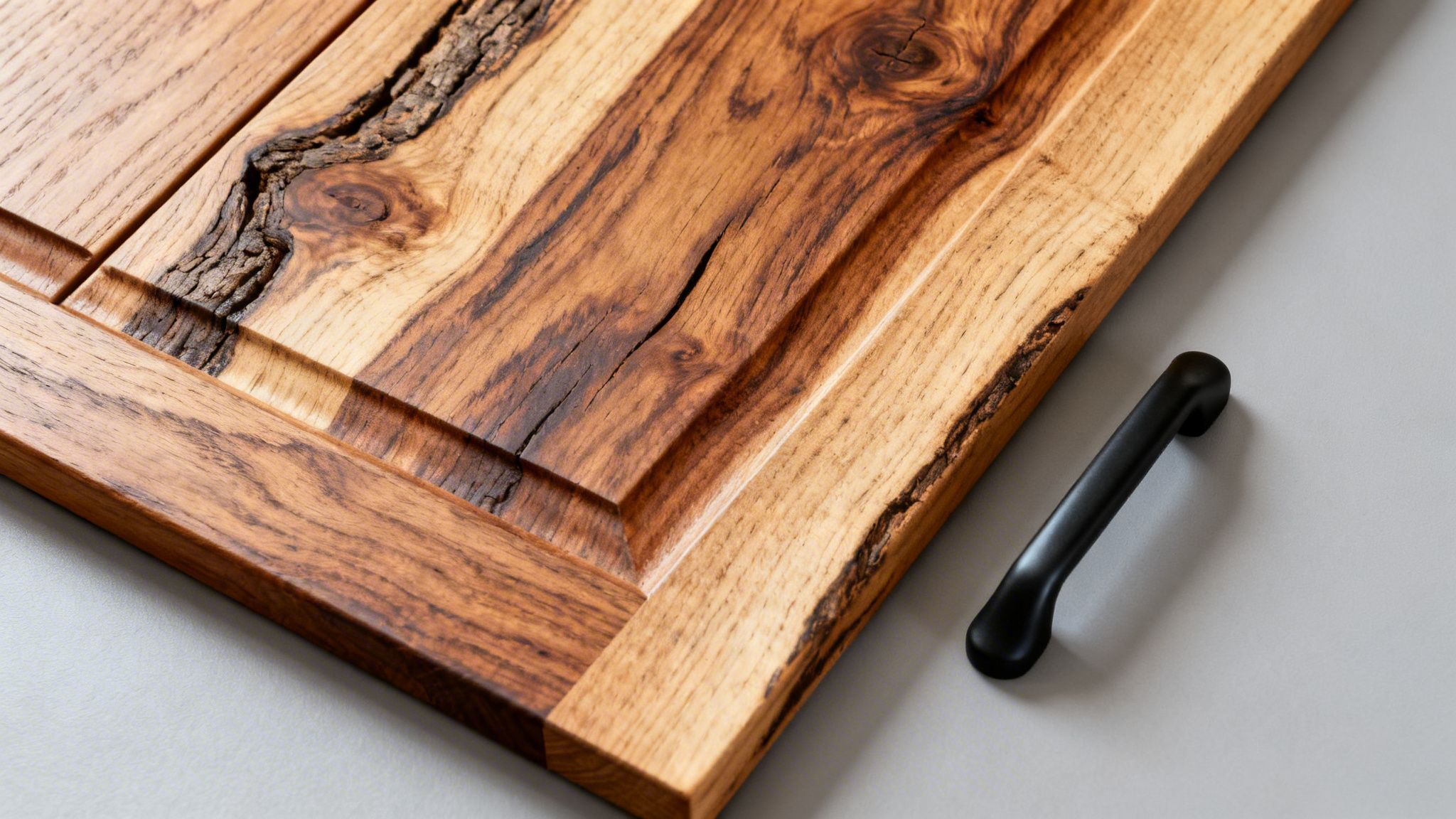
Hickory is a native North American hardwood renowned for its dramatic grain variation, exceptional strength, and distinctly rustic character. Among the various types of kitchen cabinet woods, hickory stands out for its visual drama. It often features a pronounced contrast between its creamy white sapwood and darker, reddish-brown heartwood, sometimes within the same plank. This striking appearance has made it a popular choice for rustic, farmhouse, and even transitional kitchen designs, especially in Western Washington homes from Tacoma to Kent, where its authentic American character is highly valued.
Characteristics and Suitability
Hickory's defining trait is its powerful, often unpredictable grain and color variation. With a Janka hardness rating of around 1820, it is one of the hardest and most durable domestic woods available, significantly surpassing oak and maple. This incredible toughness makes it a fantastic option for high-traffic kitchens and commercial spaces, ensuring it can resist dents, dings, and the general wear of a busy family or business.
- Grain and Color: The strong visual contrast is hickory's signature. This natural variation is not a defect but a feature that gives each kitchen a unique, one-of-a-kind look.
- Durability: Its exceptional hardness makes it a workhorse material, ideal for homeowners and facility managers who need cabinets that will stand the test of time and activity. It is well-suited for both traditional face-frame and modern frameless cabinet construction.
Finishing and Maintenance Tips
The key to a successful hickory kitchen is to embrace its natural character rather than try to hide it. Stains can sometimes appear blotchy due to density variations, so using a pre-stain wood conditioner is a good practice for a more uniform look. However, many property owners in the Seattle area prefer clear or light-toned finishes that celebrate the wood's inherent beauty. A matte or satin polyurethane topcoat protects the wood without creating a glossy sheen, preserving its rustic charm. For maintenance, a simple wipe-down with a soft, damp cloth is typically all that is needed to keep hickory cabinets looking their best.
5. Birch
Birch is a versatile, light-colored hardwood that offers exceptional value, making it a popular choice for kitchen cabinet woods. This fine-grained, sustainable domestic wood provides a clean, contemporary appearance that adapts well to various design aesthetics. Its smooth texture and uniform grain make it an outstanding candidate for both paint and stain, allowing for a high degree of customization. For budget-conscious residential or commercial renovations in the Pacific Northwest seeking quality without a premium price tag, birch presents an excellent mid-range solution.
Characteristics and Suitability
Birch has a Janka hardness rating of approximately 1260, placing it on par with red oak in terms of durability and resistance to dents and scratches. This makes it a dependable material for busy kitchens from Seattle to Kent. Its grain is typically straight or slightly wavy with a fine, even texture, which lends itself beautifully to modern, minimalist, and Scandinavian-inspired designs. Unlike the prominent grain of oak, birch's subtle pattern provides a smooth, uniform canvas.
- Paint-Grade Quality: Its smooth surface and low porosity make birch one of the best woods for a painted finish. It requires less prep work to achieve a flawless, even coat compared to open-grained woods, making it a favorite for interior painting professionals.
- Sapwood/Heartwood Variation: Birch lumber often includes both creamy white sapwood and reddish-brown heartwood. This combination can be used to create subtle visual interest in a natural finish or can be easily covered with paint or dark stain.
Finishing and Maintenance Tips
To achieve a professional-grade finish on birch, proper preparation is key. When staining, applying a pre-stain wood conditioner is essential to prevent a blotchy or uneven appearance, as birch can sometimes absorb stain inconsistently. It is an ideal wood for any painted cabinet project; its smooth surface creates a superior result. For homeowners and business owners in the moist Puget Sound climate, sealing birch cabinets with a high-quality polyurethane topcoat is critical to protect them from moisture, humidity, and staining. A well-sealed birch cabinet is easy to clean and will maintain its beauty for years, whether in a Tacoma residential home or a commercial office space renovation in Seattle.
6. Walnut
Walnut is a premium domestic hardwood celebrated for its rich, chocolate-brown color and sophisticated appearance. As one of the more luxurious types of kitchen cabinet woods, its use is often reserved for high-end, custom kitchen projects and upscale commercial interiors where its dramatic beauty justifies the investment. The fine, straight grain and natural luster make walnut a statement wood, ideal for luxury residential renovations and retail build-outs in areas like Seattle and Tacoma, where discerning clients seek exceptional quality and a standout design feature.
Characteristics and Suitability
Walnut's signature appeal lies in its deep color and smooth grain, which can range from straight to wavy and adds a layer of organic elegance to modern and contemporary designs. Its Janka hardness rating is around 1010, making it softer than oak but still durable enough for cabinet use with proper care. Its rich tones pair exceptionally well with light-colored countertops, such as marble or quartz, creating a striking contrast that is popular in designer kitchens and high-end office spaces.
- Color & Grain: Black walnut features a deep brown heartwood, sometimes with purplish undertones and lighter sapwood. Its grain is typically fine and straight, providing a sleek, uniform look.
- Best Use Cases: Perfect for creating a focal point, such as a statement kitchen island or a reception desk in a commercial space. It is also used in two-tone designs, paired with lighter woods or painted cabinets to balance its visual weight and cost.
Finishing and Maintenance Tips
The goal with walnut is to protect the wood without obscuring its stunning natural color. A minimal clear finish is often the best approach. A water-based polyurethane or a quality lacquer can provide excellent protection against moisture and wear while remaining crystal clear. To truly showcase its depth, consider installing under-cabinet lighting, which will highlight the grain and warm tones. Because of its premium nature and finishing requirements, working with a professional is highly recommended to ensure the final product is flawless. For a consultation on custom walnut cabinetry, our residential and commercial construction team can guide you through the process.
7. Alder
Alder, a hardwood native to the Pacific Northwest, has become a cherished material for kitchen cabinets, particularly for its warm, natural character and sustainable local sourcing. It presents a light tan to reddish-brown color with a straight, fine-grained texture that is subtle yet attractive. For property owners in the Puget Sound area looking to infuse their spaces with authentic regional charm, alder offers a beautiful and affordable solution. Its workability and consistent appearance make it a favorite for custom cabinet makers creating everything from rustic to transitional designs.
Characteristics and Suitability
Alder is one of the softer hardwoods, with a Janka hardness rating of around 590, making it susceptible to dents and scratches in a high-traffic kitchen. However, this softness also makes it easy to work with, allowing for intricate designs and detailing. Its fine grain provides a smooth surface that readily accepts stains and finishes, making it exceptionally versatile. For rustic or farmhouse styles, often seen in homes from Kent to Tacoma, "knotty" alder is a popular choice, where the natural knots are seen as character marks rather than defects.
- Grain & Color: Features a straight, uniform grain with a consistent color that ranges from light honey to a reddish-brown. It closely mimics cherry when stained, offering a premium look at a lower cost.
- Workability: Its softer nature makes it excellent for machining and sanding, resulting in a very smooth finish. This makes it a great candidate for both stained and painted cabinet projects.
Finishing and Maintenance Tips
To protect alder from the demands of a busy kitchen, a durable topcoat is essential. While it stains beautifully, applying a pre-stain wood conditioner will help prevent any potential for blotchiness and ensure a deep, even color. Medium to dark stains are particularly effective at adding richness and depth. For a long-lasting and protective finish, a high-quality polyurethane or conversion varnish is recommended. These finishes create a hard shell that resists moisture and daily wear, a crucial consideration for any residential remodeling or facility maintenance project in the Seattle or Tacoma area.
8. Ash
Ash is a light-colored hardwood that has become a favored option among the various types of kitchen cabinet woods, especially for property owners looking for an alternative to oak. Its attractive, open grain pattern creates significant visual interest but often presents a more refined and consistent appearance than oak's prominent grain. As a North American native hardwood, ash offers a great balance of durability, workability, and moderate cost, making it an excellent choice for custom and semi-custom cabinetry in homes and businesses from Seattle to Tacoma.
Characteristics and Suitability
The defining feature of ash is its straight, prominent grain and creamy light color, which lends itself beautifully to contemporary, modern farmhouse, and transitional designs. Its Janka hardness rating sits around 1320, placing it right between red and white oak in terms of durability, ensuring it can handle the demands of a busy kitchen. Its lighter tone can make a space feel larger and more open, a desirable quality in many Puget Sound homes and office spaces.
- Grain and Color: The consistent, straight grain is less wild than red oak's, offering a clean yet textured look. Its natural pale-yellow or light-brown hue is perfect for creating a bright, airy aesthetic.
- Workability: Ash is known for being strong yet flexible. It holds details well, accepts screws and nails without issue, and is a reliable material for residential contractors to work with, allowing for diverse door styles and designs.
Finishing and Maintenance Tips
To get the most out of ash, proper finishing is key, particularly because of its open-pored grain structure. Applying a pre-stain wood conditioner is a vital first step to ensure any stain is absorbed evenly and to prevent blotching. For a soft, contemporary look popular in modern farmhouse renovations, consider a whitewash or liming wax finish. This technique subtly highlights the grain while maintaining a light, neutral palette. To protect the surface and seal the open grain, multiple coats of a high-quality polyurethane are recommended, which also makes the cabinets easier to clean and more resistant to the moisture common in the Pacific Northwest climate.
9. Pine (Eastern & Knotty Pine)
Pine stands out as one of the most affordable types of kitchen cabinet woods, offering a distinct rustic charm. It's a softwood that appeals to those seeking an authentic, casual, or cottage-style kitchen. Pine is generally divided into clear-grained eastern pine and the more character-rich knotty pine. While knotty pine's swirling grain and prominent knots are its main appeal, these features require careful finishing to ensure longevity in a kitchen environment, a common need for budget-conscious updates in residential properties or smaller commercial spaces from Kent to Seattle.
Characteristics and Suitability
As a softwood, pine has a low Janka hardness rating, typically ranging from 380 to 420, making it susceptible to dents and scratches. This characteristic makes it better suited for upper wall cabinets rather than high-impact base cabinets. However, its prominent grain and knots are what define its appeal, creating an ideal canvas for farmhouse, cottage, and rustic designs that are popular in classic Pacific Northwest homes.
- Eastern Pine: Features a straighter, more subtle grain with fewer knots, offering a cleaner look while still providing warmth.
- Knotty Pine: Celebrated for its dramatic, rustic appearance. The knots can "bleed" resin, so sealing them with a shellac-based primer before painting or finishing is a critical step for any interior painting job.
Finishing and Maintenance Tips
Proper finishing is essential to protect pine from moisture and wear. Painting is often the best choice, as it provides a durable, easy-to-clean surface and can modernize the rustic look. If you prefer to showcase the wood's character, a heavy-duty polyurethane topcoat is mandatory to prevent damage. For a mixed-wood design, consider using a resilient hardwood for base cabinets and pine for an accent island or uppers. For those taking on a DIY project, learning about proper prep is key, and our guide on kitchen cabinet door painting offers valuable techniques. Due to its softness, regular maintenance involves gentle cleaning and prompt attention to any nicks or scratches.
10. Plywood & Engineered Woods (Veneer Panels)
While not a solid hardwood species, plywood faced with hardwood veneer is a foundational material in modern cabinet construction. Valued for its stability, resource efficiency, and cost-effectiveness, it has become a staple for residential and commercial projects alike. In addition to solid wood options, understanding what engineered wood is and its various forms, including veneer panels, is important for modern cabinet design. Engineered wood cores, like plywood or MDF, are constructed by layering or pressing wood fibers and adhesives, creating large, stable sheets that resist the warping and splitting common in solid wood, especially in the humid Puget Sound climate. These cores are then covered with a thin layer of real wood veneer, offering the exact appearance of solid wood at a much lower cost.
Characteristics and Suitability
The primary advantage of engineered wood is its dimensional stability. This quality makes it ideal for the large, seamless flat-panel doors and oversized island end-panels popular in contemporary and minimalist kitchens and office spaces from Seattle to Tacoma. Because the veneer can be any wood species, property owners can achieve the look of exotic or expensive woods like walnut or teak without the premium price tag.
- Plywood Core: Consists of thin layers of wood (plies) glued together with alternating grain directions. It is strong, holds screws well, and offers good moisture resistance, making it a durable choice for cabinet boxes in both residential and commercial applications.
- MDF/Particle Board Core: Medium-Density Fiberboard (MDF) provides an exceptionally smooth and uniform surface, perfect for painting. It is heavier and less moisture-resistant than plywood, often used in budget-friendly cabinet lines and tenant improvement projects.
Finishing and Maintenance Tips
The key to a long-lasting engineered wood cabinet is protecting it from moisture, particularly at the edges. Professional-grade edge banding is crucial to seal the core material and prevent swelling or delamination. The veneer surface can be stained and finished just like solid wood, allowing for a perfectly matched look throughout your space. A quality polyurethane topcoat will protect the veneer from scratches and daily wear. These materials pair well with a wide range of types of cabinet doors and styles, from sleek modern designs to more traditional looks, offering great design flexibility for any Kent home or Seattle office renovation.
Top 10 Kitchen Cabinet Woods Comparison
| Wood Type | Implementation Complexity | Resource Requirements | Expected Outcomes | Ideal Use Cases | Key Advantages |
|---|---|---|---|---|---|
| Oak (Red & White) | Moderate — easy to machine and finish | Widely available, affordable material | Durable cabinets with prominent grain; good for stained or painted finishes | Budget to mid-range traditional and transitional kitchens | Affordable, strong grain character, reliable supply |
| Maple | Higher — dense wood needs skilled machining and finishing | Premium cost, requires experienced craftsmen | Very durable, smooth uniform finish ideal for paint | High-use, contemporary or painted cabinet projects | Exceptional hardness, dimensional stability, excellent for paint |
| Cherry | Moderate — workable but needs UV-protective finishing | Premium pricing, limited availability | Warm, elegant cabinets that deepen in color over time | Upscale residential renovations and custom kitchens | Rich patina with age, sophisticated appearance |
| Hickory | Higher — very hard, requires careful machining and selection | Moderate to premium cost, selection for consistency needed | Dramatic rustic appearance with strong durability | Farmhouse, rustic, and transitional kitchens | Unique grain contrast, extremely durable |
| Birch | Moderate — good workability for paint and stain | Mid-range cost, sustainable domestic option | Clean, contemporary look; takes paint and stain evenly | Budget-conscious modern or Scandinavian-inspired kitchens | Affordable hardwood, excellent for painted finishes |
| Walnut | Moderate — requires expert finishing to showcase grain | High cost, specialty sourcing | Luxury, deep-colored cabinets that make visual statements | High-end custom projects, statement islands, office renovations | Rich natural color and luster, upscale aesthetic |
| Alder | Low–Moderate — easy to machine but softer wood needs protection | Affordable, locally sourced in Pacific Northwest | Warm, regional character; softer and more dent-prone | Casual, rustic, transitional kitchens with local appeal | Budget-friendly, easy to finish, sustainable local option |
| Ash | Moderate — open grain needs additional sealing/finish coats | Moderate cost, less common than oak/maple | Refined open-grain look with good durability | Contemporary, modern farmhouse, transitional designs | Oak-like grain with more refinement, versatile finishes |
| Pine (Eastern & Knotty) | Low — very easy to machine, requires heavy-duty finish | Lowest cost, widely available | Rustic, cottage appearance; lower durability under heavy use | Budget renovations, cottage/farmhouse styles, facility maintenance | Most affordable, strong rustic character, easy to customize |
| Plywood & Engineered Woods (Veneer Panels) | Low–Moderate — requires edge banding and moisture sealing | Cost-effective, stable panels; veneer allows species appearance | Stable, consistent large panels that mimic solid wood | Modern flat-panel kitchens, tenant improvements, budget-conscious projects | Superior dimensional stability, sustainable, consistent appearance |
Bringing Your Vision to Life with an Expert Partner
Choosing the right material for your cabinets is a foundational step in any kitchen remodel, but it represents just one piece of a much larger puzzle. As we've explored the distinct characteristics of various types of kitchen cabinet woods, from the enduring strength of Oak and Hickory to the refined elegance of Cherry and Walnut, a clear theme emerges. The ultimate success of your project depends not just on the wood you select, but on the quality of craftsmanship that brings it to life. The journey from a raw slab of Alder or a sheet of engineered plywood to a beautifully finished and perfectly installed cabinet is complex, requiring a deep understanding of material behavior, finishing techniques, and structural integrity.
This is especially true in the unique climate of the Puget Sound region. Homeowners and property managers from Seattle to Tacoma must consider how seasonal humidity shifts can affect different woods. A material that performs well in a dry climate might warp or swell in our damp environment without proper sealing and finishing. This is where the value of professional guidance becomes undeniable. An experienced residential and commercial contractor can help you navigate these decisions, ensuring the wood you love is also a practical, long-lasting choice for your specific home or commercial space.
From Material Selection to Flawless Execution
The difference between a good project and a great one often lies in the details of execution. The most beautiful slab of maple can be undermined by poor construction, and a budget-friendly choice like birch can look exceptional with a professional-grade paint finish. The process involves much more than just picking a wood species.
Key considerations that a professional partner like Wheeler Painting manages include:
- Proper Acclimation: Before installation, wood must be acclimated to your property's specific environment to prevent future shrinking or expanding. This is a critical step often overlooked in DIY projects, especially for properties in Kent and the surrounding moisture-rich areas.
- Precision Finishing: Achieving a durable, even finish is an art form. It requires a controlled environment, professional-grade sprayers, and knowledge of how different stains and paints interact with various wood grains and pore structures.
- Expert Installation: Ensuring cabinets are level, plumb, and securely fastened is essential for both function and longevity. A professional ensures that doors hang correctly, drawers glide smoothly, and the entire system can withstand daily use for years.
For business owners planning a tenant improvement or a retail build-out, these details are even more critical. The durability and appearance of your cabinetry directly impact your brand's image and operational efficiency. A professional contractor like Wheeler Painting provides the necessary project management to ensure your commercial renovation is completed on time, within budget, and to the highest standard, minimizing disruption to your business. We specialize in the smaller to mid-size facility maintenance and improvement projects that many larger firms overlook.
Why Expert Partnership Matters for Your Puget Sound Project
Ultimately, selecting from the many types of kitchen cabinet woods is about defining the aesthetic and functional heart of your space. Whether you're a homeowner dreaming of a modern kitchen remodel or a facility manager overseeing a multi-unit renovation, the goal is the same: a beautiful, durable result that adds value to your property.
Making that vision a reality requires a partner who can bridge the gap between design and construction. It requires a team that understands the local environment, specializes in both residential and commercial projects, and prioritizes clear communication. By working with a seasoned professional, you are not just buying custom cabinets; you are investing in a seamless process and a guarantee of quality craftsmanship that will stand the test of time. This frees you to focus on the exciting parts of your renovation, confident that the technical complexities are in expert hands.
Ready to transform your kitchen or commercial space with stunning, expertly crafted cabinets? The team at Wheeler Painting offers comprehensive residential remodeling and commercial construction solutions, from material selection and custom cabinets to professional finishing and installation. Contact us to discuss how we can bring your project in Seattle, Tacoma, or Kent to life with unmatched local expertise and build a lasting relationship for all your facility maintenance needs.






 “Like” us on Facebook!