
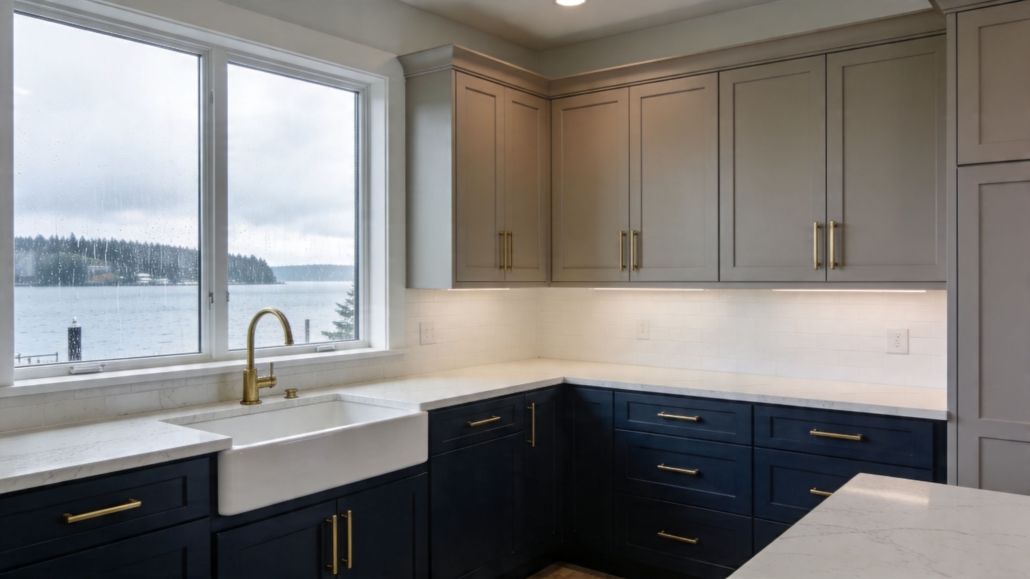
Sherwin Williams Kitchen Cabinet Colors: A Puget Sound Guide
A lot of homeowners in Seattle, Kent, and Tacoma stand in their kitchen and have the same reaction. The layout still works. The cabinets are solid. But the room feels tired, darker than it should, and harder to update than expected.
A full remodel isn’t always necessary to change that feeling. Cabinet painting can shift the whole room, especially when the color is chosen for Pacific Northwest light instead of copied from a bright, sun-heavy kitchen in another part of the country. In this region, overcast skies, common wood tones, and moisture from daily cooking all affect how cabinet paint looks and how long it lasts.
That’s why sherwin williams kitchen cabinet colors deserve more thought than a quick trip to the paint store. The right white can soften a dim kitchen and make it feel larger. The wrong greige can go flat. A dramatic navy or black can look polished in one home and heavy in another.
Your Guide to a Kitchen Transformation
A dated kitchen usually doesn’t fail all at once. It happens in layers. Yellowed cabinet finishes, busy wood grain, older hardware, and a color that absorbs more light than you realized. Before long, the whole room feels older than the rest of the house.
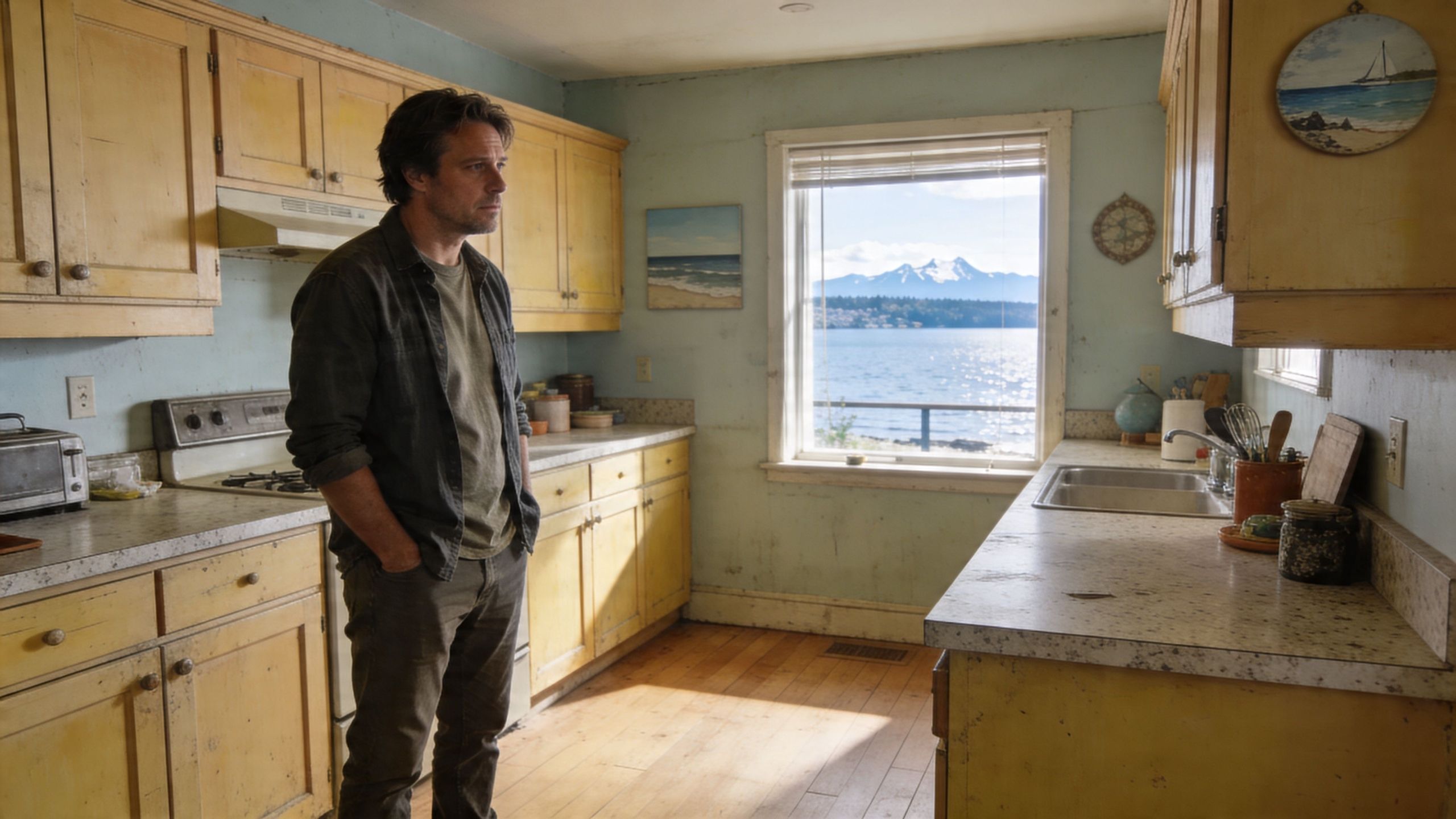
Cabinet painting is often the point where a kitchen starts feeling manageable again. You keep the footprint, avoid the disruption of a full tear-out, and put your budget where it changes the room most. For many properties between Seattle and Tacoma, that’s the practical middle ground between living with a dated kitchen and committing to a full renovation.
The part that overwhelms people isn’t usually the painting itself. It’s the color decision. White sounds simple until you see ten whites. Beige sounds safe until it turns pink or muddy. Black looks sharp online, then feels too heavy in a kitchen that doesn’t get much daylight.
A cabinet color never lives by itself. It always shows up next to countertops, flooring, backsplash tile, lighting, and the weather outside your window.
A smart starting point is to separate the visual change from the storage problem. If your kitchen also feels cluttered, this guide on how to organize kitchen cabinets helps homeowners think through function before they repaint around a layout that still isn’t working.
The payoff is real when the color is chosen well. Cabinets become the clean backdrop the room was missing, and the kitchen starts to feel brighter, calmer, and easier to maintain day to day.
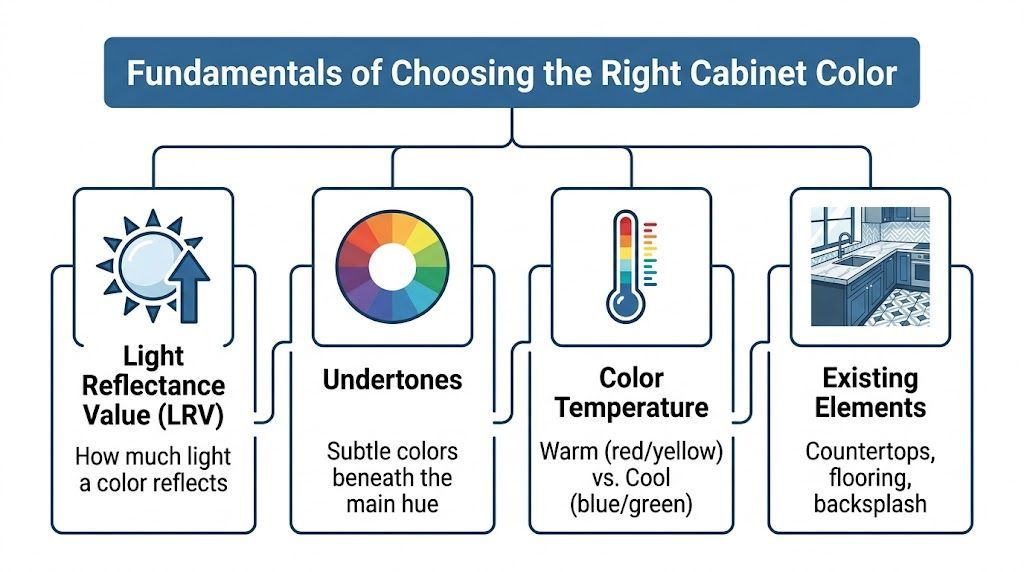
Fundamentals of Choosing the Right Cabinet Color
Most cabinet color mistakes come from choosing by name instead of performance. "White," "greige," and "navy" don’t tell you enough. The better approach is to judge each color by how it handles light, what undertone sits under it, and what sheen will look right after real daily use.
Light reflectance matters more than most people think
LRV, or Light Reflectance Value, tells you how much light a paint color reflects. Visualize the difference between wearing a black jacket and a white shirt on a cloudy day. One holds onto light. The other throws it back into the room.
In Puget Sound kitchens, that matters. A higher-LRV cabinet color can help a room feel more open and less compressed during darker parts of the year. A lower-LRV color can look rich and grounded, but it needs the right setting.
Sherwin-Williams trends have also shifted away from cool grays toward warmer greige neutrals, bleached blondes, and bold matte navies, according to Sherwin-Williams Industrial Wood’s look at kitchen cabinetry trends. That move makes sense locally because warmer cabinet colors usually read more comfortably under overcast skies than sharp, icy grays.
Undertones decide whether a color works or fights the room
A cabinet color can look white at the store and still lean yellow, gray, green, or beige once it’s installed. That hidden bias is the undertone, and it’s often what creates the "something feels off" reaction.
Here’s what to check before committing:
- Countertops first: If the counters have warm veining or creamy tones, a stark cool cabinet color can feel disconnected.
- Flooring second: Orange-toned wood floors and some older fir trim can make cool cabinet colors look harsher.
- Backsplash and wall color last: These can support the cabinet color, but they rarely fix a mismatch created by the larger fixed finishes.
For a broader comparison of common cabinet tones, this article on good colors for kitchen cabinets is useful as a secondary reference point when clients are trying to narrow down style direction before sampling.
If your existing cabinets are wood and you're trying to predict how paint and undertones will behave over the substrate, it also helps to understand the species you're working with. Wheeler has a practical overview of types of kitchen cabinet woods that can help you identify what’s already in the room.
Practical rule: Never judge a cabinet color from a tiny chip alone. Sample it beside the countertop, floor, and backsplash in both morning and evening light.
Sheen changes both the look and the maintenance
Color gets most of the attention, but sheen changes how cabinets wear. For most kitchens, satin and semi-gloss are the finishes worth considering.
Semi-gloss is easier to wipe down and usually gives you a crisper, more reflective look. Satin is slightly softer and can be more forgiving on older cabinet doors that have minor texture, grain telegraphing, or repair marks.
There’s also a trade-off with darker colors. Sherwin-Williams notes that matte and low-sheen finishes on darker cabinet colors can hide fingerprints up to 40% better than gloss finishes in high-traffic kitchens, based on its industrial cabinetry trend guidance linked above. That can be helpful on islands or lower cabinets where hands constantly hit the surface.
What usually works and what usually doesn’t
A few patterns show up again and again in the field:
- What works: Warm whites in dim kitchens, balanced greiges with mixed metal finishes, and darker accent colors used with restraint.
- What struggles: Cool gray cabinets in already gray rooms, very glossy dark finishes on busy family kitchens, and trendy colors chosen without testing them in local light.
- What deserves patience: Two-tone kitchens. They can look excellent, but they need stronger coordination between counters, wall color, and hardware.
People don’t need hundreds of paint names. They need a filter for making fewer, better choices.
Top Sherwin-Williams Cabinet Color Palettes
Not every kitchen needs the same answer. Some need light. Some need warmth. Some need contrast so the room stops looking flat. The strongest sherwin williams kitchen cabinet colors usually fall into three practical groups: bright whites, softer neutrals, and bold statement colors.
A useful gallery of ideas for side-by-side comparison is Wheeler’s collection of kitchen cabinets paint color ideas. It helps clients narrow the conversation before moving into physical samples.
Timeless and airy whites
Pure White (SW 7005) is one of the safest recommendations for cabinet painting when the goal is to brighten the room without making it feel sterile. It has an LRV of 84 and reflects substantial light, which is part of why it remains a top cabinet choice in design roundups focused on Sherwin-Williams whites, as noted by Designing Vibes. It also sits warmer than many people expect, which helps it avoid that hard, clinical look.
Alabaster (SW 7008) is another strong option when a kitchen needs softness. Verified trend guidance for Sherwin-Williams cabinetry notes Alabaster (LRV 82) as a brightening choice that reflects 80%+ light and works well in smaller kitchens where space feels compressed. It tends to be easier with warmer counters and wood floors than a cooler white would be.
These whites work well with:
- Quartz with soft veining
- Subway tile or handmade-look backsplash
- Brushed nickel, polished nickel, or unlacquered brass
- Natural wood accents on shelves, stools, or flooring
Sophisticated neutrals and greiges
Not every kitchen wants white cabinets. In many Seattle-area homes, a white cabinet can feel too sharp against warmer flooring, natural wood trim, or existing stone surfaces.
Accessible Beige (SW 7036) is a dependable direction when the room needs warmth more than brightness. It sits in that neutral zone where it can work with both black and brass hardware and usually feels more grounded than off-white. In homes with alder or fir tones, that warmth often reads more intentional than a cool gray.
Evergreen Fog (SW 9130) fits homeowners who want a color but don’t want the kitchen to feel loud. Sherwin-Williams trend guidance places it in the warmer cabinet movement and describes it in the LRV 30-40 range, which gives it enough body to read as a muted statement without going dark. It can work nicely on islands or full cabinetry when the kitchen has decent natural light and simple counters.
Neutrals and greiges pair best with:
| Cabinet direction | Best supporting finishes |
|---|---|
| Warm greige | Creamy quartz, stone-look backsplash, aged brass |
| Beige-neutral | White counters, warm wood flooring, matte black hardware |
| Muted green-greige | White oak accents, simple tile, mixed metals |
If a kitchen has a lot of fixed warm material already, a slightly warmer cabinet color usually looks more expensive than forcing in a cooler trend color.
Bold and dramatic statements
Dark cabinets can look outstanding, but they’re less forgiving. They need enough light, enough contrast, and enough restraint.
Tricorn Black (SW 6258) is the cleanest black in this group. It was featured in Sherwin-Williams’ 2021 Colormix® Tapestry palette and has grown into a major statement option. Verified data notes that it now makes up 25% of top designer picks in inspiration galleries after that palette feature, making it one of the better-established dark cabinet choices rather than a short-lived novelty. Its strength is that it reads as a true black without obvious brown or gray drag.
Dark cabinet colors often work best in one of these layouts:
- Island only: Strong contrast without taking over the room
- Lower cabinets only: Keeps weight low and preserves brightness above
- Full set in larger kitchens: Works when the space has strong lighting, lighter counters, and enough visual breathing room
For navy-leaning kitchens, Sherwin-Williams industrial trend guidance also points to colors such as In the Navy SW 9178 and Needlepoint Navy SW 0032 in the broader move toward bold matte navies. These are good candidates for people who want depth without going all the way to black.
Sherwin-Williams recommended cabinet colors
| Color Name (SW #) | LRV | Undertone/Family | Pairs Well With |
|---|---|---|---|
| Pure White (SW 7005) | 84 | Warm white | Quartz counters, brass, nickel, light backsplash |
| Alabaster (SW 7008) | 82 | Soft warm white | Warm woods, creamy counters, classic tile |
| Shoji White (SW 7042) | 74 | Off-white, warmer neutral | Stone counters, softer backsplashes, warmer flooring |
| Accessible Beige (SW 7036) | Qualitatively warm neutral | Beige-greige | Alder tones, black hardware, mixed metals |
| Evergreen Fog (SW 9130) | 30-40 | Warm green-greige | White oak, simple tile, understated stone |
| Tricorn Black (SW 6258) | Qualitatively very dark | True black | White counters, brass, concrete, wood accents |
One note on color codes: Sherwin-Williams identifies cabinet colors by SW numbers, and that’s the most reliable way to specify them on a project. Because no verified HEX or RGB values were provided in the approved source material, it’s better not to rely on unofficial digital color conversions when making a final paint decision.
Color Strategies for Pacific Northwest Homes
National cabinet advice often misses what happens in a Seattle or Tacoma kitchen in February. Light is flatter. Shadows stay longer. Colors that looked balanced online can feel cooler, heavier, or duller once they’re installed in a real Puget Sound home.
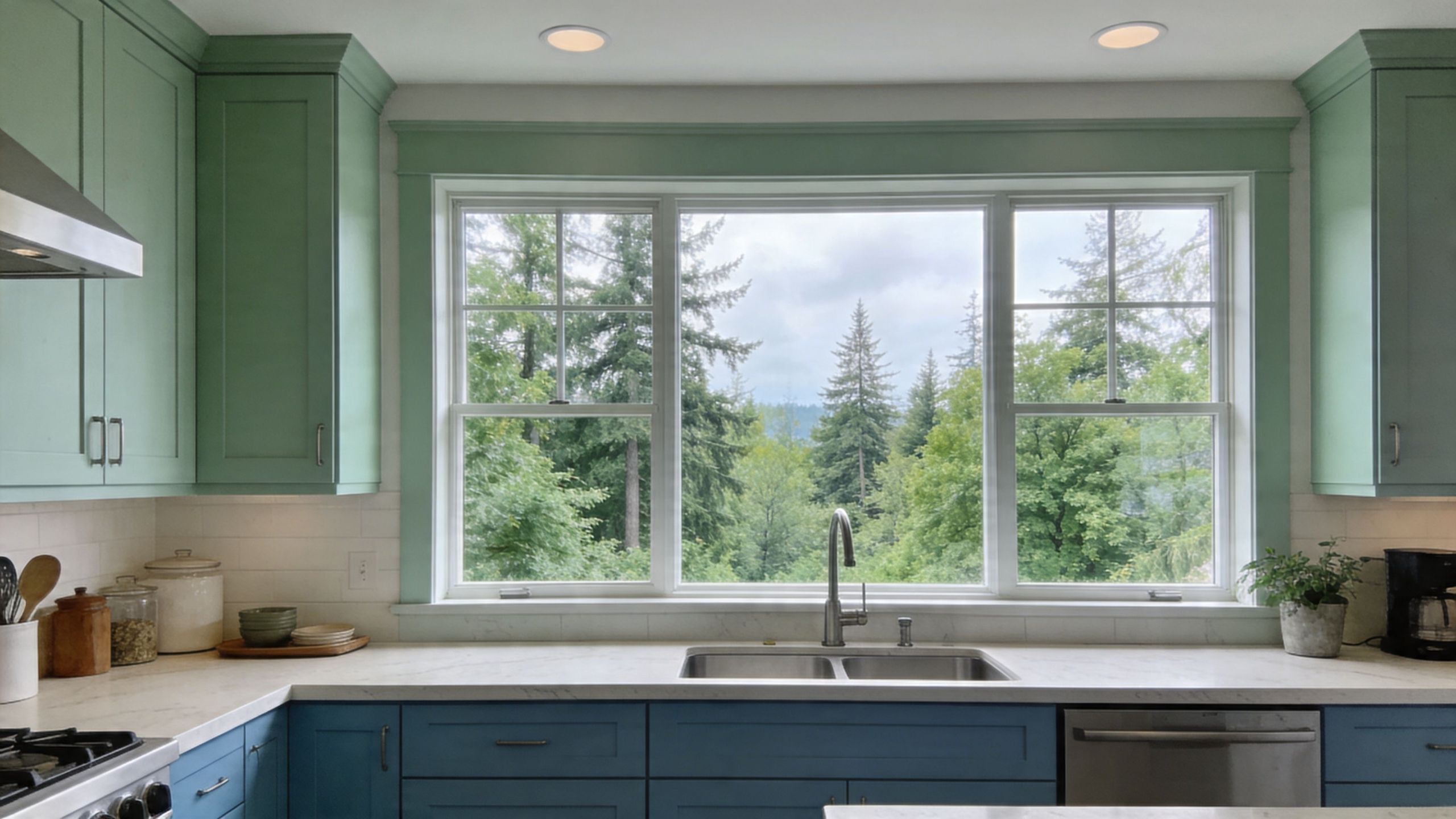
The region averages 40% less sunlight than national norms, and one survey cited a 62% regret rate for non-neutral cabinets in dim climates, which is why warmer beiges and higher-LRV whites are often the safer long-term choice in local homes, according to this Studio McGee discussion of neutral kitchen cabinet color. That doesn’t mean bold colors are a mistake. It means they need better planning here than they might in a brighter market.
Use brightness deliberately, not automatically
A brighter cabinet color can help in kitchens with limited daylight, but brightness alone isn’t the goal. The goal is balance.
In north-facing kitchens or rooms blocked by neighboring homes, warm whites and soft neutrals usually hold up better than sharp cool whites. They bounce light without making the room feel washed out. In open-concept homes, they also tend to transition more naturally into adjacent living spaces.
Work with local wood tones instead of fighting them
A lot of homes between Kent and Tacoma still have natural wood floors, fir trim, alder cabinetry in nearby rooms, or wood accents that aren’t changing with the kitchen project. That matters.
Cabinet paint should support those materials, not argue with them. In practice, that usually means:
- Warm whites for homes with honey or amber wood notes
- Greige or beige-leaning neutrals when flooring has visible warmth
- Muted greens or navies only when there’s enough contrast from counters and wall color
If the kitchen includes prominent wood elements, bring those samples into the color decision early. A paint color that looks calm on a sample board can go muddy next to warm fir or turn colder than expected against stone with gray veining.
Most PNW kitchens look better when the cabinet color relates to the wood tone somewhere in the house, even if it doesn't match it exactly.
Moisture changes the paint conversation
Puget Sound kitchens also deal with moisture differently. Daily cooking, cooler outdoor weather, and seasonal dampness create conditions where lower-quality products show their weaknesses faster.
That affects both color and finish. Dark colors can reveal failure sooner if the coating wasn’t built correctly. Lighter colors can yellow or get blotchy if the wrong product was used. A proper cabinet system matters more here because the environment is less forgiving.
For homeowners and facility managers, that means thinking beyond the paint chip. The right sherwin williams kitchen cabinet colors still need the right prep, primer, and topcoat system to stay attractive in a kitchen that sees steady use.
The Professional Process for a Flawless Finish
A cabinet finish earns its keep after the kitchen goes back to normal. Doors open and close hundreds of times. Pulls get grabbed with wet hands. Steam hangs in the room on dark winter mornings. In Seattle, Tacoma, and Kent, that daily moisture exposure is part of the job, so the process has to be built for wear from the start.
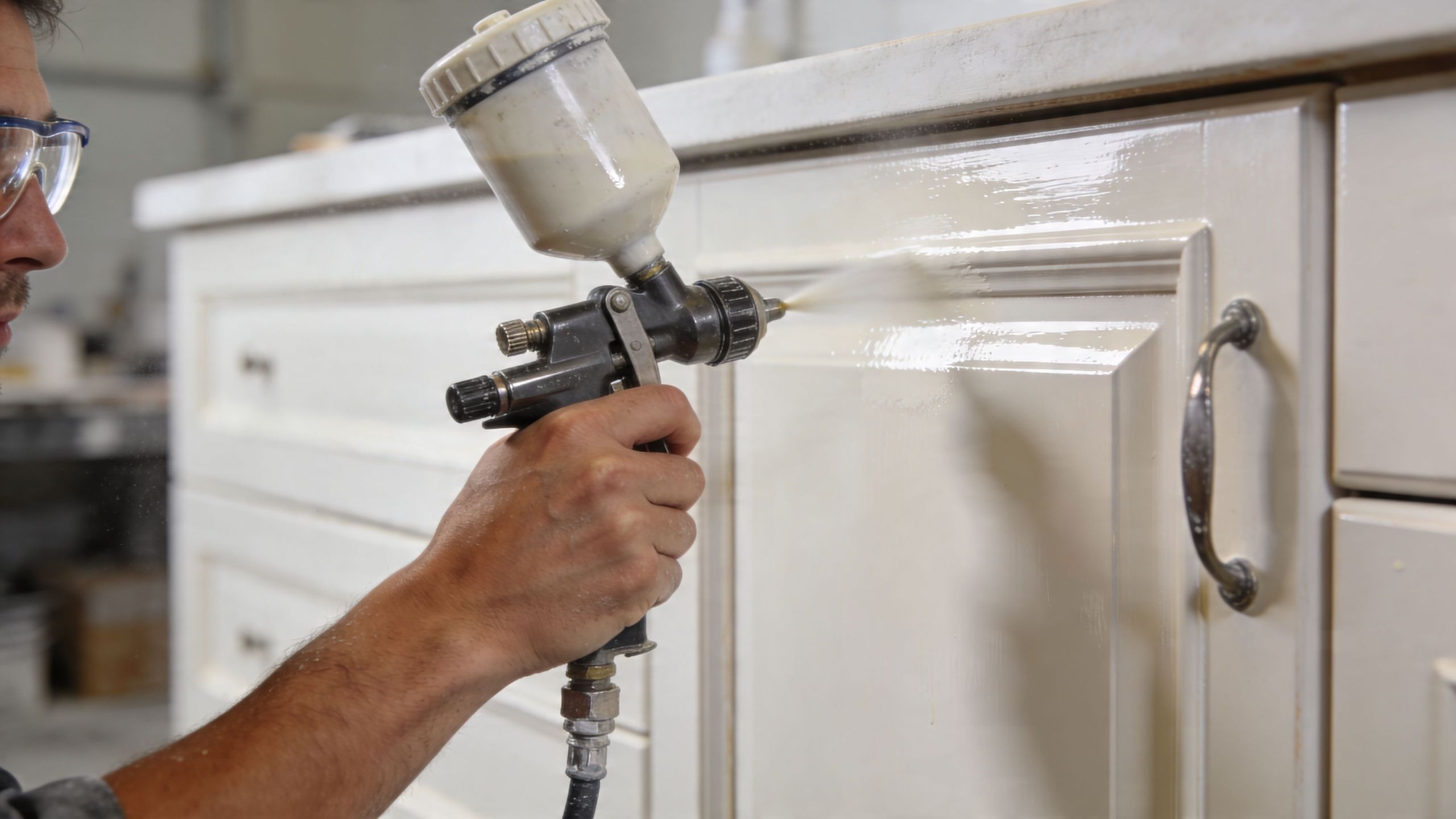
Prep does most of the hard work
Cabinets carry layers of contamination that homeowners rarely see. Grease near the range, polish residue on rail profiles, hand oils around pulls, and old cleaners all interfere with adhesion. If those contaminants stay in place, the new finish is more likely to chip at corners, fisheye during application, or wear prematurely around high-touch areas.
A proper prep sequence usually includes:
- Removing doors, drawers, and hardware so each piece can be coated cleanly.
- Labeling every part to keep reinstallation accurate.
- Cleaning and degreasing with extra attention near cooking zones and handles.
- Sanding or scuffing to create mechanical adhesion.
- Priming repaired areas and slick surfaces so the topcoat bonds evenly.
This is also the stage where old cabinet problems show up. Swollen MDF edges, failed caulk lines, hinge wear, and grain that needs filling are easier to correct before finish coats go on than after the color is applied.
Product choice matters more on cabinets than on walls
Cabinets need an enamel made for repeated contact and routine cleaning. Standard wall paint can look acceptable for a short time, but it usually does not hold up well on doors, drawer fronts, and face frames that get touched all day.
Sherwin-Williams Emerald Urethane Trim Enamel is a common choice for cabinet work because it levels well and cures to a harder finish than typical wall coatings. That matters in PNW kitchens, where moisture, cooking residue, and cooler indoor conditions can expose weak coating systems faster.
For homeowners weighing a full repaint against a more limited scope, Wheeler has a useful page on painting kitchen cabinet doors and drawer fronts. That decision affects labor, downtime, and how uniform the final result looks across the whole kitchen.
Field note: If a painter treats cabinet work like wall work, expect callbacks.
Application quality decides whether the finish looks factory-made or obviously repainted
Good spraying is only part of the job. Film thickness has to stay consistent. Dust has to be controlled. Recoat timing matters. So does temperature and humidity, especially during damp stretches common around Puget Sound. If the schedule gets rushed, the finish may dry unevenly, block when doors close, or show texture differences between frames and doors.
Cure time is where patience pays off. Cabinets can feel dry well before they are ready for full service, and that gap matters. I tell clients the same thing on nearly every project. A coating that gets handled too hard in the first few days can dent, print, or lose sheen before it fully hardens.
A general contractor with cabinet painting capability, such as Wheeler Painting & Restoration Services, can also be useful on broader kitchen projects because cabinet work often overlaps with drywall repair, trim updates, flooring protection, and schedule coordination with other trades.
Why Hire a Local Pro for Your Cabinet Project
Cabinet painting looks simple from a distance. Once the doors come off, the project becomes a finish-control job. Color selection, prep, dust management, dry time, hardware reinstallation, and protection of the rest of the home all have to line up.
That’s where DIY projects usually get expensive. The paint itself isn’t the only risk. The bigger risk is choosing a color that doesn’t work in local light, then applying it over a surface that wasn’t properly cleaned or primed. By the time those mistakes show up, the kitchen is already disrupted and the fix is rarely quick.
Local experience changes the recommendation
A contractor who works regularly in Seattle, Kent, Tacoma, and the communities in between sees the same recurring conditions:
- Overcast light that cools colors down
- Warm existing wood tones that affect undertones
- Daily moisture and cooking residue that stress coatings
- Older cabinet boxes and doors that need repair before paint
A local pro can spot these issues early and steer the project toward a practical result instead of a trendy one that won’t wear well.
Accountability matters on cabinet work
Cabinet painting is detailed work done in one of the busiest rooms in the property. Homeowners want the kitchen back. Facility managers want predictable scheduling. Property owners want the finish to hold up without constant touch-ups.
That’s why local accountability matters. If something needs adjustment, you’re not dealing with an out-of-area crew that has already moved on. You’re working with a contractor who serves this market and understands the expectations here.
The right hire doesn’t just apply paint. They protect the schedule, the surrounding finishes, and the long-term look of the kitchen.
It also helps on larger renovation projects
Some cabinet jobs stay small. Others turn into broader updates once the homeowner sees the opportunity. New flooring, drywall repair, backsplash replacement, tenant improvements, small retail refreshes, or office breakroom updates often tie into cabinet refinishing decisions.
Working with a contractor that handles both painting and broader residential or commercial construction can simplify those moving parts. Instead of coordinating several separate vendors, you have one point of contact who can keep the sequence organized.
For many property owners, that reduction in friction is just as valuable as the paint color itself.
Frequently Asked Questions About Cabinet Painting
How much does it cost to have kitchen cabinets professionally painted in the Seattle area
The exact price depends on the number of doors and drawers, the condition of the existing finish, how much prep is required, whether the boxes and interiors are included, and whether the project is part of a larger remodel. A small, straightforward repaint is very different from a kitchen with heavy grease, damaged doors, or layout-related carpentry work.
The most reliable way to price it is with an on-site estimate. That lets the contractor inspect the surface condition and confirm the scope before anyone promises a number that won’t hold.
How long does the cabinet painting process take
Most cabinet projects take several days from prep through reinstallation, and some take longer depending on drying conditions, complexity, and whether other work is happening in the kitchen at the same time. The timeline is driven less by how fast paint can be sprayed and more by how carefully the surfaces are prepared and how much cure protection is built into the schedule.
If someone promises an unusually fast turnaround, ask what they’re skipping.
Can I still use my kitchen during the project
Usually, yes, but not normally. Expect disruption. Doors and drawers may be removed, access may be limited, and parts of the kitchen may be off-limits during prep, spraying, or curing.
Most homeowners do best when they set up a temporary kitchen zone in another room with coffee supplies, a microwave, and a few everyday dishes. That takes the pressure off the main kitchen while the work is underway.
How durable are painted cabinets over the long term
Painted cabinets can be very durable when the project uses the right prep, primer, and cabinet-grade enamel. Long-term durability depends on the system, not just the color. Cabinets painted with a product designed for trim and cabinetry, and allowed to cure properly, will hold up much better than cabinets coated with ordinary wall paint.
Daily care matters too. Use gentle cleaners, avoid slamming doors, and give fresh paint time to harden before treating it like a fully cured factory finish.
If you're planning cabinet painting, a kitchen refresh, or a larger residential or commercial improvement project in Seattle, Kent, Tacoma, or the communities in between, Wheeler Painting & Restoration Services can help you sort through color selection, surface prep, and project scope with a clear on-site consultation and estimate.






 “Like” us on Facebook!