

Office Space Renovation: Your 2026 Seattle & Tacoma Guide
You walk through your office on a Tuesday morning and the problems are obvious. The conference room sits empty half the week, the heads-down areas are too noisy, the finishes look dated, and every small update seems to require a workaround. If you manage space in Seattle, Tacoma, Bellevue, or the surrounding Puget Sound area, that situation probably feels familiar.
A lot of offices aren't failing because they're old. They're failing because the way people use them changed faster than the space did. Hybrid schedules, shared desks, smaller in-person meetings, more video calls, and higher expectations for comfort have all changed what a functional workplace looks like. That's why office space renovation has become less about cosmetics and more about business operations.
Your Puget Sound Office Is Ready for a Change
In Puget Sound, many mid-size offices are in that in-between stage. They're still usable, but they no longer support how teams work. A Bellevue tenant may need fewer enclosed offices and better shared project space. A Tacoma business may want to stay in place but rework circulation, lighting, finishes, and break areas so the office feels worth coming back to.
That instinct to renovate isn't just a design preference. It lines up with broader market movement. NAIOP projected 50.5 million square feet of net U.S. office absorption for full-year 2026 in its forecast, pointing to a market where renovation and repositioning matter for tenant attraction and the reuse of aging office stock in places such as Seattle and Bellevue (NAIOP office demand forecast).
What that means on the ground is simple. If your office feels behind, waiting usually doesn't make decisions easier. It often makes them more expensive because the same unresolved issues keep affecting recruiting, employee experience, and day-to-day efficiency.
A smart renovation doesn't start with paint colors or furniture. It starts with a clear look at what the business needs now. If you're sorting through layout ideas before talking with a contractor or designer, this guide for local businesses on office design is a useful planning resource because it helps frame space decisions around workflow instead of trends.
The best office renovations solve operational problems first. The visual upgrade comes with that, but it shouldn't be the main reason for the project.
Defining Your Renovation Scope and Goals
Most budget overruns start long before construction. They start when a team says, “We need to freshen up the office,” but nobody has defined what that means.
In practice, scope should answer five questions. What's broken. What must change. What can stay. Who needs to approve decisions. What the space needs to support a year from now, not just next month.

Start with right-sizing, not decorating
A lot of office space renovation projects in Kirkland, Issaquah, and Seattle should begin with one hard question. Do you still need the same amount of space configured the same way?
Hybrid work changed the answer for many tenants. Some need fewer dedicated desks and more touchdown space. Others need to convert oversized conference rooms into smaller meeting rooms, phone booths, storage, or flexible team areas. In some cases, the smartest move is to consolidate and stop paying for square footage that no longer carries its weight.
A good early exercise is a test fit. That means laying out your current and future needs on paper before making finish selections. It forces useful decisions:
- Desk strategy: Assigned workstations or shared seating.
- Meeting mix: Fewer large conference rooms, more small rooms for video calls and focused collaboration.
- Support spaces: Storage, printing, wellness, break areas, and reception often need more thought than people expect.
- Growth assumptions: If headcount changes, can the layout adapt without another major remodel?
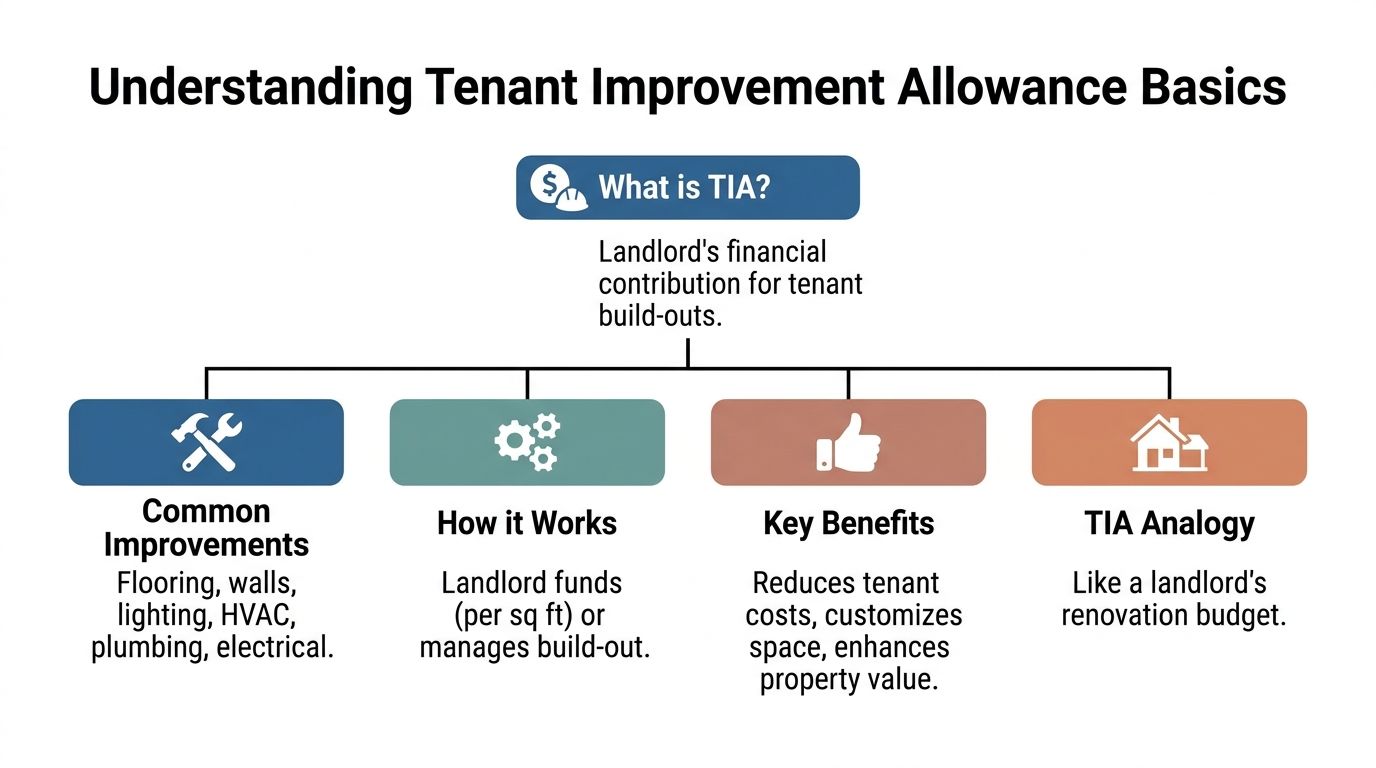
If you're planning work inside a leased commercial space, Wheeler's overview of tenant improvement planning is a practical place to get the terminology and process straight before you finalize scope.
The paperwork drives the schedule
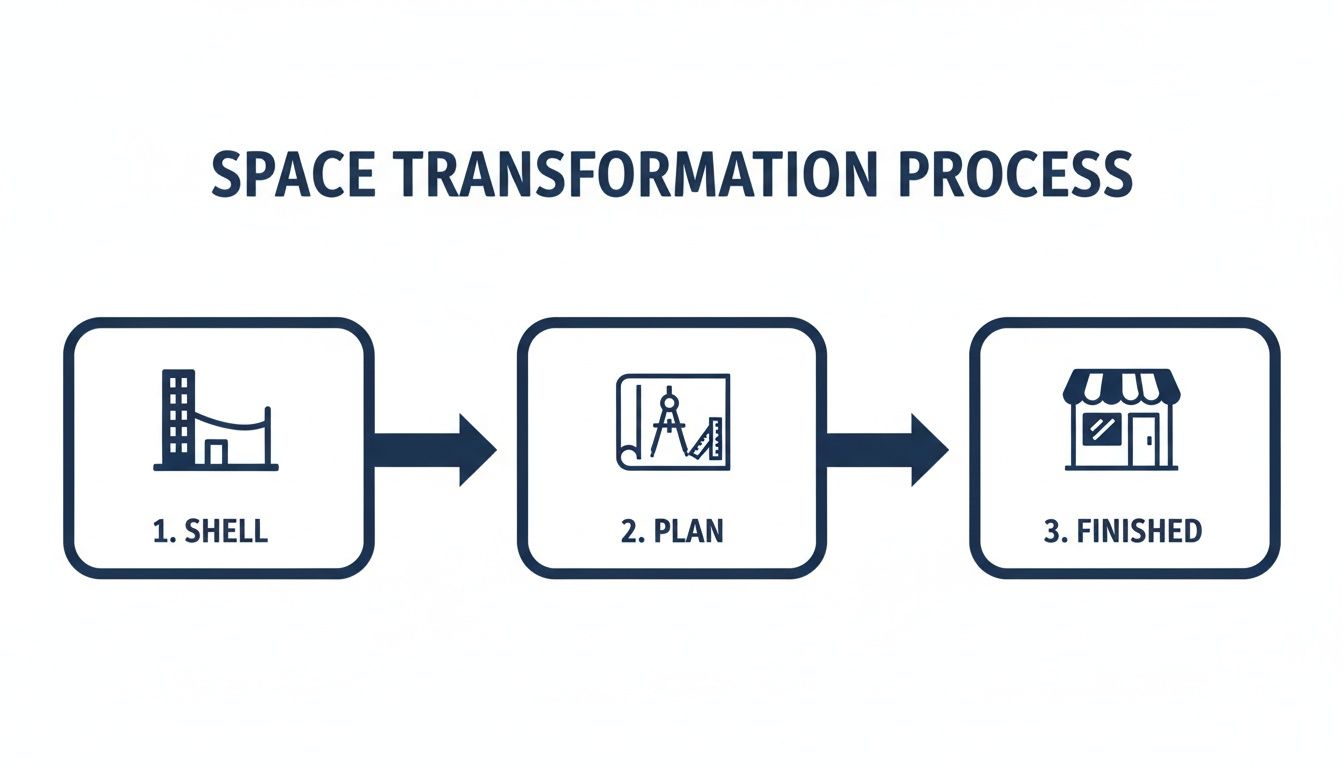
Many owners expect demolition to be the point where a project becomes tangible. In commercial interiors, the primary control point is usually the drawing set.
According to Aquila Commercial, the technical critical path is often documentation, not demolition, because construction documents need to define floor plans, interior elevations, finish schedules, furniture plans, and MEP systems before permitting and bidding can move ahead (office build-out guide from Aquila Commercial).
That matters because vague scope creates expensive field decisions. If the reflected ceiling plan doesn't coordinate with lighting, HVAC diffusers, sprinklers, and wall locations, crews stop and wait. If finish schedules are incomplete, substitutions happen late and usually at the wrong time.
Practical rule: If a project team can't describe the renovation in a written scope with layout changes, finish intent, and systems impact, the project isn't ready for pricing.
What a usable project brief should include
A solid renovation brief doesn't need to be fancy. It does need to be specific. At minimum, include:
| Project element | What to define early |
|---|---|
| Business goals | Return-to-office support, tenant retention, lease renewal, team productivity |
| Space changes | Rooms added, removed, resized, or repurposed |
| Operational limits | Occupied hours, access restrictions, security, noise tolerance |
| Finish expectations | Paint level, flooring type, wall protection, millwork quality |
| Approval chain | Landlord, ownership, facilities, IT, operations, design team |
When teams do this work upfront, pricing gets cleaner, permit review goes more smoothly, and change orders usually drop because the field team isn't guessing what the owner intended.
Budgeting Your Puget Sound Office Renovation
Office renovation budgets get into trouble when people compare unlike projects. An open office with modest finish upgrades is one thing. A private-office layout with added walls, upgraded systems, and detailed finish work is another thing entirely.
The quickest way to understand budget is to stop thinking of it as one number and start thinking in terms of complexity. Walls, doors, glazing, electrical changes, HVAC adjustments, and fire protection coordination all stack onto the same square footage.

What the national benchmark tells you
JLL reported that 59% of organizations in the U.S. and Canada planned to increase investment in office fit-outs, and it estimated average U.S. office fit-out costs at $280 per square foot. The same market snapshot showed open-plan offices starting around $245 per square foot, mixed layouts ranging from $260 to $320 per square foot, and traditional private-office layouts reaching $335 per square foot at the premium end (JLL fit-out cost snapshot summarized by Construction Dive).
Those ranges are useful because they show how layout complexity affects cost. An open plan is like repainting and reorganizing a large room. A mixed layout starts adding enclosed spaces, more doors, more electrical runs, and more coordination between trades. A traditional private-office plan usually pushes complexity even further because the number of partitions, access points, and systems adjustments climbs quickly.
What usually pushes pricing up
Square footage matters, but it isn't the whole story. In Puget Sound tenant improvements, these are the cost drivers that show up again and again:
- Systems work: Electrical, lighting, plumbing, HVAC, and fire protection changes can outweigh finish costs fast.
- Partition density: More rooms mean more framing, drywall, doors, hardware, glazing, and trim.
- Building conditions: Older offices often hide uneven walls, outdated wiring, patchwork plumbing, or limited ceiling space.
- Finish level: Durable paint systems, specialty wall coverings, upgraded flooring, custom cabinets, and high-traffic coatings all affect the number.
- Occupied conditions: Phasing, protection, after-hours work, and temporary setups add labor and coordination.
One of the most common mistakes is treating paint and flooring as the whole renovation budget. They're visible, so they get attention. But if you're moving walls or changing room use, the hidden work behind the walls and above the ceiling often decides whether a budget holds.
Where owners can save without cutting the wrong things
Not every savings idea is a good one. Value comes from simplification, not from stripping out key planning. Better choices usually look like this:
- Keep the core layout when possible: Reusing room locations can reduce permit complexity and systems rework.
- Standardize finishes: Fewer finish types usually mean cleaner procurement and less waste.
- Use durable materials in high-wear zones: It's cheaper to build for maintenance than to repaint and patch constantly.
- Make decisions early: Late selections often trigger rush orders, substitutions, or schedule slips.
If you're trying to frame rough costs before requesting proposals, this commercial painting cost estimator can help you separate finish-scope budgeting from the larger tenant improvement budget, which is useful when painting is only one piece of a broader office remodel.
Budgeting works best when the owner distinguishes between cosmetic upgrades and full reconfiguration. Those are different projects, and they need different expectations.
Navigating Permits and Codes in Western WA
Permits frustrate a lot of owners because they seem like paperwork standing between a decision and a finished office. In reality, permitting protects the project from expensive surprises later. If you skip it, or try to minimize it, the risk doesn't disappear. It just shows up later as correction notices, delayed inspections, lease issues, or rework after the walls are closed.
What usually triggers permit review
In Western Washington, permit requirements vary by jurisdiction, but the broad rule is straightforward. Once work affects life safety, accessibility, occupancy, structural elements, or building systems, expect review.
That often includes changes to:
- Walls and room layouts: Especially if egress paths or occupant load are affected.
- Electrical systems: New circuits, panel work, lighting reconfiguration, and low-voltage coordination.
- Mechanical and plumbing systems: Even modest layout changes can require updates to distribution or fixtures.
- Accessibility features: Restrooms, door clearances, hardware, path of travel, and service counters.
- Energy-related components: Lighting controls and other code-driven upgrades tied to the scope.
Seattle, Tacoma, Bellevue, and nearby cities each have their own review workflows and comments process. A submittal that passes in one city may need revisions in another because local interpretation matters.
Why code knowledge saves money
Owners sometimes think local code review only slows down the job. On the contractor side, the opposite is usually true. The teams that understand local review expectations can prepare cleaner permit sets, coordinate consultants earlier, and avoid field-built fixes that cost more than doing it right on paper.
For occupied offices in particular, code isn't just a checkbox. It affects how the work is phased, how temporary egress is maintained, and whether staff can safely remain in part of the space during construction.
A few issues deserve special attention in Puget Sound:
| Code concern | Why it matters in office renovations |
|---|---|
| Seismic considerations | Existing conditions can affect how modifications are detailed and approved |
| ADA accessibility | Small layout changes can trigger broader accessibility review |
| Energy compliance | Lighting and system updates may need to meet current standards |
| Fire life safety | Sprinklers, alarms, and exit paths must match the new layout |
If a contractor talks about permits like they're an afterthought, that's a warning sign. In commercial interiors, code review is part of project planning, not a formality.
Inspections are part of quality control
Inspectors aren't there to make the job harder. They verify that the approved work matches what was built. That protects the owner, the landlord, and the people who use the space every day.
For facility managers, the practical takeaway is simple. Don't choose the path that looks fastest on day one. Choose the path that leaves you with a legal, safe, and supportable office when the project is done.
Executing a Low-Disruption Renovation Project
Monday at 8 a.m., the front desk is open, the sales team is on calls, and a crew is waiting to shut down power in part of the suite. That is how many Puget Sound office renovations start. The projects that stay on track are the ones with a phasing plan that protects operations before demolition begins.
Most mid-size offices in West Seattle, Bellevue, or Tacoma cannot clear the space for a full remodel. Staff still need badge access, internet, restrooms, and a place to meet. Vendors still need a delivery path. In occupied renovations, the job is not just to build the new space. It is to keep the current business functioning while the work moves around it.
How a phased occupied project usually works
For a typical mid-size office with paint, flooring, lighting updates, meeting room changes, and a break area refresh, phasing needs to be set up around how people use the office. Opening the whole suite at once usually creates rework, confusion, and complaints. Controlled work zones keep the project buildable.
A practical sequence often looks like this:
Lock down operating constraints early
Set access hours, alarm procedures, elevator use, loading rules, quiet hours, and approved shutdown windows before materials arrive on site.Create real swing space
Move staff into a temporary area that can function for a few weeks, with power, data, printers, and enough acoustic separation to do their jobs.Put disruptive work where it belongs
Demolition, saw cutting, heavy electrical tie-ins, and floor prep usually belong before business hours, after hours, or on weekends.Contain the work area properly
Use dust partitions, floor protection, negative air where needed, and clear temporary signage so people know where construction stops and office circulation continues.Finish and turn over one area at a time
Staff moves back into complete space, then the next zone opens up. That limits punch list sprawl and keeps temporary moves from dragging on.
That sequence is not fancy. It is reliable, which matters more.
The problems that disrupt offices are usually hidden
The visible work gets attention. The schedule risk usually lives above the ceiling and inside the walls.
A ceiling tile comes down and you find old conduit crossing a new light layout, abandoned data cabling tied into active runs, or ductwork that leaves less clearance than the plan assumed. In older Puget Sound buildings, especially where suites have changed tenants a few times, those field conditions are common. If the team waits until demolition to sort them out, the office feels every delay.
Early investigation helps. So does carrying realistic contingency for hidden conditions, especially when lighting, plumbing, or break room work is involved. I have seen projects save a week of disruption because the team opened a few strategic areas before the full phase started.
What staff notices first
Employees rarely care how clean the submittal log looks. They care about whether they can hear on a call, reach the restroom, and get through the day without surprises.
The usual friction points are predictable:
- Noise: Hammer drilling, floor prep, demolition, and hardware installation interrupt calls and concentrated work.
- Dust and odor: Sanding, patching, coatings, and adhesives need containment, ventilation, and timing that fits occupied conditions.
- Access changes: Conference rooms, kitchen areas, restrooms, and main entries need clear daily updates, not assumptions.
- Safety separation: Staff should never have to guess which corridor is active construction and which path remains open.
Short daily communication works better than polished weekly recaps. A simple notice by the afternoon before, with what is happening, where it is happening, and what is changing, prevents a lot of frustration.
Coordination matters as much as craftsmanship
Occupied office work punishes loose coordination. One trade arrives early, another misses a shutdown window, and suddenly a conference room is offline during the busiest part of the day. Facility managers are usually better served by a contractor who can control sequencing, supervise subs closely, and keep finish work clean as each zone turns over.
If you are comparing teams, this guide to choosing a general contractor for commercial renovation work is a useful starting point. For electrical scope planning and coordination expectations, AdVoltage Electrical's guide for businesses offers a helpful outside perspective.
In practice, low-disruption renovation comes down to disciplined phasing, honest communication, and making temporary conditions workable for the people still doing their jobs in the space. That is what keeps a remodel from becoming an operational headache.
Choosing Durable Finishes and the Right Contractor
Once the layout is settled and the phasing plan is workable, finish selection becomes a business decision. Good-looking materials aren't enough. In an office, surfaces need to clean easily, hold up to rolling chairs and daily traffic, and still look presentable after repeated touch-ups and maintenance.

Compare finishes by maintenance, not showroom appeal
A finish that looks great in a sample book can become a nuisance in six months if it scuffs, chips, stains, or requires special cleaning. Facility managers usually do better when they compare options side by side.
| Finish category | Good fit | Watch-outs |
|---|---|---|
| Commercial wall paint | Offices, corridors, conference rooms, general interiors | Low-grade paint shows wear quickly in touch zones |
| Durable coatings | Break rooms, service areas, higher-abuse surfaces | Surface prep matters more than the coating label |
| Carpet tile | Open office areas where replacement flexibility matters | Seams, staining, and rolling-load performance vary by product |
| LVP or similar resilient flooring | Break areas, corridors, multi-use spaces | Subfloor prep affects long-term appearance |
| Tile | Restrooms and select service areas | More grout lines means more maintenance |
For walls, higher-traffic offices usually benefit from a scrubbable commercial system rather than a basic residential-grade product. In circulation paths, corners and door frames often need extra protection because that's where wear shows first. For floors, the right answer depends on how the space is used. A quiet admin area has different priorities than a busy tenant suite with constant foot traffic and deliveries.
Substitutions deserve scrutiny
Material changes look harmless on paper, but they can affect appearance, durability, install method, and lead time. In more spec-driven projects, substitutions should be evaluated carefully, not waved through because they seem close enough.
That applies especially to:
- Paint and coating systems
- Flooring wear layers and adhesive requirements
- Wall protection materials
- Door hardware and closers
- Acoustical products
- Specialty trim and millwork finishes
A careful review upfront prevents the “almost the same” product from causing warranty, maintenance, or code headaches later.
A finish schedule should answer one practical question. When this office is busy for a full year, will these materials still be easy to maintain and acceptable to look at?
The right contractor type for a mid-size office
Hiring separate painters, flooring installers, electricians, and millwork vendors can work on very small jobs. On a live office renovation, that setup often creates scheduling gaps and finger-pointing. One trade blames another for delays, and the facility manager ends up doing coordination work that should have been handled in the field.
For mid-size tenant improvements in places like Snoqualmie, New Castle, or Bellevue, a local general contractor with a single project lead is often the better fit. You get one schedule, one communication channel, and one party responsible for sequencing the work.
There's also a difference between a contractor who brokers all labor and one who self-performs key trades. When a firm handles painting and drywall directly, quality control tends to be tighter because punch items don't get bounced between multiple subcontractors.
If you want a practical framework for evaluating bids, references, communication style, and scope clarity, Wheeler's guide on how to choose a general contractor lays out the main questions worth asking before you sign.
For businesses also trying to understand how electrical coordination fits into a broader renovation team, this AdVoltage Electrical guide for businesses is a helpful outside perspective on what commercial electrical contractors typically handle and why early coordination matters.
A short contractor checklist
Before awarding the job, confirm these basics:
- Occupied-project experience: Ask how the contractor handles phasing, dust control, and after-hours work.
- Documentation discipline: The proposal should clearly identify what's included, excluded, and pending.
- Local jurisdiction familiarity: Experience with Seattle-area and Tacoma-area reviews matters.
- Finish knowledge: Ask how they recommend products based on maintenance, not just appearance.
- Closeout process: Make sure punch, commissioning support, and final turnover are part of the plan.
FAQs for Your Office Renovation Project
How long does an office space renovation usually take
It depends on scope, permitting, material lead times, and whether the office stays occupied. A paint-and-flooring refresh moves very differently than a full tenant improvement with layout changes and systems work. In most cases, owners should plan around phases, approvals, and procurement instead of focusing only on construction days.
Can we stay open during renovation
Usually, yes, if the project is planned around occupied conditions. That means phased work zones, clear staff communication, controlled access, dust containment, and after-hours scheduling for the loudest tasks. Businesses run into trouble when they assume normal operations can continue without changing how the work is sequenced.
What causes the most change orders
Unclear scope, incomplete drawings, late finish decisions, and hidden existing conditions are the most common causes. The best prevention is early investigation, coordinated documents, and disciplined decision-making before crews start opening walls and ceilings.
What's the difference between hiring a general contractor and hiring trades separately
With separate trades, the owner usually ends up coordinating schedule, access, sequencing, and problem-solving between vendors. A general contractor takes responsibility for that coordination, which is especially helpful when work includes multiple systems and occupied-space constraints.
Should we renovate or right-size first
Right-size first. If the business no longer uses the office the way it did a few years ago, renovating the old layout can lock in the wrong footprint. Test the space needs, then improve the space you need.
How detailed should our finish selections be before pricing
Detailed enough that bidders are pricing the same thing. You don't need every accessory selected on day one, but you do need clear intent for paint systems, flooring, wall conditions, ceilings, millwork quality, and any specialty finishes. Vague allowances often make bid comparisons misleading.
Are permits really necessary for interior office work
If the work affects layout, life safety, accessibility, or building systems, permits are usually part of the process. Even when an owner wants a fast cosmetic update, it's worth checking the local requirements early instead of finding out mid-project that approvals were needed.
What should we ask a contractor before signing
Ask who manages the job day to day, how communication works, what work is self-performed, how schedule updates are handled, and what assumptions sit behind the price. A clear answer matters more than a polished sales pitch.
If your office in Seattle, Tacoma, Bellevue, Kirkland, Issaquah, West Seattle, Snoqualmie, North Bend, or New Castle needs a practical renovation plan, Wheeler Painting & Restoration Services is available for consultations on tenant improvements, occupied office renovations, finish upgrades, and facility-focused construction work. A good first conversation usually starts with your layout, your operational constraints, and what you need the space to do better.








 “Like” us on Facebook!