
How Long Does House Paint Last? A Puget Sound Guide
TL;DR: Exterior paint in the Puget Sound lasts 5 to 7 years, while interior paint lasts 5 to 10 years on average. Those are only starting points. In Seattle, Tacoma, and Kent, rain, humidity, shade, and surface prep can shorten or stretch that lifespan in a big way.
If you're asking how long does house paint last, you're probably already seeing something that doesn't look right. Maybe the south side still looks decent, but the shaded wall has green staining. Maybe the trim is failing before the siding. Maybe an interior bathroom ceiling started looking tired long before the bedroom walls did.
That disconnect is normal in Western Washington. Generic national advice often assumes a drier climate, more sun, and fewer moisture cycles. Around Puget Sound, paint doesn't just age from time. It ages from wet siding, long damp mornings, mossy exposure, limited drying time, and surfaces that hold moisture longer than people expect.
A paint job is part finish and part protective shell. When that shell starts to weaken, the question isn't only cosmetic. It's whether the coating is still doing its job.
Is It Time to Repaint Your Puget Sound Property?
A homeowner in the Seattle area often notices the change gradually. First it's a little fading near the entry. Then the trim starts to look rougher than the field siding. After another wet season, a few spots begin to peel, and now the whole house looks older even if the structure is still in good shape.
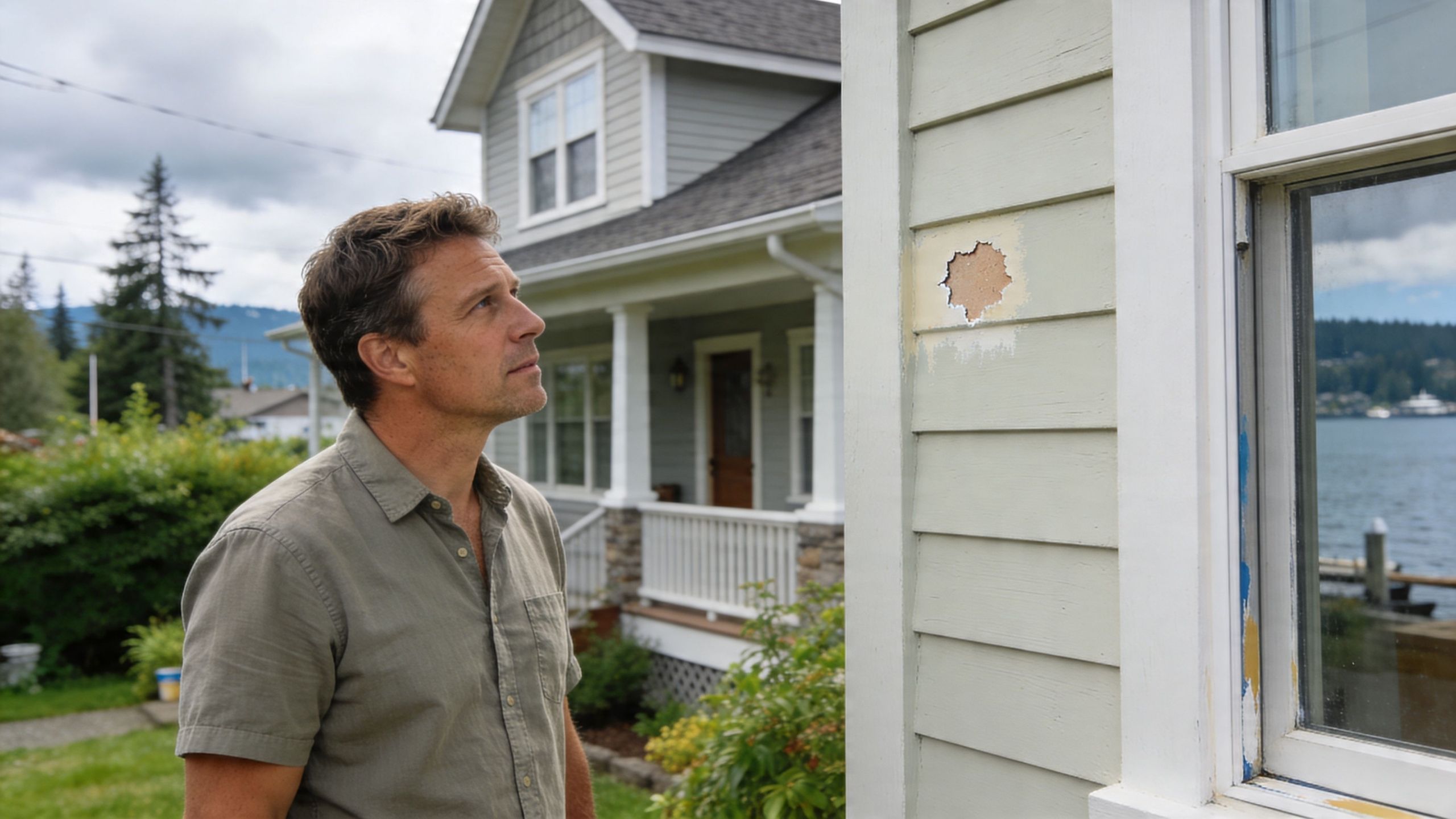
Property managers in Kent and Tacoma run into the same thing from a different angle. One building in the portfolio holds up fine, another starts showing mildew staining and edge failure sooner than expected, even though both were painted around the same time. The difference usually comes down to exposure, maintenance, and how well the original prep matched the building.
What homeowners usually notice first
The early signs aren't always dramatic:
- Uneven color: One elevation fades or dulls faster than the others.
- Dirty-looking walls: The paint film starts trapping grime, mildew, or airborne residue.
- Peeling around joints: Trim corners, window heads, and lower siding courses often show trouble first.
- A rough or chalky feel: The coating no longer feels sealed and stable.
A house can look only slightly worn and still be overdue for repainting in a wet climate. The coating often fails at edges and vulnerable details before broad walls look bad from the street.
That matters because repaint timing in Puget Sound is rarely just about curb appeal. It's about catching failure before moisture gets deeper into wood trim, siding edges, and caulk lines.
Why local guidance matters more than generic advice
A national blog may tell you paint should last a long time, and sometimes that's true in dry climates. But Seattle, Tacoma, and Kent aren't dry climates. Shaded walls stay wet longer. Moss and mildew are real maintenance issues. Marine air, tree cover, and repeated rain events all change the lifespan of a coating.
For owners searching for house painting near me or commercial painting services near me, the useful answer isn't a single number. It's whether your building is aging normally for this region or showing signs that need attention sooner.
The Real Lifespan of Exterior Paint in Washington
For wood siding in humid regions like Puget Sound, high-quality latex or acrylic paint typically lasts 5 to 7 years before significant degradation, and 100% acrylic latex formulations with mildewcides can extend that to 7 to 10 years on properly primed cedar or fir siding common in Western Washington, according to this paint lifespan guide for humid climates.
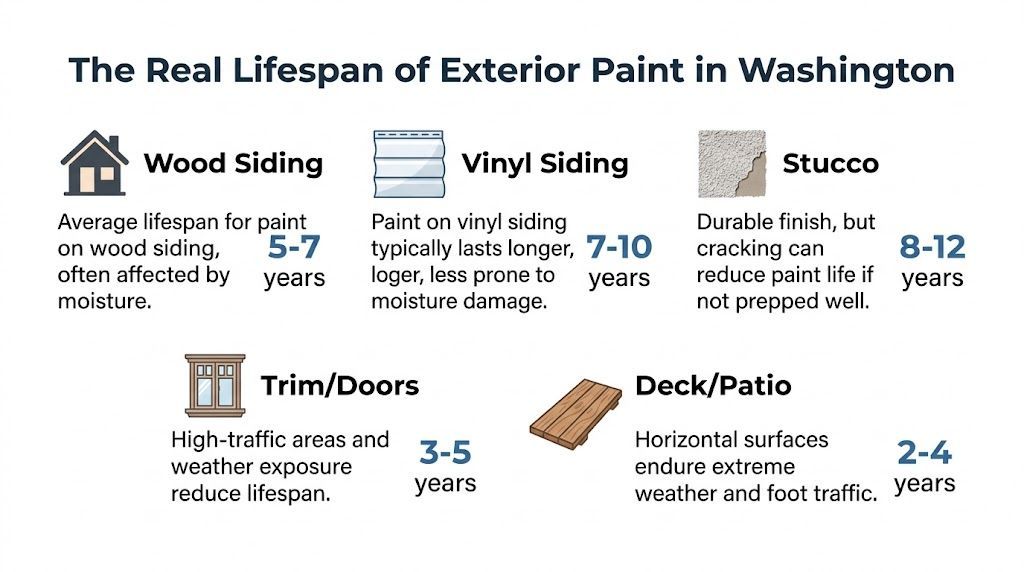
Those numbers are the most useful baseline for our area because they match what owners experience here. Wet winters, mild but persistent moisture, and long shaded periods can wear on a paint film differently than intense inland heat does.
Why Puget Sound exteriors fail sooner than people expect
Exterior paint in Western Washington usually doesn't fail for one reason alone. Several things happen at once.
- Moisture sits longer: Siding, trim, and caulk joints don't dry as quickly after rain.
- Mildew grows on shaded faces: North and east elevations often look older first.
- Wet-dry cycling stresses the film: Wood moves, coatings flex, and weak areas open up.
- UV still matters: Even with cloud cover, sun breaks down binders over time and contributes to chalking.
The result is a coating that may look passable from the driveway but is already weakening at the details that matter most.
Practical rule: In Puget Sound, the wall that stays damp longest usually tells the truth about the condition of the paint job.
Siding material changes the timeline
Not every exterior surface behaves the same. Wood siding is the biggest concern because it absorbs and releases moisture. Cedar and fir, both common in Western Washington, can perform well when they are properly primed, sealed, and painted with the right product, but they also punish shortcuts.
Fiber cement is generally more stable than wood, so the paint film usually has an easier job. Brick and masonry present a different challenge. They don't move like wood, but they can hold moisture and telegraph failures if the wrong coating is used or if drainage issues are ignored.
Trim and doors often fail before broad siding fields because they take more abuse. Sun exposure, hand contact, sprinklers, and sharp edges all work against them. That's why a house can need selective repainting on details before the main body fully reaches end of life.
Paint grade isn't optional here
In this climate, the difference between a lower-grade exterior paint and a true 100% acrylic latex product isn't academic. Better binders hold up longer under damp conditions, and mildewcides help protect the surface where mildew pressure is persistent.
Cheap paint can look acceptable when it first goes on. What it usually doesn't do well is keep its film strength after repeated moisture exposure. Once the film weakens, blistering, peeling, and edge failure start showing up where water intrusion is already trying to happen.
A better coating still won't save a bad prep job. But in Seattle, Kent, and Tacoma, lower-grade paint narrows your margin for error fast.
Timing matters too
Even the right product can underperform if it's applied under poor conditions. Surfaces need time to dry, and the work window matters more here than in many other regions. If you're comparing repaint timing, Wheeler's guide on the best time to paint a house exterior is useful because scheduling around moisture exposure is part of getting the full life from the coating.
For building owners looking for a residential contractor near me or support with facility maintenance, this is the takeaway. Exterior paint lasts longest when the siding condition, product selection, and weather window all line up. If one of those pieces is off, the clock starts running early.
How Long Interior Paint Lasts Room by Room
Inside the building, the right question isn't just how long does house paint last. It's which room are we talking about. Interior paint wears according to traffic, moisture, cleaning frequency, and how people use the space.
According to this interior paint lifespan reference, high-traffic areas like hallways and kitchens typically need repainting every 3 to 5 years, bedrooms and living rooms usually last 7 to 10 years, and bathrooms often last only 3 to 4 years because high humidity breaks down paint polymers.
High-traffic rooms wear out first
Hallways, stairwells, entry areas, break rooms, and active common spaces take constant contact. People brush walls, move furniture, carry bags, and leave marks that cleaning can't always solve without also wearing the finish.
Kitchens also age faster, but for a different reason. It's less about bumps and more about residue, cleaning, and moisture in the air. Even in a well-kept home, kitchen walls work harder than bedroom walls do.
For commercial interiors, this same pattern shows up in corridors, tenant entries, and shared use areas. An office with controlled use may hold paint well. A retail space or active common hallway usually won't.
Low-impact rooms can go much longer
Bedrooms and living rooms usually keep their appearance longer because they don't deal with the same daily abuse or humidity load. That doesn't mean they're maintenance-free. Sunlight, furniture scuffs, and lifestyle still matter. But these rooms generally age more slowly and more evenly.
Guest rooms are the classic example. They often look good long after the rest of the house has obvious wear because they don't see the same use.
Here's a simple planning view:
| Room type | Typical paint life | Main reason |
|---|---|---|
| High-traffic areas | 3 to 5 years | Contact, scuffs, repeated cleaning |
| Kitchens | 3 to 5 years | Heat, moisture, residue |
| Bathrooms | 3 to 4 years | Humidity and repeated moisture |
| Bedrooms and living rooms | 7 to 10 years | Lower wear and lower moisture |
Bathrooms are their own category
Bathrooms deserve separate treatment because humidity changes everything. Repeated showering introduces moisture that weakens adhesion over time, and poor airflow makes the problem worse. In Puget Sound homes, where ambient moisture is already part of daily life, a bathroom without good ventilation can age paint quickly.
That doesn't always start as peeling. It may begin as dullness, patchy sheen, or recurring surface discoloration that returns after cleaning.
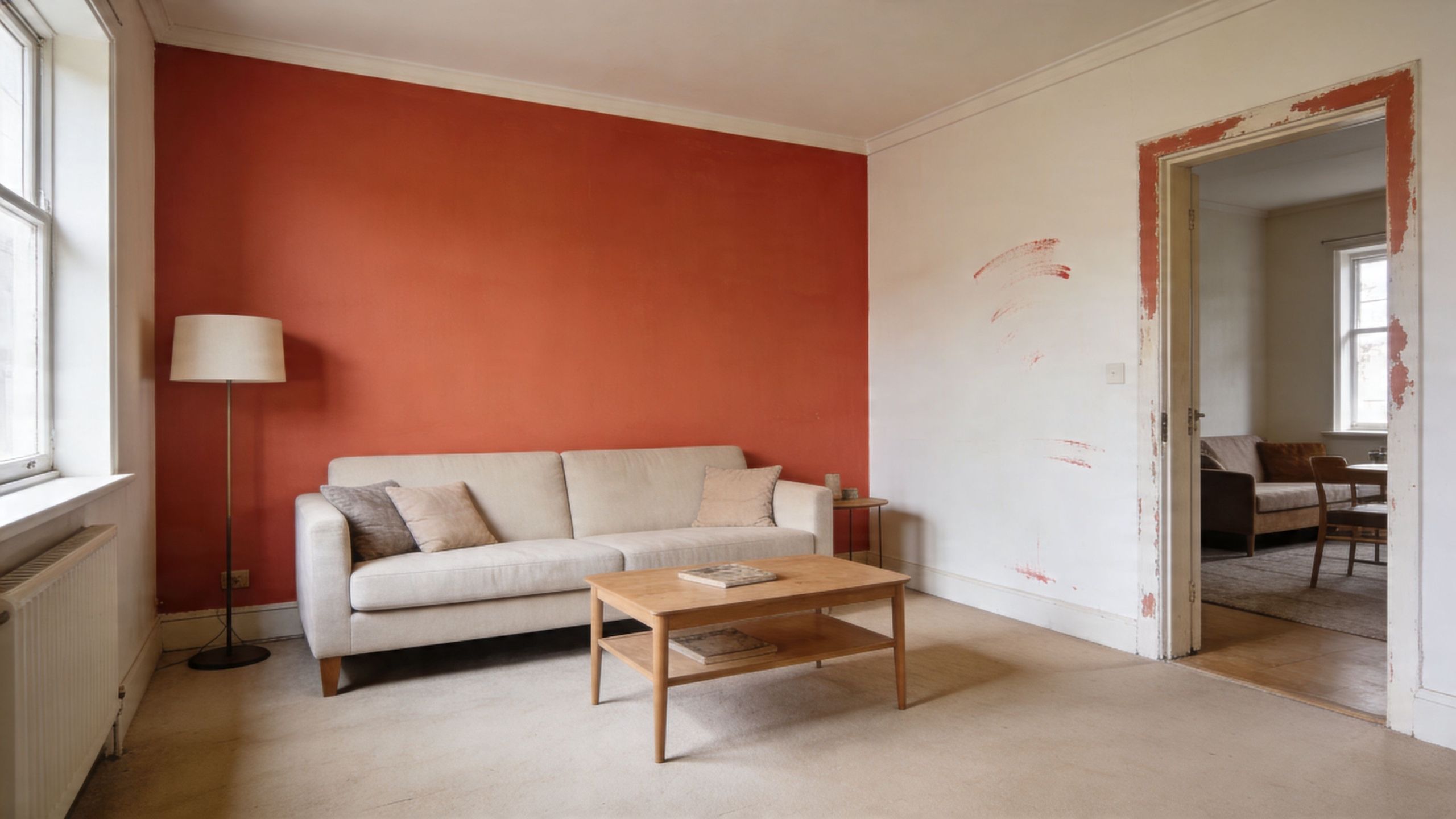
A quick visual example helps here:
What owners should do with this information
Use room-by-room repaint cycles for planning, not panic. If a hallway looks tired after a few years, that doesn't mean the whole house or whole tenant suite needs repainting at once. It means the maintenance schedule should reflect real use.
- Prioritize active zones: Entry halls, corridors, and kitchens usually need attention first.
- Budget bathrooms separately: Moisture-prone rooms rarely stay on the same cycle as dry rooms.
- Match finish to function: Washability and moisture resistance matter more in workhorse spaces.
- Think by occupancy type: A family home, office suite, and retail build-out all wear differently.
For owners managing commercial construction near me searches or planning tenant improvement work, that's often the practical path. Repaint where use demands it, not just where the calendar says you should.
Four Key Factors That Determine Paint Durability
Paint lifespan isn't controlled by paint alone. Four things decide whether a coating holds up or disappoints in Western Washington: the product, the prep, the environment, and the application itself.
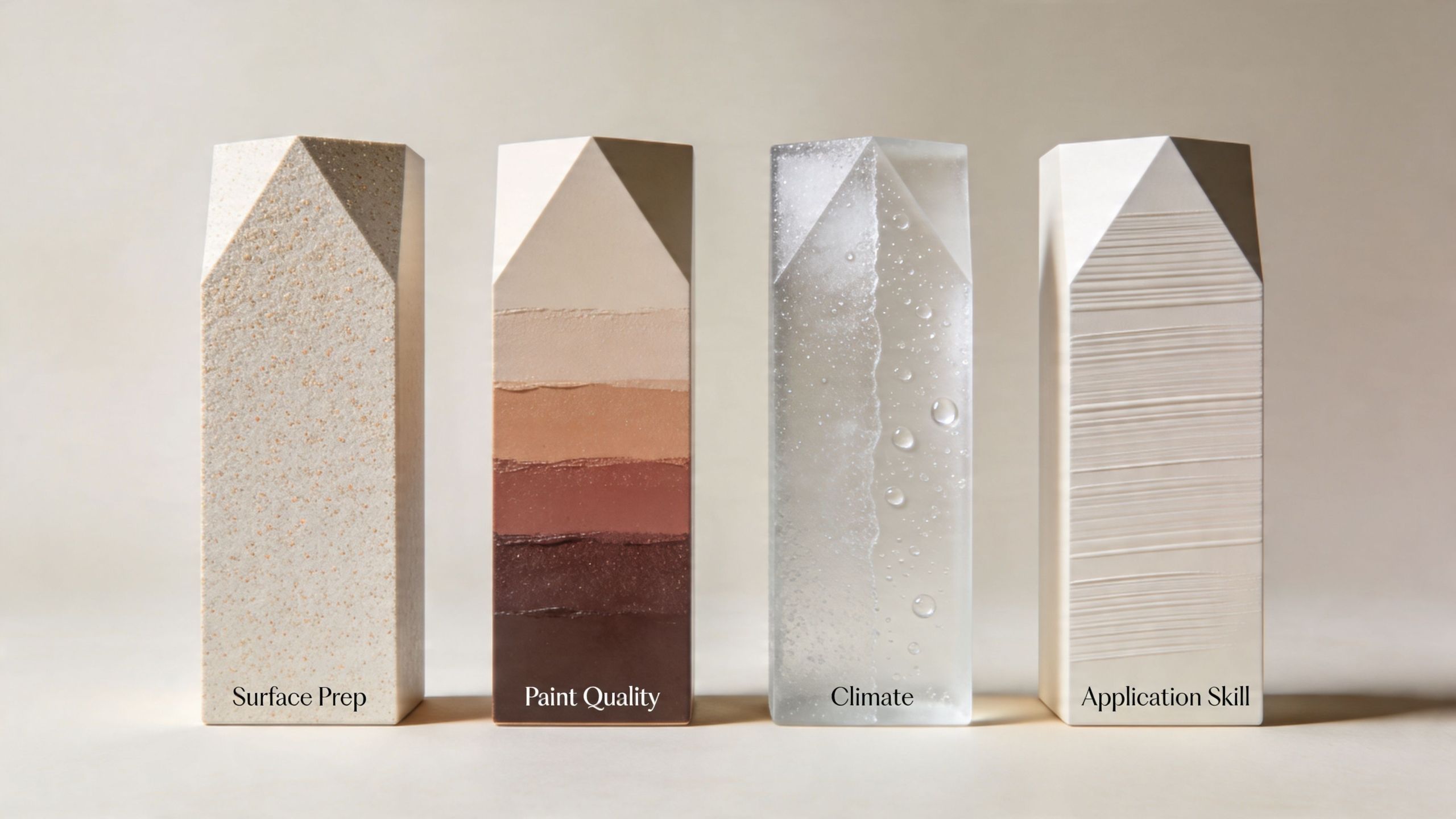
When those four line up, paint lasts closer to its full potential. When one fails, the whole system gets weaker.
Paint quality
Material selection matters most when the surface is exposed to moisture, abrasion, or cleaning. On exteriors, stronger acrylic binders are better suited to a damp climate. Indoors, the right finish helps walls resist scuffs, washing, and humidity.
This isn't about buying the most expensive can on the shelf. It's about using a coating that fits the substrate and the environment. A bargain product on a demanding surface often costs more later because the repaint cycle comes sooner.
If UV exposure is part of the problem, especially on sun-hit walls, doors, or trim, it helps to understand how UV-resistant paint fits into the bigger durability picture.
Surface preparation
Prep is where long-lasting jobs are won or lost. A surface can look paintable and still be a bad candidate for coating if it's dirty, chalky, damp, unstable, or carrying hidden failure at joints and edges.
On exterior work, prep may involve washing, scraping, sanding, spot priming, caulk replacement, and in some cases carpentry or siding replacement before paint begins. On interiors, prep often means drywall repair, stain blocking, patching, and making sure the substrate is clean enough for proper adhesion.
If mildew is painted over instead of removed, or if damp siding is coated because the schedule is tight, the finish usually tells on that shortcut later.
For owners comparing cladding options on future projects, this guide to siding materials is useful background because the substrate itself affects how hard the paint system has to work.
Environmental exposure
Puget Sound weather creates a slow, persistent kind of wear. Rain is obvious, but the harder issue is often extended dampness. Shaded walls, overgrown landscaping, clogged gutters, and splash-back near grade all keep surfaces wetter longer.
Indoors, the environmental issue is usually ventilation. Bathrooms, laundry areas, kitchens, and commercial wash zones punish coatings when airflow is poor. That doesn't always produce immediate failure. It often gradually shortens the useful life until the room suddenly looks older than the rest of the building.
A few examples show how exposure changes outcomes:
- South-facing trim: More sun, more UV stress, faster fading.
- North-facing siding under trees: More shade, more mildew pressure, slower drying.
- Bathroom ceilings: Repeated humidity load, especially when fans are weak or rarely used.
- Retail entries: Frequent touch points, frequent cleaning, higher wear.
Application skill
Even good paint on a well-prepped surface can underperform if it's applied poorly. Thin coverage, rushed dry times, missed caulk failure, sloppy cut lines around joints, and bad timing with weather all shorten the life of the coating.
Application skill also includes knowing when not to paint yet. In this region, patience matters. A surface that still holds moisture shouldn't be coated just because the calendar says the crew is due on site.
For smaller residential work and mid-size facility maintenance, Wheeler Painting & Restoration Services is one option owners use when they need painting tied to broader repair scope such as drywall, trim repair, waterproofing, or tenant improvement, where durability depends on the whole assembly being addressed rather than just the finish coat.
Your Puget Sound Paint Inspection Checklist
A good inspection doesn't require specialty equipment. You can learn a lot just by walking the property slowly and checking the same trouble points a contractor checks first. The goal isn't to diagnose every technical issue. It's to spot whether the paint is still protecting the building or just covering it.
What to look for outside
Start with the elevations that stay wet longest, then move to trim, doors, and lower siding.
- Chalky residue on the surface: Rub your hand lightly across the paint. If color dust transfers easily, the binder may be breaking down.
- Blistering or bubbling: Raised areas often point to trapped moisture or adhesion failure.
- Cracking or alligatoring: When paint loses flexibility, it can split into a cracked pattern instead of moving with the substrate.
- Peeling at edges and joints: Check butt joints, trim corners, window heads, and horizontal transitions.
- Mildew or dark staining: In Puget Sound, persistent staining on shaded walls often signals prolonged moisture exposure, not just dirt.
What to look for inside
Interior problems usually show up where moisture, cleaning, or repeated contact are concentrated.
| Area | Warning sign | What it often means |
|---|---|---|
| Bathroom walls or ceiling | Dull, patchy, or peeling finish | Moisture stress or weak ventilation |
| Hallways and entries | Scuffs that won't clean off | Finish is worn, not just dirty |
| Kitchen walls | Staining or uneven sheen | Residue buildup and repeated washing |
| Window-adjacent walls | Fading or patchiness | Surface is aging unevenly |
Walk the building in daylight if you can. Early failure is easier to spot when raking light shows sheen changes, raised edges, and surface texture.
A few places people miss
Some of the most useful inspection spots aren't the largest walls. They're the details.
- Below gutters and downspouts: Overflow and splash patterns often show here first.
- At the bottom edge of siding: Ground moisture and poor drainage stress these areas.
- Door frames and thresholds: Repeated use and weather exposure hit these hard.
- Behind shrubs: Airflow drops, drying slows, and mildew pressure rises.
If you see multiple signs at once, cleaning and touch-up may not be enough. At that point, it helps to understand whether the surface needs localized prep or full coating removal. This overview on how to remove old paint gives a useful starting point for what that process can involve.
Extend Your Paint's Life With Practical Maintenance
Most paint jobs don't fail overnight. They lose life in small steps. A little mildew that isn't cleaned. A gutter overflow that keeps soaking one wall. A bathroom fan that never quite clears the room. Maintenance works because it interrupts those small problems before they become coating failure.
Exterior habits that help
You don't need to baby your exterior paint, but you do need to keep water and organic buildup from sitting on it too long.
- Wash siding carefully: Remove surface grime and mildew without damaging the paint film. If you're deciding how often to pressure wash your house, use methods that clean the surface without forcing water into joints or behind siding.
- Keep gutters and downspouts working: Overflowing gutters shorten paint life fast, especially at fascia, trim, and lower walls.
- Trim back vegetation: Shrubs and tree branches reduce airflow and keep walls damp.
- Handle failed caulk early: Small openings around trim and penetrations can turn into paint failure if water keeps getting in.
Interior habits that matter
Interior maintenance is usually about moisture control and gentle cleaning.
- Use bath fans consistently: Let surfaces dry out after showers.
- Clean with mild products: Aggressive scrubbing can burnish or wear the finish.
- Touch up damage early: Small chips and scuffs are easier to deal with before they collect dirt and expand.
- Watch recurring stains: If a mark keeps returning, the issue may be moisture, not paint alone.
Store leftover paint the right way
Touch-up paint is only helpful if it's still usable. According to Consumer Reports on leftover paint storage, leftover latex paint can remain usable for up to 10 years if stored correctly. Warning signs include bulging cans, a thick rubberlike film on the surface, or paint that fails to mix uniformly. If you're unsure, test it on cardboard before putting it on the wall.
That advice matters for homeowners doing phased room updates and for property managers holding stock for routine touch-ups. Good labeling helps too. Keep the room name, color, sheen, and date on the lid so the paint is useful later, not a guessing game.
Hiring a Professional vs DIY Painting A Cost and Quality Guide
DIY painting can make sense for a small, simple room with sound walls and easy access. It gets harder when the project includes exterior prep, moisture problems, ladder work, repaired substrates, or color matching across a larger property.
The hidden cost in DIY usually isn't the roller cover or brush. It's time, prep, and rework. Most paint failures people blame on product quality are really prep failures, application timing issues, or skipped repairs underneath the coating.
When DIY is usually reasonable
A do-it-yourself approach is often workable when:
- The surface is already sound: No peeling, moisture damage, or patching issues.
- Access is straightforward: Standard walls, limited masking, no major safety concerns.
- The stakes are low: A secondary room or light refresh where minor imperfections are acceptable.
When professional work usually pays off
Hiring a contractor is the better value when the building needs more than color change.
- Exterior painting in Puget Sound: Moisture timing, mildew treatment, and substrate condition matter too much to guess at.
- Commercial or occupied spaces: Scheduling, protection, workflow, and finish consistency matter.
- Projects tied to repairs: Drywall work, trim replacement, waterproofing, and surface correction should be handled as one scope.
- Difficult surfaces: High walls, failing wood trim, older coatings, and detail-heavy exteriors need experience.
Professional painting isn't just about getting paint onto a surface. It's about knowing what has to happen before and after the coating so the job lasts.
For owners comparing bids, the smart question isn't "What's the cheapest way to get color on the wall?" It's "Which approach gives this building the longest useful life with the fewest callbacks?"
Protect Your Investment With a Professional Assessment
In Seattle, Tacoma, Kent, and the towns in between, paint life depends less on generic timelines and more on moisture, exposure, prep quality, and maintenance. Exterior coatings on wood siding often live in the 5 to 7 year range in our climate, while interior paint can last far longer or wear out much sooner depending on the room and how it's used. The difference is local conditions.
If your property is showing mildew, blistering, chalking, peeling, or uneven wear, a careful inspection is the right next move. It helps you decide whether you need cleaning, repairs, touch-up work, or a full repaint.
If you'd like a practical, no-pressure evaluation of your home, facility, office, or tenant space, contact Wheeler Painting & Restoration Services to discuss the condition of the surfaces, likely causes of wear, and the most sensible next step for your property.






 “Like” us on Facebook!