Tag Archive for: home improvement

Shower to Tub Conversions A Puget Sound Guide

A lot of Puget Sound homeowners end up in the same spot. The shower-only bathroom looked like the right move a few years ago. It felt cleaner, easier, and more modern. Then life changed.

Now there’s a toddler to bathe, a dog that won’t fit under a handheld sprayer, or a simple wish for a real soak after a long week. In older homes between Seattle, Kent, and Tacoma, that regret shows up often because bathroom layouts are already tight, and every fixture choice matters more.

That’s why shower to tub conversions deserve more attention than they get. Most remodeling advice focuses on taking tubs out. Far less helps homeowners put one back in the right way, especially in Western Washington homes where framing, moisture exposure, and older plumbing can change the whole job.

Why Convert a Shower Back to a Bathtub

A common story goes like this. A family buys a house with a stylish walk-in shower in the hall bath. It works fine for adults. Then kids arrive, guests stay over, or resale starts to matter. Suddenly the bathroom feels less practical than it did on move-in day.

That’s not a small concern. Guidance for reverse conversions is notably limited, even though anecdotal remodel trends suggest up to 20 to 30% of homeowners who converted to a shower later express regret, especially when they need a tub for children or everyday flexibility, according to Clear Water Shower Bath.

Everyday use changes faster than bathroom layouts

A shower-only setup can work beautifully for a while. Then the household changes.

Common reasons homeowners revisit the decision include:

  • Kids and grandkids: Bathing small children in a shower stall is awkward and tiring.
  • Comfort: Some people want the option to soak, especially in colder months.
  • Guest flexibility: A tub gives visitors more choice, particularly in a shared hall bath.
  • Buyer expectations: In many homes, buyers still want at least one bathtub.

A reverse conversion isn’t a step backward. It’s usually a correction. The original shower may have matched a specific season of life, but a bathtub often supports more uses over a longer stretch.

It can make a bathroom feel complete again

In many Seattle, Tacoma, and Kent homes, the bathroom footprint already suits a standard tub layout. The room may have originally been designed around that shape, then reworked later for a shower. When a tub goes back in, the room often feels more balanced.

Practical rule: If the bathroom serves children, guests, or the only full bath in the house, a tub is often the more versatile fixture.

That doesn’t mean every shower should become a tub. It means the decision should match how the room gets used. For a primary bath built around speed and accessibility, a shower may still be the better fit. For a family bath, the trade-off often looks different once daily routines settle in.

Choosing Your New Bathtub for Your Puget Sound Home

The best tub for a reverse conversion usually isn’t the fanciest one. It’s the one that fits the room, matches the framing below, and gives you the use you want.

In many Puget Sound remodels, the practical choice is an alcove tub because it fits the footprint left by a standard shower area. That said, there are other options if the room allows.

Start with tub type

Some tubs are easier to install in an existing bathroom shell. Others need more framing, more finish work, or more floor support.

Type/Material Best For Typical Cost Pros Cons
Alcove tub Standard family bathrooms and many shower to tub conversions Qualitatively, often the most straightforward option for existing bath footprints Efficient use of space, easy to pair with wall surrounds or tile, familiar layout Less of a design statement, fewer placement options
Drop-in tub Larger bathrooms with a custom deck or surround Qualitatively, often higher due to added carpentry and finish work Flexible look, can feel more custom, works well with built surrounds Needs more framing and finish work, takes more floor area
Freestanding tub Open layouts or design-led remodels Qualitatively, often higher because layout and plumbing matter more Strong visual impact, many style options Usually not ideal for tight bathroom footprints, cleaning around it can be harder
Acrylic Homeowners seeking a lighter, practical tub Qualitatively, common choice for remodels Lighter weight, good value, easier on older framing Can feel less solid than heavier materials
Fiberglass Budget-conscious projects Qualitatively, often one of the lower-cost material choices Lightweight, accessible entry point for simple remodels Can wear faster than sturdier materials
Cast iron Homeowners prioritizing durability and a substantial feel Qualitatively, often heavier and more demanding to install Durable, strong heat retention, classic look Very heavy, may require floor reinforcement
Steel Homeowners who want a hard surface and simple look Qualitatively, varies by model and finish Durable surface, clean appearance Can feel louder and cooler than other materials

Alcove tubs fit many reverse conversions best

Most shower to tub conversions work best when the new tub stays within the existing bathing zone. Alcove tubs are strong candidates because they’re made to sit between three walls and pair well with tile, solid-surface panels, or prefabricated surrounds.

That matters in older homes from Seattle to Tacoma where moving walls creates a bigger project fast. Keeping the same footprint often means less disruption, fewer finish transitions, and a more predictable build.

Material matters more than many expect

Homeowners usually focus first on style. Contractors tend to look at weight, maintenance, and how forgiving the material will be after years of use.

A few practical notes:

  • Acrylic is a common sweet spot. It’s lighter than cast iron and usually easier to work into an upper-floor bathroom.
  • Fiberglass can fit a tighter budget, though it may not wear as well over time.
  • Cast iron feels solid and holds heat well, but it places more demands on the floor system.
  • Steel can work nicely in the right setting, though some homeowners find it less comfortable for soaking.

The best tub isn’t the one that looks best in a showroom. It’s the one your house can support, your family will use, and your finish materials can protect properly.

Match the tub to the room’s job

A hall bath and a primary bath shouldn’t always get the same answer.

For a family-focused bathroom, look for a tub that’s easy to clean, practical to step into, and sized to the existing room. For a more design-driven remodel, a custom look may justify the extra carpentry and finish work. In smaller bathrooms, staying simple often produces the best result.

If you’re unsure where to start, list the bathroom’s top use cases first. Bathing children, quick cleaning, soaking, guest use, and resale all point toward slightly different tub choices. That exercise usually narrows the field fast.

Key Structural and Plumbing Considerations

The part homeowners don’t see is the part that decides whether the project lasts. A shower to tub conversion isn’t just swapping one fixture for another. The plumbing is different, the weight is different, and the waterproofing details have to be right from the start.

A professional plumber installing bathroom pipes during a shower to tub conversion project in a residential home.

Drain location is usually the first big hurdle

A shower drain is typically centered or set toward the rear. A bathtub drain sits at one end. That’s why the old shower drain location usually can’t stay as-is.

According to Clarion Bathware, moving the drain can add $800 to $2,500 and requires rerouting piping through the subfloor while maintaining a code-compliant slope of 1/4 inch per foot so wastewater flows properly. If that slope is off, water can back up, and moisture problems can follow.

In plain terms, the drain line needs enough downhill pitch to move water without turning the pipe run into a trap for standing waste. Too flat and the line doesn’t drain well. Too steep and solids can separate from the flow in some systems. Getting that balance right is basic plumbing work, but it has to be planned before the tub is set.

Older floors need a hard look before demo gets too far

A shower doesn’t place the same load on the floor as a filled bathtub. That’s especially important in older homes around Seattle, Kent, and Tacoma where floor framing may have been altered during earlier remodels.

Areas that deserve close inspection include:

  • Joist condition: Water exposure around an old shower pan can weaken framing.
  • Subfloor strength: Soft spots often hide beneath vinyl, tile, or patchwork repairs.
  • Previous cutouts: Past plumbing work sometimes left joists over-notched or drilled too aggressively.
  • Level and deflection: A tub wants stable support. Bounce in the floor can lead to finish cracks and movement.

When there’s any doubt, opening the floor enough to see the framing saves trouble later.

Waterproofing has to be rebuilt, not patched

One of the most common mistakes in reverse conversions is treating waterproofing like a finish detail. It isn’t. It’s part of the structure of the bathroom.

A proper tub installation needs a coordinated system. That may include a tub flange, a continuous wall waterproofing membrane, sealed penetrations, and careful transitions at corners and horizontal ledges. Products and methods vary, but the principle stays the same. Water will find the weak spot.

That’s where fixture planning matters too. During a remodel, many homeowners take the chance to rethink trim, controls, and pressure balance. If you’re comparing options, this overview of shower valves is useful because valve choice affects wall depth, trim compatibility, and service access once the tub surround is finished.

After the rough plumbing is set, it helps to see how a real conversion comes together in the field.

What works and what usually doesn’t

The jobs that hold up well usually share the same habits. The contractor confirms the drain path, verifies framing, dry-fits the tub, and builds waterproofing as a full system.

The jobs that struggle often involve shortcuts like these:

  • Keeping the wrong drain location: It may look close enough on paper, but tubs aren’t forgiving.
  • Setting the tub before the floor is corrected: A tub on a weak or uneven base can move.
  • Mixing waterproofing methods carelessly: Layering products without a clear system often creates failure points.
  • Treating access as an afterthought: Future service matters, especially around valves and waste connections.

If the behind-the-wall work isn’t right, the finished tile and trim only hide the problem for a while.

For Puget Sound homes, that matters even more because bathrooms don’t get much mercy from damp conditions. A careful structural and plumbing approach isn’t overbuilding. It’s what keeps a straightforward remodel from becoming a repair job later.

Understanding Shower to Tub Conversion Costs in Puget Sound

Homeowners typically want the same thing from an estimate. They want to know what drives the price, what counts as a smart upgrade, and what can surprise them once the walls are open.

That matters because national pricing for the opposite remodel gives only part of the picture. Angi reports that a tub-to-shower conversion averages about $3,000 nationally and can range from $1,500 to over $15,000, with labor accounting for 40 to 60% of the total. The same source notes that bathroom remodels adding functionality can see an average ROI of 60%, especially if the home still has at least one bathtub, according to Angi’s tub-to-shower conversion cost guide. For a shower-to-tub project in Puget Sound, those figures are useful as context, but the actual budget depends more heavily on plumbing changes, floor reinforcement, finish selection, and local labor conditions.

An infographic detailing the various costs and considerations for shower to tub conversions in the Puget Sound region.

The biggest cost drivers

A simple reverse conversion can stay fairly controlled if the bathroom keeps the same footprint and the structure is sound. The budget climbs when the project adds complexity behind the walls or below the floor.

The biggest pricing variables are usually:

  • Plumbing relocation: End-drain tubs often require more rerouting than homeowners expect.
  • Tub selection: A standard acrylic alcove tub and a heavier premium tub don’t install the same way.
  • Wall finish choice: Basic surrounds and fully tiled walls create very different labor loads.
  • Hidden repairs: Rot, mold, or patchwork framing from past remodels can change the scope.
  • Trim and fixture updates: New controls, spouts, and supply components add up quickly.

Labor is a major part of the investment

Bathroom work is detail-heavy. Even when the room is small, the trades are layered tightly together.

A typical shower to tub conversion may involve demolition, plumbing, framing repair, tub setting, waterproofing, finish carpentry, wall installation, paint, and fixture trim-out. That’s why labor often becomes one of the most significant parts of the total job cost in the broader bathroom remodeling category.

What raises a quote and what keeps it under control

If you want to keep a project predictable, the best moves are usually practical, not flashy.

Choices that often help control cost include:

  • Stay within the existing bathing footprint: Fewer layout changes usually mean fewer surprises.
  • Pick readily available fixtures: Special-order items can slow the schedule and complicate coordination.
  • Use a tub suited to the floor structure: Avoiding unnecessary reinforcement can simplify the build.
  • Make finish decisions early: Last-minute tile or trim changes usually ripple through labor.

On the other hand, costs rise when homeowners combine a reverse conversion with broad redesign moves. Moving walls, changing the vanity location, or adding custom glass can turn a targeted project into a full bathroom remodel.

A good estimate doesn’t just list materials. It shows where the house itself may influence the scope.

If you’re planning the budget, this guide on how to estimate home renovation costs is a helpful starting point because it breaks down how to think about construction pricing before you request proposals.

Puget Sound budgeting needs a little extra caution

Older homes between Seattle and Tacoma often hide previous repairs, nonstandard framing, or moisture-related damage. Newer homes can be more straightforward, but access still matters. Upper-floor bathrooms, tight crawlspaces, and limited parking or material staging can all shape labor.

That’s why a site visit matters more than an online calculator. In shower to tub conversions, the true budget usually becomes clear only after the contractor studies the drain path, framing condition, and finish expectations together.

The Conversion Process Timeline Disruption and Permits

The schedule for a shower to tub conversion depends less on square footage than on coordination. The bathroom may be small, but the work stacks tightly. Plumbing, framing, waterproofing, finish work, and inspections all need to happen in the right order.

A professional contractor pointing at a digital project plan for a shower to tub bathroom renovation.

What the project usually looks like

Most projects begin with an on-site review. The contractor checks the existing shower footprint, access to plumbing, the condition of surrounding finishes, and whether the floor looks ready for the added load of a tub.

Then the work generally moves through these phases:

  1. Demo and exposure
    The old shower, wall surfaces, and enough subfloor or wall area get opened to inspect what is there.

  2. Rough plumbing and framing
    The drain is relocated as needed, supply lines are adjusted, and framing repairs or reinforcement are completed.

  3. Tub setting
    The tub is dry-fit, leveled, secured, and connected after the support conditions are confirmed.

  4. Waterproofing and wall finish
    Surround materials go in after the wet-area prep is complete.

  5. Trim, paint, and cleanup
    Final fixtures, caulking, touch-up work, and punch-list items wrap the job.

Reinforcement can affect the timeline

Structural work is one reason these projects vary from house to house. In older Puget Sound homes, that step can’t be skipped when the floor system isn’t ready for a bathtub.

According to Safe Step Tub, a filled tub and bather can create a total load up to 1,000 pounds, and proper reinforcement can add $200 to $600 to the project. The same source notes that failing to reinforce the subfloor or sister joists can lead to cracked tile and failed waterproofing. That work adds time, but it protects the entire installation.

Expect disruption, but it should be organized

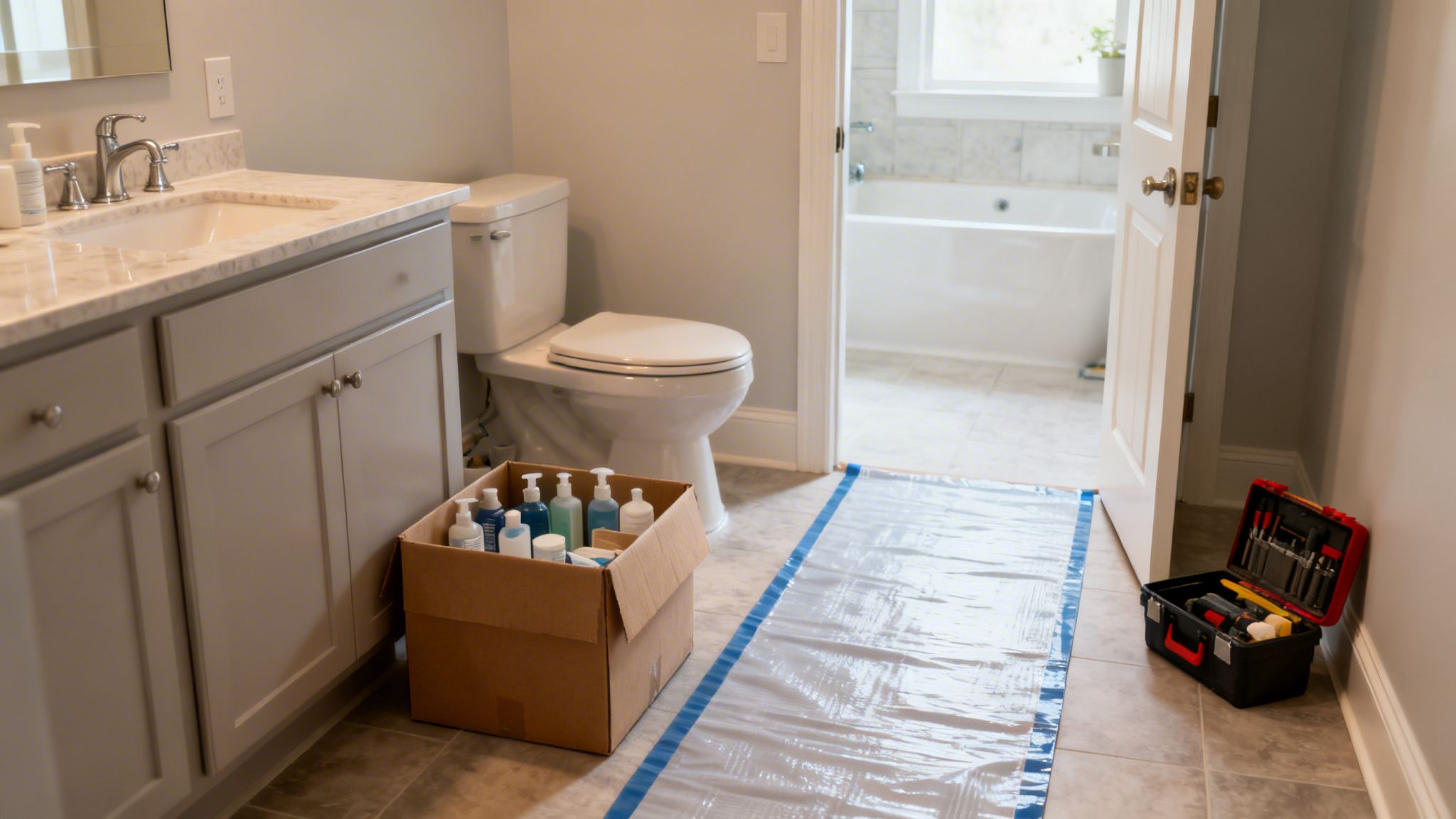
The bathroom will be out of service during the main phases of work. Dust control, debris removal, material staging, and daily cleanup all matter more than homeowners expect.

A well-run project usually includes:

  • Clear access planning: Who enters where, and when
  • Protection for adjacent finishes: Especially flooring and nearby walls
  • Trade sequencing: So one crew isn’t undoing another crew’s work
  • A punch-list at the end: Small details should be corrected before sign-off

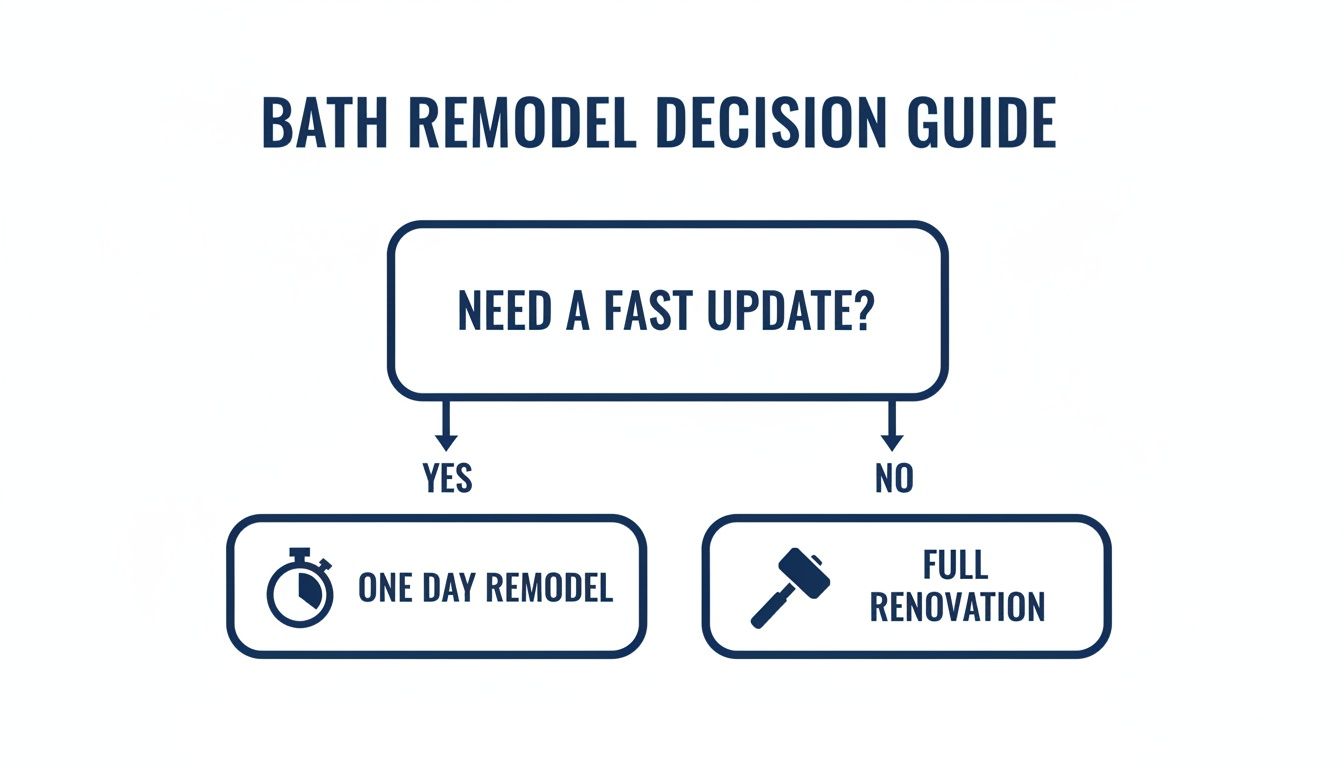
For homeowners comparing remodel speeds, this page about a one-day bath remodel helps explain why some bathroom updates move quickly and why others, especially reverse conversions with plumbing and framing changes, need a longer and more careful schedule.

Fast is only useful when the sequence still protects the plumbing, the structure, and the waterproofing.

Permits matter more than many homeowners think

When plumbing moves, permits are often part of the job. Local requirements vary by jurisdiction, so a project in Seattle may not follow the exact same path as one in Kent or Tacoma.

A professional contractor should be able to tell you:

  • whether the plumbing scope triggers permit review
  • who is pulling the permit
  • which inspections are expected
  • how corrections are handled if an inspector flags something

For homeowners, the main thing is simple. If the project changes plumbing or structural conditions, permit questions should come up early, not after demo starts.

Making the Right Choice A Homeowner Decision Guide

A shower to tub conversion can be a smart fix, a resale play, or a lifestyle upgrade. It can also be the wrong move if the room serves accessibility needs better as a shower. The right answer usually comes from how the bathroom functions day to day, not from what’s trending.

When a tub makes strong sense

A reverse conversion usually fits well when the bathroom is a shared family bath, when small children use the space regularly, or when the house lacks any practical bathtub. In those cases, adding a tub often solves a real problem instead of just changing the look.

It can also make sense when the current shower feels like a compromise. Some shower-only remodels were done quickly, with a layout that never quite suited the room. Returning the bath area to a tub can improve the room’s function more than a cosmetic refresh would.

When staying with a shower may be better

Not every household benefits from changing back. If mobility and easy entry are top priorities, a curbless or low-threshold shower may still be the better long-term fit.

That’s where a reversible approach enters the conversation. For homeowners who worry about making a permanent decision, TubcuT highlights reversible tub-to-shower conversions that preserve the cut-out section so the tub can be restored later. The idea matters because it shows how some families are planning more flexibly for aging-in-place and changing needs over time.

If you’re comparing broader design ideas, this local guide to bathroom renovations is useful for thinking through layout, finishes, and decision priorities from a homeowner perspective.

Pros and cons in plain terms

Pros

  • Family-friendly use: Easier for bathing children and more versatile for guests.
  • Comfort: A tub gives you a soaking option a shower can’t.
  • Market appeal: In many homes, at least one tub still helps the property feel more complete.
  • Balanced layout: Many older bathrooms were originally proportioned around a tub.

Cons

  • More water and cleaning: Tubs generally ask more of both.
  • Structural and plumbing complexity: Reverse conversions often involve behind-the-wall work.
  • Accessibility trade-offs: A tub wall is harder to step over than a low-entry shower.
  • Not ideal for every bathroom: Some primary baths function better as showers.

A quick homeowner checklist

Before moving forward, ask yourself these questions:

  • Who uses this bathroom most often? Kids, guests, adults aging in place, or all of the above?
  • Is this the only full bath in the home? If yes, a tub may carry more weight in the decision.
  • Does the current shower layout work? Function matters more than style photos.
  • Is the floor structure likely to support the tub you want? Heavy tubs create different demands.
  • Do you want a forever solution or a flexible one? Some families value reversibility.
  • Are you comparing this against a modernized shower instead? It helps to weigh both options.

If you’re also considering the opposite path, this overview of a bath to shower remodel can help clarify which direction fits your home better.

The best bathroom decision is the one that still makes sense five years from now, not just the one that photographs well today.

Start Your Project with a Trusted Local Partner

Shower to tub conversions look simple from the outside. In practice, they depend on solid plumbing planning, careful structural review, and waterproofing that’s built as a system. That’s why these projects go best when one experienced contractor manages the sequence from demolition through finish work.

For homeowners in Seattle, Kent, Tacoma, and the communities in between, local experience matters. Older framing, previous remodel layers, and wet-area durability all shape how the job should be built. A contractor who works in Western Washington regularly is more likely to spot the issues that national how-to articles skip.

When you speak with any contractor, ask direct questions:

  • How will you verify the drain relocation plan?
  • What will you inspect once the shower is opened up?
  • How do you handle subfloor or joist repairs if you find damage?
  • What waterproofing system will you use around the tub surround?
  • Will you handle permits and inspections if the project requires them?
  • How will you protect the rest of the home during demolition and installation?
  • What parts of the estimate are allowances, and what parts are fixed?

Good answers should sound clear, specific, and calm. Bathroom remodeling doesn’t have to feel chaotic when the scope is well understood and the process is organized from day one.


If you’re planning a shower to tub conversion and want practical guidance from a contractor that’s served Puget Sound since 1991, contact Wheeler Painting & Restoration Services. Wheeler handles residential remodeling, restoration, waterproofing, and finish work with a clear proposal process and dependable local project management.

Shower to Tub Conversions A Puget Sound Guide

A lot of Puget Sound homeowners end up in the same spot. The shower-only bathroom looked like the right move a few years ago. It felt cleaner, easier, and more modern. Then life changed.

Now there’s a toddler to bathe, a dog that won’t fit under a handheld sprayer, or a simple wish for a real soak after a long week. In older homes between Seattle, Kent, and Tacoma, that regret shows up often because bathroom layouts are already tight, and every fixture choice matters more.

That’s why shower to tub conversions deserve more attention than they get. Most remodeling advice focuses on taking tubs out. Far less helps homeowners put one back in the right way, especially in Western Washington homes where framing, moisture exposure, and older plumbing can change the whole job.

Why Convert a Shower Back to a Bathtub

A common story goes like this. A family buys a house with a stylish walk-in shower in the hall bath. It works fine for adults. Then kids arrive, guests stay over, or resale starts to matter. Suddenly the bathroom feels less practical than it did on move-in day.

That’s not a small concern. Guidance for reverse conversions is notably limited, even though anecdotal remodel trends suggest up to 20 to 30% of homeowners who converted to a shower later express regret, especially when they need a tub for children or everyday flexibility, according to Clear Water Shower Bath.

Everyday use changes faster than bathroom layouts

A shower-only setup can work beautifully for a while. Then the household changes.

Common reasons homeowners revisit the decision include:

  • Kids and grandkids: Bathing small children in a shower stall is awkward and tiring.
  • Comfort: Some people want the option to soak, especially in colder months.
  • Guest flexibility: A tub gives visitors more choice, particularly in a shared hall bath.
  • Buyer expectations: In many homes, buyers still want at least one bathtub.

A reverse conversion isn’t a step backward. It’s usually a correction. The original shower may have matched a specific season of life, but a bathtub often supports more uses over a longer stretch.

It can make a bathroom feel complete again

In many Seattle, Tacoma, and Kent homes, the bathroom footprint already suits a standard tub layout. The room may have originally been designed around that shape, then reworked later for a shower. When a tub goes back in, the room often feels more balanced.

Practical rule: If the bathroom serves children, guests, or the only full bath in the house, a tub is often the more versatile fixture.

That doesn’t mean every shower should become a tub. It means the decision should match how the room gets used. For a primary bath built around speed and accessibility, a shower may still be the better fit. For a family bath, the trade-off often looks different once daily routines settle in.

Choosing Your New Bathtub for Your Puget Sound Home

The best tub for a reverse conversion usually isn’t the fanciest one. It’s the one that fits the room, matches the framing below, and gives you the use you want.

In many Puget Sound remodels, the practical choice is an alcove tub because it fits the footprint left by a standard shower area. That said, there are other options if the room allows.

Start with tub type

Some tubs are easier to install in an existing bathroom shell. Others need more framing, more finish work, or more floor support.

Type/Material Best For Typical Cost Pros Cons
Alcove tub Standard family bathrooms and many shower to tub conversions Qualitatively, often the most straightforward option for existing bath footprints Efficient use of space, easy to pair with wall surrounds or tile, familiar layout Less of a design statement, fewer placement options
Drop-in tub Larger bathrooms with a custom deck or surround Qualitatively, often higher due to added carpentry and finish work Flexible look, can feel more custom, works well with built surrounds Needs more framing and finish work, takes more floor area
Freestanding tub Open layouts or design-led remodels Qualitatively, often higher because layout and plumbing matter more Strong visual impact, many style options Usually not ideal for tight bathroom footprints, cleaning around it can be harder
Acrylic Homeowners seeking a lighter, practical tub Qualitatively, common choice for remodels Lighter weight, good value, easier on older framing Can feel less solid than heavier materials
Fiberglass Budget-conscious projects Qualitatively, often one of the lower-cost material choices Lightweight, accessible entry point for simple remodels Can wear faster than sturdier materials
Cast iron Homeowners prioritizing durability and a substantial feel Qualitatively, often heavier and more demanding to install Durable, strong heat retention, classic look Very heavy, may require floor reinforcement
Steel Homeowners who want a hard surface and simple look Qualitatively, varies by model and finish Durable surface, clean appearance Can feel louder and cooler than other materials

Alcove tubs fit many reverse conversions best

Most shower to tub conversions work best when the new tub stays within the existing bathing zone. Alcove tubs are strong candidates because they’re made to sit between three walls and pair well with tile, solid-surface panels, or prefabricated surrounds.

That matters in older homes from Seattle to Tacoma where moving walls creates a bigger project fast. Keeping the same footprint often means less disruption, fewer finish transitions, and a more predictable build.

Material matters more than many expect

Homeowners usually focus first on style. Contractors tend to look at weight, maintenance, and how forgiving the material will be after years of use.

A few practical notes:

  • Acrylic is a common sweet spot. It’s lighter than cast iron and usually easier to work into an upper-floor bathroom.
  • Fiberglass can fit a tighter budget, though it may not wear as well over time.
  • Cast iron feels solid and holds heat well, but it places more demands on the floor system.
  • Steel can work nicely in the right setting, though some homeowners find it less comfortable for soaking.

The best tub isn’t the one that looks best in a showroom. It’s the one your house can support, your family will use, and your finish materials can protect properly.

Match the tub to the room’s job

A hall bath and a primary bath shouldn’t always get the same answer.

For a family-focused bathroom, look for a tub that’s easy to clean, practical to step into, and sized to the existing room. For a more design-driven remodel, a custom look may justify the extra carpentry and finish work. In smaller bathrooms, staying simple often produces the best result.

If you’re unsure where to start, list the bathroom’s top use cases first. Bathing children, quick cleaning, soaking, guest use, and resale all point toward slightly different tub choices. That exercise usually narrows the field fast.

Key Structural and Plumbing Considerations

The part homeowners don’t see is the part that decides whether the project lasts. A shower to tub conversion isn’t just swapping one fixture for another. The plumbing is different, the weight is different, and the waterproofing details have to be right from the start.

A professional plumber installing bathroom pipes during a shower to tub conversion project in a residential home.

Drain location is usually the first big hurdle

A shower drain is typically centered or set toward the rear. A bathtub drain sits at one end. That’s why the old shower drain location usually can’t stay as-is.

According to Clarion Bathware, moving the drain can add $800 to $2,500 and requires rerouting piping through the subfloor while maintaining a code-compliant slope of 1/4 inch per foot so wastewater flows properly. If that slope is off, water can back up, and moisture problems can follow.

In plain terms, the drain line needs enough downhill pitch to move water without turning the pipe run into a trap for standing waste. Too flat and the line doesn’t drain well. Too steep and solids can separate from the flow in some systems. Getting that balance right is basic plumbing work, but it has to be planned before the tub is set.

Older floors need a hard look before demo gets too far

A shower doesn’t place the same load on the floor as a filled bathtub. That’s especially important in older homes around Seattle, Kent, and Tacoma where floor framing may have been altered during earlier remodels.

Areas that deserve close inspection include:

  • Joist condition: Water exposure around an old shower pan can weaken framing.
  • Subfloor strength: Soft spots often hide beneath vinyl, tile, or patchwork repairs.
  • Previous cutouts: Past plumbing work sometimes left joists over-notched or drilled too aggressively.
  • Level and deflection: A tub wants stable support. Bounce in the floor can lead to finish cracks and movement.

When there’s any doubt, opening the floor enough to see the framing saves trouble later.

Waterproofing has to be rebuilt, not patched

One of the most common mistakes in reverse conversions is treating waterproofing like a finish detail. It isn’t. It’s part of the structure of the bathroom.

A proper tub installation needs a coordinated system. That may include a tub flange, a continuous wall waterproofing membrane, sealed penetrations, and careful transitions at corners and horizontal ledges. Products and methods vary, but the principle stays the same. Water will find the weak spot.

That’s where fixture planning matters too. During a remodel, many homeowners take the chance to rethink trim, controls, and pressure balance. If you’re comparing options, this overview of shower valves is useful because valve choice affects wall depth, trim compatibility, and service access once the tub surround is finished.

After the rough plumbing is set, it helps to see how a real conversion comes together in the field.

What works and what usually doesn’t

The jobs that hold up well usually share the same habits. The contractor confirms the drain path, verifies framing, dry-fits the tub, and builds waterproofing as a full system.

The jobs that struggle often involve shortcuts like these:

  • Keeping the wrong drain location: It may look close enough on paper, but tubs aren’t forgiving.
  • Setting the tub before the floor is corrected: A tub on a weak or uneven base can move.
  • Mixing waterproofing methods carelessly: Layering products without a clear system often creates failure points.
  • Treating access as an afterthought: Future service matters, especially around valves and waste connections.

If the behind-the-wall work isn’t right, the finished tile and trim only hide the problem for a while.

For Puget Sound homes, that matters even more because bathrooms don’t get much mercy from damp conditions. A careful structural and plumbing approach isn’t overbuilding. It’s what keeps a straightforward remodel from becoming a repair job later.

Understanding Shower to Tub Conversion Costs in Puget Sound

Homeowners typically want the same thing from an estimate. They want to know what drives the price, what counts as a smart upgrade, and what can surprise them once the walls are open.

That matters because national pricing for the opposite remodel gives only part of the picture. Angi reports that a tub-to-shower conversion averages about $3,000 nationally and can range from $1,500 to over $15,000, with labor accounting for 40 to 60% of the total. The same source notes that bathroom remodels adding functionality can see an average ROI of 60%, especially if the home still has at least one bathtub, according to Angi’s tub-to-shower conversion cost guide. For a shower-to-tub project in Puget Sound, those figures are useful as context, but the actual budget depends more heavily on plumbing changes, floor reinforcement, finish selection, and local labor conditions.

An infographic detailing the various costs and considerations for shower to tub conversions in the Puget Sound region.

The biggest cost drivers

A simple reverse conversion can stay fairly controlled if the bathroom keeps the same footprint and the structure is sound. The budget climbs when the project adds complexity behind the walls or below the floor.

The biggest pricing variables are usually:

  • Plumbing relocation: End-drain tubs often require more rerouting than homeowners expect.
  • Tub selection: A standard acrylic alcove tub and a heavier premium tub don’t install the same way.
  • Wall finish choice: Basic surrounds and fully tiled walls create very different labor loads.
  • Hidden repairs: Rot, mold, or patchwork framing from past remodels can change the scope.
  • Trim and fixture updates: New controls, spouts, and supply components add up quickly.

Labor is a major part of the investment

Bathroom work is detail-heavy. Even when the room is small, the trades are layered tightly together.

A typical shower to tub conversion may involve demolition, plumbing, framing repair, tub setting, waterproofing, finish carpentry, wall installation, paint, and fixture trim-out. That’s why labor often becomes one of the most significant parts of the total job cost in the broader bathroom remodeling category.

What raises a quote and what keeps it under control

If you want to keep a project predictable, the best moves are usually practical, not flashy.

Choices that often help control cost include:

  • Stay within the existing bathing footprint: Fewer layout changes usually mean fewer surprises.
  • Pick readily available fixtures: Special-order items can slow the schedule and complicate coordination.
  • Use a tub suited to the floor structure: Avoiding unnecessary reinforcement can simplify the build.
  • Make finish decisions early: Last-minute tile or trim changes usually ripple through labor.

On the other hand, costs rise when homeowners combine a reverse conversion with broad redesign moves. Moving walls, changing the vanity location, or adding custom glass can turn a targeted project into a full bathroom remodel.

A good estimate doesn’t just list materials. It shows where the house itself may influence the scope.

If you’re planning the budget, this guide on how to estimate home renovation costs is a helpful starting point because it breaks down how to think about construction pricing before you request proposals.

Puget Sound budgeting needs a little extra caution

Older homes between Seattle and Tacoma often hide previous repairs, nonstandard framing, or moisture-related damage. Newer homes can be more straightforward, but access still matters. Upper-floor bathrooms, tight crawlspaces, and limited parking or material staging can all shape labor.

That’s why a site visit matters more than an online calculator. In shower to tub conversions, the true budget usually becomes clear only after the contractor studies the drain path, framing condition, and finish expectations together.

The Conversion Process Timeline Disruption and Permits

The schedule for a shower to tub conversion depends less on square footage than on coordination. The bathroom may be small, but the work stacks tightly. Plumbing, framing, waterproofing, finish work, and inspections all need to happen in the right order.

A professional contractor pointing at a digital project plan for a shower to tub bathroom renovation.

What the project usually looks like

Most projects begin with an on-site review. The contractor checks the existing shower footprint, access to plumbing, the condition of surrounding finishes, and whether the floor looks ready for the added load of a tub.

Then the work generally moves through these phases:

  1. Demo and exposure
    The old shower, wall surfaces, and enough subfloor or wall area get opened to inspect what is there.

  2. Rough plumbing and framing
    The drain is relocated as needed, supply lines are adjusted, and framing repairs or reinforcement are completed.

  3. Tub setting
    The tub is dry-fit, leveled, secured, and connected after the support conditions are confirmed.

  4. Waterproofing and wall finish
    Surround materials go in after the wet-area prep is complete.

  5. Trim, paint, and cleanup
    Final fixtures, caulking, touch-up work, and punch-list items wrap the job.

Reinforcement can affect the timeline

Structural work is one reason these projects vary from house to house. In older Puget Sound homes, that step can’t be skipped when the floor system isn’t ready for a bathtub.

According to Safe Step Tub, a filled tub and bather can create a total load up to 1,000 pounds, and proper reinforcement can add $200 to $600 to the project. The same source notes that failing to reinforce the subfloor or sister joists can lead to cracked tile and failed waterproofing. That work adds time, but it protects the entire installation.

Expect disruption, but it should be organized

The bathroom will be out of service during the main phases of work. Dust control, debris removal, material staging, and daily cleanup all matter more than homeowners expect.

A well-run project usually includes:

  • Clear access planning: Who enters where, and when
  • Protection for adjacent finishes: Especially flooring and nearby walls
  • Trade sequencing: So one crew isn’t undoing another crew’s work
  • A punch-list at the end: Small details should be corrected before sign-off

For homeowners comparing remodel speeds, this page about a one-day bath remodel helps explain why some bathroom updates move quickly and why others, especially reverse conversions with plumbing and framing changes, need a longer and more careful schedule.

Fast is only useful when the sequence still protects the plumbing, the structure, and the waterproofing.

Permits matter more than many homeowners think

When plumbing moves, permits are often part of the job. Local requirements vary by jurisdiction, so a project in Seattle may not follow the exact same path as one in Kent or Tacoma.

A professional contractor should be able to tell you:

  • whether the plumbing scope triggers permit review
  • who is pulling the permit
  • which inspections are expected
  • how corrections are handled if an inspector flags something

For homeowners, the main thing is simple. If the project changes plumbing or structural conditions, permit questions should come up early, not after demo starts.

Making the Right Choice A Homeowner Decision Guide

A shower to tub conversion can be a smart fix, a resale play, or a lifestyle upgrade. It can also be the wrong move if the room serves accessibility needs better as a shower. The right answer usually comes from how the bathroom functions day to day, not from what’s trending.

When a tub makes strong sense

A reverse conversion usually fits well when the bathroom is a shared family bath, when small children use the space regularly, or when the house lacks any practical bathtub. In those cases, adding a tub often solves a real problem instead of just changing the look.

It can also make sense when the current shower feels like a compromise. Some shower-only remodels were done quickly, with a layout that never quite suited the room. Returning the bath area to a tub can improve the room’s function more than a cosmetic refresh would.

When staying with a shower may be better

Not every household benefits from changing back. If mobility and easy entry are top priorities, a curbless or low-threshold shower may still be the better long-term fit.

That’s where a reversible approach enters the conversation. For homeowners who worry about making a permanent decision, TubcuT highlights reversible tub-to-shower conversions that preserve the cut-out section so the tub can be restored later. The idea matters because it shows how some families are planning more flexibly for aging-in-place and changing needs over time.

If you’re comparing broader design ideas, this local guide to bathroom renovations is useful for thinking through layout, finishes, and decision priorities from a homeowner perspective.

Pros and cons in plain terms

Pros

  • Family-friendly use: Easier for bathing children and more versatile for guests.
  • Comfort: A tub gives you a soaking option a shower can’t.
  • Market appeal: In many homes, at least one tub still helps the property feel more complete.
  • Balanced layout: Many older bathrooms were originally proportioned around a tub.

Cons

  • More water and cleaning: Tubs generally ask more of both.
  • Structural and plumbing complexity: Reverse conversions often involve behind-the-wall work.
  • Accessibility trade-offs: A tub wall is harder to step over than a low-entry shower.
  • Not ideal for every bathroom: Some primary baths function better as showers.

A quick homeowner checklist

Before moving forward, ask yourself these questions:

  • Who uses this bathroom most often? Kids, guests, adults aging in place, or all of the above?
  • Is this the only full bath in the home? If yes, a tub may carry more weight in the decision.
  • Does the current shower layout work? Function matters more than style photos.
  • Is the floor structure likely to support the tub you want? Heavy tubs create different demands.
  • Do you want a forever solution or a flexible one? Some families value reversibility.
  • Are you comparing this against a modernized shower instead? It helps to weigh both options.

If you’re also considering the opposite path, this overview of a bath to shower remodel can help clarify which direction fits your home better.

The best bathroom decision is the one that still makes sense five years from now, not just the one that photographs well today.

Start Your Project with a Trusted Local Partner

Shower to tub conversions look simple from the outside. In practice, they depend on solid plumbing planning, careful structural review, and waterproofing that’s built as a system. That’s why these projects go best when one experienced contractor manages the sequence from demolition through finish work.

For homeowners in Seattle, Kent, Tacoma, and the communities in between, local experience matters. Older framing, previous remodel layers, and wet-area durability all shape how the job should be built. A contractor who works in Western Washington regularly is more likely to spot the issues that national how-to articles skip.

When you speak with any contractor, ask direct questions:

  • How will you verify the drain relocation plan?
  • What will you inspect once the shower is opened up?
  • How do you handle subfloor or joist repairs if you find damage?
  • What waterproofing system will you use around the tub surround?
  • Will you handle permits and inspections if the project requires them?
  • How will you protect the rest of the home during demolition and installation?
  • What parts of the estimate are allowances, and what parts are fixed?

Good answers should sound clear, specific, and calm. Bathroom remodeling doesn’t have to feel chaotic when the scope is well understood and the process is organized from day one.


If you’re planning a shower to tub conversion and want practical guidance from a contractor that’s served Puget Sound since 1991, contact Wheeler Painting & Restoration Services. Wheeler handles residential remodeling, restoration, waterproofing, and finish work with a clear proposal process and dependable local project management.

Choosing the Right Finish for Ceiling Paint in 2026

When it comes to painting a ceiling, we'll get right to it: for the vast majority of homes and commercial spaces, a flat or matte finish is the undisputed champion. It’s the industry standard for a reason. This non-reflective paint is a master of disguise, hiding the common bumps and seams you find on most ceilings. It creates a clean, uniform look that makes a room feel more expansive and peaceful, whether it's a residential home in Seattle or a commercial property in Kent.

Your Guide to the Best Finish for Ceiling Paint

A light-colored ceiling with a wooden ladder standing in a room during renovation.

Choosing a ceiling paint finish might feel like a minor detail, but it has a massive impact on the finished look of a space. For property managers and homeowners here in the Seattle-Tacoma area, getting this choice right from the start means a professional result that holds up. Your ceiling is a huge, blank canvas that interacts with light all day long, and that’s precisely why the finish is so important.

Think of it this way: using a paint with any shine on a ceiling is like taking a photo with the flash on in a dusty room. The light will catch and highlight every single imperfection—every drywall seam, patch, or subtle flaw becomes glaringly obvious. A flat finish, on the other hand, absorbs light. It softly diffuses it, effectively blurring those same minor imperfections into a smooth, flawless-looking surface.

Why Flat Paint Is the Top Choice

Professional painting contractors lean on a flat finish for ceilings because of its unique ability to bring a sense of calm and cohesion to a room. This is especially true in the Pacific Northwest, where our natural light shifts so dramatically. A non-reflective ceiling looks consistent whether you're dealing with a bright, sunny afternoon in Kent or a classic gray, overcast morning in Tacoma.

But it’s not just about looks; it's also incredibly practical.

  • Hides Imperfections: Most ceilings aren't perfect. They have subtle flaws from the initial construction or later repairs. A flat finish is your best friend here, making those blemishes all but disappear.
  • Reduces Glare: By diffusing light instead of reflecting it, it prevents those distracting "hot spots" of glare, creating a softer and more comfortable atmosphere for living rooms, bedrooms, and offices.
  • Easy Touch-Ups: Scuffs happen. Thankfully, flat paint is the easiest finish to touch up later without leaving obvious, shiny patches. This is a huge plus for long-term facility maintenance.

For both residential remodeling and commercial renovations, a flat finish delivers that high-end, architectural look without drawing your eye up to the ceiling. It lets your walls, furniture, and decor be the stars of the show.

To make your decision a bit easier, here’s a quick-glance table comparing the most common finishes and where they work best on ceilings.

Ceiling Paint Finish Comparison Guide

This table breaks down the pros and cons of each finish to help you match the right paint to the right room and ceiling condition.

Finish Type Appearance Best For Pros Cons
Flat/Matte No shine, non-reflective Most ceilings, low-traffic areas, textured surfaces Hides imperfections, easy to touch up, reduces glare Less durable, not easily washable
Eggshell/Satin Low to medium luster Bathrooms, kitchens, high-moisture areas More durable, easier to clean, resists mildew Can highlight minor flaws in drywall
Semi-Gloss Noticeable shine, reflective Trim, architectural details, high-moisture zones Very durable and washable, moisture resistant Highlights every imperfection, difficult to apply evenly

As you can see, while a flat or matte finish is the go-to for most situations, rooms with high moisture or a need for frequent cleaning—like bathrooms and kitchens—are the main exceptions where an eggshell or satin finish might be a better fit.

From Ancient Skies to Modern Homes

Most people don't spend a lot of time thinking about their ceiling, but the simple act of painting it connects us to a tradition thousands of years old. What we do with that "fifth wall" today is the latest chapter in a long story about art, status, and science.

It all started with a desire to bring the heavens indoors. Think of the ancient Egyptian tombs, with their brilliant blue ceilings covered in stars, meant to guide souls into the afterlife. Centuries later, that same impulse for an impressive overhead view was alive in the 1700s, where blue paints made from semi-precious stones could cost 10 times their weight in gold. A blue ceiling wasn't just decorative; it was a loud and clear statement of wealth.

The game changed completely in the late 19th century. New synthetic dyes crashed pigment costs by over 90%, and suddenly, vibrant color wasn't just for the ultra-rich. This led to a boom in home decoration, with gloss paint production jumping 300% in just one decade. You can trace this whole journey, from sacred skies to the very first cans of household paint, by looking at some of history's most stunning overhead canvases.

The Shift from Pure Art to Practical Science

For a long time, a ceiling’s finish was all about looks. The Rococo era, for example, gave us incredible gold-leaf ceilings designed to shimmer and reflect candlelight, creating an almost divine glow. They were breathtaking works of art, but wildly impractical and incredibly expensive.

As our own region grew, with early settlements popping up in Seattle and Tacoma, practicality took over. People needed simple, effective ways to finish their homes. Plaster and whitewash became the standard, valued for their ability to brighten up rooms and cover the basic wood structures underneath. This was a turning point. We started thinking about ceilings not just as a canvas, but as a functional part of the room that could control light and make a space feel bigger and cleaner.

Modern Finishes: The Legacy in Every Can

Every time we help a homeowner in Tacoma pick a durable kitchen finish or a facility manager in Kent choose a low-VOC paint for a commercial space, we're building on that history. The advanced formulas we use today are the direct descendants of that centuries-long quest for the perfect overhead finish.

The evolution of ceiling paint is really a story about solving problems. From the earliest pigments to today’s high-tech formulas, the goal has always been the same: create a finish that looks incredible, performs flawlessly, and lasts.

This is why Wheeler Painting gets so obsessed with getting the finish right. We know a ceiling does more than just sit there. It manages a room's light, conceals imperfections, and ultimately sets the entire mood of the space.

The tools have gotten better and the chemistry is more complex, but the mission hasn't changed. Whether it was an ancient artisan trying to capture the night sky or our crew working on a home in Puget Sound, the job is to use the best technology available to create a perfect result. Understanding that connection to a long line of craftsmen makes a technical decision, like choosing the right finish for ceiling paint, feel like part of a much bigger story.

Understanding How Paint Sheens Work

Choosing the right finish for ceiling paint can feel overwhelming, but the core idea is simple: it’s all about how the paint plays with light. Every paint finish sits somewhere on a spectrum, from completely non-reflective to almost mirror-like. Each step along that spectrum is a trade-off between hiding flaws and being easy to clean.

Think of flat paint as a soft-focus filter for your ceiling. It absorbs light, which helps it blur and conceal minor imperfections like old drywall patches or an uneven texture. On the other end of the spectrum, high-gloss paint is like a magnifying glass. It bounces light everywhere, highlighting every tiny bump and wave on the surface, but it's incredibly durable.

For anyone managing property in the Seattle-Tacoma area—whether you're a homeowner tackling a residential remodeling project or a facility manager handling tenant improvement services—getting this one concept down is the key to making a great choice.

What’s in the Can? The Role of Binders and Pigments

So, what actually makes a paint shiny or dull? It all comes down to the recipe, specifically the ratio of pigment (the color particles) to resin (the "binder" that holds it all together).

  • Flat and Matte Finishes: These paints are loaded with pigment and have less binder. When the paint dries, the pigments create a slightly rough, porous surface that scatters light in all directions. This light-scattering magic is what makes flat finishes so forgiving.

  • Glossy Finishes: Glossier paints flip that recipe, using a much higher concentration of binder. The resin forms a smooth, tight film over the pigment particles. When light hits this slick surface, it reflects right back at you, creating that noticeable shine.

Here’s the main takeaway: the more binder in the paint, the tougher and more moisture-resistant it becomes. This is exactly why the shiniest paints are also the most durable and easiest to clean.

For a facility manager in Kent dealing with high-traffic hallways or a homeowner in Tacoma renovating a steamy bathroom, this trade-off is critical. You have to balance the need for a forgiving appearance against the demand for a surface that can withstand moisture and frequent cleaning.

A Practical Sheen Breakdown

Let's walk through the common sheens you’ll find on the shelf, moving from the least shiny to the most. For reference, a standard flat ceiling paint has a gloss level of 0-5%, while a high-gloss can shoot up to 85% or more.

Flat and Matte

This is the default choice for most ceilings, and for good reason. A flat finish has almost no shine, so its main job is to create a uniform look that does an amazing job of hiding flaws. While "flat" and "matte" are often used interchangeably, a true matte finish might have a tiny bit more sheen (around 5-10% gloss), which gives it a slight edge in durability without being noticeably reflective. It's the perfect solution for living rooms, bedrooms, and office space renovations.

Eggshell and Satin

Moving up the shine scale, eggshell has a very subtle, low-angled glow, much like the shell of an egg. It’s more washable than flat and a great compromise when you need some durability but want to keep the shine low. Satin is the next step up, offering a smooth, velvety luster. It’s a workhorse for bathrooms and kitchens where moisture and cleanup are a concern. Just remember, that added sheen will start to show more surface imperfections than a flat finish would.

Semi-Gloss and High-Gloss

These are the champions of durability. Semi-gloss gives you a significant shine and a hard, scrubbable surface, making it the go-to for trim, doors, and areas that get a lot of moisture. High-gloss is the toughest and most reflective of all, but it’s usually reserved for specific architectural details to create a dramatic, lacquered look.

On a big surface like a ceiling, these high-shine finishes are almost never a good idea for typical residential or commercial spaces. They magnify every single flaw and can create a harsh, sterile feeling. Plus, they are incredibly difficult to apply without leaving behind obvious roller or brush marks, making them a job best left to a seasoned professional contractor.

Matching the Finish to the Room

Alright, we've talked about the "what" and "why" of paint sheen. Now for the fun part: putting that theory to work on the biggest, most overlooked surface in any room—the ceiling. Choosing the right finish for ceiling paint isn't just an academic exercise. It’s about making a practical decision that affects how a room looks and feels every single day.

Get it right, and your ceiling becomes a flawless, unnoticed backdrop. Get it wrong, and you’ll be staring at every little imperfection or dealing with peeling paint in a matter of months. For homeowners and property managers here in the Puget Sound, making the smart choice upfront saves a lot of headaches down the road.

This simple flowchart can help point you in the right direction.

A paint sheen decision guide flowchart helping select between flat, gloss, and eggshell/satin finishes.

As you can see, the core decision really boils down to a trade-off: do you need to hide flaws, or do you need maximum durability?

For Living Rooms, Bedrooms, and Offices

In most of the home—think living rooms, bedrooms, and offices—the goal is comfort. These are low-traffic, dry areas where you want a soft, non-distracting overhead surface. This makes them the perfect place for a flat or matte finish.

A flat finish is a painter's best friend for hiding the reality of most ceilings: minor drywall taping flaws, settled nail pops, and other small imperfections. Instead of reflecting light and highlighting those issues, it absorbs light, creating a smooth, uniform appearance. This is especially helpful in rooms with lots of natural light, where glare from a shinier finish can be incredibly distracting.

For Kitchens, Bathrooms, and Laundry Rooms

When you move into kitchens, bathrooms, and laundry rooms, the rules change completely. Here, moisture is the main concern. Steam from a hot shower or a boiling pot of water creates a humid environment that is tough on paint, leading to mildew, stains, and peeling.

This is where you need a finish with some protective power. For these high-moisture zones, we almost always recommend one of two options:

  • Satin Finish: This is the go-to for most bathrooms and kitchens. It has a soft, velvety luster that’s durable enough to resist moisture and can be easily wiped clean without scrubbing the paint off.
  • Semi-Gloss Finish: If you need maximum protection—say, in a poorly ventilated bathroom or a commercial kitchen—semi-gloss is your champion. Its hard, slick surface is almost waterproof, repels mildew, and can handle repeated, heavy-duty cleaning.

Yes, the added sheen will show surface imperfections more than a flat paint would, but it's a worthwhile trade-off for long-term durability in these demanding spaces. For a deeper dive into this, check out our guide on repainting a bathroom ceiling.

Choosing the right sheen is a functional decision that extends the life of your paint job. In the damp climate of the Puget Sound, selecting a moisture-resistant finish for kitchens and baths is a non-negotiable step for long-lasting results.

Special Cases: Textured and Popcorn Ceilings

Textured ceilings, especially the "popcorn" style, are a whole different ballgame. Their rough, bumpy surface creates thousands of tiny peaks and valleys, each one ready to catch the light.

For any textured ceiling, a flat finish is the only real choice. Seriously. Using anything with even a hint of sheen—like eggshell or satin—will cause every tiny bump to catch the light, creating a glittery, "disco ball" effect that is incredibly distracting. A flat finish, on the other hand, absorbs light and helps the texture visually recede, keeping it from overwhelming the room.

Interestingly, the idea of the ceiling as a decorative canvas isn't new. In the Victorian era, wealthy homeowners often had intricate stenciled patterns on their parlor ceilings, using chalky, water-based paints to create a flat, breathable surface that contrasted beautifully with glossy, oil-based trim. You can see some amazing examples of this in modern decorative painting.

Pro Tips for a Flawless Ceiling Finish

Getting a ceiling to look truly professional isn't just about rolling on some paint. As a local contractor who has worked on everything from residential remodels in Kent to new commercial spaces in Tacoma, we know the secret: a flawless finish is earned through painstaking prep and the right technique. Here are a few insider tips our Wheeler Painting crews live by.

Painting tools: ladder, primer can, roller, brushes, and sanding block ready for wall preparation.

Surface Preparation Is Non-Negotiable

You can’t just paint over problems. Trying to cover dust, grease, or old flaws is a surefire way to get a disappointing finish that will peel or show imperfections down the road. You need to start with a clean, smooth canvas.

Here’s what that looks like in practice:

  • Thorough Cleaning: Start by gently washing the ceiling. A mild detergent and water will handle dust and cobwebs, but in kitchens, you'll need a degreaser to cut through the inevitable cooking residue.
  • Patching Imperfections: Use spackle or joint compound to fill every last nail hole, crack, and dent. As an experienced drywall contractor, we know when it's best to call a pro to ensure the repair is completely invisible.
  • Sanding Smooth: After your patches have fully cured, sand them perfectly flush with the ceiling using fine-grit sandpaper. This is the step that makes repairs truly disappear once the paint goes on.

The Secret Weapon: A Quality Primer

It’s tempting to skip primer to save time, but any professional will tell you that’s a big mistake. Primer is the foundation of a great paint job, ensuring your topcoat adheres properly, looks uniform, and lasts for years. It's especially critical if you're covering stains or making a big color change.

Think of it this way: a high-quality, stain-blocking primer is your best line of defense against stubborn water spots, old smoke damage, or wood tannins that bleed through. It creates a sealed, neutral barrier so your final paint color looks exactly as intended.

For facility managers tackling tenant improvement projects or homeowners simply updating a room, primer isn't just a good idea—it’s a non-negotiable step that saves money and headaches later. If you're unsure about the specifics, our guide on when to prime sheetrock before painting breaks it all down.

Professional Application Techniques

Once your surface is clean and primed, it’s time to paint. But how you apply the paint is just as critical as the prep work. Using the right technique is what separates a smooth, uniform finish from a DIY job riddled with roller marks.

Attention to detail on ceilings is a tradition that goes back centuries. During the Rococo period (1650–1790), for example, over 80% of grand European ceilings were painted in pale blues to mimic the sky, often with painters applying up to 12 coats to get the right depth. In Parisian Art Nouveau cafes, raised plaster borders covering 20-30% of the ceiling were finished with metallic sheens, optically boosting the room’s perceived height by 15-20%. That same legacy of expert finishing is what we bring to every modern project.

To get a smooth, professional look, follow the "cut and roll" method:

  1. Cut In First: Using a 2-3 inch angled brush, paint a clean three-inch-wide band along the edges where the ceiling meets the walls.
  2. Roll Immediately: Don't let that edge dry! While it's still wet, start rolling the main part of the ceiling, slightly overlapping the brushed area to blend everything together.
  3. Maintain a Wet Edge: As you roll, always work from the wet, just-painted section into the dry, unpainted area. Overlap each pass of the roller by about 30%. This "wet edge" technique is the key to avoiding lap marks—those ugly lines that appear when paint dries at different rates.

For more specialized tips, especially if you're working with unique surfaces, this guide to finishing basement ceilings is a great resource.

Why a Professional Finish Matters in Puget Sound

Picking the right finish for ceiling paint feels like it should be simple, but there's more to it than meets the eye. You’re really balancing looks with performance, figuring out how light will play off the surface, and matching the product to what a room is actually used for. For busy property owners and facility managers here in the Puget Sound, getting that balance right is where a professional's experience really shines.

Hiring a trusted local painting contractor like Wheeler Painting isn’t just about getting a fresh coat on the walls. It’s about investing in decades of know-how and a deep-seated commitment to a flawless, lasting finish.

Beyond the Paint Can: The Value of Expertise

Let’s be honest—a DIY ceiling project can go south fast. You might find stubborn stains bleeding right through a new coat of paint, or notice ugly roller marks (what we call lap marks) that only show up once everything is dry. These little mistakes can compromise the whole job, often forcing you to start over and turning a weekend task into a month-long headache.

When you partner with Wheeler Painting, you sidestep all of that frustration. We know exactly which primers will permanently lock down the tough, water-related stains common in older homes around Seattle and Tacoma. Our crews are masters of the "wet edge" technique, which is the secret to a perfectly uniform, streak-free surface every single time. It's this meticulous process that ultimately saves you time, money, and a lot of stress.

For our commercial clients, like a facility manager handling a tenant improvement in Kent, this kind of reliability is everything. We deliver a high-quality finish on time and on budget, so you can minimize disruption and get the space ready for business.

A Flawless Finish That Protects Your Investment

A professionally painted ceiling does more than just look clean; it adds real, tangible value to your property. An expertly finished ceiling makes any room feel brighter, bigger, and far better maintained—a huge plus whether you're trying to boost home resale value or attract premium commercial tenants.

We manage every detail, so you don't have to.

  • Expert Consultation: We start by helping you navigate the options to select the perfect finish and color for your space, lighting, and daily use.
  • Meticulous Preparation: Our process always includes thorough surface cleaning, professional-grade patching, and precision sanding to create the perfect canvas for the paint.
  • Guaranteed Quality: We work with top-tier materials and proven application techniques to deliver a durable finish that will hold up, whether it’s in a steamy bathroom or a high-traffic commercial hallway.
  • Total Accountability: From the first proposal to the final cleanup, Wheeler Painting is your single, accountable partner. We make sure the project is stress-free and the results exceed your expectations.

Don’t leave the final look and feel of your property to chance. Contact Wheeler Painting today for a detailed proposal and see how our professional craftsmanship can elevate your space.

Frequently Asked Questions About Ceiling Paint

As local painting contractors serving the Puget Sound, we get a lot of great questions from homeowners and property managers about ceilings. It’s an often-overlooked surface, but getting the paint right makes a huge difference. Here are the answers to the questions we hear most often.

Can I Use the Same Paint on My Walls and Ceiling?

You technically can, but we almost never recommend it. Think of it this way: ceiling paint is formulated specifically for its job. It's thicker to minimize drips and splatter (a lifesaver when you're painting overhead) and has a very flat finish designed to hide the minor imperfections every ceiling has.

Using a wall paint with a bit of sheen, like eggshell or satin, will actually do the opposite—it will catch the light and highlight every tiny bump and wave. For a clean, professional look, a dedicated flat ceiling paint is always your best bet.

What Is the Best Way to Paint a Textured or Popcorn Ceiling?

For any kind of textured ceiling, from a light orange peel to a full-on popcorn texture, a flat finish is essential. Anything with even a hint of shine will catch the light from a million different angles, creating a distracting "disco ball" effect.

The key to application is a thick-nap roller, at least 3/4 inch, to push paint into all those nooks and crannies. Use a light touch to avoid breaking off pieces of the texture. Honestly, for heavy textures, spraying is the most efficient way to get a perfectly even coat without damaging the surface.

How Do I Choose a Ceiling Color?

Classic white is the go-to for a reason—it makes any room feel brighter and more spacious. It's a foolproof choice that works just about anywhere.

But if you want a more custom, designer feel, you have other options. Painting the ceiling a few shades lighter than your wall color can create a beautiful, cohesive look. In rooms with very high or vaulted ceilings, going with a slightly darker color can actually make the space feel a bit cozier and more grounded. At Wheeler Painting, we are always happy to walk through these options during a color consultation for your Kent or Seattle-area property.

For specialty projects, like those with beautiful plasterwork, the right application is everything. If you're aiming for that kind of high-end, durable finish, we often recommend working with local professional plaster applicators in Washington to ensure a flawless result.

Do I Really Need to Use Primer on My Ceiling?

Yes, priming is a non-negotiable step in certain situations. It’s the foundation of a good paint job and prevents a lot of headaches down the road. You absolutely need a stain-blocking primer if your ceiling has:

  • Water stains (even old ones)
  • Smoke or nicotine damage
  • A dark color you need to cover

Primer seals these problem areas so they can't bleed through your fresh topcoat. It also creates a uniform surface, which helps the paint adhere better and last longer. Skipping primer is often why you see issues like peeling or bubbling later on. You can learn more about that in our guide on what causes paint to bubble on walls.

Transform Your Bathroom with a One Day Bath Remodel

Imagine this: you leave for work in the morning with a drab, dated bathroom and come home that evening to a sparkling new shower. It sounds like a dream, but for homeowners and property owners across the Puget Sound, it's the reality of a one-day bath remodel—a smart, efficient alternative to a traditional renovation that can drag on for weeks.

The Secret to a New Bathroom in Just One Day

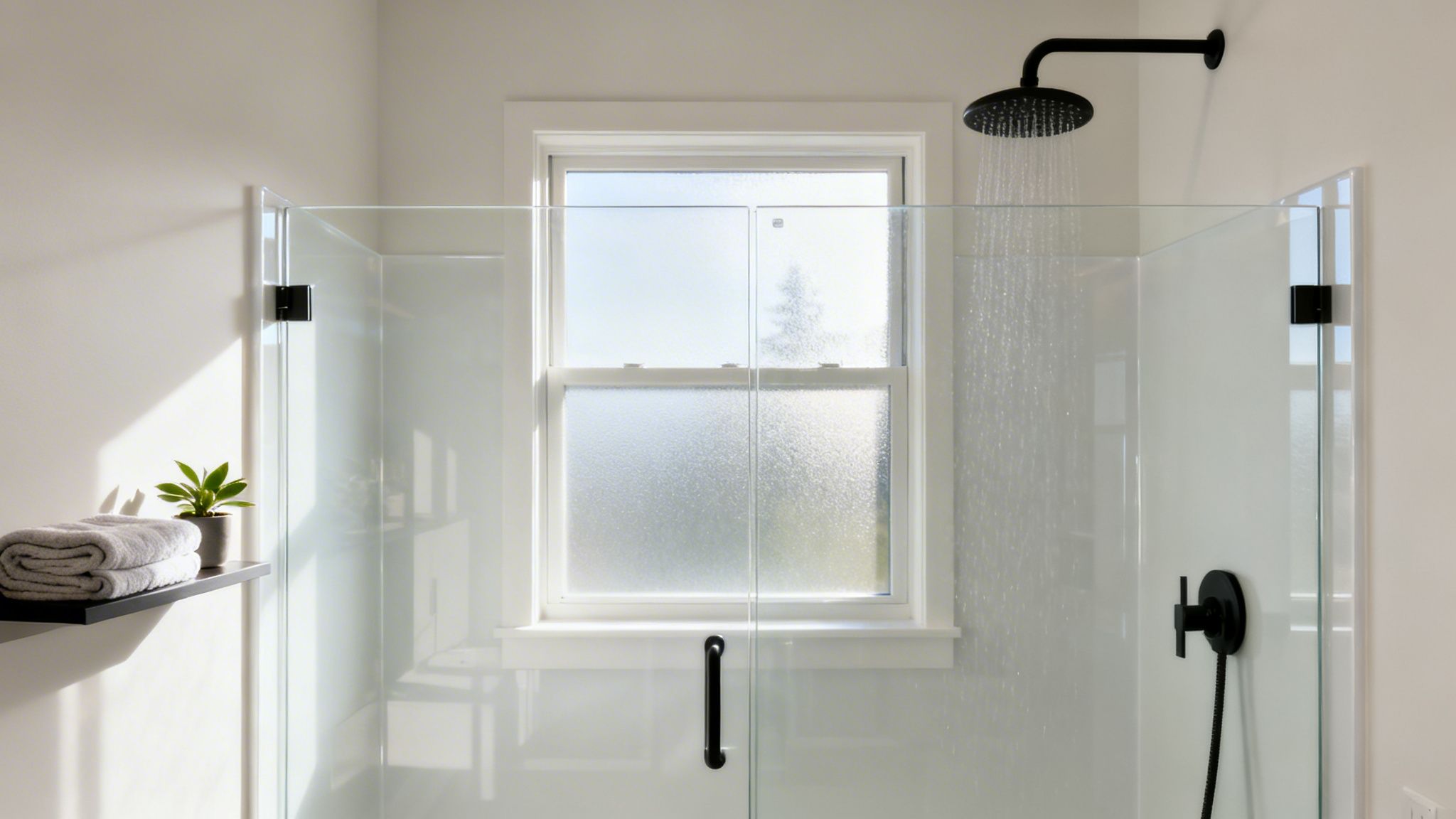
A modern walk-in shower with a clear glass enclosure, black fixtures, and a frosted window.

So, how is this even possible? The magic isn't in cutting corners; it's in a focused, professional approach. Instead of a full gut job that tears your bathroom down to the studs, a one-day remodel concentrates exclusively on the “wet area”—your tub, shower, and the walls around them. This delivers the biggest visual impact without the weeks of dust, noise, and disruption.

It’s a game-changer for anyone in Seattle, Kent, or Tacoma who can’t afford to have their primary bathroom out of commission. The process usually involves one of these core updates:

  • Bathtub or Shower Replacement: A tired, cracked unit is swapped out for a pristine, high-quality acrylic model.
  • Tub-to-Shower Conversions: That old, high-sided tub you never use becomes a safe, modern, and accessible walk-in shower—a popular residential remodeling choice.
  • Durable Wall Surrounds: Old tile and crumbling grout are covered with beautiful, non-porous wall panels that are a breeze to clean.

The key is that everything is measured and custom-fabricated ahead of time. When our installation team arrives at your home, it’s all about precise, clean fitting, not weeks of demolition.

Fast, Focused, and Surprisingly Affordable

This targeted strategy also makes a one-day remodel incredibly cost-effective. A traditional, full-scale bathroom remodel can easily top $12,000, but a one-day project typically falls in the $7,500 to $22,500 range. You save big because the existing layout, plumbing, and electrical stay put.

By focusing on the part of your bathroom that sees the most wear and tear, you get a beautiful and highly functional new space with almost no interruption to your life. Take a look at how one-day remodel costs compare to traditional projects, and you'll see why it's such a popular choice for homeowners who want fast results without sacrificing quality—a solution we're proud to offer at Wheeler Painting.

How Can a Bathroom Be Transformed So Quickly?

It seems almost unbelievable, doesn't it? A complete bathroom transformation in a single day sounds more like a TV show gimmick than reality. But the secret isn't magic—it's all about meticulous preparation and focusing on what matters most.

The term "one-day" really refers to the on-site installation. The real work actually happens weeks before our team ever sets foot in your Kent or Tacoma home. It all starts when we take incredibly precise, digital measurements of your current bathtub or shower space. From there, we custom-fabricate your new acrylic bath system off-site, built to fit your bathroom down to the millimeter. It’s like having a bespoke suit made, but for your bathroom; it’s designed to slide perfectly into place over your existing footprint.

Smart Systems for Rapid Results

When installation day finally arrives, our technicians aren't showing up with a sledgehammer and a dumpster. There's no chaotic, dusty demolition. Instead, they're installing a finished product that was built just for you. This approach is what allows for such a stunning change without the headache of moving plumbing, re-routing pipes, or tearing down walls.

This is how we deliver on the one-day promise. We concentrate all our effort on the "wet area"—the tub and shower surround, which is the most used and most impactful part of the bathroom. It’s a method that has become a lifesaver for Puget Sound families who need a functional, beautiful upgrade without having their home turned into a construction zone for weeks on end. You can get a closer look at how we tackle these projects with our bathtub and shower conversions.

The One-Day Advantage: Cost and Efficiency

A traditional, midrange bathroom remodel can easily run you $26,000 or more. One-day remodels, on the other hand, offer a much more accessible price point. Because we're using pre-fabricated systems and a streamlined process, most projects land somewhere between $6,000 and $15,000. Our skilled teams can have the entire job done in just 8-10 hours because every component is designed for efficiency.

Part of that speed also comes from making smart choices on materials that work well together. For instance, knowing what flooring is best for bathroom remodels in our damp Puget Sound climate can prevent delays and future issues, making the whole process smoother.

The key is focusing on high-impact changes without messing with the bathroom's existing layout. This is why 75% of one-day projects stay under $15,000, putting a modern, worry-free bathroom within reach for more homeowners.

One Day Remodel vs. Full Renovation

So, you’re ready to update your bathroom, but you’re stuck on a big question: should you go for a quick one-day update or a full-blown, down-to-the-studs renovation? It’s a common dilemma for homeowners around Seattle, and honestly, the right answer really depends on what you’re trying to achieve.

A one day bath remodel is all about speed and precision. It’s the perfect choice if you're dealing with a specific problem—like a grimy, outdated shower or a cracked tub that’s seen better days. It's also a fantastic way to improve safety with a tub-to-shower conversion or add a quick burst of value to your home before selling. The entire focus is on the "wet area," which is where you get the most bang for your buck.

On the other hand, a full renovation is your ticket to total creative control. This is the path you take when you’re dreaming of a brand-new layout, moving plumbing, or creating a custom spa-like retreat from scratch. It’s a much bigger undertaking, but the payoff is a space that is completely, uniquely yours.

Scope and Timeline

The biggest difference between the two really comes down to scope. A one-day project is surgical, while a full renovation is an all-encompassing overhaul.

  • One Day Remodel: All the work happens right in your tub or shower space. We’re talking about replacing the old unit, fitting a new acrylic surround, and installing fresh fixtures. Because the plumbing and electrical stay put, the whole job can be done in just a matter of hours, not weeks.

  • Full Renovation: This means tearing everything out. We’re talking new floors, vanity, toilet, lighting—maybe even taking out a wall. A project of this scale requires coordinating plumbers, electricians, and tile setters, which is why it often stretches into several weeks or even months.

This handy chart can help you see which direction makes the most sense for your project.

A bath remodel decision guide flowchart comparing one day updates vs. full renovations.

As you can see, if getting it done fast and without a major disruption is your main goal, a one-day remodel is the clear winner.

To make the comparison even clearer, here’s a side-by-side look at the key differences.

One Day Remodel vs. Full Bathroom Renovation

Feature One Day Remodel Full Renovation
Timeline Typically 8-12 hours 3-8 weeks or more
Scope Focused on the wet area (tub/shower) Entire bathroom, including layout changes
Disruption Minimal; bathroom is usable same day Major; bathroom is unusable for weeks
Cost Significantly lower Substantially higher
Customization Limited to pre-selected styles & colors Nearly unlimited design freedom
Best For Fixing specific issues, safety updates, quick cosmetic lifts Complete redesign, changing layouts, high-end custom finishes

Ultimately, choosing the right path comes down to balancing your immediate needs with your long-term vision for the space.

Budget and Customization

Your budget and how much you want to personalize the space are, of course, huge factors. A one day bath remodel is much friendlier on the wallet, mainly because you're skipping the massive labor costs of demolition and re-routing plumbing. You get a clean, modern look without the sticker shock of a complete tear-out.

A full renovation gives you endless opportunities for customization—from intricate tile patterns to that unique vanity you saw online—but that level of freedom comes with a much higher price tag and a longer wait. A one-day project streamlines the process with a carefully chosen selection of high-quality, durable materials that are designed to look great and be installed efficiently.

At the end of the day, there’s no single "best" choice—only the best choice for you. As a trusted local contractor who has served homeowners and businesses across Kent, Tacoma, and the Puget Sound for years, we at Wheeler Painting have seen it all. We can walk you through the pros and cons of each approach to make sure the final result perfectly matches your goals, budget, and timeline.

Understanding Your One-Day Remodel Costs in 2026

So, what does a one-day bath remodel actually cost here in the Seattle-Tacoma area? It’s one of the first questions we get from local property owners, and for good reason. While the speed and convenience are huge draws, the affordability is what often seals the deal for homeowners.

Of course, there’s no single price tag. The final cost really depends on what you want to accomplish and the materials you choose. Your decisions are what shape the final bill.

What Influences the Final Price

The biggest factor, hands down, is the scope of the project. Are we talking about a clean, simple acrylic tub liner that fits right over your old, worn-out tub? Or are you dreaming of a full tub-to-shower conversion? That conversion involves more work, so naturally, it will sit at the higher end of the price range.

From there, the specific materials and features you select will layer into the cost. Think of it like customizing a new car—the base model is great, but the premium upgrades will add up.

  • High-end fixtures like a luxurious rain showerhead or a specific designer faucet.
  • Accessibility features that add safety and comfort, such as strategically placed grab bars or a built-in shower seat.
  • Glass door options, which can range from a standard sliding door to a show-stopping, heavy frameless glass enclosure.

Here's a number that really highlights the value: one-day bath remodels save homeowners money primarily by keeping the existing plumbing right where it is. That single decision avoids a massive amount of labor and materials, slashing project costs by 25-35% on average compared to a tear-out renovation.

Local Costs and How We Save You Money

In the Puget Sound market, we're fortunate to have competitive pricing compared to other big coastal cities. A full, down-to-the-studs bathroom renovation can easily run into the tens of thousands. A one-day remodel delivers a stunning new look for a fraction of that by being smarter and more efficient. We dive deeper into this topic in our guide to affordable bathroom remodel options.

At Wheeler Painting, our entire process was designed to give you that value without ever compromising on quality. We custom-fabricate your new tub or shower system in our workshop before we ever set foot in your home.

This simple step is a game-changer. It dramatically cuts down on the expensive on-site labor hours. Our team arrives with everything they need, ready to install quickly and with minimal disruption. We get in, get the job done beautifully, and get out—passing those efficiency savings directly on to you. It's how we deliver exceptional results for homeowners in Kent, Tacoma, and across the region.

How to Prepare for a Flawless Installation Day

A bathroom with a vanity, toilet, and tools, showing a clear protective floor sheet for a remodel.

The beauty of a one-day bath remodel is how little it disrupts your life. But a small amount of prep work from you can make a huge difference, helping our installation day go off without a hitch.

Think of it like clearing the runway before a plane takes off. By taking a few quick steps before we arrive, you ensure our team can get straight to work safely and efficiently. The result? You get to enjoy your beautiful new bathroom even faster.

Your Pre-Installation Checklist

To set us up for success, we suggest running through this simple checklist the night before we're scheduled to arrive.

  • Completely Clear the Bathroom: Please remove everything from the countertops, shower, tub surround, and floor. This includes shampoo, soap, toothbrushes, towels, bathmats, and any decorations. An empty bathroom protects your belongings and gives our crew the access they need.

  • Create a Clear Path: Our installers will be carrying large, custom panels and all their tools from our truck to your bathroom. Make sure there’s a clear walkway from the entrance of your home to the bathroom door. This means moving things like shoes, area rugs, or small furniture that could be tripping hazards.

  • Plan for Pets and Children: The safety of your family is paramount. The work can get a bit noisy, and we'll be moving around with tools and materials. It’s always best to keep children and pets safely away from the work area throughout the day.

Taking care of these few things allows our crew to put 100% of their focus on the craftsmanship, protecting your home and delivering the quality finish Wheeler Painting is known for.

Handling Debris and Clean-Up

People often ask about the mess. And it's a fair question! Removing an old tub or shower surround definitely creates some waste, so it's smart to think about managing construction debris.

The good news? We handle all of it. We pride ourselves on leaving your home as clean as we found it, and that includes hauling away and disposing of all project-related debris. You won’t have to worry about a thing. It’s a core part of the straightforward, full-service experience we provide for homeowners in Kent and Seattle.

Finding the Right Residential Contractor Near Me

The success of your one-day bath remodel really comes down to one thing: the team you hire. With so many contractors to choose from in the Seattle and Tacoma area, it can feel a little daunting. But honestly, picking the right partner is the most important decision you'll make in this entire process.

A top-notch contractor won't stumble over your questions; they'll have clear, confident answers. They should be able to immediately show you that they are fully licensed, bonded, and insured for residential work right here in Washington. This isn't just a piece of paper—it's your single biggest protection as a homeowner.

Key Questions to Ask Your Contractor

Before you even think about signing a contract, you need to get good answers to a few critical questions. Treat it like an interview, because that's exactly what it is. A true professional will appreciate your diligence.

  • Can I see your portfolio of recent projects? Any contractor worth their salt will be eager to show off their work. Ask to see examples of one-day bath remodels they've done locally in the Kent area.
  • What warranties do you offer? You need to know about the warranty on the materials (like the acrylic surround) and, just as importantly, the labor. A company that stands behind its work will have a solid warranty.
  • Do you specialize in bathroom remodels? A one-day project isn't a job for a general handyman. It takes a specialized skill set and deep experience with factory-fabricated systems to get it right.

Experience and Trust Are Non-Negotiable

There's no substitute for experience, especially with the specific materials used in these quick remodels. As a local firm, a seasoned team from Wheeler Painting understands the unique quirks of working in older Seattle homes just as well as they know the new construction styles in places like Kent and Tacoma. They’ve seen it all and know how to handle the unexpected.

An experienced contractor with a strong local reputation often has a better relationship with municipal inspectors. This can be a huge advantage, as permit approvals and final inspections are critical steps that can delay a project if not handled correctly.

At Wheeler Painting, we've always believed in total transparency. We've spent decades building our reputation by walking homeowners through every step, from the first design ideas to the final inspection. Our goal is to make your project feel straightforward and stress-free. For more tips on getting started, feel free to check out our guide on bathroom remodel planning. We're committed to delivering the high-quality work our Puget Sound community expects and deserves.

Common Questions About One Day Bath Remodels

Even after seeing the benefits, it’s smart to have a few questions before committing to a one day bath remodel. This is a big deal for your home, and you should feel completely confident in your decision. We hear a lot of the same questions from homeowners across Seattle and Tacoma, so we’ve put together some straight answers to help you out.

Are the Materials Durable?

Absolutely. This is probably the number one concern we hear, and for good reason. The answer is a definite yes.

The materials used in modern one-day systems are a world away from what you might be used to. We're talking about high-quality, non-porous acrylic that's built to resist all the usual suspects—chipping, cracking, and fading. Even better, because it’s a seamless surface, you can say goodbye to scrubbing grout lines. It’s naturally resistant to mold and mildew, making it a fantastic, low-maintenance solution for our damp Puget Sound climate.

What if You Find a Problem Behind My Old Tub?

That's a great question, and it’s where hiring a true professional like Wheeler Painting really pays off. It's not uncommon to pull out an old tub and find some hidden water damage or even rot underneath.

When that happens, we don't just cover it up. We stop, assess the situation, and fix it properly. As a full-service residential contractor, we have the in-house expertise to handle the structural and plumbing repairs needed to make sure your new bathroom is built on a solid foundation.

It's crucial to understand that not all "one-day" companies are equipped to handle these surprises. A company that only installs liners may not be licensed or skilled enough to perform necessary structural or plumbing repairs, which could lead to major problems down the road.

What Can’t Be Done in One Day?

It's just as important to know what a one-day remodel isn't. The magic of a single-day project is its focus on the "wet area"—the tub and shower enclosure itself. Anything beyond that scope moves you into a more traditional, multi-day renovation.

A one day bath remodel won't include:

  • Moving Walls or Changing Layouts: Knocking down walls or altering the bathroom's footprint is a major construction job.
  • Relocating Plumbing: If you want to move your toilet or sink, that requires significant plumbing work, permits, and inspections.
  • Extensive Electrical Work: Adding things like a new circuit for heated floors is a task for a full remodel.
  • New Flooring or Vanities: While we can certainly handle floor repairs and replacements or install custom cabinets as part of a larger project, they aren't part of the one-day package.

We believe in being completely upfront about what’s possible in a day. Our goal is to set you up for success with no surprises—just a beautiful new bath you can start enjoying that very evening.


Ready to see how a one-day remodel can transform your home? The team at Wheeler Painting is here to answer your questions and provide a clear, transparent estimate for your project. Contact us today to start planning your stress-free bathroom update. Learn more at https://wheelerpainting.com.

How to Stain Wood Cabinets for a Flawless Finish

If you're looking for a project that delivers a serious transformation, staining your cabinets is tough to beat. It’s about more than just a new color—a great stain job will protect your wood from the chaos of daily life and can even give your property’s value a nice bump.

Why Staining Is Your Best Bet for a Cabinet Refresh

Two kitchen cabinet doors, one light natural wood and one dark stained wood, showing finish comparison.

When your kitchen or bathroom starts to feel a little tired, the classic debate begins: paint or stain? While a coat of paint offers a clean, modern slate, staining works with the wood, bringing out its natural character and grain. For many homeowners and business owners in our community, the choice is clear once you see the results.

Stain doesn’t just sit on top like paint does. It actually soaks into the wood fibers, enriching the color and highlighting all the unique swirls and patterns that make wood so beautiful. Not only does this refresh the look, but it also adds a vital layer of defense against moisture, grease, and all the bumps and scrapes of a busy home or commercial space.

The Value of Stained Wood

The appeal of stained wood cabinets goes beyond aesthetics; it's a smart investment, too. Natural, warm materials are a top feature for homebuyers and can elevate the look of any commercial interior. If you’re thinking about selling or upgrading your property down the road, this is an update that can really pay off.

Here’s a little inside scoop: Local real estate data shows that professionally stained cabinets can increase a home's sale price, making it a fantastic upgrade with a clear return on investment.

This isn't just something we're seeing locally. The demand for quality wood finishes is booming worldwide. The wood coatings market is on track to grow from $12.7 billion in 2026 to $18.8 billion by 2036, which just goes to show how much people value the timeless appeal of well-finished wood. You can find more data on the wood stain market's growth and its drivers if you like to dig into the numbers.

Is This a DIY Project or a Job for Professionals?

Figuring out how to stain wood cabinets also means deciding who is going to do the work. Taking the DIY route can be rewarding and save you money, but it’s a job that demands patience, attention to detail, and a proper workspace. It can be an overwhelming task for a busy homeowner or facilities manager.

Before you commit, think honestly about these points:

  • Time Commitment: This isn’t a quick project. You’re looking at several days of removing doors, cleaning, sanding, staining, sealing, and reinstalling. It takes time to do it right.
  • Cabinet Condition: Are your cabinets in good shape, or are you dealing with deep gouges, layers of old paint, or complex trim? The prep work can become difficult quickly, especially for a beginner.
  • Desired Finish: Getting a perfectly even, streak-free finish takes practice. If you’re aiming for a flawless look and don’t have much experience, hiring a pro is often the best call.

For many homeowners and business owners, bringing in an expert just makes sense. A professional team like Wheeler Painting has the experience to deliver a durable, high-end finish without the headache and time commitment of a DIY project.

This guide will walk you through the entire process, whether you decide to tackle it yourself or just want to understand what goes into a professional job.

To give you a clearer picture of the journey ahead, here’s a quick breakdown of what to expect. This will help you plan your time and focus your efforts where they matter most.

Your Cabinet Staining Project at a Glance

Phase Estimated Time Key Focus
1. Planning & Prep 3-5 hours Choosing your stain and finish; setting up a dedicated workspace.
2. Removal & Cleaning 2-4 hours Carefully removing hardware and doors; deep cleaning with a degreaser.
3. Sanding 4-8 hours Stripping the old finish and creating a smooth, receptive surface.
4. Staining & Drying 3-6 hours Applying stain evenly; allowing for 24-48 hours of dry time.
5. Topcoating & Curing 3-5 hours Applying a protective clear coat; waiting for the finish to fully cure.
6. Reassembly 2-3 hours Reinstalling hardware, doors, and drawers.

As you can see, the sanding and drying phases are where you'll spend a good chunk of your time. Rushing these steps is the number one mistake people make, so plan accordingly and give your project the time it deserves for a finish that will last for years.

Choosing Your Stain and Gathering Essential Supplies

Before you touch a single piece of sandpaper, let's talk about the most crucial part of the prep work: your game plan. Getting your stain and supplies sorted out first is the secret to a smooth project. Nothing kills momentum like a last-minute trip to the hardware store.

Think of this as your master list to get everything you need in one go, so you can focus on bringing your vision to life.

Oil-Based vs. Water-Based Stains

The first big decision you'll make is the stain itself: are you going with an oil-based or water-based product? They each have their place, and the right choice depends on your project goals.

For years, oil-based stains were the standard. They seep deep into the wood grain, creating a rich color. They also have a longer "open time," meaning they stay wet longer. This gives you more time to work the stain in and wipe off the excess, which is a huge help for avoiding lap marks, especially if you're new to staining.

Lately, however, water-based stains have become very popular, and for good reason. They dry quickly, letting you apply multiple coats in a single day and shortening your project timeline. More importantly, they have far fewer volatile organic compounds (VOCs). That means a much less intense smell, which is a game-changer for any indoor project, particularly in a home with kids or an active commercial space.

The entire industry is moving toward these greener options. Water-based stains are expected to cut VOC emissions by 70-80% compared to their oil-based counterparts, driving a massive shift in the US wood stain market through 2036. This move is part of a larger trend you can read about in these industry trends and growth opportunities in wood coatings.

Picking the Perfect Color

The wall of stain colors at the store can be intimidating. To narrow it down, start by looking at the fixed elements in your room—your flooring, countertops, and backsplash. Are you aiming for a dramatic contrast or a more blended, harmonious feel?

Pro Tip: Never trust the color on the can or the small sample chip in the store. Every type of wood takes stain differently. A color that looks great on maple might look totally different on oak. Always buy a small test can and try it on an inconspicuous area, like the back of a drawer front, to see how it will actually look on your cabinets.

If you’re trying to modernize classic honey-oak cabinets, try to avoid stains with heavy yellow or red undertones, as they'll just amplify the orange. Instead, look for cooler tones—muted browns, grays, or even a deep charcoal can neutralize the warmth and give you a fresh, updated look.

Your Complete Shopping List

Walking into the hardware store with a detailed list is your best defense against overspending and forgetting something critical. Here’s a full rundown of what you’ll need.

Preparation & Cleaning

  • Drill or Screwdriver: To remove cabinet doors, drawers, and all hardware.
  • Painter's Tape and a Marker: For labeling where each door and hinge belongs. Don't skip this!
  • Drop Cloths or Plastic Sheeting: To protect all surrounding surfaces.
  • Degreaser: A powerful cleaner like TSP (trisodium phosphate) is a must for cutting through kitchen grime.
  • Buckets and Sponges: For your cleaning and rinsing solutions.

Sanding & Staining

  • Sandpaper in Multiple Grits: You'll want 120-grit to start and 220-grit for the final smoothing pass.
  • Orbital Sander: This will save a significant amount of time on large, flat surfaces.
  • Sanding Sponges: Perfect for getting into the detailed or curved parts of your doors.
  • Pre-Stain Wood Conditioner: This is essential, especially for soft or blotch-prone woods like pine and maple, as it helps the stain absorb evenly.
  • Wood Stain: Your chosen color and formula (oil or water-based).
  • Lint-Free Rags or Foam Brushes: For applying the stain and wiping away the excess.

Finishing & Safety

  • Polyurethane Topcoat: A satin or semi-gloss finish provides great durability for kitchen or commercial cabinets.
  • High-Quality Brush: Use a natural bristle brush for oil-based topcoats and a synthetic brush for water-based ones.
  • Safety Gear: Always use safety goggles, gloves, and a respirator to protect yourself from dust and fumes.

Having everything on hand makes the work flow much better. These same principles of good preparation apply to any staining job, inside or out. For more tips on choosing the right product for an exterior project, take a look at our guide to finding the best stain for fences.

The Critical Prep Work for a Professional Result

I can't stress this enough: your final stain job will only be as good as your prep work. This is the stage that makes or breaks the entire project. If you've ever seen a cabinet staining job that looks splotchy or uneven, it's almost always because this step was rushed.

This isn't the glamorous part, but taking the time to properly dismantle, clean, and sand your cabinets is what creates the smooth, durable finish you're after. Let's walk through the process.

Setting Up Your Workspace and Removing Hardware

First, you need a dedicated work zone. A garage or a well-ventilated basement is ideal. Lay down drop cloths to catch dust and drips, and set up a pair of sawhorses or a large work table. This gives you a proper station to work on the doors.

Now it's time to take everything apart. Grab a drill or screwdriver and carefully remove all the cabinet doors and drawer fronts. As you take each one down, you must label it. A small piece of painter's tape with a simple code (like "UR" for upper right, or "BS" for below sink) placed inside the hinge pocket and on the cabinet frame will save you a massive headache later. You don't want a frustrating puzzle on your hands when it's time to reassemble.

Finally, take off all the hardware—hinges, knobs, pulls, everything. Put them into labeled plastic baggies so you know exactly which screws go with which hinge. Years of use can cause subtle shifts, and mixing them up can lead to misaligned doors.

Process flow diagram showing three steps of supply gathering: Choose, Gather, and Test with corresponding icons.

As the diagram shows, once your supplies are gathered, testing your stain is a non-negotiable step before you commit to the whole project.

The All-Important Deep Clean

Over the years, kitchen cabinets get coated in a fine layer of grease, cooking fumes, and grime. Stain simply won't penetrate that layer. You have to start with a thorough degreasing.

For this job, a heavy-duty cleaner like TSP (trisodium phosphate) or a quality TSP substitute is your best bet. Mix it according to the directions on the box and scrub every surface of the cabinet boxes, doors, and drawer fronts. The amount of grime that comes off can be surprising.

After scrubbing, you have to rinse every trace of the cleaner off. Any residue left behind will interfere with the stain and topcoat. Wipe everything down with a clean rag and fresh water, then go over it a second time with another clean, damp rag to be sure. Let the wood dry completely before you move on to sanding.

Sanding for an Even Finish

Sanding is a grind, but it's also the single most crucial step for getting a beautiful, even stain color. Your goal is to completely remove the old, glossy topcoat (like lacquer or polyurethane) so the new stain can soak into the wood. For most projects, you need to get down to bare wood.

Key Takeaway: You must sand down to the raw wood. Staining over an existing finish is a recipe for disaster. The stain will sit on top, creating a sticky, blotchy mess that will never cure properly and will scratch off easily.

Start with 120-grit sandpaper on a random orbital sander for the large, flat surfaces. It has enough power to remove the old finish without damaging the wood. For detailed areas—like routed edges or panel inserts—a sanding sponge of the same grit is perfect for getting into the contours.

Once the old finish is gone, switch to a finer 220-grit sandpaper for your final pass over every surface. This critical step erases any sanding marks from the coarser grit and prepares the wood grain to accept the stain evenly.

Now for cleanup. Any dust left behind will get trapped in your stain, creating a gritty, rough texture. A tack cloth is the old-school standard, but a microfiber cloth lightly dampened with mineral spirits works even better to pick up every last particle. To do the job right, using one of the best shop vac for dust collection is a game-changer for getting the area truly clean.

With your cabinets clean, sanded smooth, and completely dust-free, you're finally ready for the fun part: applying the stain.

How to Apply Stain Evenly Without Streaks

A hand applies wood conditioner or stain to a brown wooden cabinet door with a cloth.

This is where all that tedious prep work really starts to pay off. With your cabinets sanded smooth and clean, it’s finally time to add the color that will completely transform your space. Applying stain properly is what separates a DIY-looking job from a professional one.

It's less about force and more about technique. We’ll walk through the exact methods to get a rich, even color, ensuring your hard work results in a streak-free finish you can be proud of.

Don't Skip the Wood Conditioner

Before you open that can of stain, there's a crucial step you can't ignore: applying a pre-stain wood conditioner. Think of it as a primer for stain. It’s a thin, clear liquid that soaks into the wood, evening out the porosity of the surface so your stain absorbs uniformly.

Without it, you’re asking for trouble, especially with certain woods. Softwoods like pine and maple are notorious for getting blotchy. But even some hardwoods, like cherry and birch, have unpredictable grain patterns that can absorb stain unevenly. Conditioner is your insurance policy against a splotchy, amateur-looking finish.

Application is simple. Just wipe a liberal coat onto the bare wood with a clean, lint-free cloth. Let it soak in for about 15-30 minutes—always check the can for the manufacturer's specific instructions—then wipe off any excess. The key is to apply your stain within a couple of hours after conditioning for it to work properly.

The Art of Wiping On and Wiping Off

For staining cabinets, your best tool is often the simplest: a clean, lint-free rag. A cloth gives you excellent control and lets you feel the surface as you work the stain into the grain. Foam brushes are also an option, but many find rags more forgiving, especially for beginners.

Here’s the fundamental process for a perfect application:

  • Stir, Don't Shake: First, open your can of stain and stir it thoroughly with a paint stick. Never shake the can. Shaking introduces tiny air bubbles that can get trapped in your finish. Make sure you scrape the bottom to mix all the settled pigments.
  • Apply a Generous Coat: Dip your rag into the stain and wipe a wet coat onto the wood, always moving in the direction of the grain. Don't be shy with it; you want to fully saturate the area you're working on.
  • Work in Manageable Sections: Avoid trying to stain an entire door at once. Instead, break it down. Stain the center panel first, then move to the surrounding frame. This helps you maintain a "wet edge" and prevents lap marks where sections overlap.
  • Let It Penetrate: Let the stain sit for a few minutes. The final color is directly related to how long you let it penetrate before wiping. A longer wait time means a deeper color.
  • Wipe Off the Excess: This is the most critical part of the process. Take a clean, dry cloth and wipe away all the excess stain, again moving with the wood grain. If you leave a thick film on the surface, it will become a sticky mess that refuses to dry properly.

Your goal is to color the wood, not coat it. The rich, final hue should come from pigment that has absorbed into the wood fibers, not from a thick layer of stain sitting on top. When you're done wiping, the surface should feel almost dry to the touch.

Controlling Color Depth and Consistency

Getting the perfect shade is a delicate balance. It’s determined by two things: how long you let the stain penetrate and how many coats you apply.

If you test a spot and decide you want a deeper color, the best approach is to apply a second coat—not to let the first coat sit for an excessive amount of time. A single, super-heavy coat is a recipe for a sticky finish.

For applying a second coat, here’s what you do:

  1. Let the first coat dry completely. This can take anywhere from 4 to 24 hours, depending on whether it's an oil-based or water-based product and the humidity in your room.
  2. Once dry, lightly apply the second coat using the exact same "wipe on, wipe off" technique.
  3. The second coat won't absorb as much as the first, but it will subtly deepen the color, adding a beautiful layer of richness.

Mastering this method gives you precise control over the final look. While a DIY cabinet project is rewarding, remember that large-scale renovations or complex jobs often benefit from professional expertise to guarantee a flawless, long-lasting finish.

Applying a Durable Topcoat and Final Reassembly

You’ve done the hard work with the staining, and your cabinets probably look fantastic. But don't put the tools away just yet. This next step—applying a protective topcoat—is what separates a good DIY job from a professional, long-lasting finish.

Think of the topcoat as armor for your hard work. It’s what stands between your newly stained wood and the reality of a busy kitchen or office: sauce splatters, clanking dishes, and daily scuffs. Without it, your beautiful stain is left vulnerable and won't hold up for long.

Choosing the Right Polyurethane

When it comes to protecting cabinets, polyurethane is the go-to finish. Your main decision will be between classic oil-based formulas and more modern water-based versions. The choice will affect your project's final look and your application experience.

  • Oil-Based Polyurethane: This is the traditional workhorse, famous for its incredible durability. It cures to a very hard finish and adds a warm, amber glow that can deepen the look of many wood stains. The trade-offs? It dries slowly, the fumes are strong (high VOCs), and cleanup requires mineral spirits.

  • Water-Based Polyurethane: This is a popular choice today, as it dries quickly with very little odor. It cleans up with just soap and water, which is a huge plus. It also provides a crystal-clear finish that won’t change your stain color. Modern water-based polys are exceptionally durable.

For most home and commercial projects, water-based polyurethane is an excellent choice. The low odor and fast drying time make the process much smoother and less disruptive.

How to Apply a Bubble-Free Finish

Applying a topcoat is all about finesse. The secret to a glass-smooth finish isn't one thick coat; it's several thin, even coats. This builds strength and eliminates drips, bubbles, and brush marks.

Your applicator matters. Use a high-quality natural bristle brush for oil-based products or a synthetic bristle brush for water-based ones. A cheap brush may shed bristles into your finish—a frustrating mistake.

When you're ready, stir the polyurethane can gently but thoroughly. Never shake the can. Shaking creates a foam of tiny air bubbles that will transfer to your wood and ruin the surface.

Dip your brush and apply the finish in long, smooth strokes, always moving with the wood grain. Overlap each pass slightly to maintain a "wet edge" and prevent lap marks.

Let the first coat dry completely—check the can for the specific recoat time. Once dry, give the surface a very light sanding with 220-grit sandpaper. This quick "scuff" knocks down any dust nibs and gives the next coat something to grip onto. Wipe all dust away with a tack cloth before applying your next coat. For cabinets, two to three coats will give you the rock-solid protection you need.

For a deeper dive into getting that perfect look, it's worth the time to review the finer points of mastering wood finishing techniques.

The Final Reassembly

This is the moment you've been waiting for. Once that final topcoat has fully cured—which can take anywhere from 24 hours to several days—it's time to put everything back together. Be patient here. A finish that feels dry to the touch might not be fully hardened, and you can easily scratch it if you rush.

Grab those labeled bags of hardware. It’s usually easiest to reattach the hinges to the doors first, then hang each door on its original cabinet frame. Finally, install your knobs or pulls.

Take a step back and enjoy the new look. You've just tackled a major project and given your space a complete refresh. While it's an incredibly satisfying DIY, a flawless result requires a serious investment of time and patience.

When to Call a Professional for Cabinet Staining

There's a special kind of pride that comes from a successful DIY project, and staining cabinets can certainly be one of them. But it’s not a simple weekend task. Sometimes, the smartest move you can make for your home or business is recognizing when to let an expert take over. This isn't admitting defeat; it’s making a smart decision for a guaranteed, high-quality result without the headaches.

For most property owners, it really boils down to time versus money. A proper cabinet staining job can easily take up several weekends, and that's if everything goes smoothly. If your schedule is already stretched thin, hiring a professional contractor gets you that flawless finish without sacrificing your valuable time.

Signs You Should Hire a Professional

While the basic idea of staining seems straightforward, some cabinets are just plain tricky. If any of these descriptions sound like your project, it’s a strong signal that calling in an expert is your best bet.

  • Intricate Details or Ornate Doors: Do your cabinets have deep grooves, detailed carvings, or louvered slats? These are a nightmare to sand and stain evenly by hand. A pro has the right spray equipment and techniques to get into every nook and cranny without leaving drips or blotchy spots.
  • Existing Damage: If you're dealing with deep gouges, water stains, or peeling veneer, staining over it won't fix the problem. A professional contractor knows how to properly repair the underlying wood, which is crucial for a finish that looks good and lasts.
  • You're Making a Drastic Color Change: Going from a dark espresso stain to a light, natural wood tone is a huge job. It means chemically stripping the old finish completely, then meticulously sanding to remove every last trace of the old color. It’s a messy, time-consuming process that often requires more than what most DIYers bargain for.
  • You Have a Large Kitchen or Commercial Space: The sheer volume of work in a big kitchen, an office space renovation, or a retail build-out makes a DIY approach almost impossible. A professional crew can complete the project in a fraction of the time, keeping disruption to your home or business at a minimum.

The biggest advantage of hiring a professional isn’t just speed—it's the guarantee of a flawless, durable finish. Professionals have controlled environments for spraying, access to commercial-grade products, and the experience to troubleshoot issues that can derail a project for a first-timer.

The Value of Professional Cabinet Refinishing

Bringing in a pro is more than just a time-saver; it’s an investment in a top-tier result that adds value to your property. This is especially true for business owners and facilities managers who need reliable, long-lasting work for their commercial construction and renovation projects.

A team like Wheeler Painting manages every detail, from the painstaking prep work to applying the final protective topcoat. We understand how different wood species—like oak, maple, or cherry—absorb stain, and we know how to achieve that perfect, even color that only comes with years of hands-on experience.

For homeowners, it means your kitchen update is done right the first time. For business owners, it ensures your renovation stays on track with minimal downtime. While there's satisfaction in DIY, there's certainty in a professional job. For a closer look at our process, see what you can expect when working with professional cabinet painters near me.

Ultimately, if you’re looking for a high-end finish without the steep learning curve and time commitment, calling a pro is the way to go.


Ready to transform your cabinets with a guaranteed professional finish? Whether it's a residential kitchen remodel or a large-scale commercial renovation, the expert team at Wheeler Painting is here to help. Contact us today for a stress-free consultation and a detailed estimate for your project.

Your Guide to an Affordable Bathroom Remodel in Puget Sound

An affordable bathroom remodel isn’t about cutting corners—it’s about making smart, high-impact choices. For homeowners and business owners alike, the key to keeping costs in check is focusing on cosmetic updates and, most importantly, avoiding changes to the existing layout. That’s how you sidestep expensive plumbing and electrical work. A stunning, functional bathroom is absolutely within reach, and this guide will help you understand the process in simple, helpful terms.

What an Affordable Bathroom Remodel Really Costs

When property owners in the Puget Sound area hear "bathroom remodel," their minds often jump to massive, budget-busting projects. But an affordable remodel is a different beast entirely. It’s all about maximizing your return on investment, transforming the space with strategic upgrades that deliver a fresh look without the full-demolition price tag.

Getting a handle on the potential costs is the first step. It helps you plan with confidence. A recent nationwide survey from This Old House gives us a pretty clear picture, finding the average project comes in at a manageable $15,586. Of course, that’s a big range—projects can run from $6,456 for smaller powder rooms to $24,715 for larger primary baths. You can dig into the specifics by checking out their in-depth bathroom cost research.

Breaking Down the Numbers

So, what does an "affordable" project actually look like? It almost always means sticking to a cosmetic refresh. These are the updates that give you the most bang for your buck, whether in a home or a commercial facility:

  • Professional Painting: A fresh coat of quality, moisture-resistant paint can completely change the feel of a room. It’s the fastest way to make things feel new.
  • Fixture Swaps: Simply replacing an old, dated faucet, showerhead, or light fixture can instantly modernize the space.
  • Hardware Updates: Never underestimate the power of new cabinet pulls, drawer handles, and towel bars. These are small details with a huge visual impact.
  • Surface-Level Fixes: Instead of ripping out a perfectly good tub or shower surround, consider reglazing. This process can restore the finish for a fraction of the cost of a full replacement.

The single most significant way to save money on any bathroom project is to preserve the current footprint. As soon as you decide to move a toilet or a shower, you're talking about re-routing plumbing and electrical lines. That one decision can add thousands of dollars to your budget.

To help you visualize where your project might land, we've put together some typical budget ranges for different remodel scopes we see here in the Puget Sound.

Here’s a look at what you can expect for different levels of bathroom remodels in our area. These estimates can help you set realistic expectations, whether you're just sprucing up a powder room or doing a more involved update.

Sample Bathroom Remodel Budgets for 2026

Remodel Type Typical Cost Range Common Inclusions
Cosmetic Refresh $4,000 – $9,000 New paint, hardware, light fixture, faucet, mirror, and minor repairs.
Mid-Range Update $9,000 – $18,000 Includes all cosmetic updates plus a new vanity, toilet, and flooring (like LVT).
Layout-Change Remodel $20,000+ All of the above plus moving plumbing/electrical for a new layout, new shower/tub.

These numbers give you a solid starting point for a conversation with a local contractor, helping you align your vision with your budget right from the get-go.

How to Plan a Remodel for Maximum Value

A beautiful, affordable bathroom remodel doesn’t just happen. It all starts with a smart plan, long before the first tile comes off the wall. The real secret is figuring out the difference between what your bathroom needs and what you want. This is your best tool for fighting off "budget creep"—that sneaky tendency for costs to spiral once a project gets going.

Grab a notepad and draw a line down the middle. On one side, list your needs. These are the essentials, the things you can't ignore. Think of that constantly dripping faucet, the cracked floor tile that’s a water-damage risk waiting to happen, or an ancient toilet that wastes gallons with every flush. These are the non-negotiables.

On the other side, list your wants. This is the fun stuff: heated floors for those chilly Puget Sound mornings, a luxurious rain shower head, or custom-built cabinetry. They're great to have, but they're also the first things you can scale back or postpone to keep your budget in check.

By clearly separating needs from wants, you take back control. It’s a simple but powerful exercise that lets you put your money where it matters most, ensuring every dollar you spend delivers real, tangible value.

Focus on High-Impact Surfaces and Fixtures

With your priorities sorted, you can now focus on the changes that give you the most bang for your buck. You don’t always need to tear everything down to the studs to get that "wow" factor. In fact, some of the most dramatic transformations are purely cosmetic.

Here are a few high-impact areas we always recommend focusing on:

  • A Professional Paint Job: Seriously, never underestimate what a fresh coat of paint can do. Using a high-quality, moisture-resistant formula instantly makes a space feel brighter and cleaner, hiding years of minor wear and tear.
  • Strategic Fixture Swaps: Swapping out an old, clunky vanity, a dated mirror, and a tired light fixture can single-handedly modernize a bathroom. These three items work as a team to define the room’s style, and upgrading them offers a massive visual return.
  • Tub and Tile Reglazing: If your tub or tile looks a bit sad but is still in good shape structurally, reglazing is a fantastic alternative to a full tear-out. The process restores the surface to a glossy, like-new finish for a fraction of the cost and mess of replacement.

The following graphic shows how budgets tend to scale with the scope of work, from a simple cosmetic update to a more involved renovation.

As you can see, a "Refresh" keeps costs manageable by focusing on surface-level updates instead of major construction. That’s the heart of an affordable remodel strategy. This is exactly where we come in. At Wheeler Painting, we've helped countless homeowners and property managers across the Puget Sound area make smart choices that bring their vision to life without breaking the bank.

Choosing Budget-Friendly Materials That Last

Various bathroom renovation samples including wood-look tiles, light floor tiles, and a color palette.

When you're trying to keep a bathroom remodel affordable, your material choices are where the real savings happen. This is especially true here in the Puget Sound, where constant dampness means you can’t just pick the cheapest option—you need finishes that will last.

The great news? You don't have to sacrifice a high-end look to stick to your budget.

It’s all about finding smart alternatives that give you the look of expensive materials without the hefty price tag. For example, instead of shelling out for natural stone, consider luxury vinyl tile (LVT). Modern LVT looks incredibly convincing, mimicking real wood or stone, but it’s far more water-resistant and much easier on the wallet. It’s a perfect fit for our Pacific Northwest homes and commercial spaces.

High-Impact, Low-Cost Material Swaps

Getting the most bang for your buck comes down to knowing where to look and what to prioritize. A few strategic swaps can save you thousands without anyone knowing the difference.

  • Flooring and Walls: Porcelain tile is a fantastic workhorse. It’s tougher and less prone to chipping than some ceramic options, and if you choose larger format tiles, you’ll have fewer grout lines to scrub.
  • Showers and Tubs: Instead of a complex and costly custom-tiled shower, look into a high-quality prefabricated shower enclosure. These one-piece units give you a sleek, modern look for a fraction of the cost and labor. Plus, no grout means easier cleaning.
  • Vanities and Countertops: One of our favorite pro tips is to ask your contractor about using stone remnants for your vanity top. These smaller leftover pieces of beautiful granite or quartz are often deeply discounted but deliver the same luxurious feel as a full slab.

Here’s one of the biggest budget-savers we recommend: restoration. Reglazing an existing bathtub or tile surround can make it look brand new, saving you up to 70% compared to a full replacement. It’s a game-changer for making a dramatic visual impact without breaking the bank.

Experts are seeing a big trend for 2026: basic refreshes costing between $4,000 to $9,000, especially in smaller bathrooms where the existing layout is kept to avoid expensive plumbing work. While labor can be 40-60% of the total bill, hiring a pro prevents costly mistakes down the road. Overall, you might see costs from $6,600 to $18,000, but don't discount sub-$5,000 updates. Simple changes like a new vanity or reglazing the tub can completely transform a space.

The Transformative Power of Paint and Tile

Never, ever underestimate what new surfaces can do. A fresh, professional paint job with high-quality, moisture-resistant paint is more than just cosmetic—it’s your first line of defense against mildew and damage in a humid environment. This is absolutely critical in any bathroom, where proper waterproofing is non-negotiable. Our guide on effective waterproofing for wet rooms dives deeper into why this step is so important for longevity.

For more inspiration, check out the latest bathroom tile trends to see how you can adapt stylish designs to fit your budget. As local contractors, the Wheeler Painting team knows exactly which materials deliver the best blend of cost, style, and durability for our climate, and we’re here to help you make the right choices.

Deciding Between DIY and Hiring a Local Pro

So, you’ve got your vision. Now comes the big question: should you roll up your sleeves and tackle this yourself, or is it time to call in a professional residential or commercial contractor?

There's no doubt that going the DIY route can save you some serious cash. If you're comfortable with a paintbrush and basic tools, tasks like demolition, painting, or installing a simple vanity and faucet are well within reach. It’s satisfying work, and it can definitely make a dent in your costs—after all, labor often accounts for 40% to 60% of a total remodeling bill.

Where DIY Can Go Wrong

But here’s where you need to be brutally honest with yourself about your skills. In our years of experience, we've seen the line between a successful DIY project and a full-blown disaster drawn at two specific trades: plumbing and electrical.

A tiny, seemingly insignificant mistake with a plumbing fitting behind your new shower wall can lead to a slow, silent leak. You won't notice it for months, but it will be there, causing catastrophic water damage, rot, and mold. Likewise, a wiring error isn't just a minor issue; it's a major fire and safety hazard.

Trying to save a few hundred dollars on these trades can easily lead to thousands in repairs, completely torpedoing your "affordable" remodel and turning it into a financial headache.

An experienced residential or commercial contractor isn't just another line item on your budget—they're an investment in peace of mind. Their real value is in their efficiency, their network of skilled trades, and their deep knowledge of Puget Sound building codes.

The Value of a Professional Contractor

This is where bringing in a trusted local provider like Wheeler Painting really pays off. We manage the hundred little details that can overwhelm a homeowner or facilities manager.

  • We Sweat the Small Stuff (and the Big Stuff): We ensure every single piece of the project, especially the critical plumbing and electrical work, is done correctly and up to the latest local codes. This protects your property and its long-term value.
  • We Know the Right People: Forget spending weeks vetting and chasing down reliable plumbers, electricians, and tile setters. We have a trusted network of local experts we work with every day.
  • We Keep Things Moving: A professional crew operates on a clear, established timeline. This is the difference between a project that’s finished in a couple of weeks and a DIY remodel that drags on for months, leaving your home or business in chaos.

If you’re planning a more involved project like a full tub-to-shower conversion, leaning on a general contractor's expertise is almost essential. You can see what that process involves in our guide to tub-to-shower conversions in the Puget Sound area.

Ultimately, a partnership with a pro ensures your bathroom remodel is done right the first time, giving you a beautiful, durable space without the hidden risks and sleepless nights.

Finding a Partner to Bring Your Vision to Life

This is the point where all your planning starts to pay off. But it's also where things can go wrong. A bathroom remodel is notorious for budget creep, scheduling nightmares, and those "uh-oh" moments that pop up after demolition. Bringing in an experienced local partner isn't just a good idea—it’s how you sidestep the headaches.

It’s no surprise that bathroom remodels have become one of the most popular property updates. A recent industry report found that 38% of homeowners tackled a bathroom renovation, making it a top project nationwide. Here in the Puget Sound, we see it all the time. Sometimes it's a planned upgrade for a home or office space, but often it’s a necessary repair after a flood or leak, where getting it done right and on budget is critical.

That’s where a team like Wheeler Painting & Restoration comes in. We’ve been navigating these projects for homeowners and businesses since 1991, and we know that clear, transparent proposals are the key to keeping everything on track.

How We Keep Your Project On Track

When you hear that labor can account for 40-65% of a bathroom remodel's cost, it underscores the importance of efficiency. Mistakes, delays, and rework—especially with tricky tile or plumbing—are what blow up a budget. Our entire process is built to prevent that.

With over three decades of experience in Western Washington, we’ve refined our approach to make your remodel as straightforward as possible.

  • It Starts With a Conversation: We meet you on-site to see the space, listen to your goals, and get a feel for your budget and style.
  • A Clear, Itemized Plan: You'll get a detailed proposal that breaks down every cost and task. No vague estimates, no hidden fees.
  • We Handle the Headaches: Our project managers coordinate all the moving parts—from scheduling the plumber and electrician to ordering materials—so you don't have to.
  • The Final Stamp of Approval: We aren’t finished until we’ve done a final walkthrough with you to ensure every last detail is perfect and you're completely happy with the result.

This same commitment to quality, communication, and craftsmanship is what we bring to our commercial construction services, too. The principles are the same whether we're upgrading a single residential bathroom, renovating an entire office, or installing new siding and fixtures on a retail space. For those who want a high-end look with even less fuss, some people are even exploring options like a demolition-free bathroom renovation to minimize mess and downtime.

Partnering with an experienced general contractor means you have a single, accountable partner dedicated to quality outcomes. It’s the most effective way to protect your investment and ensure a stress-free experience from start to finish.

Ultimately, picking the right partner is the single most important decision you'll make for your project. To help you navigate that choice with confidence, we created a practical guide on how to choose a general contractor.

Common Questions About Affordable Bathroom Remodels

Every property owner we talk to has questions, and that's a good thing. Getting clear answers is the first step toward a successful remodel. To get you started, we’ve put together some straightforward answers to the questions we hear most often from homeowners and property managers right here in the Puget Sound area.

What Is the Cheapest Way to Remodel a Bathroom?

Without a doubt, the most budget-friendly option is a cosmetic refresh. This approach is all about high-impact, low-cost changes that make the room feel brand new without getting into heavy-duty construction.

A cosmetic refresh usually involves a few key things:

  • A professional paint job: Nothing transforms a dated bathroom faster than fresh paint. It instantly brightens the space and hides minor flaws.
  • New hardware: You’d be surprised what a difference swapping out old drawer pulls, faucets, and towel bars can make.
  • Updated light fixtures: A modern fixture can completely change the mood and feel of the room.
  • Reglazing surfaces: Instead of a full replacement, giving your existing tub and tile a new, durable finish can save you thousands.

If there’s one piece of advice we give every client on a tight budget, it’s this: avoid changing the bathroom's layout. Keeping the toilet, sink, and shower right where they are lets you sidestep the expensive plumbing and electrical work that can quickly blow up an affordable project.

How Much Should I Budget for a Small Bathroom Remodel?

Here in the Puget Sound region, the numbers can vary, but we can give you a solid baseline. For a basic cosmetic update on a small bathroom (around 40-50 sq. ft.), homeowners are typically looking at a cost between $4,000 and $9,000 in 2026. This range covers those surface-level improvements and fixture swaps.

Want to take it a step further? If you're planning to replace the vanity, toilet, and flooring with quality, standard-grade options but keep the layout the same, your budget will likely land somewhere between $6,500 to $15,000. Whatever your scope, we always recommend setting aside a contingency fund of 15-20%. It’s just smart planning for any surprises that might be hiding behind the walls.

Can I Remodel a Bathroom for Under $5000?

Yes, you absolutely can remodel a bathroom for under $5,000. It just requires some smart planning and discipline in your material choices.

At this price point, you can realistically afford a new vanity and faucet, a new toilet, an updated light fixture, fresh paint, and affordable flooring like Luxury Vinyl Tile (LVT). To make that $5,000 budget work, you'll probably need to handle some of the labor yourself—like painting or demolition—and plan on keeping your existing shower or tub.

How Long Does an Affordable Bathroom Remodel Take?

The timeline really comes down to the scope of your project. A simple cosmetic refresh with just painting and new hardware can often be wrapped up in a few days to a week, meaning very little disruption to your routine.

For a more involved project where you're replacing major fixtures but not changing the layout, you should set aside about 2 to 4 weeks. Working with an experienced residential or commercial contractor is the best way to get a reliable schedule from the start and make sure your project stays on track without any frustrating delays.


A beautiful, high-quality bathroom remodel is well within your reach. With a solid plan and a partner you can trust, you can transform your space without the headaches.

Wheeler Painting & Restoration Services has been that reliable general contractor for homeowners and commercial clients across Western Washington since 1991. We simplify the entire process, from the first design ideas to the final, flawless walkthrough. Ready to see what’s possible? Contact us today for a straightforward consultation and a transparent proposal.

Learn more about our services at https://wheelerpainting.com.

Your Guide to Replacing a Shower in Puget Sound

Thinking about replacing a shower in your home or commercial property? It's a great way to update a dated bathroom, improve accessibility, or finally tackle nagging leaks and mold issues. But it's a lot more involved than just picking out new tile. A successful shower replacement hinges on solid planning and a clear understanding of the process, which can feel overwhelming. This guide is here to walk you through it, making you feel confident in your decisions.

Whether you're a homeowner in need of a residential contractor near you or a facilities manager looking for commercial construction services, we'll explain the process in simple, helpful terms.

Defining Your Shower Replacement Project

Before you fall in love with a high-end rain shower head or a specific tile pattern, the most important work happens on paper. A well-thought-out plan is what keeps a project on track, on budget, and ensures the end result is something you’ll love for years.

So, what are you trying to accomplish? Are you just swapping out a leaky, old fiberglass unit for a new one in an office restroom? Or are you dreaming bigger, picturing a spacious walk-in shower for your home that feels like a personal spa? Getting clear on your goals—whether it's a simple update or a full-blown transformation—will steer every decision you make.

Setting a Realistic Budget

Once you have a vision, it’s time to talk money. Budgeting for a shower replacement involves more than just the cost of the visible materials. From our experience serving the Puget Sound community, the real costs are often hiding behind the walls.

A common mistake is underestimating the full scope of expenses. Your budget needs to account for:

  • Materials: This includes the shower pan, wall materials (like tile or solid-surface panels), fixtures, glass, and all the crucial waterproofing membranes and sealants.
  • Labor: Unless you’re a seasoned pro, you’ll be hiring a contractor. This cost covers demolition, plumbing adjustments, installation, tiling, and finishing. For commercial projects, this may include coordinating multiple trades.
  • Permits: Depending on your city and the extent of the work (especially if you’re moving plumbing lines), a permit is often required. A trusted local provider will handle this, ensuring your project is fully compliant with local codes.
  • Contingency Fund: This is non-negotiable. Plan on setting aside an extra 15-20% of your total budget. You never know when you’ll open up a wall and find hidden water damage or old plumbing that needs immediate replacement, especially in older buildings.

To give you a clearer picture, here’s a breakdown of what you can generally expect to spend. These are averages, and costs can vary based on project complexity and material choices.

Shower Replacement Budget Snapshot

Expense Category Average Cost Range (DIY) Average Cost Range (Pro Install)
Materials (Pan, Walls, Fixtures) $800 – $3,500 $1,200 – $7,000+
Plumbing & Labor $0 (Self-performed) $1,500 – $4,000
Demolition & Debris Removal $100 – $300 $400 – $800
Permits & Inspections $150 – $500 $250 – $750
Contingency Fund (15-20%) $225 – $860 $500 – $2,500+
Total Estimated Cost $1,275 – $5,160 $3,850 – $15,050+

Remember, a higher-end custom tile job with premium fixtures will naturally sit at the top of these ranges, while a straightforward swap of a pre-fabricated unit will be more budget-friendly.

Creating a Practical Timeline and Plan

A detailed timeline is your best friend for managing expectations and minimizing how long your bathroom is out of commission. It all starts with the foundational planning process.

Shower project plan infographic showing define, budget, and plan stages with icons.

This process boils down to three key phases: defining your scope, setting your budget, and creating a step-by-step plan. A simple replacement might only take a few days, but a custom tile shower can easily stretch over a week or more, factoring in all the necessary prep, waterproofing, and tile setting.

Working with an experienced local pro like Wheeler Painting means you get a detailed schedule upfront. We coordinate all the necessary trades—plumbers, tile setters, electricians—to make the process as seamless as possible, whether it's a home remodel or a commercial facility construction project.

Of course, sometimes during planning, you might realize a bathtub better suits your needs. If that's the case, you can learn more about how to convert a shower to a bathtub in our guide on that topic.

Key Takeaway: The success of your shower replacement depends heavily on the initial planning phase. Rushing this stage often leads to budget overruns and compromises on quality. Take the time to define your scope, set a comprehensive budget, and consult with a professional.

By putting in the effort at the beginning, you set the stage for a smooth project that results in a beautiful, functional shower you can enjoy for years to come.


Choosing Materials That Last in the Pacific Northwest

When it’s time to pick materials for your new shower, you’re deciding on more than just the look. You’re choosing its durability and how much time you'll spend cleaning it. Here in the perpetually damp Pacific Northwest, moisture resistance isn't just a nice feature—it's essential for keeping mold and mildew at bay in both residential and commercial settings.

Making the right call now will save you from headaches down the road. Let’s walk through the most common choices we see property owners make, weighing the pros and cons so you can find a solution that looks great and holds up to daily use.

Shower Wall Surfaces

The shower walls take the brunt of the water. From classic tile to sleek, modern panels, each material brings its own unique balance of style, maintenance, and performance in our wet climate.

Porcelain and Ceramic Tile

Tile is the classic go-to for a reason; it offers endless design freedom. If you can dream it, you can probably do it with tile. For a shower, you'll want to lean toward porcelain, which is denser and less porous than ceramic, making it a champion in high-moisture zones. The real weakness of any tile job, though, is the grout.

  • What’s to love: You get a huge variety of colors, sizes, and patterns to create a truly custom look. Porcelain is incredibly tough and water-resistant.
  • What to watch out for: Those grout lines need regular cleaning and sealing to keep stains and mold from taking hold. Installation is a skilled craft—this isn't the place for a "good enough" job if you want it to be waterproof.

Our advice: If you love the tile look, go for the largest format tiles your space can handle. Fewer grout lines mean less cleaning. We also strongly recommend upgrading to a high-performance epoxy grout. It's stain-proof and resists mold, making it a brilliant investment for any shower.

Solid Surface Panels

For anyone who dreads cleaning grout, solid surface panels are a game-changer. These are large sheets of material, often acrylic or an engineered composite, that create a seamless and totally waterproof surface.

  • What’s to love: No grout lines means nowhere for mold and grime to hide. They are incredibly easy to wipe down and can often be installed much faster than tile, which is a great benefit for commercial renovations.
  • What to watch out for: The initial cost can be higher than a basic tile job. Your design choices are a bit more limited, though many modern options mimic natural stone or even tile patterns.

Shower Material Comparison

So, how do you choose? It usually comes down to aesthetics versus your tolerance for long-term maintenance. This table breaks down the key differences to help you decide what’s best for your property.

Material Type Pros Cons Best For
Porcelain Tile Highly durable, waterproof, and offers endless design options for a custom look. Grout lines require maintenance, and professional installation is critical for a leak-proof finish. Homeowners and commercial properties wanting a classic, high-end look and are prepared for routine cleaning.
Ceramic Tile A budget-friendly choice with a wide variety of styles and colors available. Less dense than porcelain; can be more prone to chipping and water absorption if the glaze is compromised. Projects with a tighter budget where a traditional tiled appearance is the goal.
Solid Surface Grout-free, making it extremely low-maintenance and quick to install. The initial cost is higher, and there are fewer custom design options compared to tile. Busy households, rental properties, and commercial facilities (like office space renovations or retail build-outs) where durability and easy cleaning are key.
Acrylic/Fiberglass Often the most affordable option, available as a single, integrated unit for fast installation. Can look and feel less premium. It's also more susceptible to scratching and can yellow over time. Quick bathroom updates, secondary baths, or projects where the budget is the primary concern.

Ultimately, a beautiful and functional shower can be achieved with any of these materials. The best one is simply the one that fits your lifestyle, budget, and design vision.

Selecting the Right Shower Pan and Fixtures

The shower pan—the floor of your shower—is arguably the most critical component. A failing pan is one of the most common and destructive sources of bathroom leaks.

  • Acrylic & Fiberglass Pans: These pre-fabricated bases are the industry standard for a reason. They are cost-effective, completely non-porous, and relatively straightforward to install correctly.
  • Custom Tiled Pans: A tiled shower floor gives you that high-end, seamless look. Be warned: this requires expert skill. A proper tiled pan involves a complex, multi-layered waterproofing system. One small mistake here can cause catastrophic water damage.

Finally, let's talk fixtures. Your showerhead, valve, and handle are the workhorses of your shower. Stick with reputable brands to ensure you get reliable performance. When picking a finish—whether it's chrome, brushed nickel, or matte black—think about how it will stand up to water spots and daily cleaning. Working with a professional ensures all these pieces fit together perfectly, from plumbing compatibility to a flawless final look.

Demolition: Uncovering What’s Really Behind Your Shower Walls

Before you can get to the exciting part—setting beautiful new tile or installing a sleek glass door—the old shower has to go. This demolition phase is more than just swinging a hammer; it's an investigation. This is the moment you finally see what’s been happening behind the walls, and for many older properties here in the Puget Sound, it’s when you discover the real scope of your project.

First, we shut off the water supply to the shower. Once the water is off, we remove the old showerhead, faucet handles, and the shower door.

Modern chrome shower faucet, beige tiles, and a shower drain sample on a wet surface.

Once the fixtures are out, it's time to tear out the old surround. This gets messy fast. We make sure to cover your vanity, toilet, and floor with heavy-duty drop cloths and have a plan for hauling away the debris.

The Big Reveal: Inspecting the Studs and Subfloor

With the walls stripped down to the bare studs, the real inspection begins. Don't rush this part. What you find now will dictate the next steps and determine whether your new shower lasts five years or twenty-five.

We see this all the time, especially in older buildings: slow, undetected leaks that have been silently rotting wood for years. Even a hairline crack in old grout can let just enough water in to cause major damage over time.

A shower remodel is one of the few times you get a clear look at your property’s framing and subfloor. Ignoring problems at this stage is the most expensive mistake a property owner can make. Addressing rot, mold, or bad plumbing now is non-negotiable for a lasting result.

This is your one shot to make things right before it all gets covered up again. We grab a good flashlight and closely examine every stud, the subfloor, and the surrounding insulation.

Common Problems to Look For

As you inspect the exposed shower bay, you're hunting for specific red flags. Spotting them now can save you thousands in structural repairs down the road.

  • Water Damage and Rot: Look for dark, stained wood on the studs or subfloor. A tell-tale sign of rot is wood that feels soft or spongy. Poke any suspicious-looking spots with a screwdriver; if it sinks in easily, that wood must be replaced.
  • Active Mold or Mildew: Mold isn't always black. It can be green, white, or even pinkish. Any drywall, insulation, or wood affected by mold has to be carefully removed and the area treated to ensure it doesn't come back.
  • Outdated or Failing Plumbing: This is the perfect time to assess your plumbing. Look for corrosion on copper pipes or heavy rust on old galvanized steel. Upgrading to modern PEX or new copper lines now is a smart investment.
  • Pest Damage: Damp, soft wood is a dinner bell for pests like carpenter ants and termites. Keep an eye out for tunnels in the wood or small piles of sawdust-like frass.

Finding and correctly fixing these hidden issues is what separates a DIY job from a professional-grade remodel. As a commercial and residential contractor, we use a detailed construction quality control checklist on every project to make sure nothing gets missed. This careful, methodical approach is the only way to guarantee the foundation for your new shower is solid and dry.

The One Step You Can't Afford to Get Wrong: Waterproofing

If there's one part of a shower replacement where you absolutely cannot cut corners, it's waterproofing. It’s easy to get excited about the tile and fixtures—the parts you'll see every day. But the most important work is hidden behind the walls. A single pinhole-sized leak in a bad waterproofing job can quietly cause thousands of dollars in mold and rot.

A person with a flashlight inspects severe mold behind a removed bathroom shower wall.

We tell every client to think of waterproofing as the foundation of the entire project. It's a meticulous system designed to create a completely sealed box that guarantees water stays exactly where it belongs.

Building a Bulletproof Water Barrier

Older showers used a flawed "water in, water out" system. Today, we use far superior methods that stop water right at the surface, just behind the tile. Here’s a look at how we build a truly modern, waterproof shower enclosure:

  • Start with the Right Board: We always use waterproof backer boards, like cement board or specialty foam panels. Unlike drywall, these materials won't rot or feed mold.
  • Seal Every Single Weak Point: Every screw head, seam, and corner is a potential point of failure. We meticulously cover them all with waterproof banding and specialized sealant to create one continuous surface.
  • Apply a Waterproof Membrane: Finally, we apply a liquid membrane (which cures into a seamless rubber barrier) or install a sheet membrane over the entire assembly. This is the final layer of defense that makes the shower truly watertight.

This modern approach ensures the structure behind your tile stays bone dry. It's the single biggest reason professionally built showers last for decades, a major concern for property owners here in the damp Puget Sound region.

Peace of Mind Is Priceless: An estimated 98% of basements will experience water damage at some point. While your shower isn't in the basement, the principle holds true: where there's water, there's always risk. Proper waterproofing is your best defense.

This Is a Job for a Licensed Pro

Installing a modern waterproofing system isn't just a matter of following steps; it requires real-world experience and precision. Nowhere is this more true than around the shower valve and plumbing penetrations.

A licensed professional knows how to install the valve flawlessly, tightening every connection and correctly integrating it into the wall. They have the experience to flash the valve body into the waterproofing membrane, creating a bombproof seal.

This is the one stage we always advise property owners against trying to DIY. A tiny mistake here won't show itself for months or even years. But when it does, you could be looking at a catastrophic failure that has rotted out your subfloor and walls.

Fixing a failed shower is far more expensive than building it right the first time. You can learn more about the detail involved by reading our guide on waterproofing a wet room. When you hire a trusted local provider, you’re buying confidence that the job meets code, protects your property, and will stand the test of time.

Bringing Your New Shower to Life

Once all the waterproofing is in, the satisfying work begins. This is when a messy construction zone transforms back into a bathroom—and you finally get to see your vision come together.

Whether you went with timeless tile or a sleek solid-surface system, this stage is all about precision. A pro's experience really shows here, making sure every cut is perfect and every line is true. The goal is a shower that doesn’t just look good on day one, but holds up beautifully for years.

Installing Your Chosen Shower Walls

How we tackle the walls depends on the material you picked. Each one demands a different approach to get that flawless, professional finish.

With a custom tile shower, we start by dry-fitting the layout to create a balanced look and avoid awkward, sliver-thin tiles in the corners. Once the plan is set, we mix the thin-set mortar and start setting the first course, using spacers to keep grout lines perfectly uniform.

Pro Tip for Tile: If you love the look of tile but hate scrubbing grout, pick the largest tiles that look right in your space. Fewer grout lines mean way less cleaning. Pair them with a high-performance epoxy grout, and your shower will be nearly stain-proof and incredibly resistant to mold.

If you chose solid surface panels, the game changes. We meticulously measure and cut the large panels, which are custom-fit to your shower walls and bonded with a high-strength adhesive. A perfect fit is essential to ensure every seam is tight before it gets sealed for good.

Achieving a Perfect Water-Tight Finish

With the walls up, the next job is to seal every single seam, corner, and hole. This is where a shower remodel can either succeed or fail.

Grouting and Sealing Tile

After the tile mortar has cured (24-48 hours is typical), it's time to grout. We work the grout into every joint, packing it in so there are no hidden air pockets. Then comes the tricky part: cleaning the excess haze off the tile face without pulling fresh grout from the joints.

Installing the Shower Door

A well-installed shower door is the final gatekeeper. The process looks something like this:

  • Measure and Mark: We take careful measurements to get the door frame perfectly plumb (vertically straight) and level.
  • Drill with Care: Drilling into brand-new tile or a solid panel requires special drill bits and a steady hand to avoid causing any chips or cracks.
  • Set and Seal: The frame is secured, the glass panels are carefully set, and a clean, continuous bead of high-quality silicone caulk is run along every edge of the frame.

The Final Details That Make the Difference

The project isn't done until the last little details are handled. These are the touches that separate a "finished" job from a professionally finished one.

Installing the Trim Kit

This means putting on the faucet handle, the escutcheon plate behind it, and the showerhead. We caulk the top and sides of the plate but always leave the bottom unsealed. This tiny gap allows any moisture that might get behind the plate to escape, preventing a hidden mold problem.

Final Caulking and Painting

Next, we caulk every transition point with 100% silicone: where the tile meets the shower pan, where the door frame hits the wall, and in all the corners. This flexible seal handles the tiny movements that naturally occur in a building.

Finally, a fresh coat of high-quality, mold-resistant paint goes on the surrounding walls. It’s the finishing touch that makes everything look clean and polished and adds one last layer of moisture protection. This focus on every detail ensures your new shower isn't just beautiful, but built to last.

Answering Your Shower Replacement Questions

A person in a glove applies white sealant with a caulk gun to a shower base.

If you're thinking about replacing your shower, you probably have a few questions. After decades of handling residential and commercial construction projects all over the Puget Sound, we've heard just about everything. Here are some straight answers to the questions we get asked the most.

How Long Does It Really Take to Replace a Shower?

This is always the first thing people want to know, and the honest answer is: it depends.

For a straightforward swap—pulling out an old prefabricated unit and putting in a new one—you're typically looking at 3 to 5 days. That’s assuming we don't find any major surprises.

A full custom tile shower is a different story. The process is much more involved, with demolition, plumbing, meticulous waterproofing, tiling, grouting, and sealing. Each of those steps has its own required curing time. For a custom job, a more realistic timeline is 7 to 12 days. A good contractor will always give you a clear schedule so you know exactly what to expect.

What Are the Most Common Hidden Problems?

Once we get the old shower out, the most common issues we find are water damage and mold. It's shocking how much rot can happen over the years from even a tiny, slow leak.

In older Puget Sound properties, we also frequently run into outdated and failing plumbing, like old corroded galvanized pipes that are waiting to cause a problem.

This is exactly why the demolition phase is so important. It's our one and only chance to uncover and properly fix these hidden issues before your beautiful new shower goes in. It’s a critical step that protects your investment.

Do I Need a Permit for a Shower Replacement?

More often than not, yes. Most local jurisdictions in our service area require a permit any time you alter plumbing supply lines or drains. If you’re doing a simple like-for-like fixture swap, you might not need one, but it’s always best to check.

This is one of the big advantages of hiring a licensed commercial or residential contractor. A professional firm like ours manages the entire permitting process for you, from the initial application straight through to the final inspection. It ensures your project is done right and fully up to code.

Can I DIY a Shower Replacement to Save Money?

We understand the temptation to save money. If you're handy, you could probably handle the demolition or the final painting.

However, we strongly caution anyone against DIY-ing the plumbing and waterproofing. A tiny mistake in either of these areas can lead to a catastrophic failure down the road—one that you might not discover for years. The resulting water damage can be incredibly expensive to fix.

Paying a professional to handle those critical stages isn't just buying labor; it's buying peace of mind and protecting the value of your home or commercial property.


Ready to transform your bathroom without the stress? Whether you're looking for a "residential contractor near me" or "commercial construction near me," the team at Wheeler Painting has the experience to handle your project with skill and precision. Contact us today to schedule your consultation.

How to Convert a Shower to a Bathtub: A Professional Guide

Swapping a stand-up shower for a bathtub is a popular home improvement project, but it’s more complex than a simple fixture exchange. At its core, the job involves removing the old shower, reconfiguring the plumbing to fit the new tub, and finishing with a fresh, waterproof surround. The primary phases are demolition, plumbing work, and meticulous waterproofing to ensure a lasting, beautiful result.

Should You Convert Your Shower Into a Bathtub?

Bathroom renovation plan with a chalk-drawn bathtub outline, tape measure, and blueprints.

Deciding to convert a shower into a tub is a significant choice for any homeowner. It's easy to feel overwhelmed by the decision, but the reasons for making this change are often very practical. Understanding the initial questions and the true scope of the project is the first step toward making a choice you’ll be happy with for years to come.

This isn't just a cosmetic update; it's a real investment in how you use and enjoy your home or property. The bathroom remodeling market reflects this, with projections showing massive growth from USD 412.8 billion in 2025 to USD 593.7 billion by 2035. People are placing more value on comfort and wellness, and turning an underused shower into a versatile tub is a perfect example of this trend.

Why Homeowners and Property Managers Make the Switch

The desire to convert a shower to a tub often comes down to a shift in needs or simply wanting a more relaxing, valuable space. As a local contractor serving the community, we see a few key motivators time and time again.

  • Growing Families: For homeowners, a bathtub is essential for bathing young children. It transforms bath time from a challenge in a stand-up shower into a simple, manageable routine.

  • Creating a Personal Retreat: After a long week, nothing beats a hot soak. Many homeowners and even tenants in commercial properties are looking to create a spa-like oasis to unwind and de-stress.

  • Boosting Property Value: If your home is the only one on the block without a tub, adding one can make it far more attractive to potential buyers, especially families. Having at least one bathtub is a huge selling point in the real estate market.

Before you get too deep into planning, ask yourself a critical question: Is this the only full bathroom in the house? Removing the only shower could complicate daily routines and potentially impact your home's value down the line. It's a factor that needs serious consideration.

Initial Questions to Answer

Before swinging a single hammer, you need to know if the project is feasible. Start with the basics. Do you have enough room for a standard tub? Most are 60 inches long, and stand-up showers are often built into smaller alcoves. You’ll need to measure carefully.

Next, think about your property's value. While adding a tub is usually a positive, removing the only walk-in shower in a home designed for accessibility could be a drawback for some buyers. Finally, be realistic about your budget and timeline. A professional conversion is a multi-day job involving plumbers, carpenters, and tile setters. Knowing the full scope helps set clear expectations from the start, whether for a residential home or a commercial renovation.

Nailing Down the Plan: Budget, Tubs, and Materials

Once you’ve decided to swap that standing shower for a proper bathtub, the planning phase begins. This is what separates a smooth, successful project from a series of headaches. A good plan isn't just about picking a tub you like; it’s about thinking through materials, understanding local costs, and making sure every choice works for your specific bathroom and budget. Let's walk through how we guide property owners to get these crucial details right.

Choosing the Right Bathtub Type

First, what kind of tub will you install? Your bathroom's layout is the biggest factor, but so is the style you're aiming for. In our experience with residential and commercial renovations, the choice almost always comes down to one of these three.

  • Alcove Tubs: This is the workhorse. An alcove tub is designed to fit neatly into a three-walled enclosure—often the exact space your old shower occupied. They’re practical, make waterproofing the walls straightforward, and the standard 60-inch length is a perfect fit for most conversions.

  • Freestanding Tubs: If you’re dreaming of a spa-like retreat, nothing makes a statement like a freestanding tub. They look incredible but demand more floor space. The plumbing is also more involved since the fixtures can't be mounted on the wall, which is something to factor into your budget.

  • Corner Tubs: If you have an unusual layout, a five-sided corner tub can be a brilliant way to maximize bathing space without consuming the whole room. We often see these in older homes or master suites with unique angles.

Selecting Your Bathtub Material

After you have a style in mind, it's time to think about the material. This decision is a balance of durability, feel, and cost. It’s no surprise the global bathtub market was valued at USD 11.91 billion in 2025; property owners have more high-quality options than ever. North America leads this trend, holding 36.51% of the global market share in 2025, showing how much we value these kinds of improvements. You can explore these bathtub market trends to see how new materials are changing the industry.

Here are the materials we install most often and what you can expect from them:

  • Acrylic: This is arguably the most popular choice today. It’s lightweight, available in many shapes, and its non-porous surface is easy to clean. It also retains heat well and resists chipping, making it a great all-around option.

  • Fiberglass: If the budget is tight, fiberglass is a common choice. It's the most affordable material and very lightweight, which can simplify installation. The downside is that it’s more prone to scratching and can feel less solid than heavier materials.

  • Cast Iron: The heavyweight champion. Coated in tough enamel, a cast iron tub can last a lifetime and holds heat better than any other material. But its durability comes with a major consideration: weight.

Pro Tip: Don't underestimate the weight of a cast iron tub. A standard model filled with water can easily top 1,000 pounds. Before we install one, our residential construction services team always inspects the subfloor. If there's any doubt, we reinforce the floor joists. It’s a critical step to prevent major structural problems down the line.

Creating a Realistic Local Budget

Now, let's talk numbers. Budgeting for a conversion in our service area means looking at the full picture, not just the price of the tub. Local labor rates and the age of local housing stock mean you must plan for both known and unknown costs.

A solid budget includes the tub and fixtures, professional labor, and a contingency fund for surprises.

Here’s a realistic cost breakdown for a project in our area:

Cost Component Typical Price Range What It Covers
Materials $500 – $3,000+ The tub itself, fixtures (faucet, drain), your new tile or wall surround, and all behind-the-scenes plumbing and waterproofing supplies.
Professional Labor $2,500 – $7,000+ This covers skilled work: demo, plumbing updates, tub setting, carpentry, tiling or panel installation, drywall repair, and painting.
Potential Hidden Costs $500 – $2,500+ This is your contingency fund for issues we might uncover after opening the walls, like rotted subfloor, outdated plumbing, or mold that needs remediation.

By thinking through these categories, you can create a budget that reflects the reality of your project, ensuring your conversion goes smoothly and results in a bathroom you’ll love.

Our Process for a Flawless Shower-to-Tub Conversion

With the plans in place, it's time for our team to get to work. Watching a cramped shower transform into a beautiful new bathtub is one of the most satisfying parts of our job. But achieving that result requires precision and expertise. Over the years, we've refined our process on countless residential and commercial projects, making sure every tub we install is built to last.

Here’s a look at how our professional team tackles a shower-to-tub conversion. It’s a detailed process where craftsmanship ensures the final result is beautiful, functional, and completely watertight.

Careful Demolition and Site Prep

The first step is always removing the old shower. This isn't about brute force; it's a careful deconstruction. We start by shutting off the main water supply and disconnecting the old fixtures. Then, we remove the shower surround piece by piece, whether it’s old tile or a fiberglass unit.

Our primary goal is to expose the wall studs and subfloor without damaging the surrounding drywall. This gives us a clean slate and, just as importantly, lets us inspect the bathroom's structure. It's common to find hidden moisture damage or mold—issues we can resolve now to prevent major headaches later.

Tackling the Plumbing: The Heart of the Conversion

Once the space is open, we address the most technical part of the job: the plumbing. A shower drain and a tub drain are in different locations. Getting this right is non-negotiable and truly defines the conversion.

  • Drain Relocation: Your shower drain is likely near the center, while the new tub’s drain will be at one end. To fix this, we cut into the subfloor, access the P-trap and drainpipe, and re-route everything to the new location. This is precision work that must meet local plumbing codes to ensure proper drainage and prevent leaks.

  • Water Supply Lines: The shower valve and head are set high on the wall. We lower the hot and cold supply lines to the correct height for the new combination tub and shower valve. This is also the perfect time to upgrade to a modern, pressure-balancing valve for enhanced safety and comfort.

A common DIY oversight is forgetting about the sheer weight of a new tub. A standard bathtub, once filled with water and a person, can easily weigh over 800 pounds. We always inspect the subfloor and add extra blocking between the floor joists to guarantee your floor can handle that load without shifting or sagging.

Framing and Subfloor Preparation

Before the new tub can go in, the subfloor must be perfect. We repair any damage found during demolition, paying close attention to the area around the old drain where water might have seeped in. We also ensure the floor is perfectly level. An unlevel tub is a significant problem—it won't drain correctly and can rock or creak.

Sometimes, we also need to adjust the wall framing. Alcove tubs require a snug, three-wall enclosure. Our carpenters will frame the opening to the exact size and install a solid ledger board along the back wall to support the tub’s rim.

A selection guide illustrating three bathtub types: alcove, freestanding, and corner designs with icons.

As you can see, an alcove tub is a natural fit for most shower conversions, while freestanding and corner tubs offer more creative freedom if the layout allows.

Setting the Tub and Building the Surround

With all the prep work done, it's time for the main event: setting the new bathtub. We carefully move the tub into the framed alcove, check that it's level in every direction, and secure it directly to the wall studs. Many tubs sit best in a bed of mortar, which we use to create a rock-solid foundation that eliminates any chance of flexing.

Once the tub is anchored, we hook up the new drain and overflow, meticulously testing every connection to ensure it’s 100% watertight. The last major step is installing fresh waterproof backer board for the new surround. This is the foundation for your tile or wall panels and is your primary defense against moisture.

Seeing how these steps come together in a real project can make all the difference. Take a look at the photos from one of our recent bathroom remodel projects to get a better sense of the transformation. It’s a complex job, but one that is incredibly rewarding when done right by a trusted local provider.

Finishing Touches: From Waterproofing to Polished Fixtures

A person's hands applying a white sealant around the edge of a bathtub and tiled wall.

Once your new tub is set, the real transformation begins. This is where we shift from heavy construction to the fine details you'll see and appreciate every day—the tile, the fixtures, and the flawless paint job.

But what you don't see is even more important. Behind those beautiful finishes lies the most critical element of the entire project: waterproofing. Getting this right is what separates a bathroom that lasts for decades from one that fails in just a few years.

Choosing Your Tub Surround: Tile vs. Panels

The walls surrounding your tub need to look great while standing up to a constant barrage of water. Your two main choices are classic tile or modern solid panels.

  • Classic Tile: There's a reason tile has been a bathroom staple for centuries. It offers limitless design freedom, from simple subway patterns to complex mosaics. We typically recommend porcelain or ceramic for their durability and variety. The only real-world drawback is that grout lines need proper sealing and maintenance to stay fresh and free of mildew.

  • Waterproof Wall Panels: For a sleek, modern look with minimal upkeep, solid wall panels are a fantastic option. Made from materials like acrylic or solid surface composites, they create a seamless, grout-free wall that’s incredibly easy to clean. No grout means no scrubbing.

Our Take: This often comes down to personal style and your willingness to perform maintenance. Tile gives you total creative control, while panels offer a clean, "set it and forget it" alternative. We can show you samples of both to help you decide what works best for your home and lifestyle.

Why Waterproofing Is Non-Negotiable

Living in a damp climate means we understand how crucial it is to keep water out. Proper waterproofing isn't just a suggestion; it's the single most important part of ensuring your investment doesn't lead to hidden rot and mold damage.

This is much more than a simple bead of caulk. A truly durable bathroom requires a complete, multi-layered system. Before a single tile is set, we install a waterproof membrane over the cement backer board. This creates an unbroken barrier that stops water from ever reaching your home's wood framing. We've honed our expertise in these advanced waterproofing techniques for wet rooms because we know what it takes to build a bathroom that can handle constant humidity. Every corner, seam, and plumbing cutout is meticulously sealed to create a completely watertight shell.

Drywall Repair, Paint, and Final Details

A conversion project always leaves some marks on the surrounding drywall. A true professional doesn't just hang the tile and leave; our job isn't done until the room looks perfectly finished. We take the time to expertly patch, sand, and re-texture any damaged areas so the repairs are completely invisible.

Next comes paint. In a bathroom, the right paint is crucial. We always use high-quality, moisture-resistant paint, typically in a satin or semi-gloss finish. These sheens are formulated to inhibit mold and mildew and are far easier to wipe down.

Finally, we install the "jewelry" of the bathroom: the new fixtures. This includes the tub and shower faucet, drain assembly, and any new lighting. Whether you've chosen a striking matte black or a timeless polished chrome, these final touches pull the whole design together.

Projects like these are a smart investment. With the bathtub and shower industry reaching USD 27.29 billion in 2025 and continuing to grow, homeowners and commercial property managers are clearly prioritizing comfort and spa-like amenities. You can learn more about this growing demand by reading the latest bath fixtures market trends on archivemarketresearch.com.

Why Hire a Local Contractor for Your Renovation

While a DIY shower-to-bathtub conversion might seem appealing, this project is loaded with potential pitfalls. It involves serious plumbing, potential structural changes, and waterproofing that must be perfect. One misstep can lead to catastrophic and expensive damage.

This is why bringing in a trusted, local contractor is a smart move. At Wheeler Painting, we know a bathroom remodel can feel overwhelming, whether it’s for your home, a retail build-out, or an office space renovation. Our job is to make the entire process clear and manageable, handling every detail so you get a beautiful new bathroom built to last.

Navigating Local Codes and Permits

One of the biggest hurdles for any DIYer is the maze of local building codes. As soon as you alter plumbing drains or supply lines—the core of this project—a permit is required. An experienced local contractor like Wheeler Painting already knows the specific rules for your city and manages the entire permitting process for you.

We handle everything from submitting plans to scheduling inspections. This not only keeps your project compliant but also guarantees your new bathroom is safe. That protects you from surprise fines and issues when it comes time to sell your property.

Think of a professional contractor as your single point of accountability. Instead of you juggling a plumber, carpenter, and tile setter for your residential or commercial renovation, one team manages everything from demolition to the final coat of paint. It removes the stress from your shoulders.

The Value of Local Experience

Working with a contractor who understands the challenges of our local climate is invaluable. The constant dampness makes expert-level waterproofing non-negotiable. We’ve spent decades perfecting our techniques because we’ve been called in to fix too many jobs where a small leak turned into thousands of dollars in hidden mold and structural rot.

Our local experience also means we know the homes and commercial buildings here. We can anticipate the unique quirks of a historic building or a modern facility, spotting things like outdated plumbing or framing that needs reinforcement before it becomes a surprise delay. This foresight keeps a project on time and on budget.

Here’s what a local pro really brings to the table:

  • Code Expertise: We know the specific plumbing and building codes for cities in our service area, ensuring your project sails through inspections.
  • Climate-Proof Methods: Our waterproofing systems and material choices are specifically designed to handle regional humidity.
  • Proven Local Suppliers: Our long-standing relationships with local suppliers often mean better pricing and quicker access to quality materials.
  • Community Reputation: As a local business, our name is everything. We’re accountable to our neighbors and committed to craftsmanship you can depend on.

Choosing the right team is the single most important decision for your project's success. For more advice, check out our guide on how to choose a general contractor.

Ultimately, converting your shower into a bathtub is a major investment. Hiring an experienced local contractor like Wheeler Painting protects that investment, ensuring a smooth process and a beautiful result you will enjoy for years to come.

Common Questions About Shower-to-Bathtub Conversions

Even with a solid plan, a few questions always pop up before starting a big project like this. It's a major change for your bathroom, and you want to be sure about the details. We've heard just about every question from homeowners and facilities managers in our area, so let's clear up some of the most common ones.

Our job is to provide straight answers and make you feel completely comfortable with the process, whether you’re remodeling your own home or upgrading a commercial space.

How Long Does a Conversion Actually Take?

For a standard project, a professional crew can typically complete a shower-to-bathtub conversion in about four to seven days. This timeline covers everything from demolition and plumbing to setting the tub, waterproofing, tiling, and installing fixtures.

Of course, the schedule can sometimes extend. If we’re waiting on custom materials or discover unexpected issues like subfloor damage after opening the walls, it might add time. We always communicate openly about any potential delays as soon as we identify them.

Will Converting My Shower to a Tub Increase My Home's Value?

In most situations, absolutely. This is especially true in family-oriented neighborhoods. Having at least one bathtub is a huge selling point for buyers with kids. If your home currently has zero tubs, adding one can provide a healthy return on your investment.

From our decades of experience as a residential contractor, we’ve seen that a well-done conversion doesn't just add to your home's price tag. It adds real functional and aesthetic appeal that buyers notice immediately, making your home a much stronger contender on the market.

What Are the Biggest Mistakes to Avoid?

The most destructive and expensive mistakes almost always come down to two things: improper plumbing connections and failed waterproofing. A tiny, slow leak from a poorly sealed drain can silently cause thousands of dollars in rot to your subfloor and the ceiling below.

It’s a nightmare scenario, but we see it. The most common issues we're called to fix are:

  • Poorly sealed drains: Leading to hidden leaks and structural rot.
  • Failed waterproofing: Once moisture gets behind the tile surround, it creates a breeding ground for mold and decay that requires a massive, costly tear-out to fix.

Hiring a professional for your shower-to-bathtub conversion is the simplest way to ensure these risks are completely off the table.

Is a Permit Required for a Shower-to-Tub Conversion in Washington?

Yes. Nearly every jurisdiction requires a permit for this kind of work because it involves altering your property's plumbing. Anytime you're changing supply and drain lines, the city wants to know about it. Skipping this step can lead to fines and major headaches when you eventually sell.

As a licensed general contractor, we manage the entire permitting process for you. We ensure every part of the job—from the pipes in the wall to the final faucet—is inspected and fully up to local building codes, giving you total peace of mind.


Ready to transform your bathroom with a beautiful new tub? The team at Wheeler Painting has been serving homeowners and businesses in our community for over three decades, delivering dependable craftsmanship on every residential and commercial construction project. Let our local experts handle the complexities so you can enjoy a stress-free renovation and a stunning result.

Schedule your on-site consultation today at wheelerpainting.com